A fantasy trilogy following Magdelia Estuv-Bres — half-Alvar, raised by Dern, the last of an ancient bloodline, and the unwitting instrument of a two-thousand-year-old prophecy.
This wiki contains all world-building material, character notes, plot outlines, and reference information for the trilogy. Use the sidebar to navigate between sections.
Quick Navigation
The Story in Brief
At ten years old, Magdelia Estuv-Bres watches her parents murdered on a forest road. Shot through the throat and left for dead, she is found by dwarves and raised among them for a decade. When she returns to claim her inheritance at twenty, she finds it stolen by her uncle — the magistrate who was supposed to protect it.
What begins as a revenge story slowly reveals itself as something much older and larger. Mags is the last surviving member of the Umber bloodline — descendants of a beloved king who became a god two thousand years ago. A two-thousand-year-old prophecy names the last of that line as either the instrument of an enemy god's destruction, or a soul that falls forgotten with none to mark her passing. Sorvaine, who engineered the deaths of most of Mags' family, has spent two thousand years trying to ensure the latter. Her uncle Eclesses — the other surviving Umber at the story's start — was never a real threat: infertile, watched, a loose end. Mags is the problem. Mags could fulfil the prophecy, or have children who do. Sorvaine is ready to take the world. She wants this closed.
What Sorvaine doesn't know — or perhaps knows and is gambling on — is that she has already given Mags a weapon. The rat Mags has carried since childhood, the one companion she has trusted with everything, was sent by Sorvaine herself to make Mags a witch. The god who wants her dead is also the god who supplies her power.
Thematic Core
- Loss and the journey back to happiness — Mags' personal arc across all three books
- Revenge vs. justice — the central question she can't answer cleanly
- Becoming what you fight — the cost of defeating Sorvaine
- The trap of prophecy — being the instrument of someone else's story
- Loyalty and its limits — Maren, Plague, the group
Physical Description
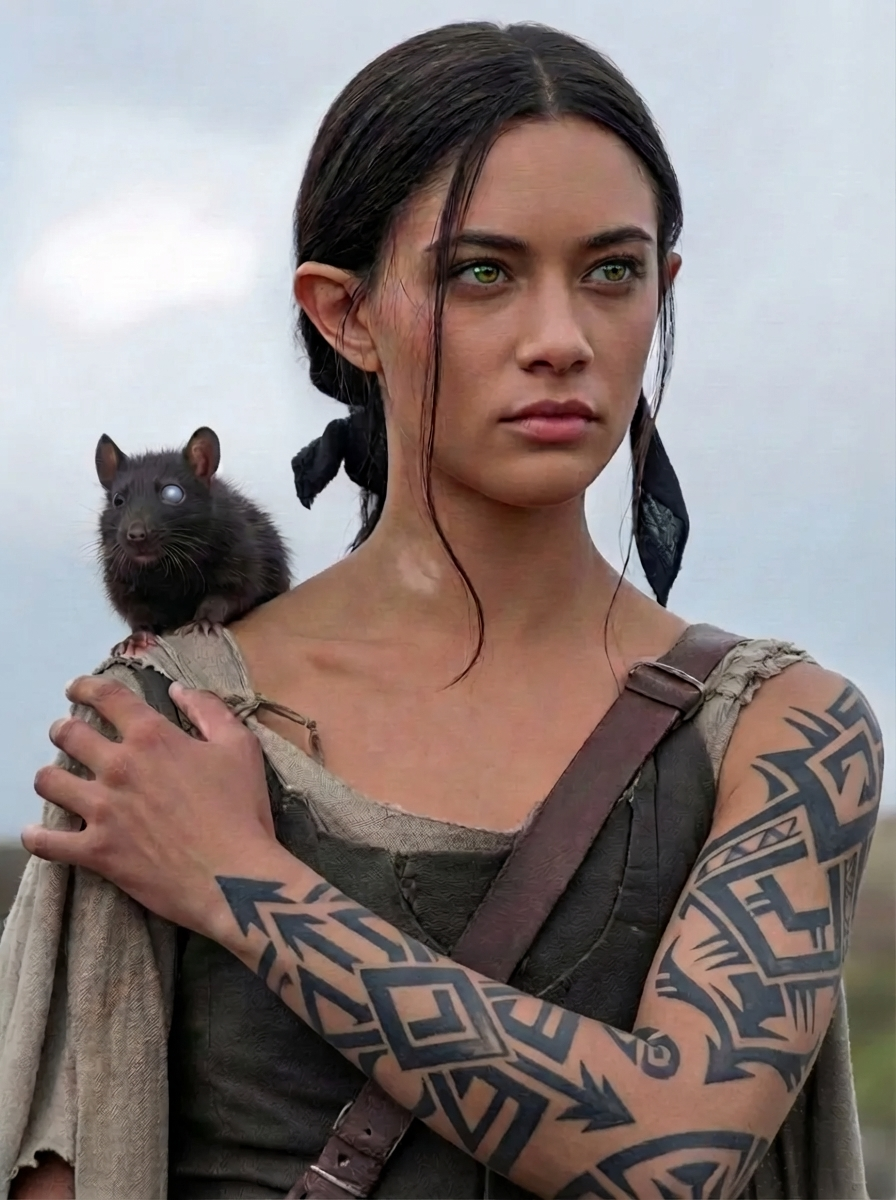
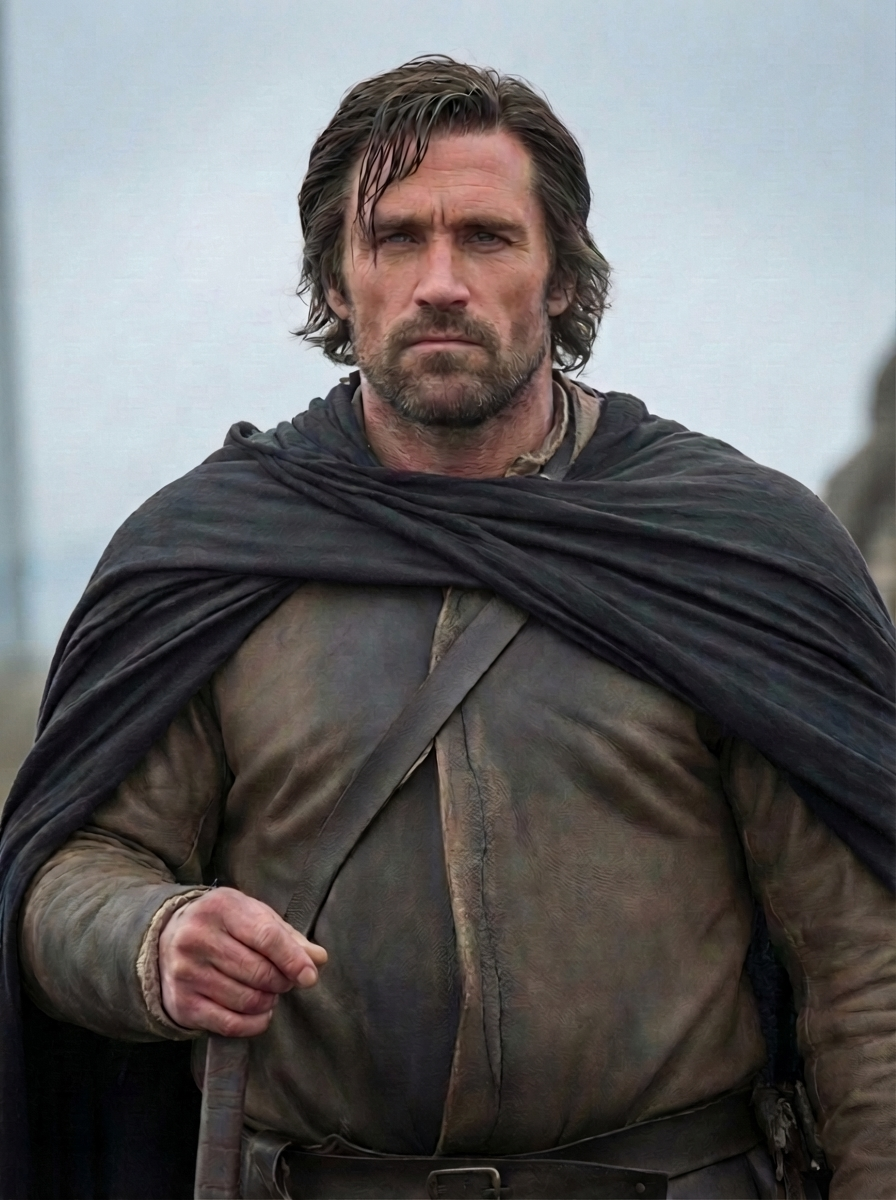
Half-Alvar, so she runs somewhere between the slender Alvar grace of her mother and the more solid human build of her father. Ten years of hard outdoor living with the dwarves has made her lean and capable. Derni clan tattoos cover her left arm from wrist to nearly the shoulder — warrior marks, almost never given to women, earned after her first kill at thirteen. She carries a sickle and a graelin dagger. Plague rides on her shoulder or inside her cloak.
Personality
Morose, guarded, and self-contained. The girl who once played extravagant games with Zirul in a sunlit garden, who talked in three languages before age five, who named her rat Plague to vex her mother — that girl is still in there, but bolted behind a door she closed at age ten when she saw her parents die. Her core arc across all three books is the journey back to happiness, complicated by the fact that the ending of her story is not a happy one.
Her primary flaw is overcompensating for lack of confidence — she projects certainty she doesn't feel. She is also too focused on her goal, sometimes at the expense of the people around her.
Skills & Abilities
- Witch magic — instinctive, untrained, drawing essence from surroundings and from Sorvaine via Plague. No bargain was struck, which means no contractual limits apply.
- Multilingual — five languages beyond Valdic, including the rare Dunai and Briari
- Trapping and wilderness survival — can survive alone for weeks
- Cooking and herbalism — genuine talent, learned with the dwarves
- Combat — sickle and dagger, self-taught through necessity
- Communication with Plague — developed naturally, now fully fluent
Self-Knowledge Progression
Mags knows she is a witch from early in the story. She has known for years — not from formal education but from practical experience with Plague and her magic. She does not think about this in theological terms. She has never questioned where Plague came from or who her patron might be, because Plague has been there since she was ten and the wilderness offered no framework for the question. Her discretion around others is practical: she knows what happens to witches.
What she does NOT know — and what shatters her in Book Two — is that her patron is Sorvaine, the god whose church hunts witches, the god who ordered her parents' murder. The revelation is not "you are a witch" (she knows that). It is "the god on the other end of your bond is the one trying to kill you, and has been watching through Plague since you were ten."
Possessions
- Sickle — never needs sharpening, Dern equipment master's
- Graelin dagger — belonged to her father, Bres clan make. Ceremonial in origin but functional. Harven wore it regularly. Morgrym recognized the craftsmanship when Mags first arrived at Bresholm — he said nothing at the time. The full significance of how Harven came to carry a Bres clan dagger is not known to anyone in the story.
- Tessara's spellcraft treatise — written in Alvari, the book Mags studies every evening. Kept on the joist above the window in the storage room at Bresholm. She has been using her mother to teach herself magic for years without knowing it. The marginal notations look like abstract theory; they are also a mother tracking her daughter's latent potential across years.
- Tessara's personal spellcraft journal — retrieved from Zirul's box in Carnehue. Distinct from the teaching treatise: this is Tessara's private research document, more cryptic and intimate. Mags begins studying it in the weeks after returning from Carnehue and gets the first glimmer of what her mother was actually researching — familiars, witch magic — though the journal is deliberately oblique and she cannot fully decode it without mage training. The Lirenne scholar in Book Two is the one who reads the marginal notations properly and shows Mags what they are.
- Black silk ribbons — Tessara's, worn in her hair when gardening. Retrieved from Zirul's box. Mags ties them at the moment Zirul first sees Tessara in her face.
- Derni clan tattoos — left arm, wrist to shoulder
- The lion's knot pendant — a very old piece of jewelry on a cord, worn close to the body, usually under clothing. Retrieved from Zirul's box in Carnehue. It was Harven's — passed down through his line without explanation; he wore it close, usually beneath his shirt, and had no idea what it was. The design is recognizable as an Aelwold Rose to anyone who glances at it — close enough that Mags has never thought twice about it. But it is not quite right. The proportions, the precision of the knotwork, something in the execution is subtly off from the common version. Not worse — older. The Aelwold Rose as it exists in the world is a copy of a copy of a copy; the pendant is closer to the source, and the differences are visible to someone who knows what the original looked like. There is also a secondary detail Mags has always read as decorative inscription — ancient script, which she never examined closely enough to question. The prophet reads it. The combination of the design's age, its precision relative to modern Aelwold Roses, and the inscription is what moves him from interested to still. He tells her honestly: this is almost certainly genuine, but almost certainly is not the same as proof. The pendant is the strongest evidence available that she is an Umber descendant. It is not confirmation. Mags carries that ambiguity forward from this moment — never entirely free of the possibility that she has been proceeding on a belief rather than a fact. The design was known by two names in the Umber period: the lion's knot and the lion's paw — the former referring to the interlocking knotwork pattern, the latter to the shape the design suggests when viewed as a whole. Both names fell out of use over fifteen hundred years as the Umber connection dissolved. The symbol's history runs deeper than the Umber kings: in its oldest known use it represented the fundamental duality of existence — good and evil, light and dark, hot and cold, love and hate. Two forces bound together, neither destroying the other. Balda Umber adopted it as his mark, likely because of that cosmological weight; it became the symbol of his royal household and, after his death, of the Church of Umber. When Sorvaine destroyed Balda in Aevorn and the Church of Umber was dismantled, the symbol's name and meaning dissolved slowly over fifteen hundred years until only the knotwork remained, renamed and forgotten. At the story's end, after Mags has passed into Aevorn, her devotees reclaim it — the symbol of her emerging church. It has now meant the duality of existence, a king, a church, a bloodline, and a god.
The List
The list as it exists at the start of the story — the people Mags holds responsible for her parents' murder:
- Eclesses — uncle, magistrate, stole her inheritance. On the list from the beginning but said last and hardest — he's the only real person on the original list, the others being memories of a traumatized child. His culpability deepens in Book One Ch. 7 when he files the witchcraft accusation against Mags and travels to testify, his improvised pivot to Agna causing her death. He is elevated on the list after Bresholm. Dies in Book One — an accident, Maren's fist at the wrong moment, in circumstances Sorvaine may have helped arrange. Mags never resolves what she would have chosen.
- Ruko Paka — half-Dunai mercenary, present at her parents' murder. She finds him first. He tells her freely the murder was contracted — just business, no shame. He forces her hand when cornered; she tries to stop him without killing him but he pushes it until she has no choice. Dies in Book One.
- Devon Paka — half-Dunai mercenary, Ruko's brother, present at the murder. She finds him second. By this point she knows the murder was contracted and Devon holds no new information — he's just the last name on the original list. She chooses his death deliberately, in front of the group. Nothing lifts afterward. Dies in Book One.
- The silent human bowman — dark hood and cloak, shot her through the neck. She never learned his name. He is Osmen.
The list grows after Bresholm. Added in Book One Ch. 8, after Agna's death:
- The head Examiner — the lead Examiner who ran the trial at Bresholm. Mags adds him after leaving the cave, in the immediate aftermath of learning what happened. Whether she ever finds him or acts on this addition is not yet determined.
Note on the list's emotional function: the original names — Ruko, Devon, the bowman — are boogeymen assembled from a decade of distance. Memories of a traumatized child, not quite real. Eclesses is the only name she says last and hardest because he has a face she has seen recently. After Bresholm, the list shifts in character: it is no longer purely about her parents. It is about Agna and Morgrym too. The revenge story has begun. She doesn't think of it as revenge yet. She calls it justice.
The Bloodline Secret
Mags does not know this at the start of the story. Her father Harven was a descendant of the bastard child of Balda Umber — the last beloved king, who became a god after his death. The other gods waged a holy war to erase the Umber bloodline. By the time of the story only three remain: Mags, Harven (dead), and Eclesses (dies in Book One, Part Six). When Eclesses dies, Mags becomes the last Umber. The prophecy becomes live. Sorvaine begins to move directly against her.
Mags learns the truth in Book Two, at the One God's monastery. The prophet sees the lion's knot pendant she has worn without understanding since Zirul returned it to her — a design she has always known as an Aelwold Rose, close enough to the common pattern that she has never questioned it. But it is not quite right, and the prophet knows why: the Aelwold Rose as it exists in the world is a copy of a copy of a copy. Hers is closer to the original, the knotwork unusually precise, the proportions subtly different in ways only visible to someone who has spent a lifetime studying the Umber period. There is also inscription on the piece that Mags dismissed as decorative — the prophet reads it as ancient script. He asks where she got it. She tells him. His stillness in that moment is the first signal that something has shifted. He tells her what the pendant is, what her bloodline likely is, and what the prophecy says about her — and he is honest about the limits of his certainty. The pendant is the strongest evidence available. It is not proof. Mags carries that ambiguity from this moment forward. None of it resolves anything. All of it reframes everything.
Power Development — Book Three
Early in Book Three, Edoine tells Mags what the math requires: to make the suicide spell viable, the witch bond must deepen considerably beyond where she ended Book Two. The path runs through Plague — not passively, but actively, deliberately. She will draw closer to Sorvaine in order to destroy her.
She does not simply accept this. From the moment the math is delivered she is also looking for another way — a path to the same destination that doesn't require her death. This search runs parallel to the bond deepening throughout Book Three. She is not passive about it. She is practical and stubborn and she has people she loves now, and she does not want to leave them. Every new development in Edoine's formula, every breakthrough Ingle makes, every piece of knowledge the group gains — she is looking at it with the same question: does this change the equation?
Ingle's breakthrough in Lirenne — the stabilized essence compound, extracted essence held in physical form without a living conduit — is the moment the hope feels most legitimate. Edoine sees the intersection immediately and writes it in the notebook. If the massive expenditure of the suicide spell could be partially captured in physical form rather than dissipating entirely, it might change what the spell leaves behind. The group allows themselves to believe, briefly, that this might be the variable. It isn't — or it is, but not enough, or it introduces a complication that forecloses the avenue. The reader should not know this until it is confirmed. The hope should feel real.
The decision — that there is no other way, that the math is what the math is — comes late, almost at the end. Not with resignation. With the specific exhaustion of someone who looked for every exit and found none. She does it anyway. That is the version of this that is true to who she is.
The growth of the bond is steady but punctuated by one significant threshold crossing: she draws essence from a living person for the first time. She has always drawn from the world — vegetation, environment — never from people. Drawing from a person is structurally identical to what Sorvaine does with worshippers. Not metaphorically. Mechanically. The person she draws from doesn't know it's happening, and that unknowing belongs to her afterward. Edoine sees it happen, or works it out immediately after. The formula in the notebook takes a significant step toward resolution.
The change is visible to the group. Behavioral first — she becomes colder in certain moments, decisions come easier that shouldn't, she sometimes looks at a problem in a way that is not quite the Mags they know. The magic changes too: darker in texture, heavier in the air, with an edge the world around her seems to flinch from slightly. Physical change accumulates as the bond deepens. The group is frightened and they love her and neither cancels the other. Nobody leaves. The fear and the loyalty coexist in the specific silence the group has for things too important to say directly.
Background
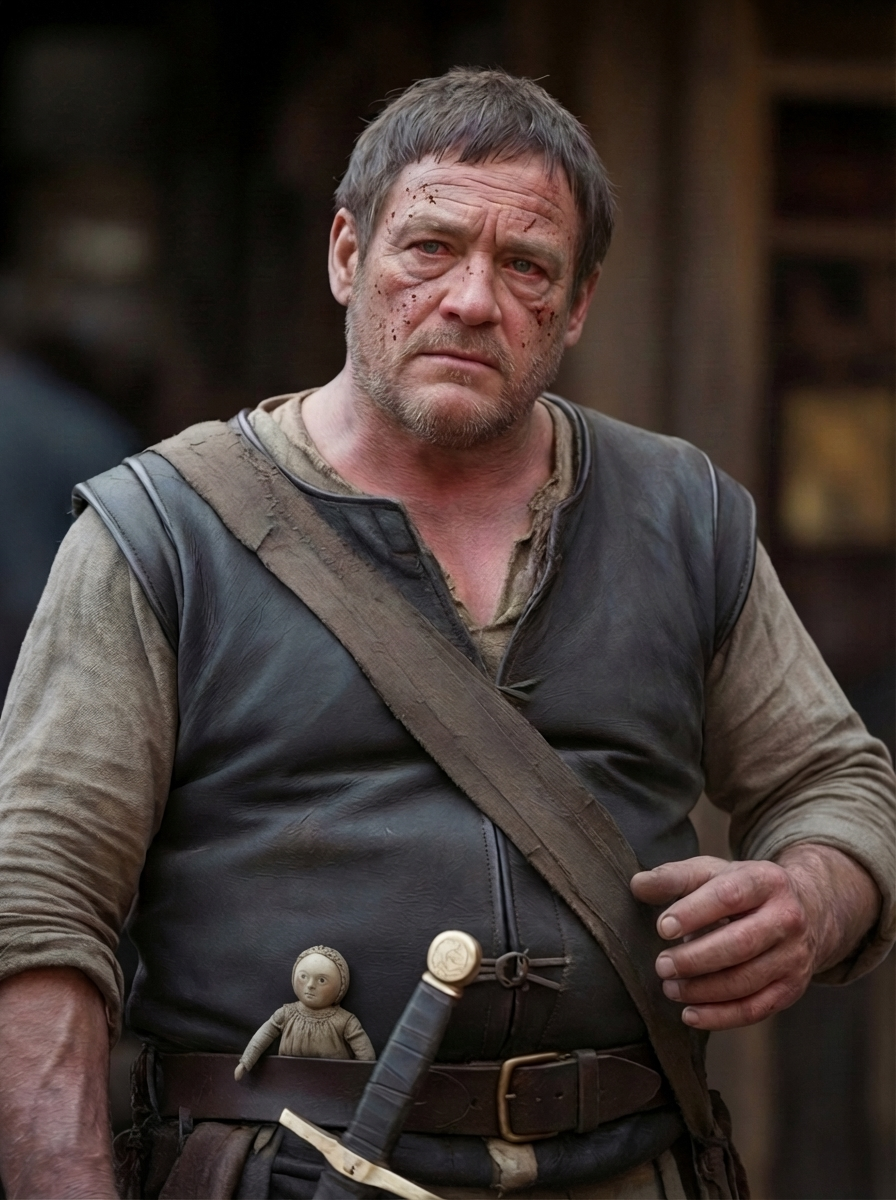
Raised in the Puddles district of Carnehue by an alcoholic, gambling father after his mother left when he was nine. Took beatings stoically. Joined the city watch at sixteen. Made sergeant by twenty-three. Married Gladys, had a daughter named Maggie. Spent years frequenting the Dark Fox Inn, drinking with soldiers, taking women upstairs. Became attached to a half-Alvar bard named Tari — never physical, but the attention cost him his marriage. Gladys left and took Maggie. Maren's drinking spiraled. He resigned before being fired, returned to his father's home, drank together until the old man died, then found work with the Wardens' Company — a reputable mercenaries guild with chapters across the continent — specifically its chapter known as the Order of the Road, which takes long-distance escort and travel contracts. Later the Thagari.
Active Examiner — The Critical Detail
This distinction changes the weight of his betrayal arc considerably. When he almost turns Mags in and doesn't, he is not resisting an old instinct or confronting a shameful past — he is refusing a current duty. He has decided to stop being what he is. He needs to be alone with that before he can be useful to anyone.
Not all Examiners work openly. Some use their institutional authority visibly as a tool. Others — Maren among them — work in deep cover, where the information is better and the targets don't run. His Wardens' Company cover is so effective that Morgrym hired him without knowing what he was. His bearing, manner, and equipment carry the institutional mark in ways that are readable only to those with the specific knowledge base to look for them. Edoine and Ingle both identify him correctly shortly after joining — not because Examiners are universally obvious, but because those two know what to look for. Most people don't catch it. Those two do.
The Rag Doll
Tucked into his belt every day. His daughter left it behind — or it was left behind for her — when Gladys took her. He has carried it ever since, through every road job, every fight, every year of drifting. It is not attached to his weapon. He would not bring his daughter into the killing. He just keeps her near him. If Mags asks about it, he says it belongs to his daughter. That is all he says.
Bresholm — The Lie That Mattered
After delivering Mags to Carnehue, Maren has no stated reason to stay. He stays anyway — telling himself and Morgrym that he is between jobs, needs to rest, not as young as he used to be. Morgrym, who has used him as a road man before, accepts this without pressing. The days accumulate. Morgrym begins to notice the pattern without remarking on it.
When the Examiners arrive at Bresholm — sent by an accusation Eclesses filed targeting Mags — Maren is present in the yard. The open Examiners know who he is. The institutional contempt between the two factions means they don't acknowledge him directly that first night. The next morning, in the hall where the trial is held, it surfaces.
The lie: during the trial, when Eclesses identifies Maren as the man he saw in Carnehue with Mags, Maren says it wasn't him. He looks at the wall when he says it. He has told a thousand small lies in his life — the alcoholic's lie, the self-protective deception of a man hiding a weakness. This is different. This lie is given freely, at cost, for someone else. It costs him the one column in his internal accounting that has always stayed in the black: he has always told the truth about the things that mattered. He says it anyway. He doesn't fully understand what that means about him until after he's already said it.
The open Examiners read his lie as professional discretion — an undercover man not blowing his cover. Their assumption that Maren must be investigating someone at Bresholm accidentally contributes to the verdict against Agna. He tried to stop it. He lied for Mags. Both things made it worse. He watched Agna burn in the birthday bonfire site — the same ground where the family celebrated, though he didn't know that — because he was the one who stayed to witness it so Mags didn't have to.
The Betrayal Arc
Hired by Morgrym to escort Mags to Carnehue. Stays on after everything falls apart. Mags becomes the closest thing he has to a reason to keep going. Then he discovers she's a witch — not a suspicion, but a certainty. The sequence is not a man confronting his past. It is a man refusing his present duty:
- Chapter 16: Mags pulls Plague through twenty feet of air to save him from a hawk. Unmistakable. Maren says nothing — loudest of all
- The next day: they encounter someone who knows Maren as an Examiner — a colleague on the road, easy and professional, talking shop
- The colleague asks who Maren is traveling with. He introduces everyone. Saves Mags for last. Opens his mouth. Says Magdelia — the institutional name, the name on an accusation form. He has called her Maggie since the cave. The name shift is the almost-betrayal made audible. Then he stops. The colleague leaves confused
- The next morning he is gone before dawn, no word left
He doesn't turn her in. But he can't stay. He's looked at someone he cares about and almost handed her to the people who would burn her. He can't unknow that about himself. So he leaves before he has to face it.
He returns in Book Two. The reunion is not warm. He takes the harder place Mags gives him and holds it. Whatever relationship they rebuild is built on something harder and more honest than what came before.
The Surrogate Father
Mags becomes the closest thing Maren has to a reason to keep going — and over the course of the trilogy becomes the surrogate daughter he lost when Gladys left and took Maggie. He would never say this. She would never say it either. The rag doll tucked into his belt is the tell for the reader — he has been carrying his lost daughter with him into every road job and every fight for years, and then someone who needed a father walked into his life and he couldn't walk away. Neither of them has a word for what they are to each other. Both of them know.
Unification Sympathy — The Quiet Position
Maren is not opposed to the Unification Movement. He is not a vocal proponent, but he spent his career in institutional structures — city watch, mercenary guild, the Thagari — and a man shaped by those roles naturally finds the argument for unified governance at least partially compelling. Order is sensible. Fragmented kingdoms cause suffering. He thinks, privately, that the idea isn't wrong even if the current execution is catastrophically so.
He is too jaded to care whether it actually comes to pass. The Movement could succeed tomorrow and he'd shrug. What mobilizes him is not principles but people — specifically the specific person in front of him. That's the jaded man's version of values. What makes it interesting is that he knows this about himself and has made a kind of peace with it. He chose Mags over the institution he served. He chose a person over an idea. He suspects this is the only kind of choosing he's ever really been capable of.

Background
Born to a sixteen-year-old mother who never named his father. Sent at thirteen to serve the Carenhal Order — a crown-affiliated military institution — likely because his mother could no longer afford to keep him. Five years of misery among boys twice his size. Never strong enough to wield a blade. Excelled at intellectual studies — history, engineering, tactics. Assigned to the columbary to tend messenger birds, where he spent years alone with books, tactical histories, and the quiet company of animals. He was largely self-taught, filling the years with relentless autodidactic study from the Order's library.
Over time his work in the columbary expanded quietly beyond its stated remit. He began maintaining the Order's tactical communications records — not because he was asked to, but because nobody else was doing it well and the math of it was interesting. He drafted dispatches that senior officers sent under their own names. He identified three logistical failures in planned operations that would have cost lives, noted them in writing, and was thanked privately and ignored officially. He was good at making himself useful in ways that couldn't be formally acknowledged, because formally acknowledging him would have required explaining what a columbary acolyte was doing analyzing troop movements.
The Discharge
The Carenhal Order reorganized its administrative structure when a new commanding officer took charge. The reorganization was rational and efficient — redundant functions consolidated, columbary operations streamlined, several positions eliminated. Edoine's position was among them. His discharge paperwork described him as "satisfactorily completing his term of service." There was no misconduct finding, no ceremony, no acknowledgment of the eleven years he had spent there or what he had built in the margins of his assigned role. The Order simply no longer had a place for him, and so he no longer had a place.
He did not contest this. He had understood for some time that the Order's relationship to his abilities was essentially extractive — useful outputs, invisible source. The discharge confirmed rather than surprised him. He collected his things, left the columbary in the care of a junior acolyte he had trained, and walked out.
What he did not have was anywhere to go. His mother had died while he was in the Order — he had attended the burial and returned the same week, because there was nothing else to do. He had no family, no contacts outside the institution that had consumed his entire adult life, and no professional credentials that translated cleanly to civilian work. What he had was eleven years of self-taught mathematics, tactical history, and the specific skill of finding the words other people couldn't find — which is how he ended up at a waystation in Fenwick writing letters for travelers who couldn't write themselves. He was doing it when Mags arrived. He was very good at it. He found it insufficient in a way he had not yet named.
The Gift
Edoine sees everything as math. The swing of a sword, the blocking of a shield, architectural structures, the patterns of magic — all of it resolves into equations for him. He can see tactics at a glance. He describes it only as "It's just math, really." This is innate — something he was born with and has spent his life trying to systematize, because the alternative is accepting that he simply sees things other people don't. He is a mage by training and inclination, not a witch. His power derives from study and internal comprehension, not from any patron or bargain. The formulas he understands are his own.
His school is Vaurri (Aerics) — he worked it out alone, across eleven years in the Carenhal Order's library, without ever attending the College of Vaurri on Tāvelaris. The college sits on a remote island off Lirenne's southern coast, accessible only by a dedicated sea crossing, and Edoine has never quite had the reason or the resources to justify the trip. He thinks about it occasionally. The archives there would contain, formalized and organized, everything he reconstructed for himself from fragments. He has never gone. The distance between the self-taught version of a discipline and the version preserved in the institution that owns it is, in his case, a literal sea.
Role in the Trilogy
Eventually Edoine sees the mathematics of the suicide spell — the formula that will let Mags die in a way that strips Sorvaine of her power. He constructs this formula across books two and three, the culmination of a journey that began when he first noticed equations around Mags he couldn't explain. His sacrifice is giving her the weapon. He is her love interest. He likely does not survive book three.
In Book Three, when Mags crosses the threshold — drawing essence from a living person for the first time — Edoine sees it happen, or works it out within minutes from what he observed. The formula takes a significant step toward resolution. He then faces a decision the wiki does not resolve in advance: whether to tell the group what she did, or carry the knowledge alone. This is itself a calculation for him — what does disclosure cost, what does silence cost, what does the group's knowledge or ignorance do to the final arithmetic. He makes a conscious choice, not a default. Whether it was the right one is left to the reader.
How He Joins (Chapter 9)
Mags and Maren stop at Fenwick — a waystation town on the road south — to meet a former colleague of Harven's. Someone who knew her father professionally and can give her something of him that wasn't in Zirul's dusty box. Edoine is there writing correspondence for travelers who cannot write themselves — the Carenhal Order reorganized him out of existence some months ago and this is what he's been doing since, because it fills time and he is good at it. The work reveals his empathetic side: he is genuinely skilled at finding the words other people can't.
Before the meeting, Mags stills a basin of water with an instinctive cantrip and checks her reflection, looking for her parents in her own face. She is looking for something to carry into the room. She doesn't find what she's looking for. She goes anyway.
Edoine sees the cantrip from across the room. Nobody else notices. The equation doesn't resolve the way any magic he has ever studied does. He writes something in his notebook — quietly, without drama — and says nothing. Shortly after, he reads Maren, and says nothing about that either. Two connected silences, both deliberate.
He is at breakfast the next morning. And the morning after. On the fourth morning, when Mags and Maren walk out with their packs, he is there with his. Maren buys him a meal without comment. Nobody formally invites him. He is simply there when they leave.
Background
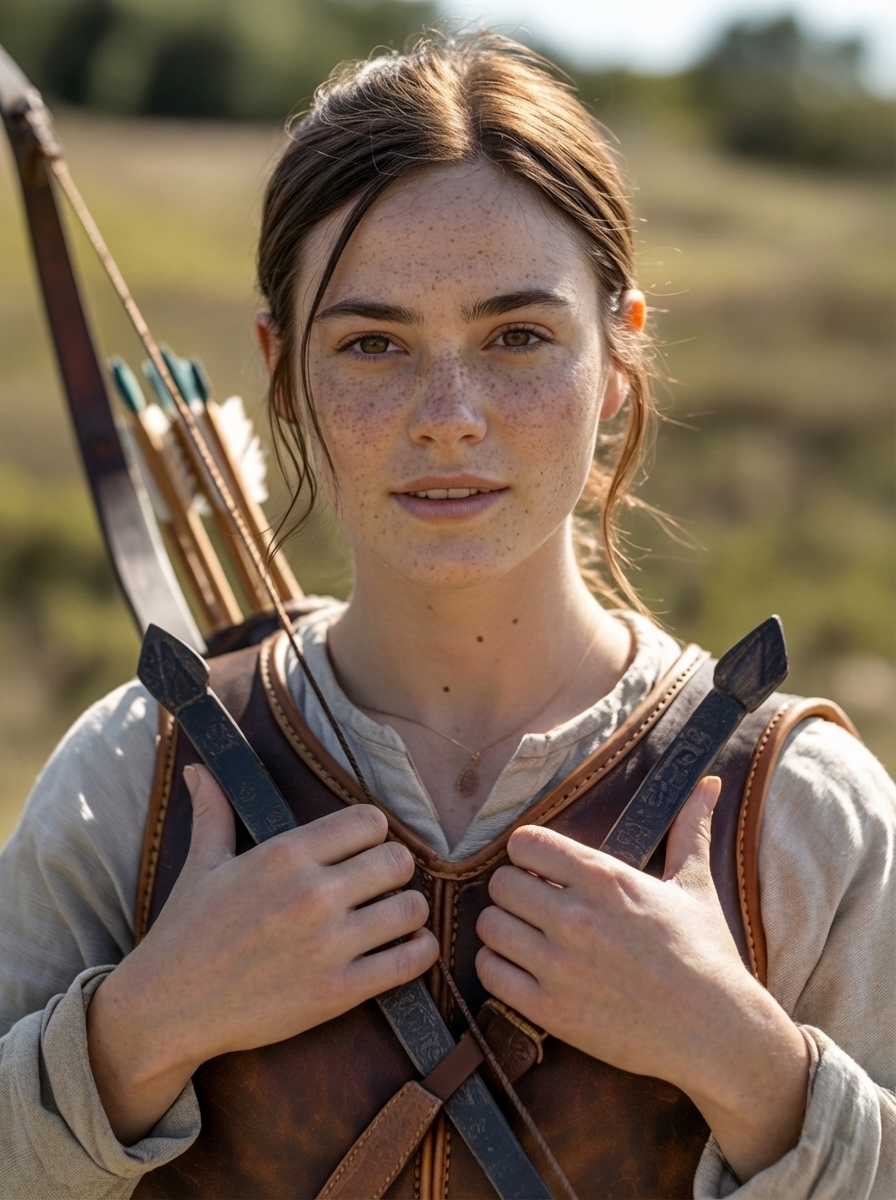
Raised on the frontier, hunting and growing what the family needed. Took up swordplay out of boredom. Joined the Wardens' Company — a reputable mercenaries and adventurers guild with chapters across the continent — specifically its chapter known as the Iron Charter, which specializes in bodyguard and security contracts, at eighteen for the same reason — craved adventure, variety, epic battles, clever things to say at the fish market. Often lost in daydreams that play out like heroic tales. Daydreams are a liability everywhere except combat, where she's relatively focused.
Became bodyguard to an opera singer named Natalia Delaire after accidentally killing Natalia's bodyguard — who had drawn a blade on her — outside an opera house in Greypool. "Well, it looks like you have a position open. I'm Elia." The two shared languages (both speak Aevornian, inexplicably) and values (both believe freedom is everyone's right). They became lovers. Elia ended it — and has never been entirely sure she was right to. After leaving Natalia, she traveled to Sosamyra, where she met Mott. They have been traveling together for approximately two months when the story begins.
Natalia Delaire
Elia ended the relationship with Natalia Delaire — opera singer and the foremost living scholar of Aevornian — and has carried the uncertainty about that decision ever since. She is relatively private — the group knows little about her life before, and she prefers it that way. She doesn't speak of Natalia. The wound is recent enough that it hasn't fully settled into the past tense.
In Book Two, when the group arrives in L'lane, Lirenne, Natalia is there — performing or living in the city, having built something of herself in the world Elia walked away from. Elia disappears for an evening. No announcement, no explanation. The group's register doesn't include pressing on things like this. She goes alone. The scene belongs entirely to her — off-page, held entirely outside the group's awareness.
She comes back quieter. Something in the encounter cost her. What was said, whether anything resolved, whether she got what she went for — none of this is stated. The reader holds the gap. Mott notices the change without asking — they are close enough that he sees it, and their register doesn't include pressing. He adjusts slightly toward her in the days that follow, in small practical ways. Elia knows he noticed. Neither of them says so.
Natalia does not appear again. Lirenne is the whole arc. The encounter doesn't close neatly because it was never going to — the question Elia went to answer either didn't resolve or resolved in the wrong direction. She carries it quietly for the rest of the trilogy without it resurfacing.
What happened in the off-stage scene: Elia went not to rekindle but to know. They talked, had dinner, spent the night — both understanding it was the last time. Natalia has built a life in L'lane. In her way, so has Elia. The meeting confirmed the ending rather than reopening it. Mags was never discussed. Elia didn't go there for help — she went for something entirely personal. The help came later, of its own accord.
The Harbor Master scene: Some days after Elia's return, the group needs entry to the Harbor Master's administrative building to chase the financial paper trail of the Shippers Guild's Lirenne activity. They are stopped at the door — access requires credentialed traders or civic vouching, neither of which the group can produce. While they are on the steps arguing their case, Natalia passes. She is a celebrated figure in L'lane, moving in the same civic and merchant circles that patronize the opera. She speaks to the official by name. She vouches for the group without explaining them. The door opens. She leaves without addressing Elia, without addressing anyone. Elia says nothing. Mott has no framework for what he just witnessed. The reader, who knows what the off-stage scene was, understands the gesture completely.
How She Joins (Chapter 14)
See Mott Kir's entry for the full join scene. Elia and Mott arrive together as an established pair with a worked-out cover story — he presents as a traveling steward from a minor northern house, she as his hired protection. When something goes wrong at the records hall in Chapter 14, Elia draws blades before anyone has made a decision. The resulting chaos throws both groups into the same alley.
She knows exactly who Mott is — a prince of Aldenmere running from the church that wanted to make him Cardinal. She is between jobs, doesn't like leaving a situation incomplete, and Mags is clearly in the middle of something that needs a blade. The loyalty comes later, after she has had time to watch who Mags is.
Role in the Group
The emotional counterweight to Mags. Where Mags is controlled, quiet, and damaged, Elia is impulsive, warm, and present-tense. Her instinct to help — drawing blades for strangers before knowing who she's defending — is something Mags needs around her. Once she gives her loyalty to Mags it is absolute. She is also Mott's secret lover and bodyguard, knowing their relationship has no future but playing along for his sake — and because she knows it too.
Faith and the Church
Elia has a good heart and assumes everyone else does, deep down. She has never had reason to think poorly of Sorvaine's church — growing up in Greypool, a provincial city in Valdenne near the Aldenmere border, her experience of it was local and genuine: charitable, pastoral, present during hard times. Greypool is far enough from Sosamyra that the church's institutional machinery never felt like a presence — just the priest who buried her neighbor and the sisters who ran the soup kitchen. She doesn't know Sorvaine the god. She knows that version of the faith, which is decent and loving, and she has no reason to think otherwise when the story begins.
In Book One Ch. 18, she names this for the group when they pass through the ruins of a destroyed town — burned structures, smoke, more bodies than one man could ever reach — where a priest named Deverin does burial rites for one body with nobody present. He is a refugee parish priest whose town was destroyed by the war, carrying only what he grabbed when he fled. He does the rites from memory, the star scratched in the dirt, the words said carefully because they are owed whether anyone is watching or not. She speaks to him briefly and then rejoins the group and says, without looking at anyone, that this is what she means when she says the church is good. She knows the difference between the performance of faith and the real thing. Nobody argues. In Book Three Ch. 3, the group passes through a battle's aftermath and finds Deverin dead in the mud, unburied. She stops, looks at him, keeps walking. She doesn't say anything. She doesn't need to.
Her faith has specific texture in daily life. She wears a simple silver star on a cord at her throat — visible when not armored, worn close to the skin when she is. The pendant is devotional and practical: in a world where witchcraft accusations fall disproportionately on women, a visible star is a public declaration of orthodox faith, and Elia has worn hers long enough that she no longer thinks about either function. She makes the gesture of her faith reflexively — two fingers touched briefly to the forehead, then the heart — as a reflex after hard things, before hard things, sometimes in the middle of an ordinary moment when something moves her. She does not perform it. It is simply there, the way breathing is there.
Her arc across the trilogy involves her faith being slowly eroded as she learns what the church actually is at the top of its structure — the prophecy, the two thousand years of bloodline hunting, Plague, the machinery Osmen ran. The local goodness she experienced doesn't go away when she learns the truth. She can't simply decide she was wrong to feel what she felt. What she has to reckon with is that something can be genuinely good at the local level and genuinely monstrous above it — and that the local goodness is partly what makes the monstrousness possible. It's the face that keeps people believing. Deverin's face was that face. The war his church helped make killed him and left him in the mud, and nobody did the rites.
There is probably one scene where something she can no longer explain away forces her to stop assuming good faith. After that she is still warm, still generous, still the person who draws blades before thinking — but something has closed that was open before. She knows now that assuming the best about people isn't the same as being right about them.
Elia and Mott
He was running from a destiny inside the church. She was running toward a faith she'd always trusted. They meet in the middle — both of them losing something, in opposite directions, at roughly the same pace. That's part of what works between them even before the horizon arrives. When he goes back to Aldenmere alone, she lets him go. That is where their story ends — not in a fight or a speech, just the moment where the horizon they always knew was coming arrives and she opens her hands.
Elia and Plague
Of everyone in the group, Elia is the only one besides Mags who loves Plague openly and without reservation. Where others are wary, calculating, or indifferent, she simply likes him — immediately and without condition. She lets him sit on her shoulder without being asked. She shares food with him. She talks to him directly, not performing for the group, just talking to a rat. Mags watches her do this without comment.
After the Book Two revelation — that Plague is Sorvaine's instrument, that the god has been watching through him since Mags was ten — the group's response varies. Elia looks at him and says something simple: he didn't choose it either. She does not change her behavior toward him afterward. Her love for him is not conditional on what he is or where he came from.
In Book Three, as Mags changes and the bond darkens, Plague changes with her. Elia keeps being warm with him. There should be one specific moment — late, when the dread is close — where she holds him when he is frightened, and it is the most ordinary thing in the chapter.
The ending: the suicide spell requires the witch bond to be severed at a specific moment in its execution. Edoine's formula accounts for the severing but cannot confirm with certainty whether it must happen before, during, or after the threshold is crossed — getting it wrong may destroy the spell entirely. He cannot bring himself to act on incomplete mathematics. Mags cannot do it at all. Maren's hands are the wrong hands — a former Examiner killing a witch's familiar would carry the wrong meaning in the worst possible moment. Ingle cannot act without certainty he doesn't have. Elia draws blades before she thinks. She is the only person in the room whose instinct for action is not subordinated to calculation, to history, or to grief. She does it quickly. There is no speech.
Then the waiting.
When the whiskers move, Elia sees it first. She is the one holding him. The prose doesn't announce it — it describes what she sees, a small physical detail, and moves on without resolution. The group doesn't know what it means. Elia picks him up. She carries him out. The last image of Elia in the trilogy is this: walking away from Ossavar with Plague in her hands. What his survival means — whether the bond persists, whether Mags left something in him, whether Sorvaine's architecture simply collapsed and freed him — is never answered. Elia takes him anyway.
Place names resolved: Elia's city is Greypool. Guild resolved: The Wardens' Company (parent guild) — Maren's chapter is the Order of the Road, Elia's chapter is the Iron Charter. Same institution, different chapters explains why they never crossed paths.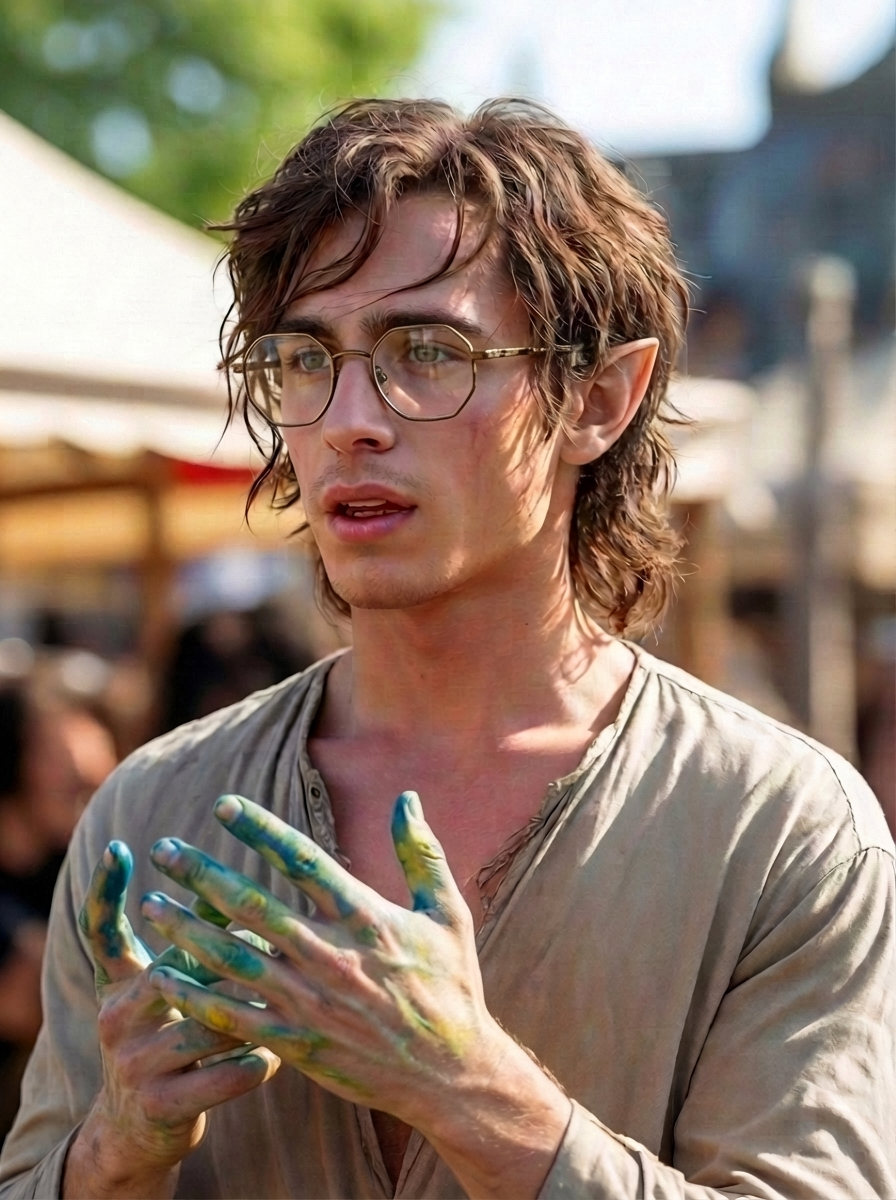
Background
Grew up in Brentwick, a northern town in The Hael. His father, Menion, is an Alvar who settled in Brentwick — a man who loves his son and has always been exhausted by him. Ideas running faster than his brain, mouth running faster still. Menion sent him at fourteen to apprentice under the village mage not as punishment but as hope — an outlet for uncontrolled imagination. The apprenticeship proved disastrous: expelled after ten months, couldn't cast a single spell. But he grasped the workings of spellcraft theoretically, and when he pivoted to alchemy, Menion was relieved — the boy had found a lane. He was pleased at both the aptitude and the commercial potential. Tindertwigs, salves, compounds the town needed — good honest work. Ingle dedicated the next ten years to something far beyond that.
His family — parents and siblings — are still in Brentwick. He left to pursue the project and hasn't gone back. He tells himself this is temporary: when he becomes the best alchemist in the world, when the project is complete, when he has something to show for the absence, he'll go home. The years have accumulated without the condition being met. He doesn't examine this too closely.
The Project
Ingle can replicate some magical effects through alchemy — not all, not yet. His central theoretical problem is essence stabilization: magic draws essence from living things in the moment of casting, through a living conduit. Ingle has been trying to capture extracted essence in a physical medium — a compound — so it can be stored and used later without a caster present. Mages have maintained this is categorically impossible because essence disperses without a living conduit to hold it. Ingle does not find "mages say it can't be done" a satisfying reason to stop trying.
In Lirenne in Book Two, working alongside the college scholars with access to their resources, he solves it. A compound that stabilizes extracted essence in physical form — usable later, without a conduit, without a caster. The scholars recognize immediately what he's done. It is a genuine breakthrough and they treat it as one. He earned it.
It still falls short of what he was actually trying to do, which was never quite what he said it was. The project was a proxy: for earning a legitimacy beyond the tindertwigs and salves his father saw as sufficient, for proving that the bigger plans were worth the leaving, for having a reason to have been gone ten years from a town that needed an alchemist. The breakthrough gives him professional recognition and reveals, in the same moment, that the recognition was never the point. What he was actually chasing was underneath the project. He understands this for the first time in Lirenne, in the specific quiet of getting the thing he wanted and finding it insufficient.
This is not failure. It is a reframe. The project was real, the work was real, and what he built is also real. He simply understands now what he was actually doing. That understanding is what he takes home.
The Family Thread
His parents and siblings are present in the story only as an absence he carries. He sends a letter at some point in Books Two or Three — not explaining everything, but acknowledging the gap, saying something sideways about where he is and what he's been doing. He never confirms it was received. The not-knowing is part of what he carries alongside the breakthrough, alongside the group, alongside everything else that accumulated while he was away from Brentwick. He doesn't let himself think about it directly. It surfaces at the edges of things — in how he reacts when the group talks about where they're from, in the specific way he goes quiet sometimes when the conversation turns to what people are going back to.
How He Joins (Chapter 11)
Brydden — a market town south of Fenwick, mid-morning. Ingle is demonstrating an alchemical light compound to a small public crowd. His light compounds work. Mostly. This is not mostly. The compound flares the wrong color, produces an impressive quantity of acrid yellow smoke, and then makes a sound it absolutely should not make. The crowd's reaction is not the one he wanted.
Mags and Maren are passing through. Maren keeps walking. Mags stops — not from sympathy, but because the smoke is blocking the street. She does something small and instinctive to disperse it. The smoke clears. Ingle's compound stabilizes into the clean pale light it was supposed to produce thirty seconds ago. The crowd approves and moves on.
Ingle stares at her — not at the light, at her. Within seconds he also looks at Maren's retreating back and reads exactly what he is looking at. His expression does not change. He looks back at Mags. She can see him doing the arithmetic. Neither of them says the word. They don't need to.
He makes his case efficiently and at length: his supplies are genuinely useful, he can name six things he is carrying that would help with whatever she is clearly in the middle of, and he has contacts in apothecary networks across three cities who know things that don't get written down. Mags doesn't say yes. She says she'll think about it. Maren, stopping without turning, says only: "The alchemist. His supplies are worth having." Ingle takes it as a yes before Mags can qualify it.
Their first private conversation about her magic is conducted entirely in the language of people not saying the word — oblique, plausibly deniable, completely understood by both parties. Ingle finds this frustrating. It is the most interesting conversation he has had in months. Maren is in the next room.
The Dynamic with Mags
Perfect foil: she does instinctively what he's spent years trying to replicate through chemistry and logic. He understands systematically what she does by feel. Each has what the other lacks. They infuriate each other productively. Together they can accomplish things neither could alone. The dynamic deepens across the trilogy as his project and her power develop in parallel — he is the one member of the group who approaches her magic as a subject of genuine intellectual interest rather than wonder or fear. That is its own kind of respect, and she eventually recognizes it as such.
Ingle and Elia
The relationship that develops most meaningfully beyond the Mags dynamic. Elia extends warmth without assessment — she just likes him, straightforwardly, before he's done anything to earn it. This is disorienting. He has spent his adult life being evaluated: by his father, by the village mage who expelled him, by apothecary guilds and scholars and customers who want to know if his compounds actually work. Judgment is the register he knows how to navigate. Her warmth sits outside that register entirely.
He resists it for a while. She is undeterred — not because she's oblivious to the resistance but because she genuinely doesn't find it meaningful. And then, gradually and without his full permission, he develops a crush on her. A real one. He is aware of this. He is also aware that she is Mott's lover, that this is therefore both pointless and awkward, and that the correct response is to not be obvious about it. He is slightly too awkward to not be obvious about it.
Nobody mentions it. This is the group's register — the obvious thing goes unnamed. Elia knows perfectly well and finds it quietly sweet, which she also doesn't name. She continues being warm with him in exactly the same way she always was, which is its own kind of mercy and its own kind of torment. He probably suspects she knows. He can't confirm it. He continues being slightly too obvious anyway.
What the crush actually does for him is more interesting than its romantic content: it is the first thing in years that he cannot think his way out of or solve through application of method. The feelings arrived without being invited and decline to leave when instructed. This is, for a person who has organized his entire life around the principle that problems yield to sufficient logic, genuinely novel. He doesn't examine it directly. It surfaces at the edges of things — in how attentive he is when she's talking, in how quickly he moves when she's in danger, in how he goes quiet for a specific period after she laughs at something he said.
Ingle and Mott
Mott likes Ingle well enough. He simply doesn't process him as a romantic variable. He is handsome, confident, and has never in his adult life been the less attractive person in a room — the idea that Ingle might be competition does not occur to him because it does not need to occur to him. When he notices Ingle's attention to Elia, he files it as unremarkable: the alchemist has a crush, nothing will come of it, Elia is not interested in awkward gangly men with ink-stained fingers, end of analysis. He is not unkind about this. He is simply not paying attention in the way the situation might warrant.
Ingle occasionally encounters from Mott a slightly extra dismissiveness he doesn't fully understand — not contempt, just the casual confidence of a man who isn't tracking the competition because he doesn't believe there is any. Elia sees both sides of this and says nothing. That triangle of awareness — Ingle oblivious to Mott's dismissiveness, Elia seeing both — has a texture the narrative can use without announcing it.
Ingle and the Church
His disdain for religion is principled and consistent — he doesn't believe in gods, doesn't trust institutions that claim divine authority, and finds the Sorvaine apparatus specifically repugnant once he understands what it actually is. This is not a dramatic arc for him the way it is for Elia. He was already there. What changes across the trilogy is that his abstract disdain becomes specific and personal: he has watched Sorvaine's machinery operate at close range, on people he cares about. The disdain acquires weight without losing its intellectual foundation. He doesn't become more emotional about it. He becomes more certain.
The Ending
He survives. This is not incidental — it is part of what the story needs. Among the group's endings, his is the only one that looks like an ordinary life resuming. Mags dies. Mott doesn't come back. Ingle goes home to Brentwick with the knowledge of what he was actually chasing and without the letter's answer and with something that is harder to name than vindication. His family is there. They are the same. He is not. The story shows this — briefly, quietly, in the coda that follows "None to Mark Her." Ingle's POV, his only one in the trilogy. The workbench, the village, the father. The ordinariness of resumption after the extraordinary. Something on the workbench that may or may not be a sign. The book closes on the most ordinary ending in the trilogy, and the ordinariness is the point.
Royal Background
Third son of King Aldric of Aldenmere — the heir to the actual remnant of the God-King Temet Aldric's kingdom, a man going slowly mad who renamed himself after that ancient king and is driving the Unification Movement with messianic conviction. He was born into the mythology, not built around it. Eldest brother Essren will inherit the crown — groomed for kingship, trained in military arts, ambitious and capable. Second brother is being groomed to lead the military. Mott, being third, was being groomed to head the church — to become Cardinal, one of the three heads of state in Aldenmere, and effectively Sorvaine's instrument in the government.
He is not cut out for this. Too wild, too restless. He left Aldenmere rather than accept the Cardinal destiny. Cardinal Brennan — warm, pastoral, approachable, and Sorvaine's instrument all along — probably genuinely likes Mott in his way. That makes him harder to dismiss as simple opposition, and more dangerous for it.
When Osmen filed treason charges against Mott and the group at the end of Book Two, Aldric's reaction was that the whole thing was absurd — the truth would come out at trial. He still believes Mott is coming home. He holds that belief because the madness protects it.
Book Three Arc
The treason charges create an asymmetry Mott carries through Book Three: Essren has quietly allowed his charges to lapse — a dead brother is tidier than a fugitive one — but the co-conspirator charges against the group remain active, running on the institutional momentum Osmen set in motion. Essren doesn't pursue the group personally. He also doesn't call it off. The apparatus keeps running without him. At a critical moment in Book Three the charges force the group onto a harder route — longer, more exposed, arriving later or with fewer resources than the direct path would have allowed. The charges die only when the war exhausts the machinery that would enforce them. Not justice. Just the system running out of fuel. Mott knows the asymmetry. He can't undo it and he can't transfer his release to the people who need it.
Mott's cover identity is blown after the Book Two escape — he can no longer pose as a traveling steward. How he moves in the world after that is a practical problem that generates its own complications.
The war forces Mott's hand. When Aldenmere moves on South Aldenmere, he has to go back — to stop the war, to confront his father, possibly to end him. He goes alone. The group cannot follow him into Aldenmere, and he would not ask them to. Some of what he needs to do requires being his father's son, which is not a thing anyone else can be for him.
Elia lets him go. That is where their story ends — not in a fight or a speech, just the moment where the horizon they always knew was coming arrives and she opens her hands.
He finds Brynn first — in a church compound in Ashton Cross, a recently occupied town in northern South Aldenmere. The confrontation resolves nothing between them. She names the port encounter. She gives him the route to Aldric anyway — Greyminster, the command headquarters behind the advance. Her intelligence is precise. She helps him reach his father even while disagreeing with everything he has become, because love is older than the argument. Mott moves through the layers using the system's language against itself, each layer recognizing him more. The institutional uncertainty — nobody wants to arrest the king's son, nobody wants to let the king's fugitive son through — creates the corridor he needs.
He returns to Aldenmere as a traitor by law, to a father who believes he's coming home willingly, to stop a war that Brennan started. The version of going back that works is not as a prince or a son but as someone who has chosen something else entirely. That choosing is what his whole arc has been building toward.
Aldric is killed outside of battle. Mott is present. He does not strike the blow. He came back to end this one way or another, and the choice was removed before he could make it. He was there. He didn't stop it. He doesn't know if he could have. That is what he carries — not the act of killing, but presence without action, watching something become irreversible. The charges against Mott lapse. The group's don't. The asymmetry closes his arc — everybody got what they wanted, and the getting is the cage.
Brennan's fate is a downstream Book Three question — whether Mott deals with him directly still to be determined.
Earlier Life
Mother died quietly when he was fifteen. Father disappeared six months later under ambiguous circumstances. Was apprenticed to a Dern blacksmith named Braggar Ironhame who was the first person strong enough to meet his anger on equal terms. Braggar taught him Derni, how to control his temper, and how to fight. When Mott left the smithy, Braggar forged him an arming sword — plain in shape, exceptional in craft, the kind of Dern work that reads as ordinary to a casual eye. He has carried it since. Tried several trades after leaving the smithy. Fishes the rivers. Finds solace in wilderness.
How He Joins (Chapter 14)
Mott has been in South Aldenmere for some time, trying to stay inconspicuous under a cover identity — a traveling steward from a minor northern house, with Elia as his hired protection. During his grooming for Cardinal he was briefed, or half-briefed, on how the church's commercial relationships were structured. The Shippers Guild operates within the orbit of Aldenmere's church and the Unification Movement. A name, a connection — something he was shown that didn't sit right. Two months on the road has given him time to decide he wants to understand what he was actually being prepared to oversee.
He is at the same records hall as Mags in Chapter 14, working the same door from a different angle. Something goes wrong — a clerk who reads his bearing despite the cover. Elia draws blades. In the aftermath, sheltering in the same alley, Mott and Mags discover they are chasing threads that are tangled: he has a name she doesn't have (Aldous Ferrick), she has context for that name that he lacks (Mave Solloway, Wenden Poole). Neither explains how they know what they know. The name is enough.
The Derni moment: during the waiting, Mott uses a Derni phrase reflexively — something Braggar drilled into him, an expression of patience or stubbornness. Mags' head turns before she means it to. Neither remarks on it. Something in her posture changes slightly. It is the first crack in her wariness toward him, and neither of them acknowledges it.
He and Elia fall into step when the group moves. No formal invitation. Overlapping reasons, same direction.
Role in the Group
Despite the loose-cannon feel, he becomes the moral compass of the group. His connections can get them into places they wouldn't normally be allowed. The dramatic irony: he's running from a destiny that would make him Sorvaine's creature, toward the one person Sorvaine most wants destroyed. He doesn't know he's changing sides in a war he can't see yet.
The Cardinal Thread
During his Cardinal grooming, Mott was shown financial records and institutional briefings about the church's commercial relationships. Something didn't sit right — a name, a connection, a flow of money presented as routine that wasn't. He left Aldenmere carrying that unresolved question. Two months on the road has given him time to decide he wants to understand what he was actually being prepared to oversee.
Stage one — Chapter 14: At the records hall in Erish, he is tracing the money he saw in his briefings back to its source — specifically the financial connections between the church's charitable works offices and the Shippers Guild. In the alley afterward, the information exchange is immediate: he gives Mags the name Aldous Ferrick, Commissioner of Charitable Works. She gives him context from Mave Solloway — Wenden Poole in Carnehue, the Guild's operations, the money flows. Neither explains their source. The name is enough to tell both of them their threads are tangled.
Stage two — Lirenne colleges, Book Two Chapter 6: The college archives are old enough and complete enough to show what was obscured in his Cardinal briefings. The Shippers Guild connection to Sorvaine's church is not incidental — it has been flowing in the same direction for over a century. The Unification Movement wasn't Aldric's vision that Sorvaine co-opted. It was Sorvaine's project from the beginning, grown through Aldric because he was the right instrument — a genuine believer, already standing in the God-King's legacy, already predisposed toward the myth of reunification.
His father didn't lose his mind pursuing something real. He lost his mind pursuing something he was engineered to pursue.
Stage two — third element: What the archives also reveal — and what is visible in the streets of L'lane before Mott even opens a document — is that Sorvaine's reach into Lirenne is already underway. A newly constructed church in her name, larger than it has any right to be in a city that has never been her stronghold. Her symbol scratched into walls in student districts. Operatives placed in low-level positions: teaching assistants, college administrators, district clerks, community organizers. The method is the same one used everywhere else — convert the students and the common people first, build the numbers, let the numbers pressure the leadership in time. Lirenne has always been the hardest target on the continent, the one place most structurally resistant to her influence. She isn't trying to take it quickly. She is being patient. The archives show Mott that Lirenne is not an exception — it is simply earlier in the process than everywhere else. The same pattern is running simultaneously across every kingdom. Daening, H'analaise, Umberhal — all of it. The Shippers Guild and the Unification Movement were the visible machinery. This is the deeper operation that was always running underneath. By the time any individual kingdom notices, the numbers are already there. Mott recognizes the pattern immediately because he was being groomed to sit at the top of exactly this machinery in Aldenmere. He was going to be the endpoint of a process he is now watching begin in the one place it was supposed to be impossible.
Mott tells the group what he found — clearly, completely, without editorializing. The Shippers Guild confirmed as Sorvaine's financial arm. The Unification Movement confirmed as Sorvaine's political project. The grassroots infiltration confirmed as the mechanism running beneath both — active in Lirenne, active everywhere. He states these facts and stops talking. The weight underneath he keeps entirely to himself. Elia probably notices the gap.
Character
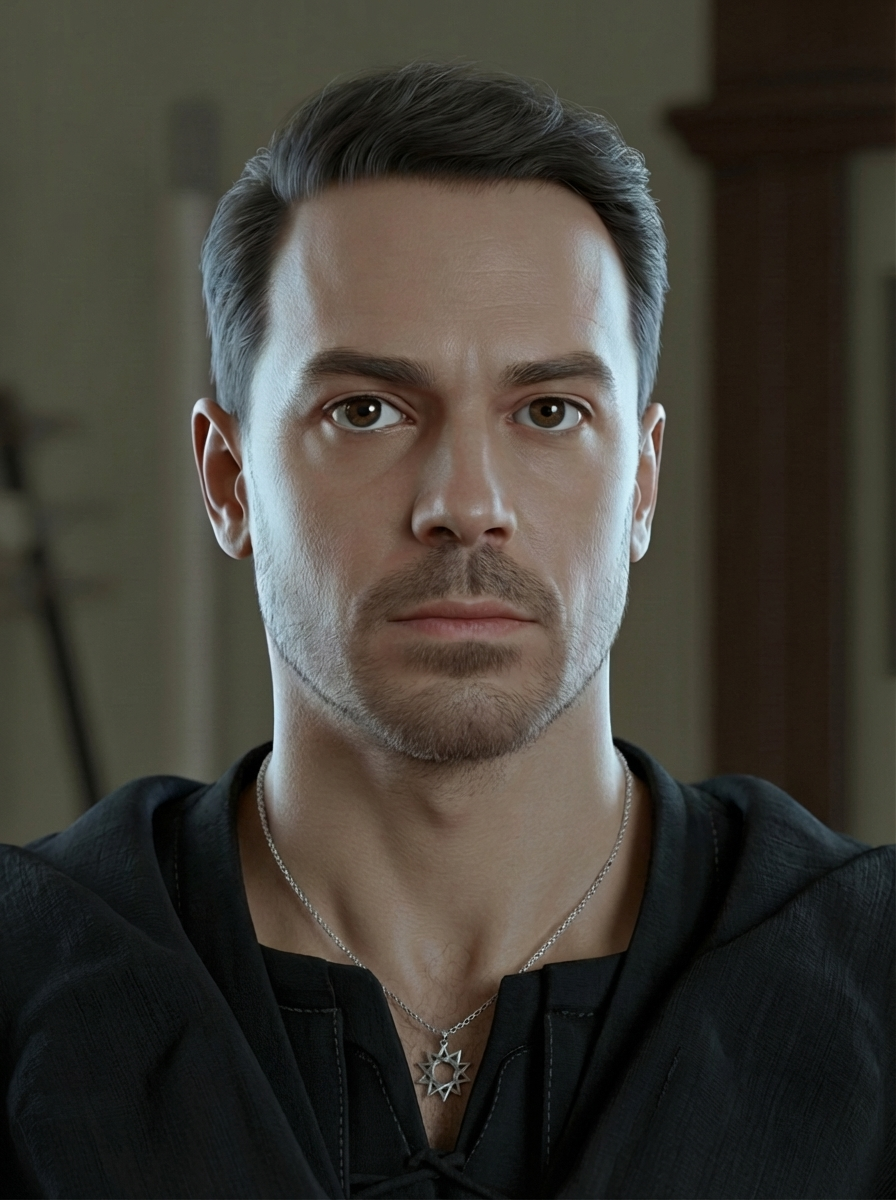
Osmen is not a mustache-twirler. He has a code, a reputation, taste. He never failed a contract. He never gave up. If he took a task it would be done or he would die trying. He does not genuinely believe in a higher cause — his operating philosophy of "order above all" is the story he tells about himself, and it is close enough to true that he has never needed to examine it closely. What he actually serves is his own advancement within a regime he has helped build. The church provides the structure. He provides the results. The arrangement suits them both.
He is the same age as Maren Lull — born the same year, shaped by the same era. Two men who spent their careers doing institutional violence, on opposite sides of the same war. Maren believed in something and was wrong about the institution. Osmen never quite believed — he found a system that rewarded his skills and told a flattering story about it. Both men did terrible things. One of them has the capacity for genuine reckoning.
The Prologue
Ten years before the story begins, Osmen led the ambush on Tessara and Harven Estuv. He contracted the half-Dunai brothers Devon and Ruko Paka and a young mage named Dexel. The ambush was planned for Tessara alone — possibly with an escort — but the family arrived together on a cart, with their ten-year-old daughter asleep under a blanket in the back. Harven was killed first by Devon's arrow. Dexel deviated from the plan by attempting to assault Tessara; she struck first, setting him on fire with his own catalyst dust. When Dexel retaliated with a killing fire spell against Tessara, Osmen drove his sword through the mage's gut — not for the assault, but for turning a clean contract into a mess. He then ordered no survivors. Devon offered to take the child to the slave markets in Myraei. Osmen declined, took Devon's bow, and shot the girl through the neck himself as she turned to look back at them. He offered his companions the word "errant" as a courtesy — not a claim he believed, but a story they could tell themselves if the killing of a child bothered them. He left her to die. A rat was already at the body when they rode east.
Arc Across the Trilogy
In Book One he appears in three interludes and the epilogue — never on the page with Mags, always in his office in Sosamyra's church compound, always processing paperwork. The first interlude: a witchcraft accusation crosses his desk with the name Estuv on it. He escalates the filing as housekeeping. Examiners are dispatched to Bresholm. The second interlude: the field report confirms the girl survived — Tessara and Harven named, the forest road, September 2810. She may be a witch. He writes a proper directive. The epilogue: she has been pulling threads, has reached Taggert, has institutional backing. The machinery moves in earnest. His name is spoken once at Bresholm — Maren reads it on the dispatch authorization in the granary and names it as high-ranking. Nobody registers it.
In Book Two he relocates from Sosamyra to Waypool — a church-controlled town in southern Aldenmere near the South Aldenmere border — to shorten his response time and operate without the compound's politics. He has physical descriptions of Mags' companions from Carnehue field reports (a bodyguard woman, a young educated man, a scholar type, a shorter alchemist) but does not know about Maren. The young man's description matches the missing Cardinal-designate closely enough to register — he files the possible Mott match without acting on it. He orders Prefect Taggert collected from Carnehue and brought to Waypool for questioning — a cross-border extraction using the Thagari's ecclesiastical authority that carries significant diplomatic weight. His machinery reaches for the group in the mountains — Naia Sorrel's attack on the road between Hanyi and Tianshu is his operation at distance — but he and Mags do not meet. He also files the treason charges against Mott and the group from Waypool — moving without Aldric's endorsement, serving Sorvaine's agenda rather than the king's feelings about his son. He files it away. It doesn't stay filed.
In Book Three, late — close to the ending, the last piece clicking into place — Mags tracks him down. She has been hunting him since Book Two. He is the last name on the list, the one that has always mattered most. Edoine comes with her. Not as backup. As the person who needs to be in the room.
The one thing: In the window after he knows Mags is closing in and before she reaches him — when he has already accepted that the door is coming — Osmen identifies and eliminates a group of Sorvaine's operatives who were on an intercept course toward Mags. He uses his insider knowledge of the church's deniable operations network to reach them before they reach her. He does this not to save her but to ensure the meeting happens. He has decided the ending — the confession, the mechanism, the door — and will not have it interrupted by operatives who don't know they are in the way of something more important than their assignment. He removes them with the efficiency of a man who has done this kind of work for twenty years. It is the last operation he runs. He leaves no trail pointing back to himself.
The Final Confrontation
Osmen knows she's coming before she arrives. Whether he could have run and chose not to, or simply ran out of places to go, is deliberately ambiguous. When she walks through the door he is not surprised. He looks at her the way a man looks at something he has been expecting for a long time.
He confirms her parents' murder without being asked — yes, that was his work, here is the commission, here is what it accomplished, here is what she should know about why Tessara specifically had to die when she did. No apology. No performance of guilt. He states it the way he would state any professional fact. This is what Mags came for as much as she came for his death — the confirmation, the specific shape of it, the reason her mother died two days before a meeting that might have changed everything. She has carried that not-knowing for twenty years.
Then he tells them about Aevorn. Not because he owes it to her — he owes her nothing and he knows it. Because Sorvaine used him as a tool his entire career, and this is the one act that belongs entirely to himself. He tells them what the church has always known and has spent considerable resources suppressing: the mechanism is not to draw Sorvaine out. It is to go in. The suicide spell is the key — you die drawing massively from your patron, you enter Aevorn weakened by the expenditure, and Sorvaine is there, weakened in turn by the drain. She cannot avoid it. Aevorn is where she lives. There is nowhere for her to go.
He says it cleanly and without drama. Edoine writes it down. Of course he does.
Then Mags kills him. The list is complete. It doesn't feel the way she expected. It never does with the ones that matter most — there is no lifting, no release, just the specific flatness of a thing finally finished. Edoine says nothing. He closes his notebook. They leave.
Before they go — the last thing. He tells her he stopped a team of Sorvaine's operatives from intercepting her on the way to him. Cleared the path. Not for her sake. To ensure the meeting happened on his terms, at his chosen moment, without interference. She came to find him. He made sure she could. What she does with that knowledge is not his concern. He states it the way he states everything else — as a professional fact. Then he is done talking.
Interlude Visibility — Church Connection
The Osmen interludes across all three books must build the reader's understanding of his institutional position layer by layer. Book One interludes: he has institutional backing, and it is church-connected (environmental details — church compound, church seal, institutional rhythms). Book Two interlude: he files the treason charges against Mott, serving Sorvaine's agenda rather than the king's. Book Three interludes: he eliminates Sorvaine's own operatives. By the confrontation in Ch. 18, the reader should have watched him operate inside the church's machinery, then turn a piece of it against itself.
The Star Pin — In-House Openness, Field Concealment
When Osmen and other senior operatives of the deniable apparatus wear Sorvaine's ten-pointed star on their person, the rule is consistent: open inside the Sosamyra compound and other church-controlled spaces, concealed beneath cloak or collar everywhere else. Covering it on departure and uncovering it on return is reflexive in senior operatives — a physical expression of the distinction between in-house identity and field identity. (This is separate from the star's use as the church's public emblem on buildings, vestments, and ecclesiastical markers, which follows no concealment rule.)
Prologue (Book One): During the bow handoff, Osmen's cloak opens at the throat and the pin shows as a glint of silver, small and many-pointed. He draws the cloth closed without looking. The reader has no frame for what they've seen. The moment is the seed.
Interlude 2 (Book One, Part 3): Osmen rises from his desk, settles his cloak, and the pin catches the light at his collar — worn openly the way every man in the compound wears it — before the cloak closes across it. The reader who noticed the prologue glint gets the second half of the pair. The in-house/field rule becomes legible as a rule, not a one-off image.
Book Two Ch 11 — Naia: During the engagement, Mott glimpses the star on Naia Sorrel's body — concealed beneath clothing, worn close, the way operatives wear identification they don't want seen. This is the payoff. The reader can now identify church operatives by the concealed star without being told.
Origin
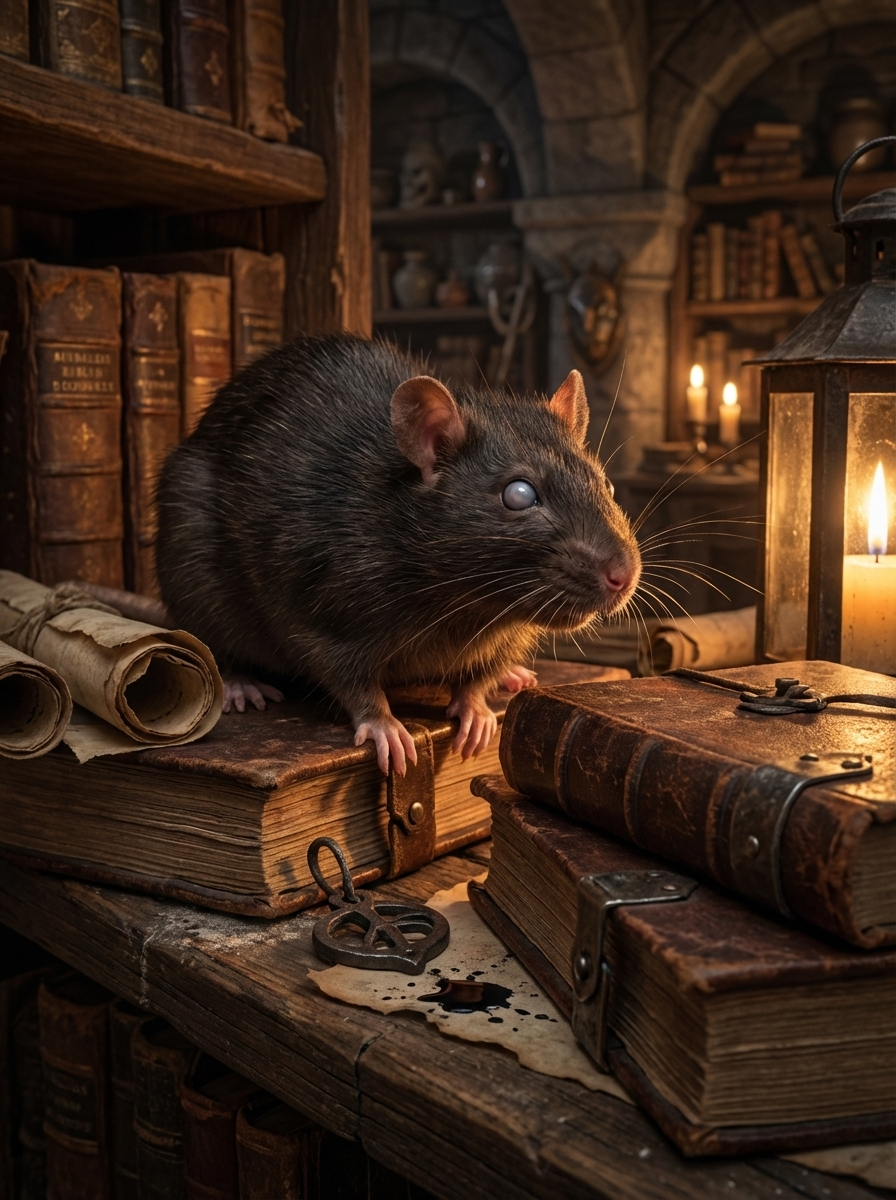
Sent by Sorvaine to Mags before her parents' murder — to develop her latent arcane potential before Tessara could train her in formal wizardry. Prepared as a familiar through the divine process, which left him blind in one eye and altered in intelligence and lifespan. Mags had already named him Plague — to vex her mother, who disliked rats — by the time of the ambush. He was present on the road that day. He survived the magic blast that killed Tessara, sustaining serious wounds to his left side — distinct from the blindness, which preceded the ambush. Mags carried him away without knowing he was anything other than her rat.
The birthday scene — Mags at twenty, at the herb garden behind Bresholm's kitchens on the night of her Morenn — is not his arrival but his activation. Ten years after the ambush, the bond deepens, communication sharpens, the witch potential begins to manifest. The thyme blackening around him is the first time she draws essence from the world, exactly as a witch would, without knowing it. She notices it as odd and dismisses it. Sorvaine watches through him as the connection locks in.
The Bond
Mags named him Plague to vex her mother, who disliked rats and said rats bring the plague. In the weeks before the ambush, a ten-year-old girl dragging a rat around the house — Tessara rolling her eyes, Harven pretending to be stern — is one of the last textures of normal life Mags has. The name itself is a small act of childhood mischief that becomes, in retrospect, the first move in a two-thousand-year-old game. Their communication developed naturally over years — first sensing his intentions, then assigning him a voice, then simply understanding him. By the time she's sixteen they communicate fully.
The Revelation
In Book Two, a letter from a Lirenne college scholar confirms what Plague is. The description of the familiar preparation process used by Sorvaine's church matches Plague specifically — the injuries, the blindness, the unusual intelligence, the extended lifespan. Sorvaine has been watching through him since Mags was ten. Every secret whispered into the dark. Every wound opened. Every moment of vulnerability.
The Road to Carnehue — Plague Goes to Ground
When Maren arrives at Bresholm to collect Mags, Plague disappears before the journey begins. He runs off without explanation. Mags is surprised — he has never done this before. On the road south, she catches glimpses of him from time to time: keeping pace, staying out of sight. She doesn't understand it.
On reread the explanation is clear: Plague recognized Maren as an Examiner and went to ground. This is significant because it is an act against Sorvaine's interests. Maren killing Mags would have been a clean solution for Sorvaine — one Plague actively prevents by removing himself from the equation. Sorvaine only knows what Plague chooses to reveal to her. He is not like other familiars. No explanation is given for why.
This is one of the earliest seeds of the ambiguity about whether the bond became genuine. Sorvaine sent him to make Mags a witch and report back. Protecting her from an Examiner was not part of the brief. He did it anyway.
A secondary consequence: without Plague close, Mags finds that some instinctive magic doesn't work. She reaches for something small and automatic on the road south and it isn't there. She does it manually instead, files it away without fully understanding what it tells her. The lesson — that Plague is part of how the magic flows — accumulates quietly across the journey.
Captain Whiskers — The Cover
After Elia joins the group, Plague engineers a scene in which he appears near camp looking for food. Mags tries to coax him — confused, because he still won't simply come to her the way he used to. Elia is watching. She believes she is seeing Mags half-taming a scrappy, battle-scarred wild rat.
Elia's response is immediate and sincere: delight. She names him. She begins with Sweetpea — catches herself, too cute — overcorrects toward dignity and lands on Captain Whiskers. Said with full commitment, as though commissioning an officer. Plague sits there looking like he has survived a war and has opinions he is choosing not to share. Mags' face does everything. Maren says nothing, which is the funniest response.
From this point forward Elia calls him Captain Whiskers, always sincerely. Mott uses it once, ironically. Ingle refuses to engage with it on principle. Mags never uses it. Plague never responds to it. He maintains the performance — slightly tamed, suspicious, occasionally hungry, not quite domesticated — hiding his intelligence until Mags' witchhood is plain to the group. Then he can be himself again.
Mags plays along because she has learned to trust Plague's instincts. She doesn't fully understand why he engineered this. She knows he had a reason. Elia accidentally solves a problem nobody asked her to solve and never knows she did it.
The Ambiguity
After the revelation, Mags doesn't cast him out. The question remains open: is he purely Sorvaine's instrument, or has whatever he was sent to be become something else over time? Maren, from his experience as an Examiner, notes that familiars sometimes exceed their programming. Sometimes what a god sends out into the world stops being purely what the god intended. Whether that's true of Plague is never definitively answered.
Book Three — The Active Conduit
The path to making the suicide spell viable runs through Plague. Edoine's math requires Mags to deepen the witch bond considerably — not drawing through him passively as she has done since childhood, but using him as an active conduit, deliberately and repeatedly. She does this knowing what it means: drawing closer to Sorvaine in order to destroy her, using the god's own instrument to build the weapon that ends her. Whether what Plague carries back through that channel — the deepening bond, the threshold crossing, the scale of what Mags is becoming — serves Sorvaine's awareness or works against it is part of the ambiguity that is never resolved. Sorvaine engineered this. Whether the engineer can see what is being built through her own instrument is a question the ending doesn't answer.
Maintaining the Ambiguity — Book Three
The balance of evidence across Books One and Two currently tips toward genuine agency (going to ground for Maren, engineering Captain Whiskers, the group deciding to keep him). To maintain the ambiguity through Book Three, the story needs one or two moments where Plague does something that could be read either way — helpful to Mags but potentially serving Sorvaine's interests, or briefly unsettling in a way that can't be fully explained. Not a betrayal. Not a crisis. Just a flicker of uncertainty. The reader who has decided Plague is loyal should feel a moment of doubt. The reader who suspects he's still an instrument should feel a moment of warmth.
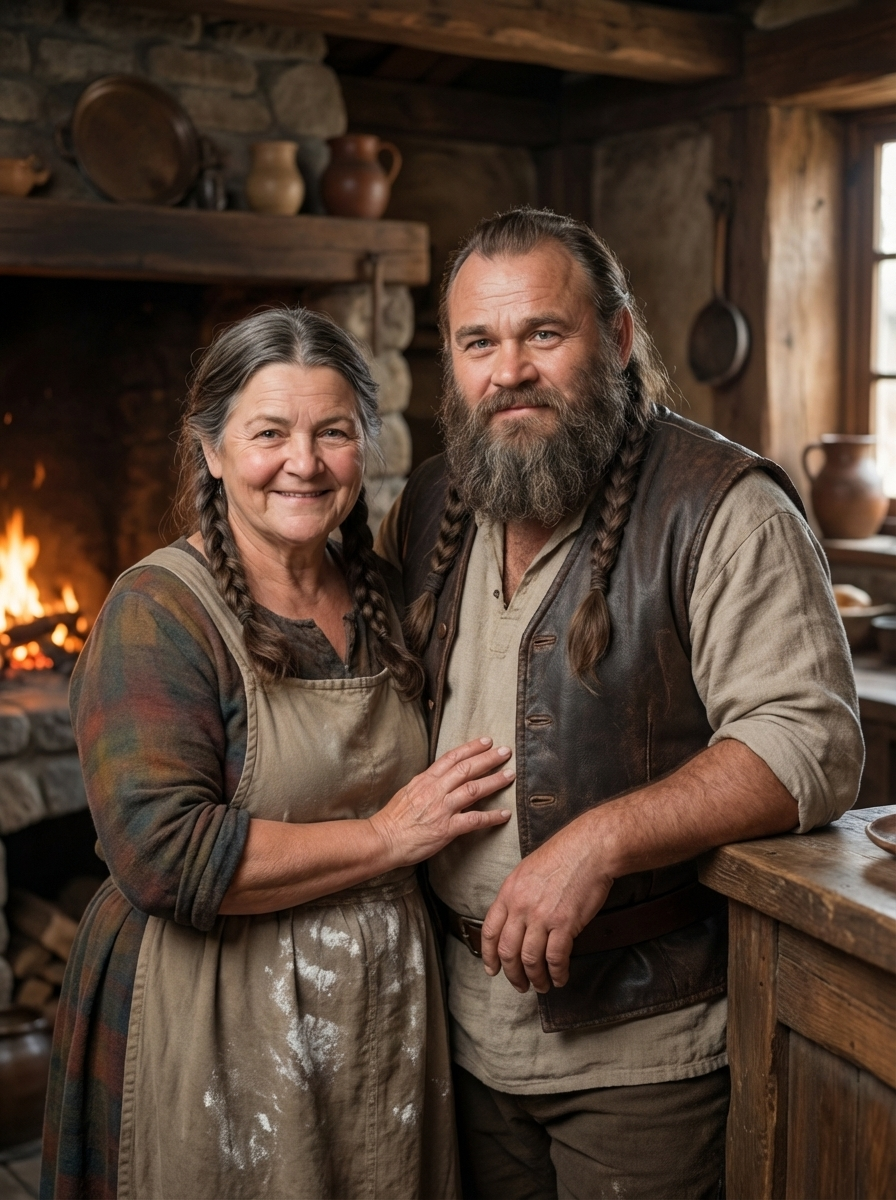
Their Role
Found Mags on the road near the ambush site, stabilized her, brought her back to camp. Their druid companion saved her life. Morgrym and Agna took turns sitting by her side through all hours. When the druid pronounced her well enough to travel they returned her to Carnehue, discovered the orphanage situation, bribed Eclesses (a sore financial blow for people who were by no means wealthy), and took her in. Their home — House Bres, known to outsiders as Bresholm — is a Bres clan settlement near Ketton in South Aldenmere.
Morgrym: believes busy hands make happy lives. Patient with Mags' endless questions in the mines. Furious on her behalf when Eclesses steals her inheritance. The birthday scene — "Have ye a party on yer mind then?" "Nay. I just wanted ye to know." — is one of the finest moments in all of Mags' backstory.
When they first brought Mags in, Morgrym recognized the graelin dagger among her few salvaged belongings as Bres clan work — his clan's work. He never said anything to Mags about it. He had no way to explain how her father came to carry it, and it seemed like the wrong kind of thing to make much of when the child had just lost everything. But he knew. It is the sort of detail that would have meant something to a Dern, quietly, without requiring any action.
Agna: warm, present, protective. Burns as a witch in Book One — accused by Sorvaine's agents to isolate Mags. This is the final straw that sets everything in motion.
Dern Kinship Terms — Mags' Usage
In Derni, Baldr is father and Moldr is mother. Mags calls Morgrym Morgrym — she has never adopted the kinship word for him. Agna she sometimes calls Moldr, but only in private moments when they are alone. Using the word in front of others would feel, to Mags, like a small betrayal of Tessara. The careful private accounting of divided daughterhood is visible in the register shifts — Agna in public, Moldr in intimate moments — and the reader who tracks the pattern will feel it without needing it explained.
The Morenn — Agna's Gift to Mags (Ch 2)
A Dern woman's coming-of-age rite is called the Morenn — held at twenty-five, marked by a Morenn ring her mother has made for her: silver wire woven with the mother's own hair, worked over months at the hearth. See the Dern race page for the full tradition. Agna performed Mags' Morenn at her twentieth birthday — five years early by Dern reckoning. The adaptation is the gesture's meaning: Agna would not wait for a Dern age Mags would likely never observe in Bresholm, so she brought the rite forward to meet Mags at her Alvar majority. Mags wears the Morenn ring on her right thumb from Ch 2 onward.
Agna's hair is dark going to grey at the time of the making. The ring is thin enough to be nearly invisible on Mags' thumb — a band of silver with darker veins of hair woven through. In ordinary light it reads as a simple band; up close it is unmistakably personal.
After Agna's death in Ch 7, the ring becomes the physical Agna that Mags still carries. A ring touch — involuntary, her thumb rubbing against her palm or her hand closing around itself — joins the pendant touch (Harven) and the scar touch (Tessara) as her three unconscious gestures of grief. Each gesture reaches for a different dead parent.
On the morning of the spell at Ossavar, Mags privately moves the ring from her right thumb to her left. This is not a ritual marriage claim — Mags knows she is bending the tradition past its original meaning, and she does it anyway because the ring is the closest thing she has to saying I love you to Edoine without saying it out loud. She has loved people all her life without saying so: Morgrym whom she never called Baldr, Agna whom she called Moldr only in private, Edoine whom she never named at all. The ring-move is the last private gesture of that pattern. The meaning dies with her.
Elia notices — the pale stripe around Mags' right thumb where the ring had sat for three years, then the ring itself on the left. Elia does not know Dern custom. She files the observation without understanding it and does not ask. The gap between what the reader knows (having learned the custom in Ch 2) and what the characters in the room know (nothing) is where the gesture's grief lives. Do not stage a Morgrym-decodes scene or an Edoine-realizes scene. Whoever is meant to understand will understand, or won't. The ambiguity is the point.
Their Fate
Agna is burned at the stake on a witchcraft accusation — but the mechanism is more specific than a simple frame-up. Eclesses filed the accusation against Mags, naming her as the witch. He traveled with the Examiners to testify, as the process requires. When the Examiners arrived at Bresholm, Mags was in hiding and couldn't be produced. Eclesses improvised under pressure — pivoted his accusation to Agna, claiming she taught Mags the craft. The thing that broke Agna's composure and caused her to slip was Eclesses saying Mags probably killed her own parents. She couldn't let that stand. One sentence, quietly said, containing knowledge she couldn't have if Mags had never returned from Carnehue. The Examiners heard it. The trial found its shape. Agna died in Mags' place, without knowing it, without being asked. That weight belongs to Mags for the rest of the trilogy. Morgrym is taken when he tries to stop it physically — processed efficiently, the way the institution handles obstacles. Not cruelly. Just moved through the system.
He survives. She finds him in early Book Three — broken in some way, not permanently, but she has to reckon with what was done to him. The damage is specific: years of isolation from clan, compounded by labor conditions. He's in a work facility, not a cell — the system found a use for him. The work is not mining, not craft, not anything the Dern relationship to labor dignifies. The isolation is the deeper damage — a Dern without his people, among strangers who neither understand nor care about his culture, for years. He hasn't broken in the sense of being destroyed. But he's smaller. The stubborn density that defined him has been slowly worn at. He's intact. He's not himself. The reunion echoes the quiet emotional register of their earlier relationship — the important things said sideways. She leaves him somewhere safe before the end. He is alive when she goes. She is not dying with nothing.
He does not know she has been searching for him when she arrives. Finding out is part of the reunion — and it comes out sideways, the way everything does between them. She mentions a specific facility name from a year earlier and he realizes from the timeline that she was looking when she was still in the middle of everything else. His response is in the Dern register: not broken open, not effusive. A long silence, and then something practical, and the practical thing carrying everything.
The Search Thread (Books Two and Three)
Mags pursues the search herself at every stop — local records halls, jails, anyone who might know. She is active, not passive. The search is visible enough to the group that they know what the silence means when she comes back from a records hall. Nobody makes it a conversation. Elia probably offers to help at some point and is gently deflected. Maren, when he returns in Book Two, finds out and says nothing — which is its own kind of acknowledgment.
Book One, Ch. 20: Mags checks the Crossgate records while at the Carnehue parish hall. The clerk finds the transfer record — Morgrym was processed and moved to "eastern processing" roughly two months ago. Where specifically? The clerk can't say. Work camps, transfer stations, labor facilities — the system doesn't track people after the first transfer. The information is genuinely unactionable. She writes down what there is to write down and leaves without him.
Book Two, Ch. 2: The second check — the trail has cooled. Before leaving for Lirenne, Mags goes back to the Carnehue records hall. The facility that had him has transferred him again. The gap is widening because she waited. She can't follow Morgrym's trail overland; the investigation is pulling the group across the sea to Lirenne, and they are waiting. The wall is the same but the guilt is doubled — she had the information in Book One and chose the investigation over him.
Book Two, Ch. 6: At the port, before the crossing. She stops at a municipal records office while the group arranges the ship — ten minutes. The facility named in Ch. 3 transferred him five months ago. Destination listed as "H'analaise circuit, northern district." The trail has crossed a border. She stands outside the records hall for a moment before walking back to the harbor. The group has seen her do this enough times to know what the silence means.
Book Two, Ch. 11: Mags is already carrying two impossible things simultaneously — the Umber revelation and the knowledge that Morgrym is somewhere in H'analaise in a circuit of facilities that doesn't have a central registry. A brief interior beat: she puts Morgrym in the same place she puts everything she can't act on yet, and keeps moving. Both facts are too large to hold at once.
Book Two, Ch. 25–26 (aftermath): In the quiet after the public power use, when the group is safe in a room and nobody is saying the thing they're all thinking — one interior line, not interrupting the scene's silence. She thinks of Morgrym. He is in a facility somewhere that doesn't know her name yet. It's not a plan. Just a thought that surfaces in the quiet.
Book Three, early: The search goes active with real resources for the first time. She's now publicly known — a liability for almost everything, but for navigating bureaucracy her name moves people now, sometimes out of fear, sometimes out of something else. She follows the H'analaise circuit transfer by transfer: six facilities over three years, each one logging him in and shipping him out. The trail gets warm.
The Dagger Beat
Morgrym has known since the beginning that the graelin dagger was Bres clan work — he recognized it among Mags' salvaged belongings when they first brought her in, and said nothing, because it seemed like the wrong kind of thing to make much of when the child had just lost everything. The Book Three reunion is the right moment to finally say it out loud. Not as a revelation — just as something he's held for years and decides she should know before the end. He tells her it's his clan's work. He tells her her father carried it without knowing what it was. How Harven came to have it is beyond what Morgrym knows — the chain stops at recognition. He doesn't have a theory. He just wanted her to know. She looks at the dagger. It's the same dagger it has always been. It isn't.
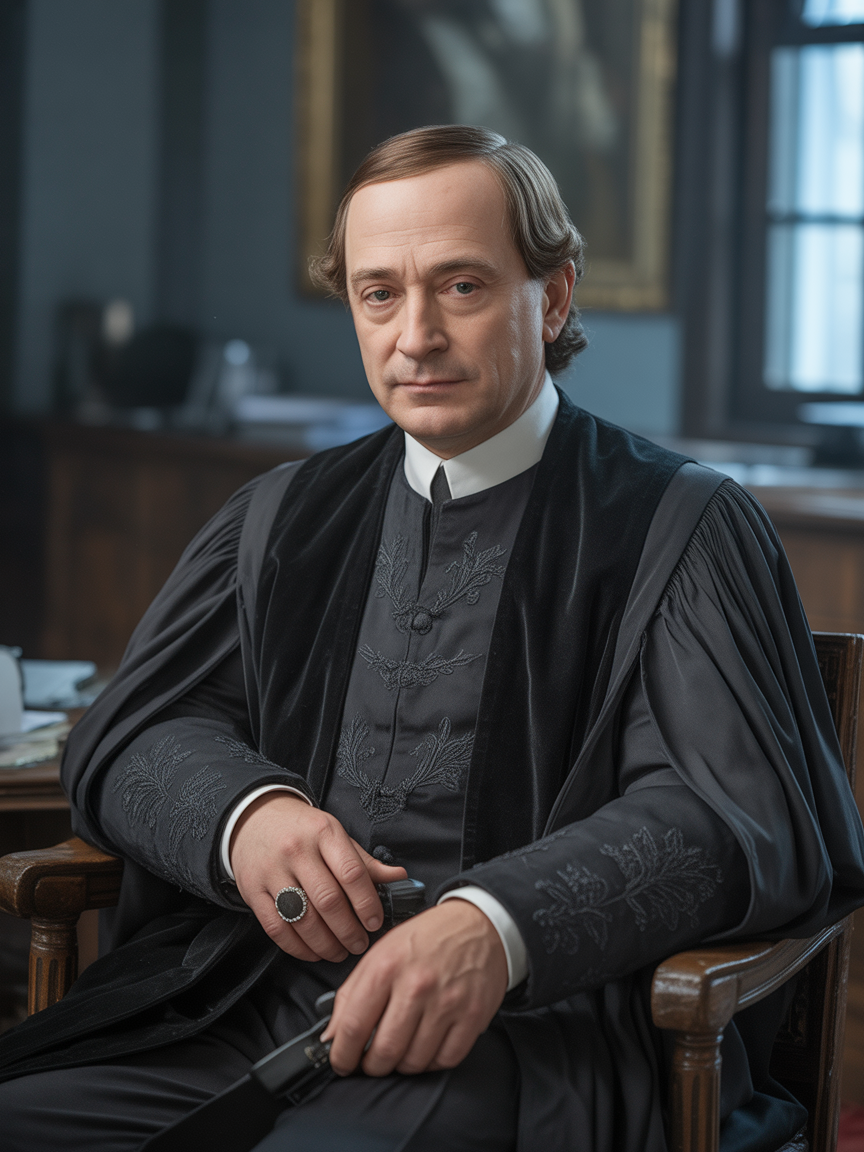
Refused to take Mags in after her parents' death. As magistrate, placed the family estate in escrow and administered it himself for ten years. When Mags returns at twenty, he claims taxes, fees, and upkeep have consumed everything. He gives her thirty-two gold pieces. His office has been refurnished with her family's money.
He used the inheritance to fund his divorce from his first wife — whom he blamed for their childlessness — and his remarriage to a younger woman, done in a legally defensible but morally bankrupt way. The second marriage has also produced no children. He has never once turned that question around on himself. The problem, in his accounting, has always been his wives. He does not know about the Umber bloodline. His motivations are pure greed and self-interest — the inheritance was there, the child was gone, the paperwork was his to manage. He didn't need to hate her. Indifference was enough.
After Mags' confrontation at his door — the argument, the near-punch, the wife's offer and his refusal — Eclesses decides he needs Mags gone more permanently than a magistrate's paperwork can achieve. He files a witchcraft accusation with the Thagari naming Mags specifically, then travels with the Examiners to Bresholm to testify in person, as the process requires. He is not a brave man. He came anyway because the accusation required his presence and because he told himself this was just procedure — the Examiners would rattle the household, frighten Mags, and she would leave and stop being his problem. He did not intend anyone to burn.
When the Examiners arrive at Bresholm, Mags cannot be found. She is in hiding. Eclesses' testimony has no body to attach to. He improvises under pressure — pivots his accusation to Agna, claims she taught Mags the craft. He says it with the confidence of a man who has found the system accommodating before. During the trial he says Mags probably killed her own parents — the specific lie that breaks Agna's composure and causes her slip. He does not believe it. He said it because it was the thing that would make the room listen. Agna burns. Morgrym is taken. Eclesses got a result. It was not the result he intended, and he has to live with that — the man who pulled a lever not knowing what it was connected to, and finding out too late.
The original witchcraft accusation against Mags remains open in the Thagari system. It becomes effectively moot when she is declared a traitor to the crown in Aldenmere later in Book One — at that point the witchcraft charge is the least of her problems. But in the intervening chapters she is technically a named suspect in an open investigation, which informs how she moves through the world and sharpens the weight of Maren's almost-betrayal in Part Three.
What Sorvaine knows and Eclesses does not: he is infertile. The Umber line cannot continue through him under any circumstances. He was never the real threat — merely a loose end. Mags was always the one Sorvaine needed to watch. His death tidies the board; her continued existence is the problem.
He dies in Book One — not at Mags' hand, and not cleanly Sorvaine's work. The circumstances bring Maren into contact with him — Sorvaine's hand, perhaps, in the arrangement, a nudge that puts two men in the same place at the wrong moment. An argument. Maren's fist at the wrong moment. An accident that kills a man who was already marked as a loose end. Whether Sorvaine engineered the meeting, the argument, or simply let the pieces fall once they were in proximity is deliberately unclear. The result is the same: Eclesses dies, Mags finds out, and the list had his name. The name is gone before she acts on it. She never resolves what she would have chosen.
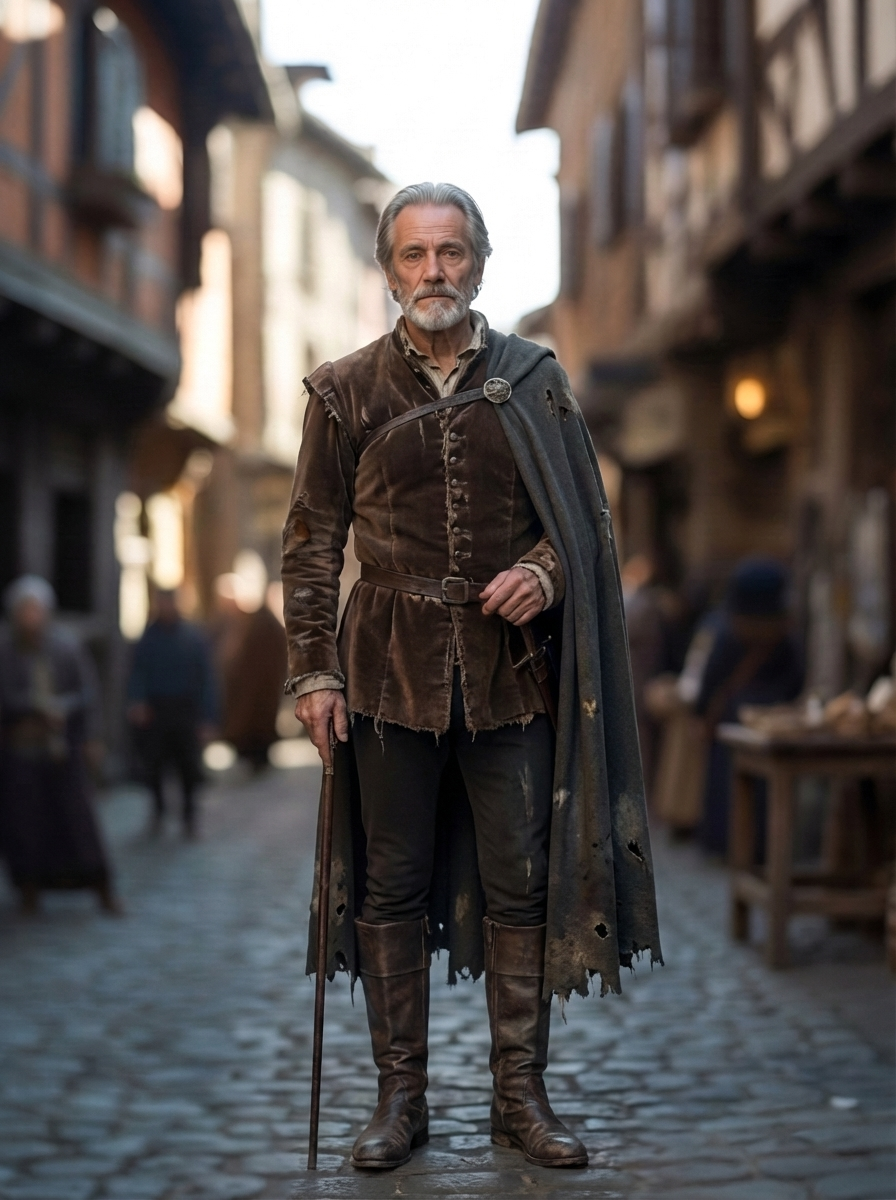
An older man, employed by Harven to care for his daughter and home. Maintained a facade of the prim and proper manservant, always put-upon, but truly cared for the family and loved Magdelia. Was told the child had been killed alongside her parents.
Encountered by chance in the Carnehue market when Mags returns at twenty. The reunion is bittersweet — he takes time to recognize her, not placing the grown woman until she ties the black silk ribbons and he sees Tessara in her face. He brings her to his modest room above a carpenter's shop and produces a wooden box he has kept carefully for ten years. Inside: Tessara's personal spellcraft journal — her private research document, distinct from the teaching treatise Mags already carries — the black silk ribbons Tessara wore in her hair when gardening, and the pendant on a worn cord, an old knotwork piece in a design Mags has always known as an Aelwold Rose. The pendant was Harven's. Zirul assumed it was a family piece. He kept it because it seemed personal. The dagger is not in the box — it was on Harven's body at the ambush and Morgrym recovered it then.
Zirul never liked Eclesses — not before the deaths, not after. He watched Eclesses arrive at the Estuv house and dismiss the staff and begin picking over the property, and he has carried his contempt for that day for ten years without a word to complain to. His own circumstances are reduced but he does not speak of this. He receives Mags in his small room with the same grace and dignity he always had.
He lives above a carpenter's shop in Carnehue. His address should be tracked — he becomes relevant again if Mags returns to the city, and he is, at this point in the story, the only living person who knew both her parents personally and is genuinely on her side.
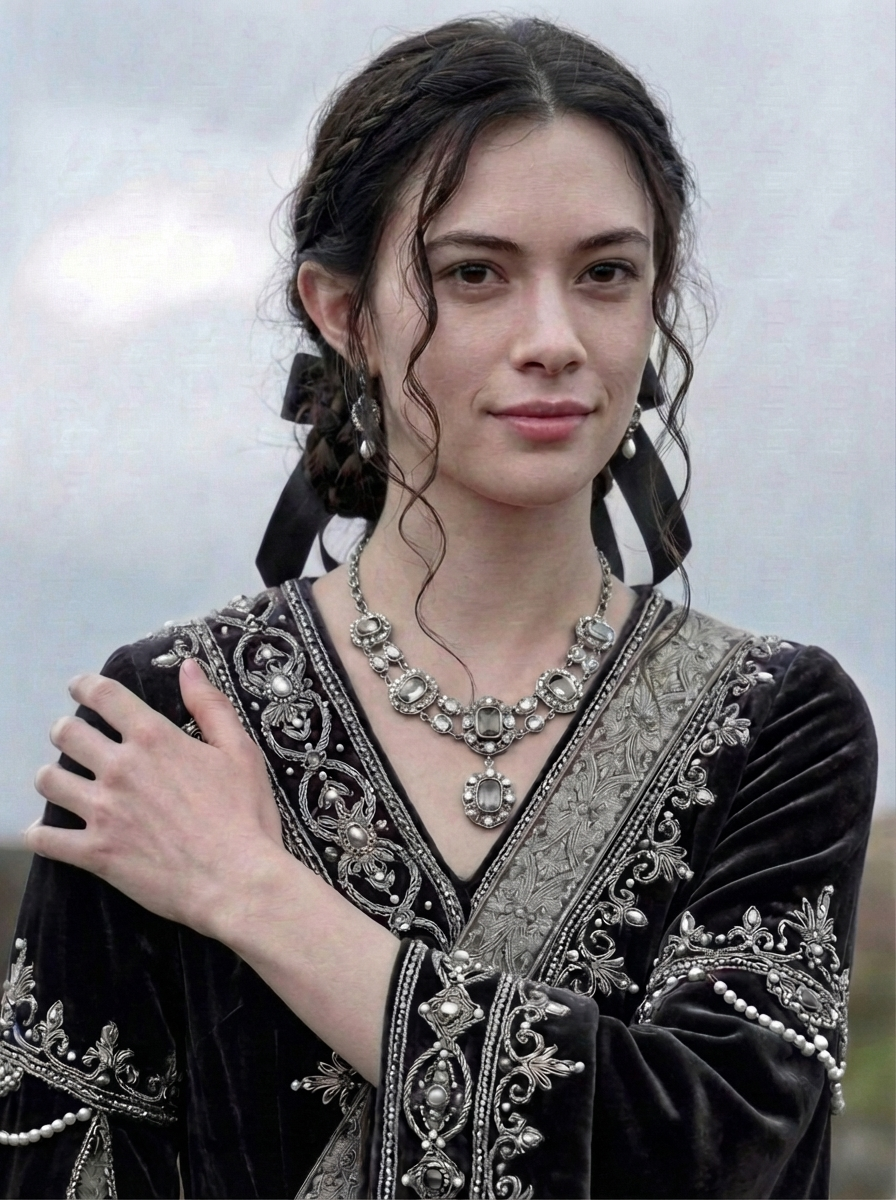
A principled woman of genuine character. Sharp-eyed, incorruptible, and observant enough to follow money where it led — even when it led somewhere dangerous.
Physical Description
Pale complexion, the slender Alvar frame and fine features of her people — the proportions that read as elegant on her and as sharp on Mags. Black hair worn long, often tied with silk ribbons. Green eyes flecked with gold. Mags has her face and her hair; the eyes are Harven's. That combination is what catches Zirul the moment she ties the ribbons, what makes Mave Solloway's breath snag at the door — her mother's face carrying her father's eyes back into rooms Tessara used to move through.
The Investigation
Over time Tessara had noticed the accelerating growth of Sorvaine's church and thought poorly of it — not from personal hostility but from a practical administrator's instinct. She could see that an enormous amount of money was flowing through the church's institutional machinery, and that the Shippers Guild — whose waterfront operations she oversaw as Judge Magistrate — had been quietly taken over by Sorvaine's operatives. Lower fees for church-affiliated merchants, looser regulatory enforcement, favorable tariff structures. And the inverse: deliberate obstruction for interests that ran counter to Sorvaine's expansion. She had connected the Guild to the church. She did not know the prophecy. She was simply following corruption wherever it led.
The immediate crisis was a planned expansion of Carnehue's harbor — a significant commercial project the Guild had been pushing through council. Tessara moved to stall it, citing procedural concerns, buying herself time to gather more evidence before she could be forced to a vote. She had not yet laid out the full scope of her suspicions publicly — not to colleagues, not officially. She was careful. But she had talked, in fragments, to people she trusted. And she had discussed it openly with Harven, who understood the shape of what she was into.
The Guild tried bribery first. She refused without hesitation. At that point, with the harbor expansion stalled and a judge magistrate who knew too much and couldn't be bought, the calculation changed. She had requested a private meeting with Prefect Dell Taggert at his country estate — intending to lay out what she had found and request additional resources to pursue it formally. She was two days from that meeting when she was killed. The Prefect never learned what she knew. The harbor expansion broke ground within the year.
She proved a more difficult adversary than expected even at the end. When Dexel attempted to assault her, she struck first — using concealed catalyst dust to set him on fire with his own school of magic. She dodged Devon's arrow well enough that it caught her shoulder instead of her heart. She was killed by Dexel's retaliatory fire spell, cast after he managed to put out the flames she had set on him. Osmen killed Dexel immediately afterward.
As a Mother
She had begun to recognize Mags' latent arcane potential and likely intended to train her in formal wizardry when she was older. That intention was interrupted by her death. The spellcraft treatise she read often — now in Mags' possession — is her teaching Mags magic from beyond the grave.
The treatise is not only a record of Lirenne spellcraft tradition. Tessara was using it as a research document — tracking something she was trying to understand about Mags' specific latent capacity. The margins contain notations that Mags has always read as technical annotations: numbers, ratios, development curves written in the shorthand of someone recording a subject at intervals. They are that. They are also a mother measuring her daughter's potential across years, preparing a curriculum she never got to deliver. The notations are oblique enough that Mags never recognized what she was reading — they don't name her, they don't use the word "child" in any way that would signal their purpose. They look like theory. They are love expressed in the only language Tessara fully trusted.
There is also an unfinished section near the end — a chapter that begins and stops mid-thought. The Lirenne scholar who recognizes the treatise in Book Two knows what Tessara was building toward. The chapter that doesn't exist is the one that would have been the beginning of Mags' formal instruction. It ends where Tessara's life ended.
One phrase in particular carries a double meaning Mags never knew. An Alvari technical term Tessara uses several times — readable as standard spellcraft notation — also functions in Lirenne academic tradition as a term of intimate address, the way a teacher names a student they have specifically chosen. The scholar reads it aloud in context and pauses. That is what it means here, she says. Not the technical meaning. The other one.
Origins
Her origins trace to Lirenne — the island nation that is the Alvar homeland and home of the magic colleges. She wrote Truth is Divinity — L'lane's civic motto — inside the front cover of her spellcraft treatise in Aevornian. Mags sounded out the characters for eleven years without comprehension. The translation arrives in Book Two Ch 5, when Elia reads the same phrase on the harbor arch in L'lane.
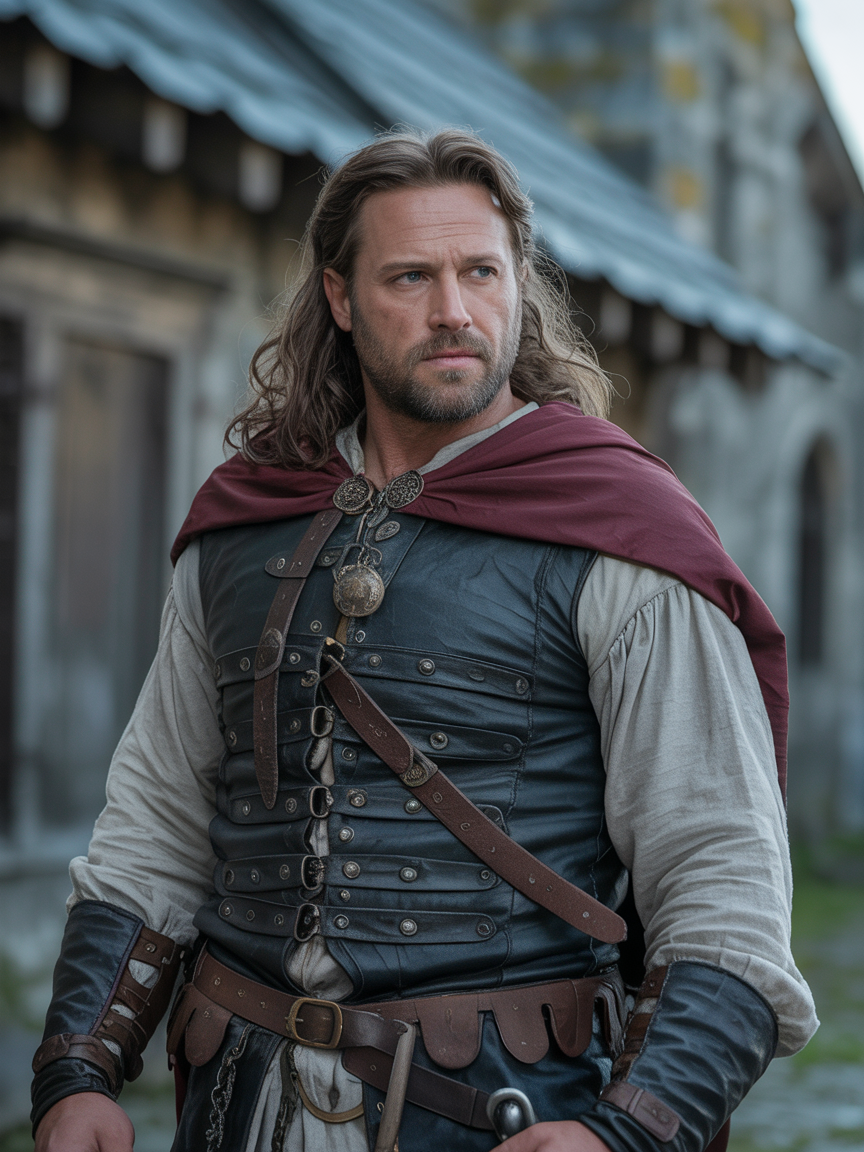
A good man and a good father. Tessara talked to him about what she was finding — not everything, but enough that he understood the shape of it. He knew she was carrying something dangerous when they set out on that road. He insisted on accompanying her anyway. That was not naivety. That was a choice. Killed in the initial assault, which targeted him as the primary physical threat. Died before he could protect his family.
His graelin dagger — ceremonial in origin, Bres clan work, worn regularly at his belt — is now carried by Mags. A fellow guardsman gave it to him as a practical gift, neither of them knowing what they were passing along. Harven acquired it secondhand and had no idea of its provenance. The craftsmanship is Bres clan work — something only a Bres clan Dern would recognize on sight. Morgrym recognized it immediately when Mags arrived as a child and said nothing. Author-level knowledge only: the chain beyond the guardsman gift is not traceable and does not need to be.
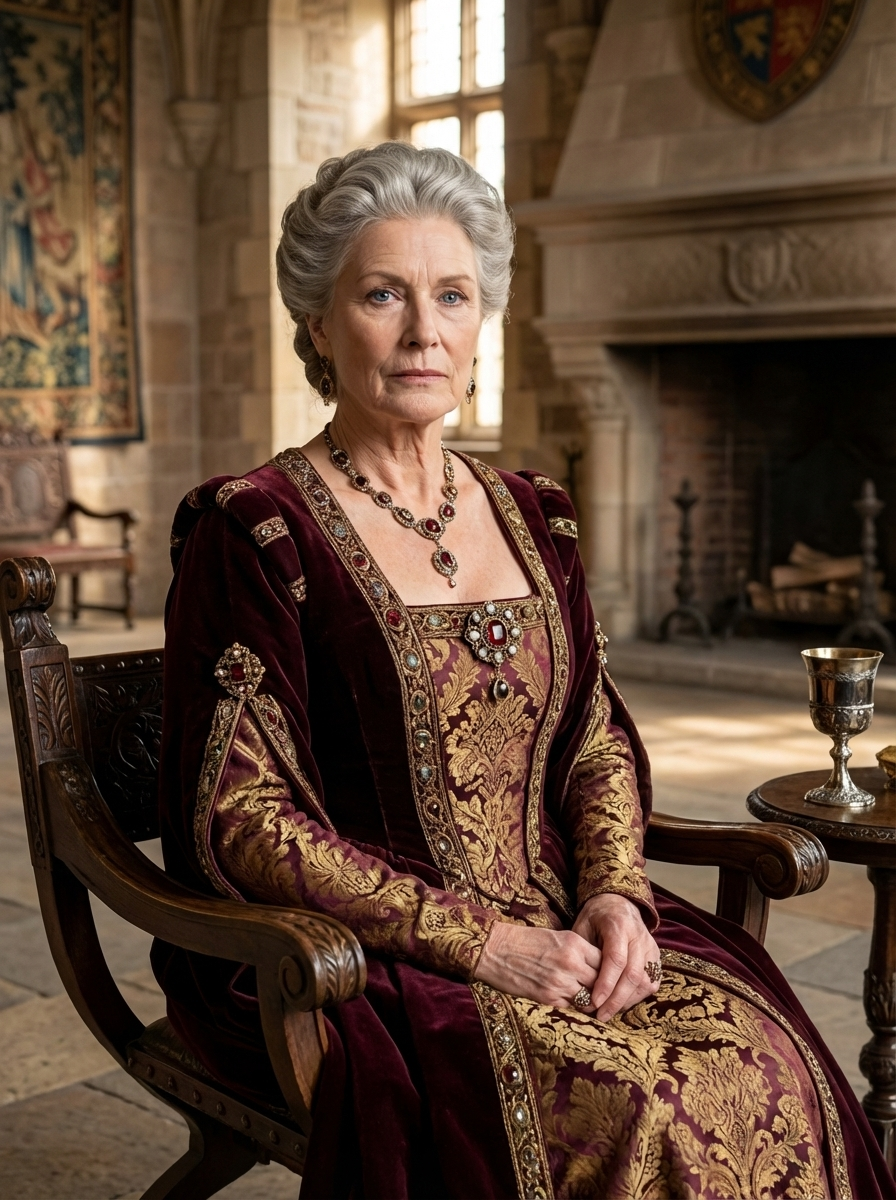
Who She Is
Brynn is the sister of Mott's mother — not royal by blood, not at court by position. She came to Aldenmere when her sister married Aldric, and she stayed. If Mott's mother is dead, Brynn stayed after her reason for being there was gone, because the children were still there. Because Mott was still there. She has no institutional role that requires her presence. She is there entirely by choice, held by love and faith in roughly equal measure — and for Brynn those two things have never been in conflict.
She is not part of Sorvaine's machinery. She is not Brennan. She does not work the church's political structures or manage its commercial relationships. Her belief is entirely personal: she thinks the six fragmented kingdoms cause more suffering than a united realm would, she thinks Sorvaine's faith provides the moral foundation that unity requires, and she has believed this long enough and consistently enough that it is simply who she is. Nobody engineered her faith. Nobody needed to. She arrived at it herself and has never found a reason to leave.
This is what the story needs her to be. Not a villain. Not a dupe. A person whose belief is real and whose argument is not without merit — and who is used, without knowing it, by the god she worships to accomplish something that will cost her everything.
Her Relationship with Mott
She watched him grow up. She disagreed when he ran from his Cardinal destiny — not bitterly, not as a rupture, but as a sustained quiet disappointment that coexists with intact love. She is waiting for him to come back to the right side. This is not stubbornness; it is faith applied personally. She believes Mott will eventually see what she sees, the way she believes Sorvaine's plan is good, the way she believes Unification is right. Her belief in him and her belief in the cause run from the same source: a fundamental conviction that the good thing will eventually prevail.
When he ran, she didn't expose him. When she sees him in the early encounter — in disguise, apparently invisible — she says nothing and does nothing that would draw attention to him. She protects him instinctively, the way you shield a child before you think about it, even while disagreeing with everything he has become. He does not know she saw him. She carries that quietly until Book Three.
The Two Appearances
Book Two Chapter 2 — Carnehue Harbor
The group is at Carnehue's harbor arranging passage to Lirenne. Mott spots Brynn in the port crowd — she is there on church business, or court business, or simply passing through. He is in his cover as a traveling steward from a minor northern house. He chooses not to approach. He believes she hasn't seen him.
She has. She recognized him immediately. She says nothing — does not call out, does not alert anyone, does not send word. She watches him from a distance and lets him go. Whether this is love, or mercy, or the quiet conviction that he will come back on his own, is left to the reader. She doesn't examine it. She just does it.
This scene is rendered from Mags' POV. Mags notices the woman before Mott does — her gaze finding Mott a half-second before he sees her. Mags catches the full sequence: the woman's recognition, her deliberate silence, and Mott's evasive reaction. Mags files the specific detail that nobody else caught: the woman saw Mott first, and her silence was a decision, not an absence. Mags does not mention this observation to Mott. The detail sits dormant until Book Three, when Brynn names the port encounter — at which point Mags' stored observation becomes the reader's proof that Brynn is telling the truth. Mott will be surprised. Mags will not.
The first-time reader finds the scene unremarkable — Mott watching someone he knows from a safe distance and choosing not to engage. A reader returning from Book Three will see the second half of the scene that wasn't on the page.
Book Three — Aldenmere (Interlude — Mott: The Cage)
When Mott returns to Aldenmere to face his father and the war, he finds Brynn first — in a church compound in Ashton Cross, a recently occupied town in northern South Aldenmere. The ten-pointed star is fresh on the lintel. The specific order of the space carries her imprint. She is in the ecclesiastical apparatus following the advance, not in Sosamyra.
She names the port encounter immediately — she saw him, she knew, she said nothing. This retroactively transforms the earlier scene: his safety was not invisibility. It was her choice.
The confrontation is not a shouting match. It is two people who love each other, on opposite sides of a question that has become a war, saying true things that do not resolve. She is not wrong that the fragmented kingdoms have bled for centuries. He is not wrong about what Sorvaine is. Neither of them can give the other what they need. The scene ends without either of them winning it, because that is the only honest ending for a scene like this.
Despite the confrontation resolving nothing between them, Brynn gives Mott the route to Aldric — Greyminster, the command headquarters behind the advance. Her intelligence is precise. She helps him even while disagreeing with everything he has become, because the instinct to protect him is older than the argument.
She survives the trilogy — a living true believer whose god may be destroyed without her knowing it. A living Brynn is more thematically devastating than a dead one: the faith persists, the belief continues, and the reader carries the weight of knowing what she doesn't. She never learns that Sorvaine engineered the Movement she believed in.
What She Never Knows
The Unification Movement was Sorvaine's project from the beginning — engineered through Aldric because he was the right instrument. Brynn's faith in Sorvaine is genuine. Her belief that Unification is righteous is genuine. Neither of those facts protects her from being a tool. She continues believing without knowing the ground she stands on was laid by the god she prays to, for reasons that have nothing to do with the good she believes she is serving. The faith survives. The believer survives. The manipulation is invisible to both.
Mott carries this. The knowledge of what her faith was built on, and the certainty that she will never know it, belongs entirely to him after she is gone. There is no one to tell. There is nothing to do with it. He simply has to hold it.
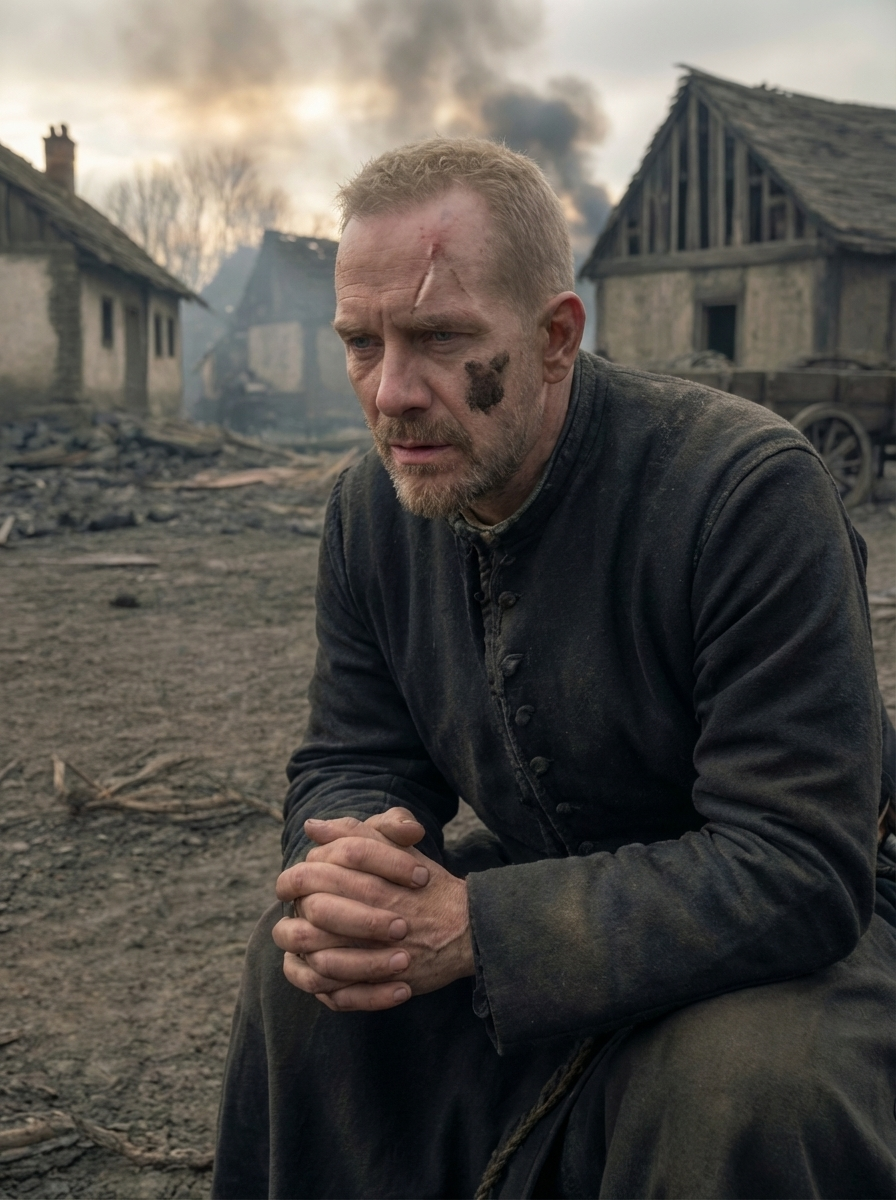
Background
Deverin was a parish priest whose town was destroyed by the war — the same war his church's leadership helped engineer, which he doesn't know and wouldn't believe. He is now a refugee on the road, carrying whatever he grabbed when he fled. Not a priest's traveling kit. A refugee's essentials. The liturgy he carries in memory. The gesture costs nothing. Whatever he can find serves the rest.
First Appearance — Book One, Chapter 18
The group passes through the ruins of a town — burned structures, mud, smoke, other bodies too numerous for one man to ever reach. Deverin is in the ruins performing burial rites for one body. He vaguely intends to get to the others. It is clear to everyone watching that this is not going to happen. He doesn't appear to be thinking about that. He is thinking about the one in front of him.
The ceremony is improvised — no borderwick tapers, no proper materials, the star scratched in the dirt with a stick. The words delivered from memory because memory is all he has. He says them carefully because the words are owed whether anyone is watching or not. The form is incomplete. The intention is whole.
Elia stops. The group keeps moving a few steps before realizing she isn't with them. She watches. Something in it catches her — not the scale of what he can't do, but the specific dignity of a man doing the one thing in front of him. She speaks to him briefly. He is kind without performing kindness. She rejoins the group and says, without looking at anyone, that this is what she means when she says the church is good. Nobody argues. Nobody agrees.
The scene holds two readings simultaneously without resolving them: the futility of the war visible in the ruins around him; the grace of the one act visible in the man himself. The prose doesn't choose. Neither does the group. Elia names one truth. The other sits in the silence.
The birthmark makes him memorable. She does not forget faces.
Second Appearance — Book Three, Chapter 4
The group passes through the aftermath of a recent battle — the harder route forced on them by the treason charges, the war's leading edge already in this territory. Among the unburied dead is a man with a strawberry birthmark covering his right cheek. Face down in the mud. Deverin. Dead in a battle his church helped engineer. No rites for him. Nobody is coming.
Elia stops. She doesn't say anything. She looks at him for a moment and then keeps walking. The group keeps walking. Nobody says the thing. They don't need to.
The observation she made in Book One is still true. The local goodness she witnessed was real. It just doesn't protect the person she witnessed it in. Something can be genuinely good at the local level and genuinely monstrous above it — and the local goodness is partly what makes the monstrousness possible. It is the face that keeps people believing. Now the face is in the mud, and the thing it belonged to is the same thing that put it there.
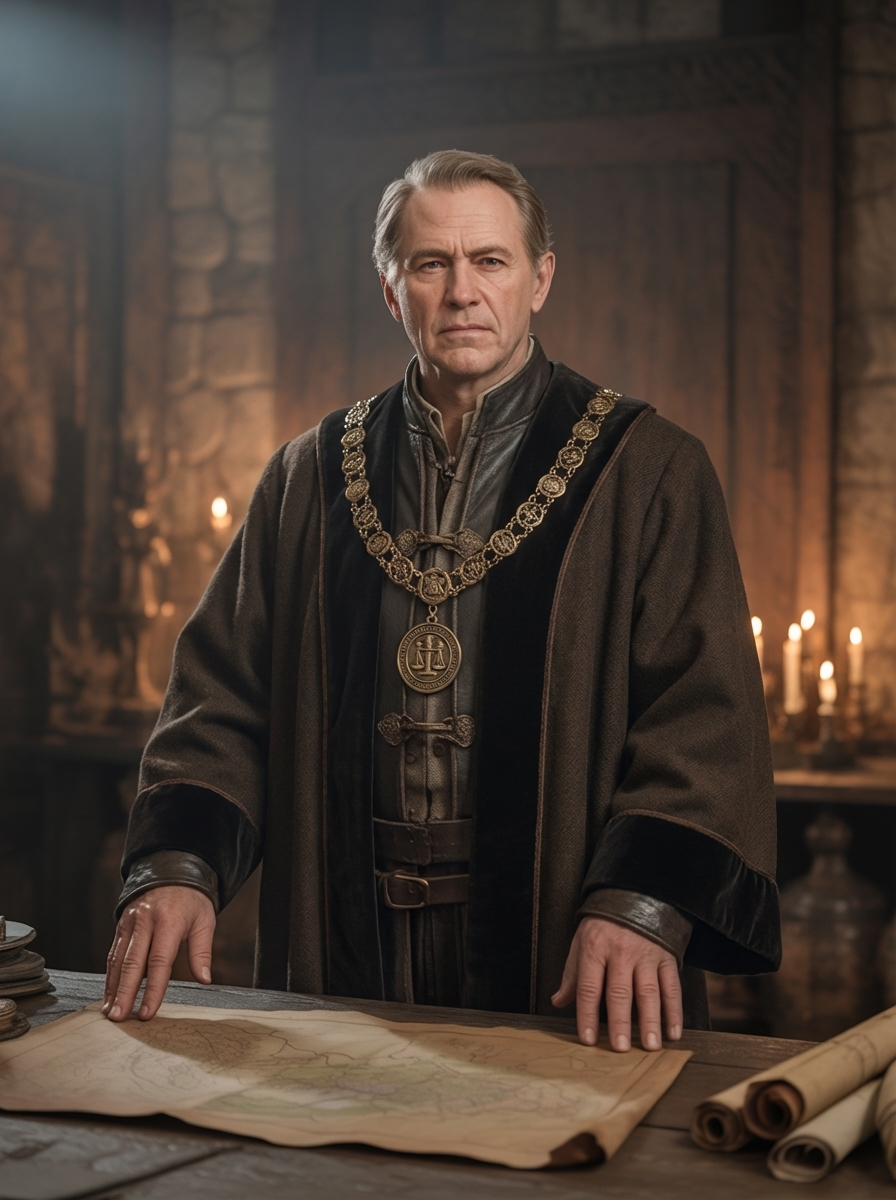
His Situation
Tessara Estuv was his Fourth Aldward — a judge magistrate for the waterfront ward under his broader oversight. She had requested a private meeting with him at his country estate. She was going to lay out what she had found about the Shippers Guild and Sorvaine's institutional machinery, and request additional resources to pursue it formally. She was killed two days before that meeting.
Taggert never learned what she knew. The meeting was never held. The harbor expansion broke ground within the year. He is a practical man — observant enough to have noticed things that didn't quite fit after her death. The Guild's behavior shifted. The waterfront ward settled into a quietness that didn't entirely make sense. He didn't have enough to act on. He never had a framework for what he was noticing.
He also carries a specific and unresolved guilt: one of his own household staff passed word to the Guild that the meeting was scheduled. He doesn't know this. Mags does.
The Scene — Book One Ch. 22
Mags comes to Taggert at the top of the Carnehue thread. He is not the villain — he is the man who should have been Tessara's ally and was protected from that role by the people who killed her. She tells him the shape of what Tessara found and where she was going with it. He listens. What she brings confirms and contextualizes things he has been holding without framework for ten years. He is not on the list. He is not an enemy. He is a door.
What he can offer: institutional standing, resources, the ability to act on information in ways Mags cannot. What Mags can offer him: the shape of what happened, the specific knowledge that Tessara's death was not random, and the direction the thread goes above the Guild. Neither of them gets everything they need from the exchange. But they both get more than they had.
Whether Mags tells him about the household aide who passed word — Mirin Cole, whose name she has, whose death she confirmed in a parish register — is a drafting decision. She could tell him. She could decide it costs him something he doesn't need to carry, and keep it. Both are honest to who she is at this point in the story. The scene leaves this open.
Book Two — Waypool
In Book Two, Osmen orders Taggert collected from Carnehue and brought to Waypool — a church-controlled town in southern Aldenmere — for questioning. The Thagari's cross-border authority covers witchcraft investigations, and Taggert harbored a suspected witch and obstructed a Thagari inquiry. The ecclesiastical justification is sufficient on paper. In practice, this is an extrajudicial abduction of a senior civil administrator of a neighboring kingdom — one more piece of Aldenmere treating South Aldenmere as something less than sovereign. By the time anyone in Erish understands what happened, Taggert is already in a room in Waypool. Mags does not know this is happening — she is on the sea heading to Lirenne. The person who helped her most is being extracted because he helped her.

A fixer in Fenwick who has made himself indispensable to people who need things done quietly. Maintains a pigeon loft with birds from multiple city lofts — a Carnehue bird, among others — as infrastructure for his message network. Edoine Tull works in the yard below his loft and handles correspondence and pigeon logistics as part of a regular working arrangement. Not friends. Just useful to each other.
Maren Lull has used him before. When Morgrym is taken by the civil authorities after Agna's burning, Maren proposes the Fenwick detour specifically because Bran understands how the civil transfer system works. Bran confirms Morgrym was taken to Crossgate Keep in Carnehue and provides the name Tomas Reck as the contact to see — but notes the transfer paperwork is already moving. He sends a pigeon to Carnehue to confirm Morgrym's current status; the reply takes three to four days.
Bran knew Harven Estuv tangentially — a crossed path, a professional memory. He offers one small true thing about who Harven was in the world. Mags receives it quietly.
He does not reappear in person after Chapter 9. His connection to Mave Solloway — a retired Guild official he has used as a paid informant — reaches the group through Edoine, who sent Bran's correspondence to Mave and knows her name, location, and buyable nature from that work.
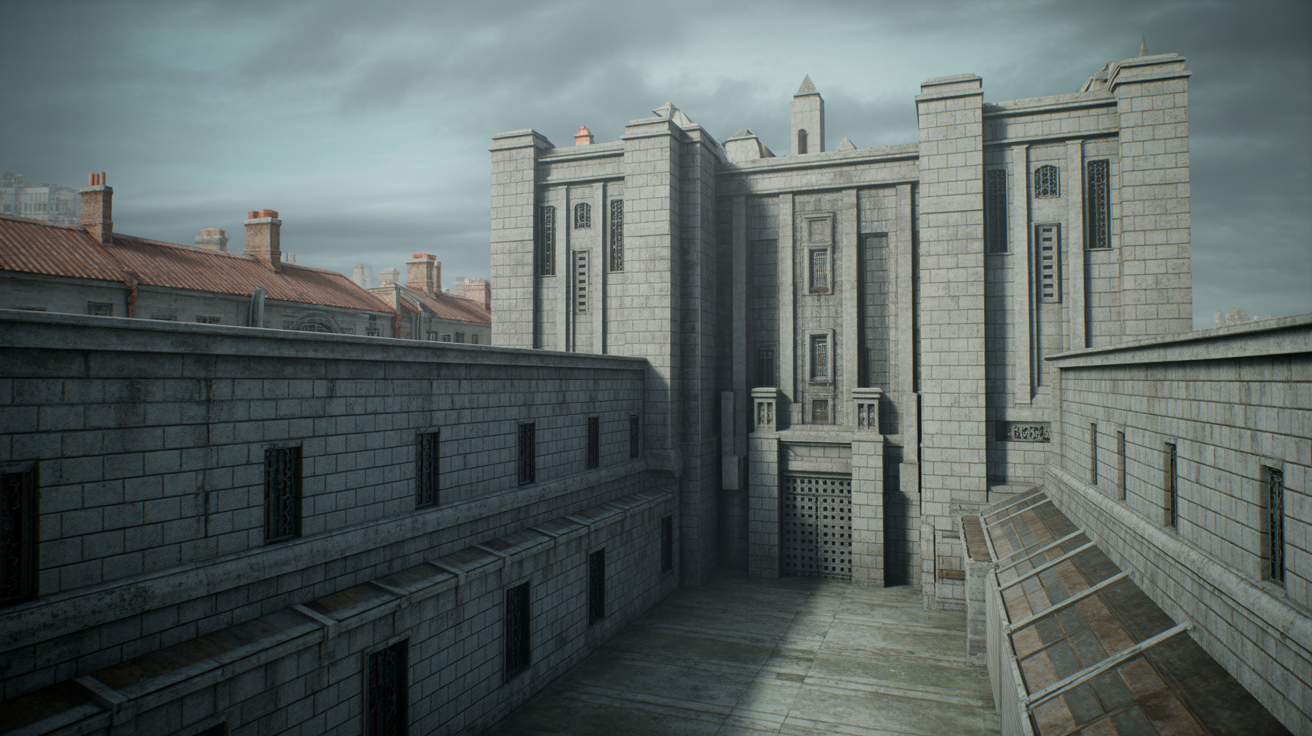
Carnehue's civil detention facility, formally Crossgate Keep but known simply as Crossgate. Morgrym Bres is transferred here after being taken by the civil authorities following Agna's burning at Bresholm. According to Bran Setter, Crossgate is overcrowded and the transfer paperwork moves quickly — Dern are not typically held in Carnehue long-term. By the time Mags and Maren arrive in Carnehue, Morgrym has already been transferred east. The trail goes cold from here, eventually dispersing him through a circuit of H'analaise facilities over the following years.
Tomas Reck is the contact at Crossgate — a records clerk or facility aide who can check transfer status. Bran Setter's name gets Mags access to him.
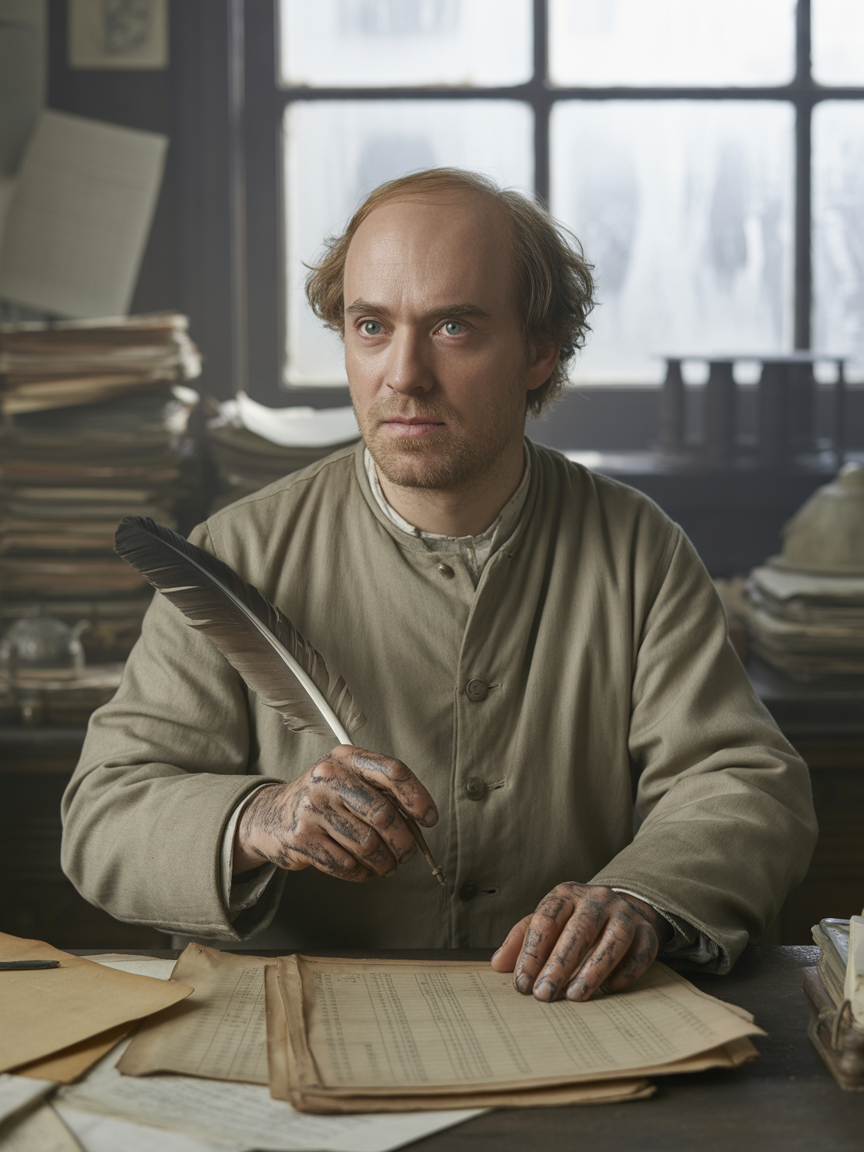
Bran Setter's contact at Crossgate Keep. Knows how the civil transfer system works and can check the status of a specific prisoner. When Bran sends a pigeon to Carnehue confirming Morgrym's status, it is Tomas Reck who replies. His reply confirms Morgrym is still at Crossgate — for now — but the transfer paperwork is moving. When Mags checks the records hall in Carnehue (Book One Ch. 20), the Crossgate transfer record shows Morgrym was processed and moved to "eastern processing" — but the clerk can't say where specifically. Work camps, transfer stations, labor facilities — the system doesn't track people after the first transfer. The trail eventually goes cold across H'analaise.

Who She Is
A professional operative in Sorvaine's church infrastructure, reporting to Osmen. She runs field operations using standard church operational doctrine — positioned observers, evaluating distance, coordinated withdrawals. H'analaise features. Professional calm. An evaluating eye that misses nothing and gives nothing away. She is not a villain — she is a competent person doing her job with integrity and discipline.
Arc
Book Two Ch 11 — Osmen: Naia leads the first direct move against the group, somewhere between Lirenne and the Daening coast. She wounds Elia during the engagement. The group survives. Naia withdraws cleanly when she has what she came for. Mott glimpses the ten-pointed star concealed at her collar during the engagement — the first named appearance of the church's operative mark, and the moment that lets Mott (and the reader) identify who sent her. See Osmen — The Star Pin for the full tradecraft rule. This is where the group first encounters church operatives who are genuinely dangerous — not bureaucrats or local officials but the institutional machinery's sharp edge.
Book Three Ch 7 — Drawing: Naia returns in the Aldenmere border margins, running another church operation with the same operational doctrine. An evaluation engagement — she is gathering intelligence on the group's changed capabilities, noting that Elia now fights with a bo staff instead of dual blades, and that Mags' power has changed in ways the briefing didn't cover. She withdraws again after getting what she came for. Her glance at Mags on withdrawal carries something different this time — what she saw was not the power from the briefing. The briefing described a witch. What she saw was something closer to a god using a witch's body.
Book Three Ch 17 — Resolved: Naia's final stand. She is positioned on the road to Ossavar in a blocking position — not evaluating, not gathering intelligence. Stopping them. She has her orders. The orders are to prevent the group from reaching Ossavar. She does not know that Osmen has already decided to let Mags through. She does not know that he cleared every other operative along the corridor. She dies doing her job for a man who already decided the job was over.
Thematic Function
Naia is Maren's mirror on the other side of the fight — the institutional professional whose competence and discipline serve a cause she believes in without examining too closely. The reader should respect her the way the reader respects Osmen: as someone who is very good at something terrible. Her death is the last significant combat before the Osmen confrontation, and the irony — that the institution's judgment has been countermanded by the man she's protecting — is invisible to her. She will never know.
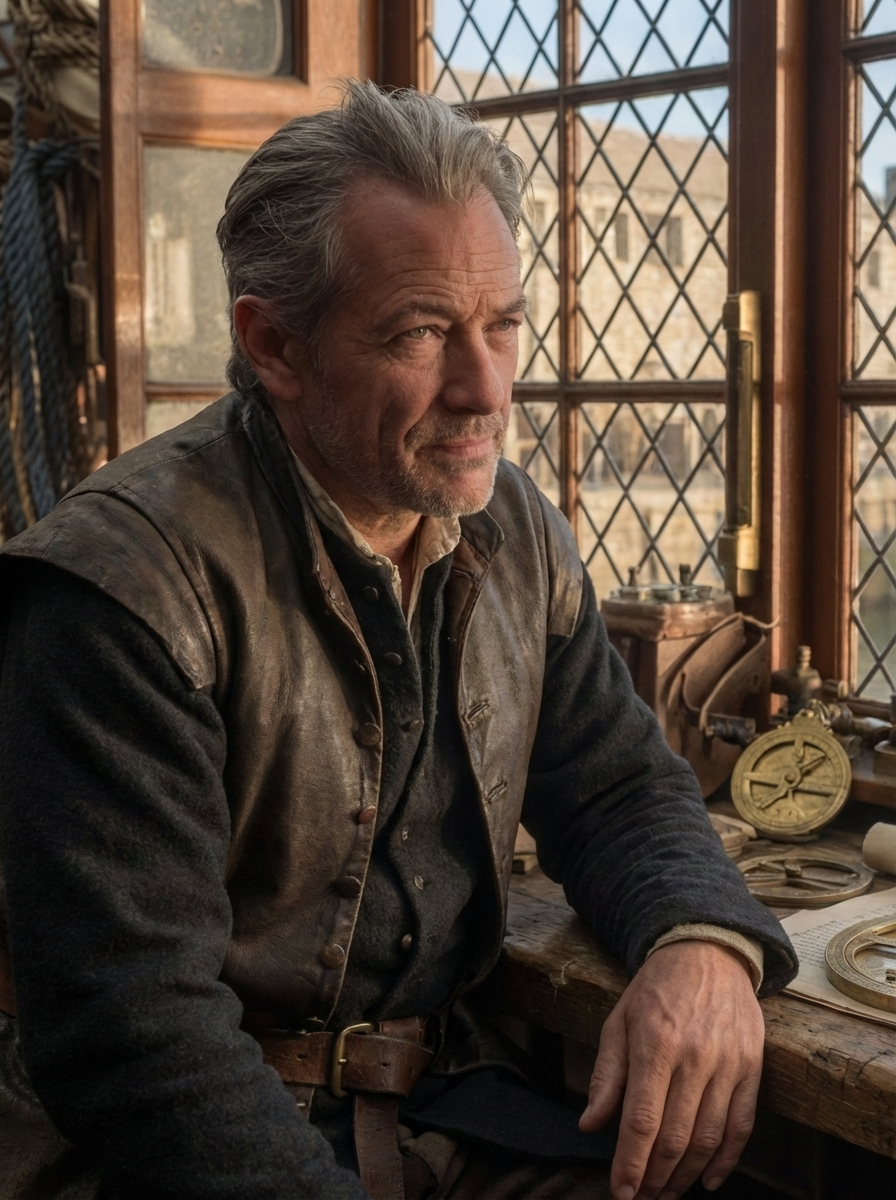
Former Order of the Road. Worked with Maren on long-distance escort contracts years ago — the kind of shared history that doesn't need maintaining because the trust was built in situations where trust was the only thing keeping you alive. Pol took a contract to Lirenne, met a woman, and never went back to the mainland. Runs a chandlery in L'lane's harbor district now. Settled into civilian life without ever quite losing the road instincts — he still reads a harbor the way he used to read a road.
He is not an operative. He is not a spy. He is a retired road man running a shop who gets a message from an old partner asking him to watch for something. He does it because Maren asked, and because Maren wouldn't ask unless it mattered.
Function in the Story
Maren, unable to follow the group to Lirenne immediately, sends word to Pol: watch the harbor, watch the colleges, a group matching this description is arriving. Pol watches, asks around at the harbor and the colleges. A scholar at the College of White (Sienne) looks at him for a long time and tells him nothing. The harbor is more generous — he picks up that the group used the colleges, moved south to Corivel, sailed from Haelith. He sends word back to Maren through a merchant captain heading to the mainland.
The reader encounters Pol as a shadow in Ch 6 — Sienne mentions that an older mainlander with no credentials was recently asking about foreign researchers. The group doesn't know what to make of it. On reread after Ch 15, when Maren's tracking is explained, the reader recognizes Pol as Maren's eyes. Sienne dismissed him. The harbor didn't. The connection is never stated on the page — it is offered to the reader who is paying attention.

A government official whose office — Charitable Works — serves as the church's bridge into South Aldenmere's civil administration. His budget doesn't match what his office should require. His paper trail connects the Guild's commercial operations to the church's institutional reach. Mags and Mott trace him through the Erish records hall in Book One. He is the tier above the Guild and the tier below the church.
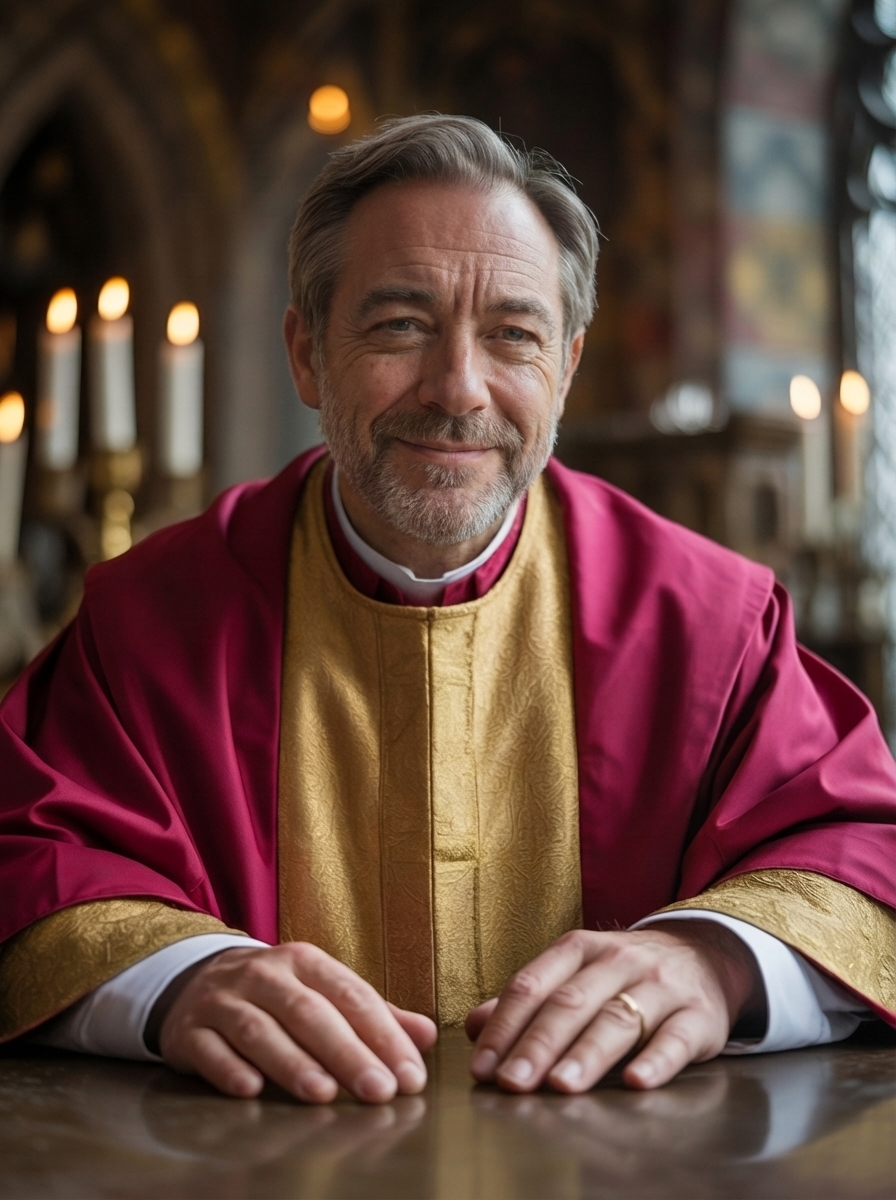
The Cardinal. Probably genuinely likes Mott, which makes him harder to dismiss. Shaped King Aldric's faith over thirty years — not through manipulation but through the slow institutional shaping of a king's belief. The war is partly Brennan's architecture. In Book Three, Brennan is already seated at the new king's table after Aldric's death. The church didn't lose. It adapted.

The fourth man at the ambush. Young, arrogant, unable to sit still. Carries catalyst pouches on his belt and touches them compulsively. Throws stones into the woods for no reason. Uses the slur "Dreg" against the Paka brothers. Osmen has already marked him as a liability before the targets arrive.
When the ambush goes wrong — wrong because the family arrives together, with a child — Dex deviates from the plan. "What do you say we have some fun first?" Ruko shoves him. Devon dismisses him. But Dex moves on Tessara anyway. She is faster: using concealed catalyst dust of her own, she sets him on fire with his own school of magic. He retaliates with a killing fire spell that takes her life. Osmen drives his sword through Dex's gut immediately afterward — not for the attempted assault, but for turning a clean contract into a mess. The distinction matters. It tells the reader who Osmen is.
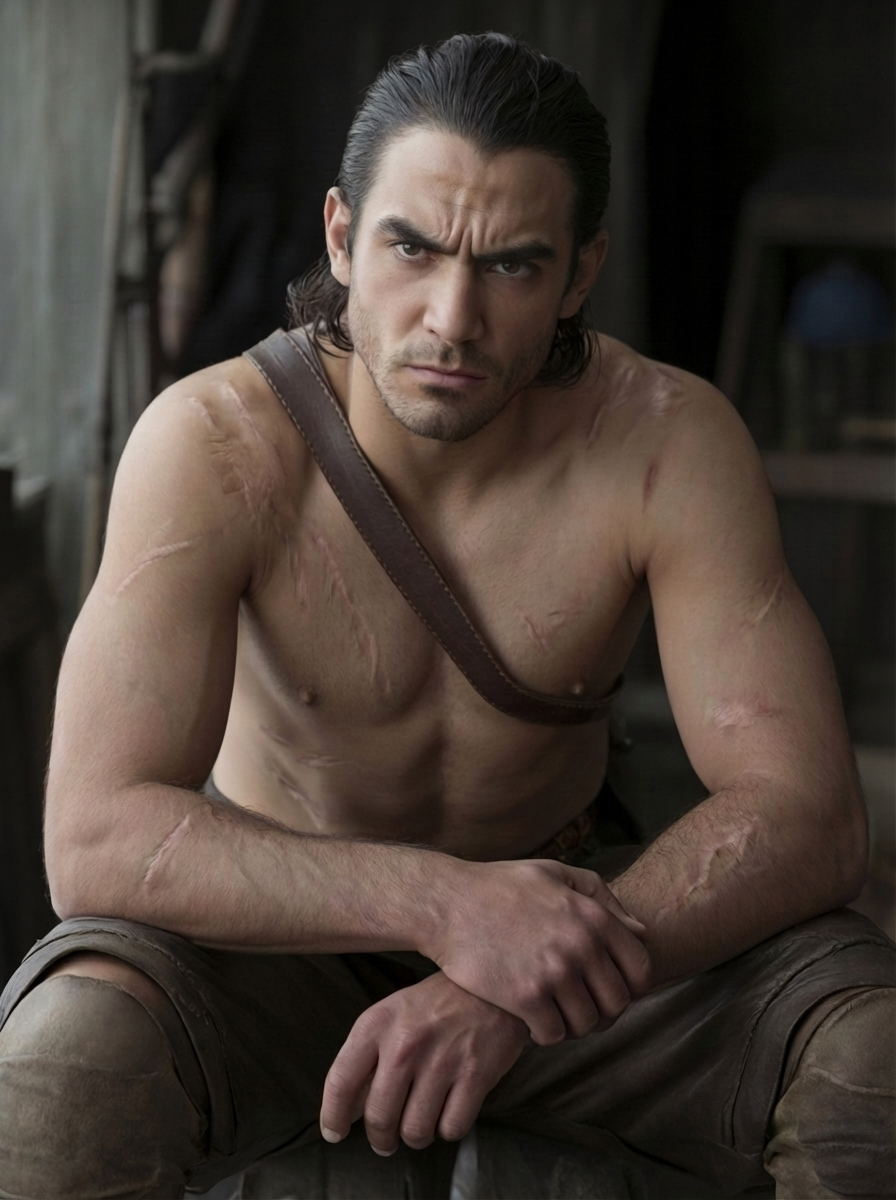
One of the hired killers at the ambush. Found by Mags in the Tangle in Carnehue. His death produces nothing — no relief, no closure. The revenge story fails her. Previously named Drevon; surname Paka added.
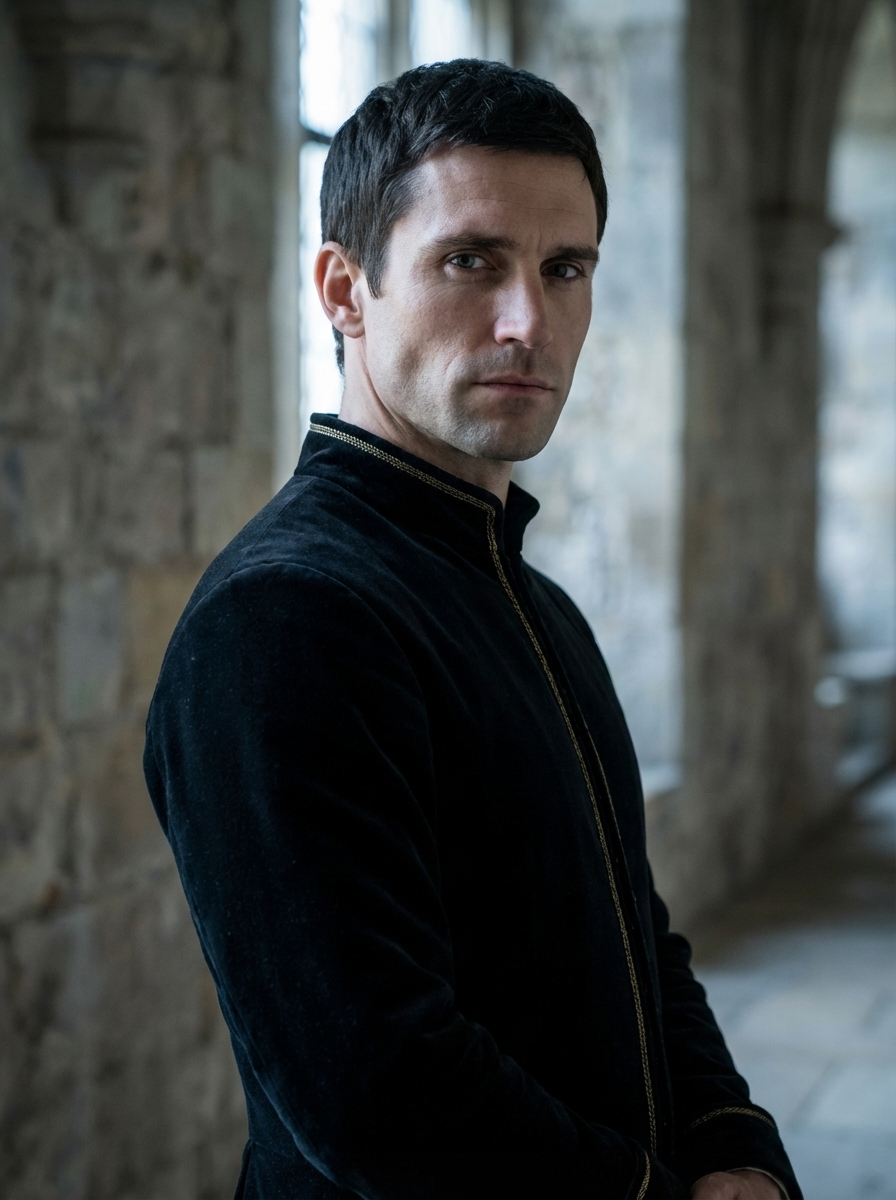
The brother who stayed. Where Mott ran, Essren watched how power works. They probably don't hate each other. They are simply very different people. Assigns a military detail to Mott in the Book Three interlude — pragmatism that doubles as a cage. Assumes the throne after Aldric's death.
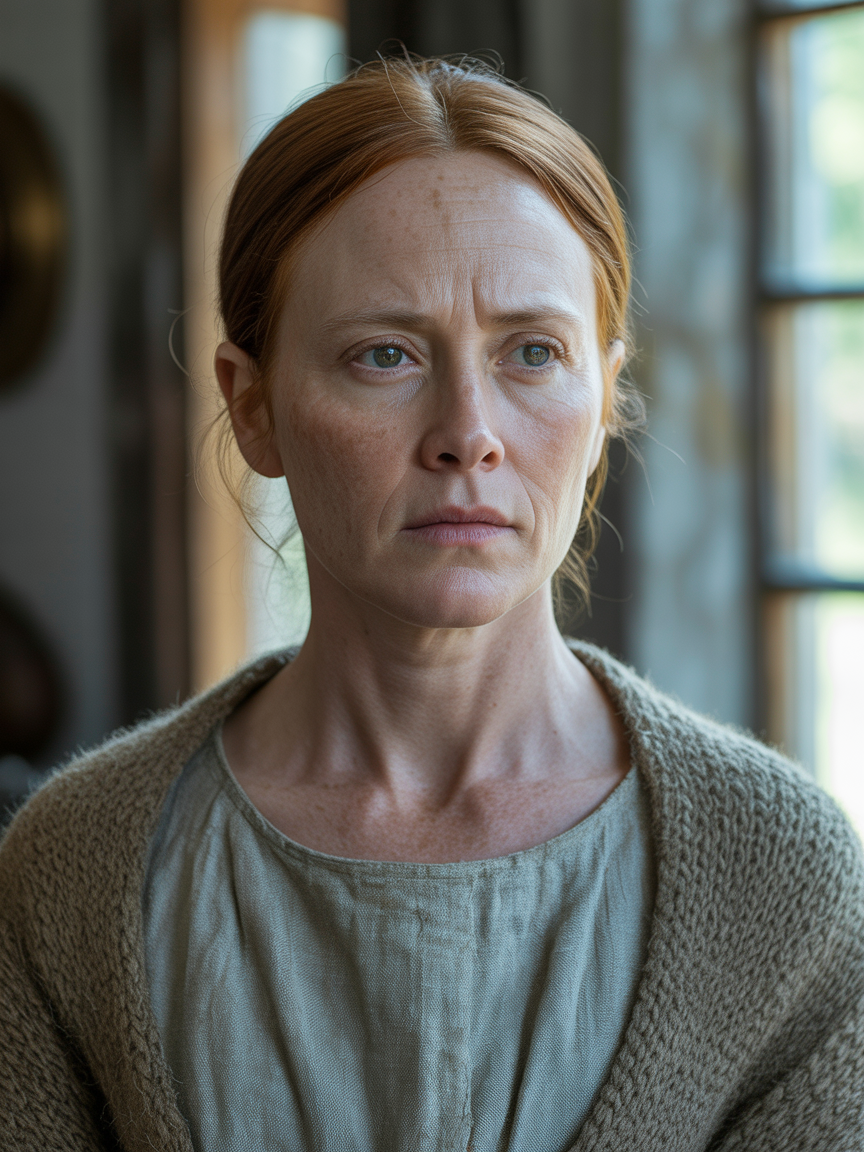
Married Maren in 2803. Left in 2806, taking their daughter Maggie. Does not appear in the story. The rag doll Maren carries was left behind.
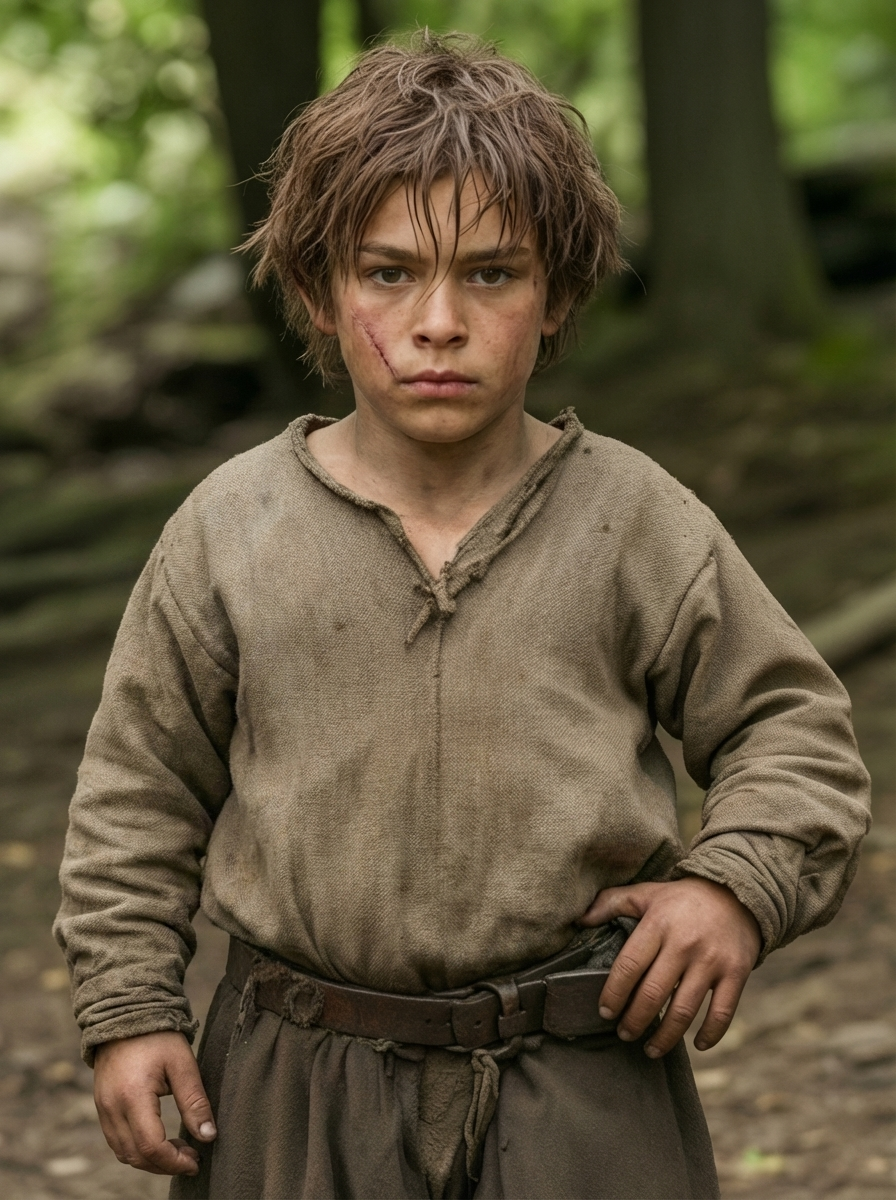
A Dern boy who steals from Mags' trap line. Details to be established in prose.
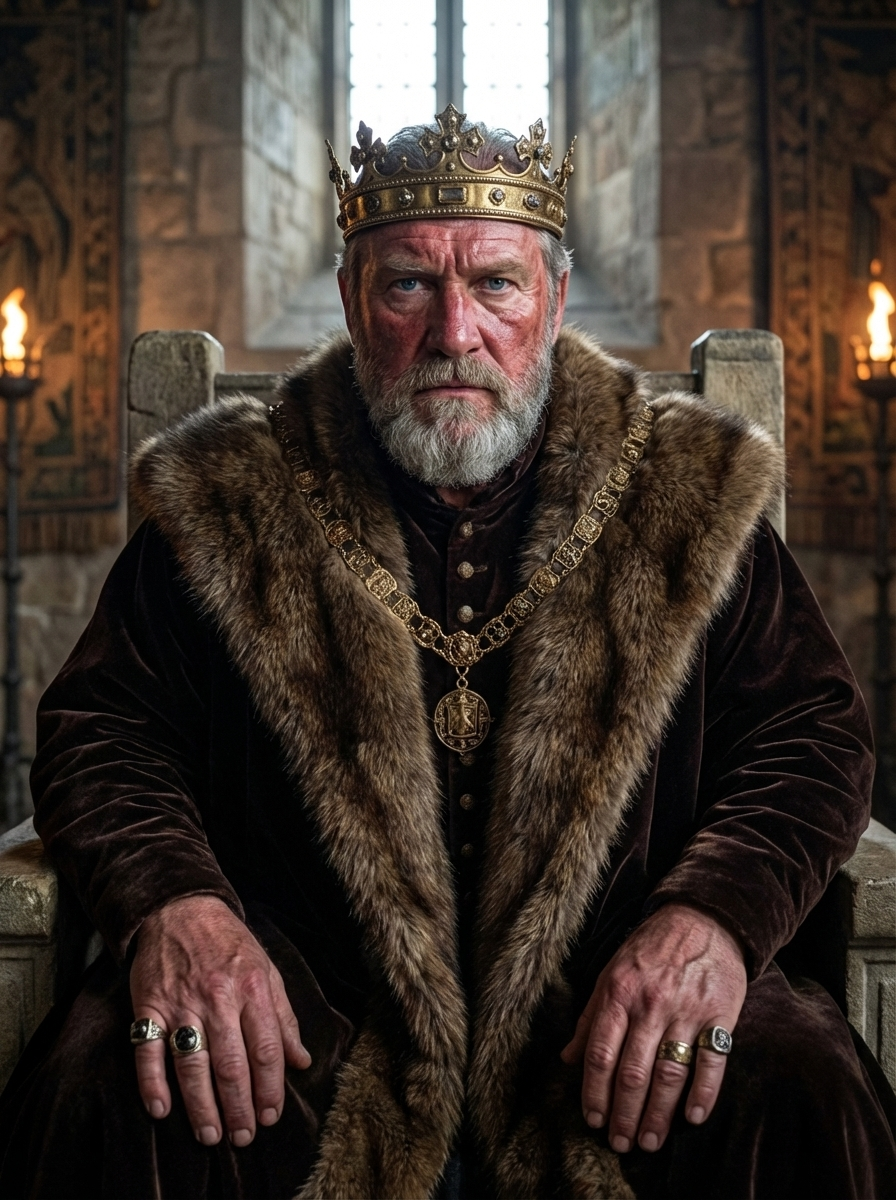
Named himself after the God-King Temet Aldric. Believes he is the new God-King. A large man, a genuine believer, a father whose relief at seeing Mott is real. His faith was shaped by Brennan over thirty years. The war is his project. Fully human — not a monster, a man. His death changes nothing about the institutional landscape.

A later prophet whose vision described the dying cub, the dead lions, and the fires on the horizon. The only prophetic text showing both Umber fates as sequential truths rather than alternatives. Scholars dismissed it as confused. The current prophet does not share that assumption.
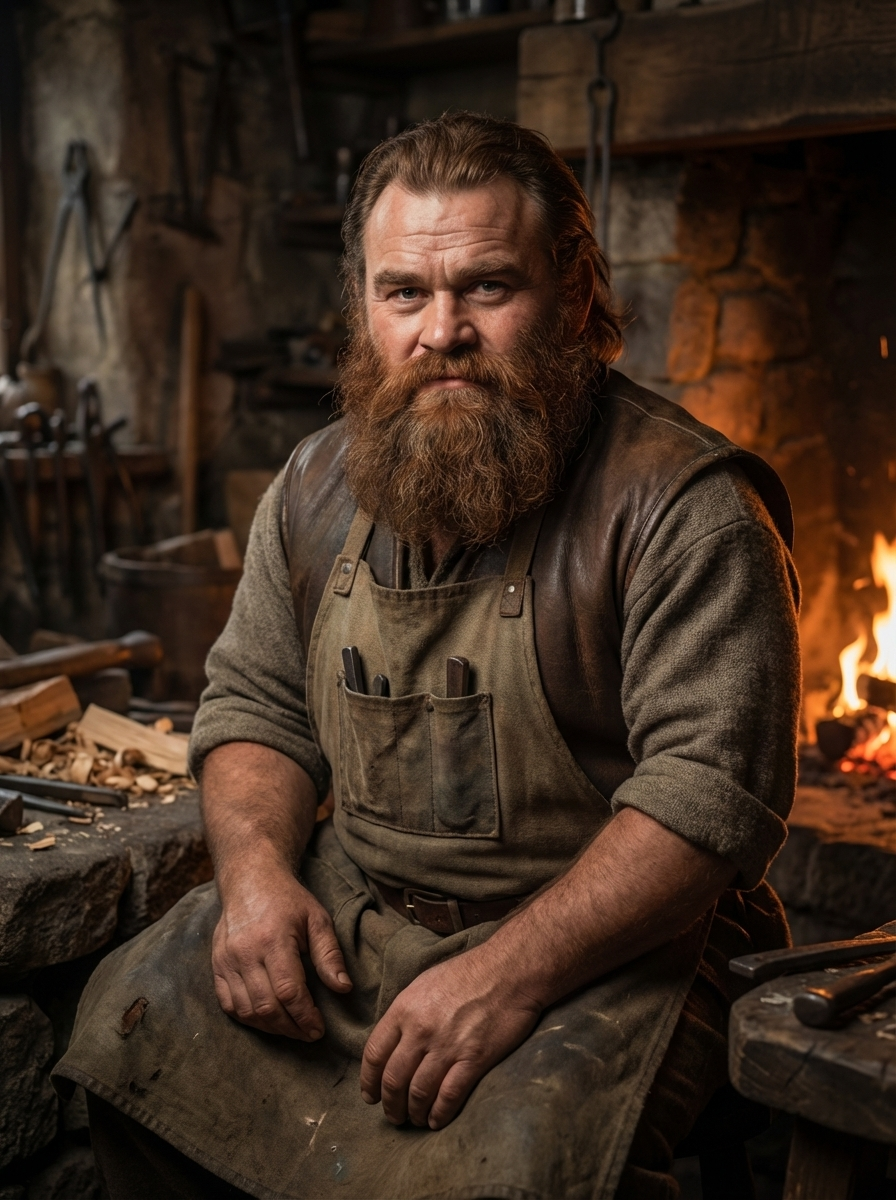
Details to be established in prose.
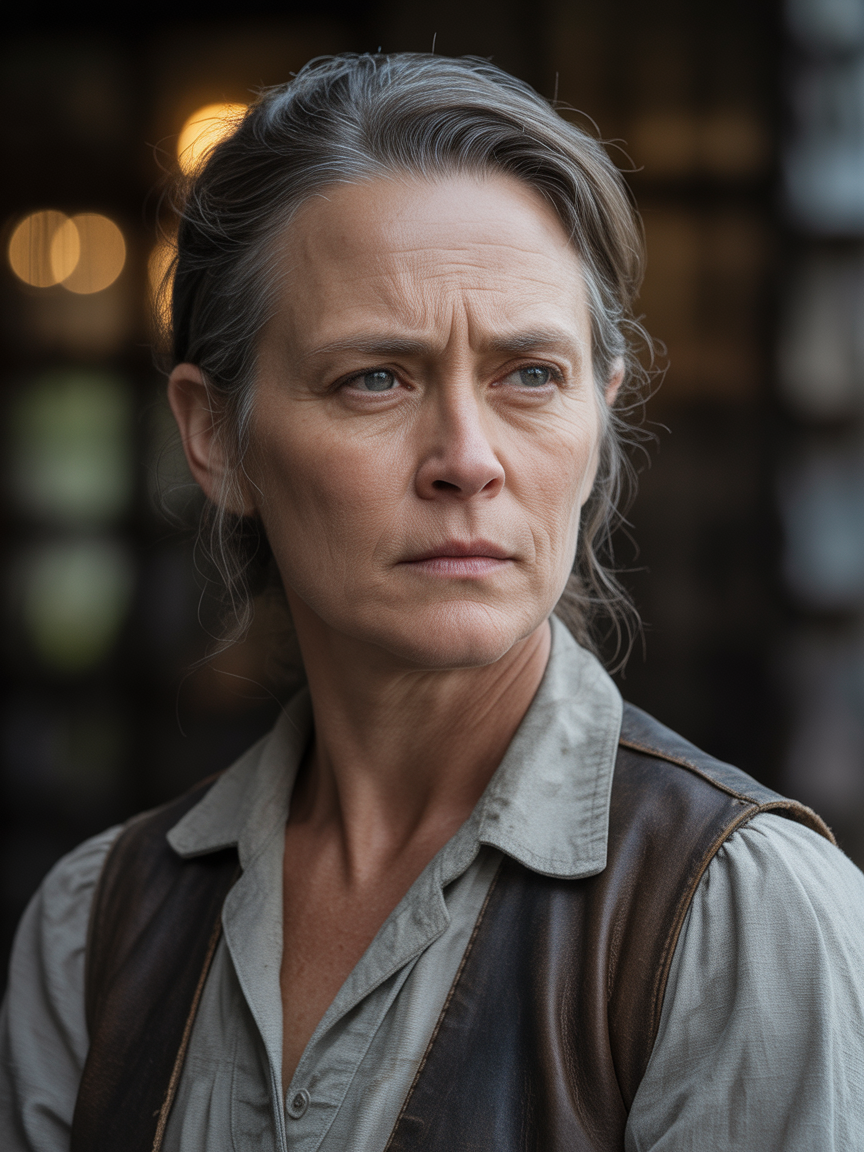
Ex-Guild and buyable. Professional and resistant — until she sees Mags and sees Tessara in her face. Provides the Guild's corruption structure: which officials were compromised, how the money moved. Points the investigation to Aldous Ferrick. Edoine knew her name through Bran Setter's correspondence.
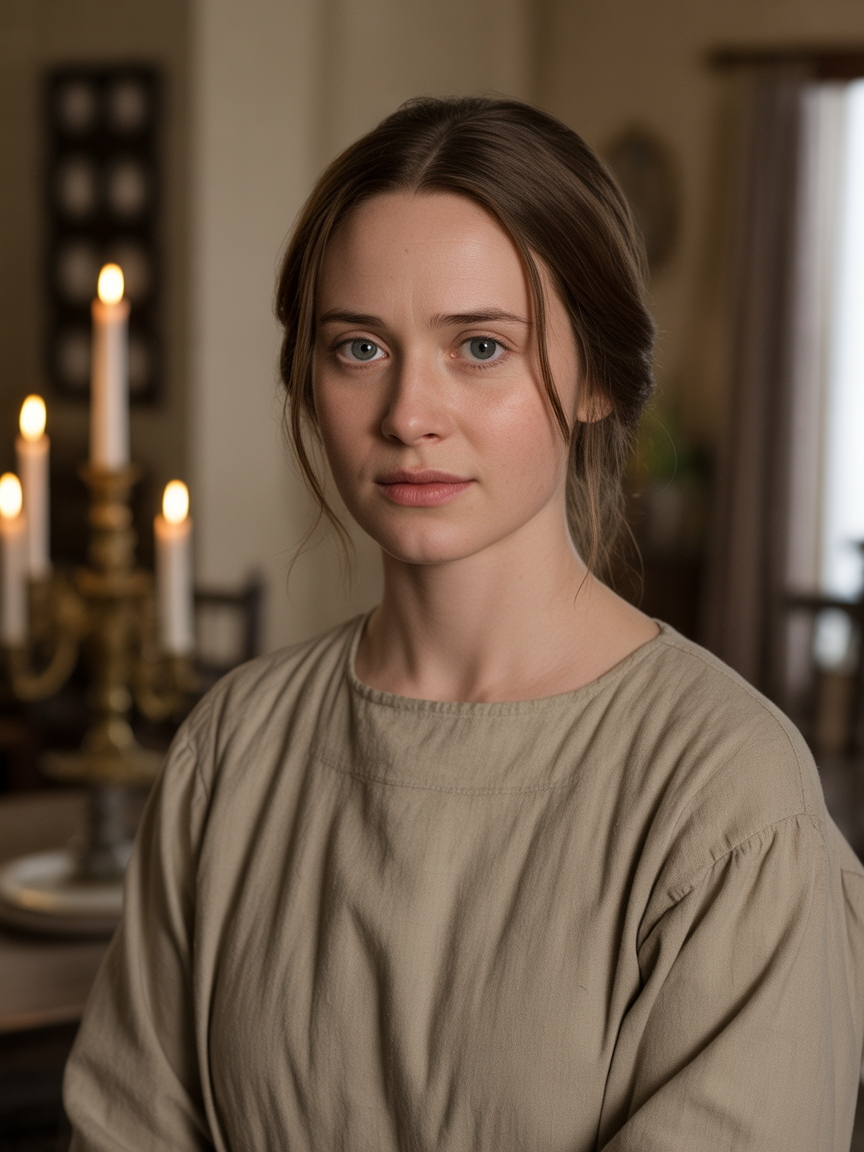
A church operative embedded in Taggert's household. Her death created a gap Osmen filled. Evidence that the church had eyes inside the Prefect's estate — where Tessara was trying to deliver her evidence.
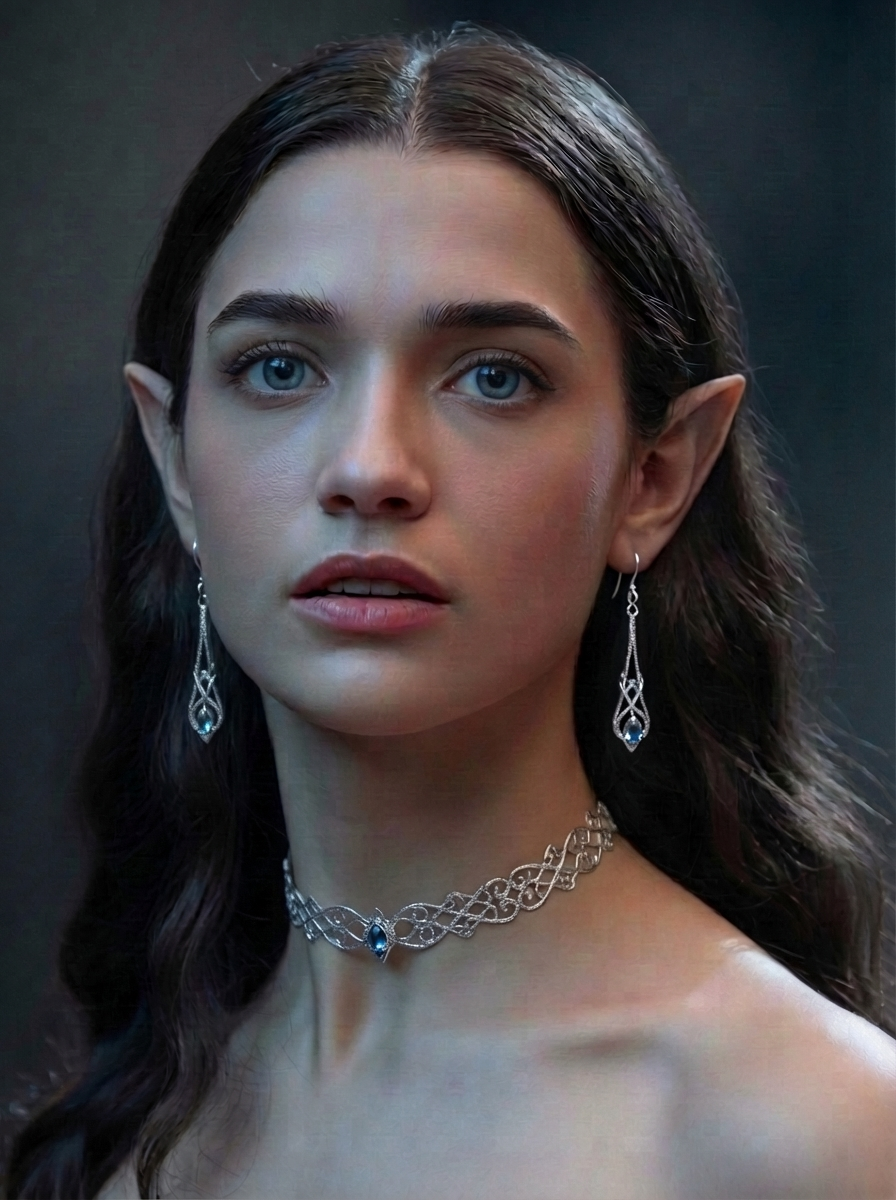
Vouches for the group at the harbor master's building without explanation, without addressing Elia, and leaves. Where Elia learned the Old Tongue. They were together. Elia ended it. She has not been entirely sure she was right to.
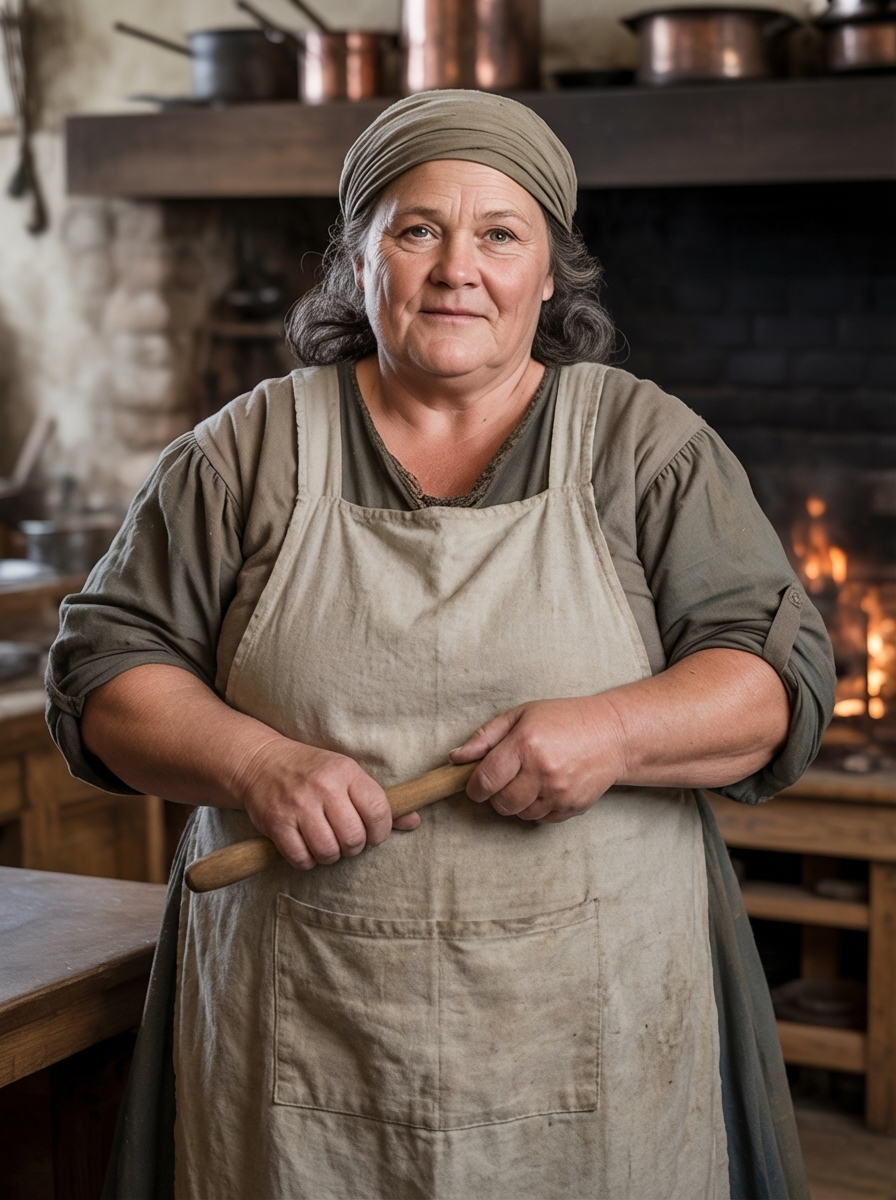
Part of the domestic world Mags grew up in. Details to be established in prose.

Found first by Mags. Tells her freely the murder was contracted — just business. Describes the silent bowman (Osmen) without naming him. Forces her hand — lunges for the sword belt. Dies in his chair.

Young Alvar scholar. Pleasant without warmth, helpful without humor. Becomes the group's guide at the College of White. Recognizes Tessara's spellcraft treatise and shows Mags what the marginal notations actually are — a mother tracking her daughter's potential. Directs Edoine to Anessi. Dismissed Pol Harkin (Maren's confederate) when he came asking about foreign researchers.
Her apparent age is inconsistent with her evident seniority at the College. She moves through the White archives with the specific authority of someone who has been here a very long time — longer than her face suggests. No explanation is offered. The reader is left to consider it.
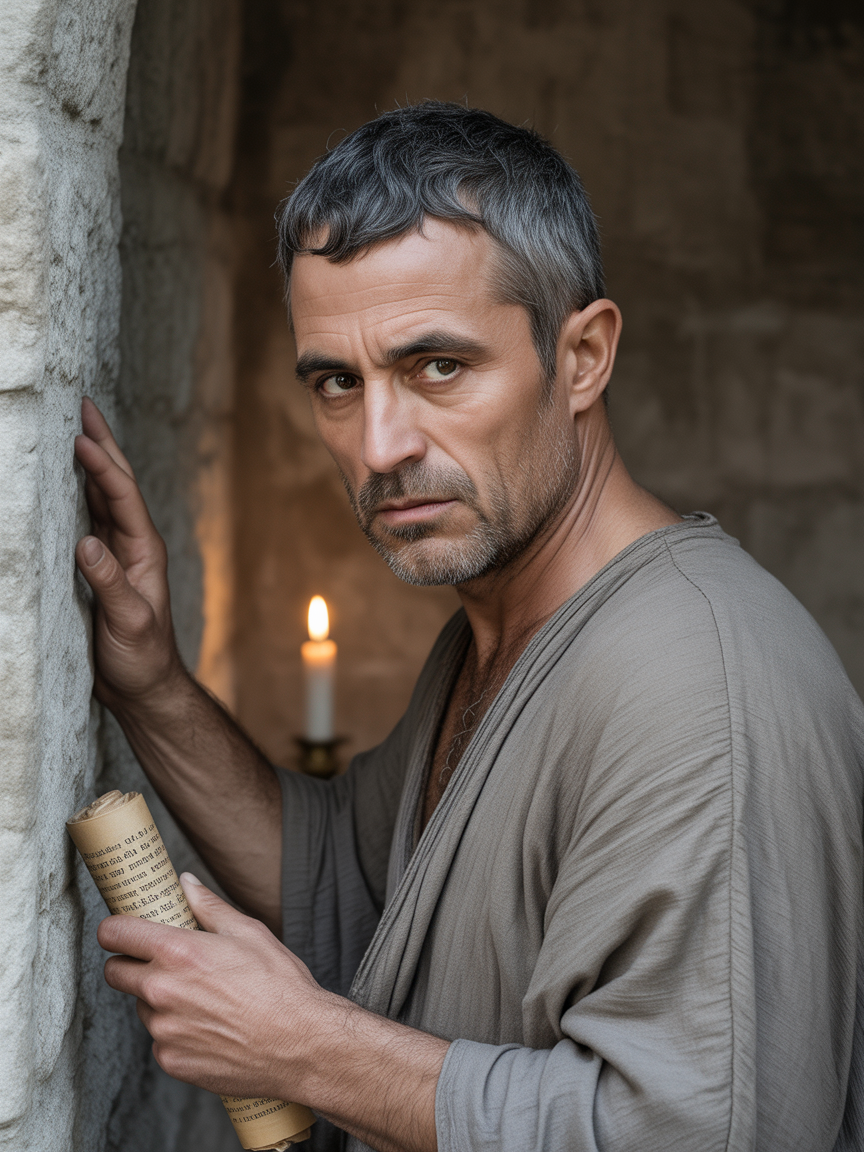
Earliest recorded prophet of the One God. Received exactly two divine utterances. His first prophecy described Ossavar's death with exact precision. Because it proved verifiable, the second — the Umber prophecy — could not be dismissed. See the One God page for full detail.
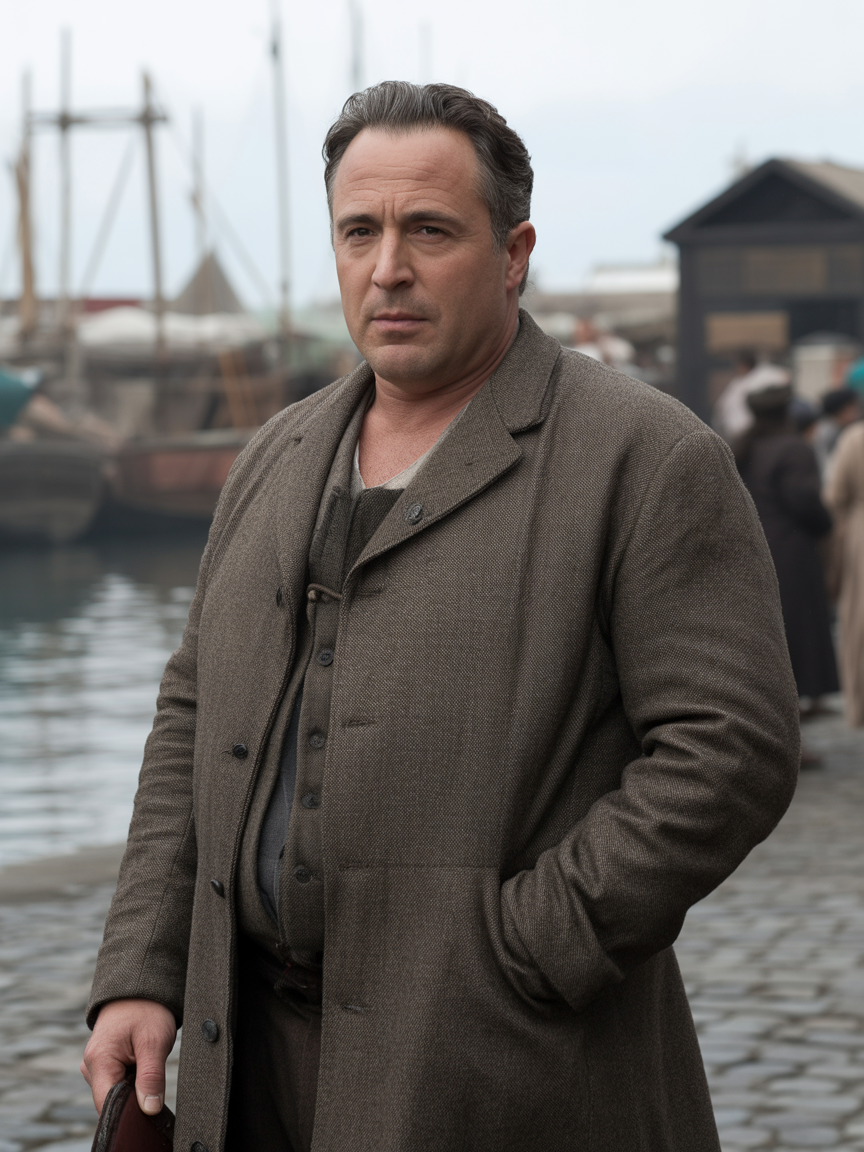
The local man. Managing displacement operations in Carnehue — the harbor expansion, the regulatory manipulation. Follows orders from Aldous Ferrick in Erish. Named by Mave Solloway. The investigation traces through him from the hired killers upward to the church.
The Nature of Gods
To be a god, you need only one thing: immortality. Whether you are a real player depends on having followers. Gods draw power from worshippers — the more followers, the more powerful the god. People are like batteries to them.
Gods cannot force anyone to do anything. They cannot make it rain. They can divert some collected energy back to a particular person to perform a miracle, but only if there is a net gain — a miracle that converts 500 new followers but costs 1,000 points of power is a net loss.
Types of Gods
The Known Pantheon
Major Gods
Moderate Gods
Diminished Gods
Special Category
Gone
The Holy War Coalition
Sorvaine did not act alone in the holy war against the Umber bloodline. A coalition of gods joined her — their theological justification was the compounding existential threat of Balda's descendants becoming minor gods upon death, an accumulating population of divine rivals. Self-interest dressed as principle. The coalition members are unnamed in common knowledge and untracked in most scholarship. They are still extant. One — Vessa — defected and was punished for it. The rest remain loosely present in the world, pursuing their own interests, neither allied with Sorvaine nor opposed to her.
The Lesser Divine
The gods listed here are those significant enough to have shaped history, culture, or the story directly. They are not the whole of the divine world. Minor gods — immortals with few or no worshippers, no institutional presence, no meaningful power — exist in numbers no scholar has successfully counted. Some were once major. Some were always small. Some are forgotten entirely by the living while remaining present in Aevorn, waiting. The divine ecology of the world is older and stranger than any single tradition accounts for. What is listed here is what matters. What isn't listed is still out there.
Divine Communication
Gods find it very difficult to communicate with humans directly. Two methods exist:
- Emotional nudging — influencing emotions. Works on animals easily; humans tend to talk themselves out of discordant feelings or suspect outside influence.
- Direct communication — requires absolute concentration, leaves the god completely unaware of surroundings. Humans reflexively resist; those who don't often go mad. Most commonly attempted through dreams, which are easier to enter but easily dismissed or misremembered.
The workaround: preparing an animal as a conduit. The process is complicated, often kills the creature, but once completed allows easier communication. This is commonly associated with witches but used by virtually all religions. The god must still concentrate absolutely during any conversation.
Aevorn
Where immortal souls reside. When a mortal dies, their soul moves on. When an immortal dies, they go to Aevorn and stay. Gods can kill one another — rare but it happens. A god who expends too much power leaves themselves vulnerable to rival gods.
Aevorn is the formal and scholarly name — a proper noun whose etymology is disputed and whose origin predates the current kingdoms. In common speech across all races and kingdoms it is known simply as the Old Country — a vernacular name old enough that nobody remembers coining it, carrying the specific melancholy of a place everyone goes eventually and nobody returns from. Both names refer to the same place. Scholars use Aevorn. Everyone else uses the Old Country.

Character
Sorvaine wants complete dominion. She is patient, intelligent, and knows how to appear benevolent. She is a Satan analog — the sugar-coated version of absolute control. Her true nature won't be obvious for a long time in the books; she should read as somewhat benevolent at first.
History
Was the primary power after the holy war against Balda Umber. Spent enormous power destroying Umber in Aevorn (Year 813), which weakened her church for two generations. Spent the following 500 years rebuilding. By Year 2679 her church is resurgent and becoming dominant. By the time of the story she is one of the most powerful gods in the world and growing.
The Prophecy Problem
Sorvaine knows the Umber prophecy hasn't been fulfilled because Umber descendants keep appearing in Aevorn. She has systematically had the bloodline killed off over centuries. By story's start only three remain. When Eclesses dies, Mags becomes the last — and the prophecy becomes live. This is what Sorvaine has been trying to prevent for two thousand years.
Eclesses was never the real concern. Sorvaine's surveillance confirmed long ago that he is infertile — the line cannot continue through him. She kept him alive and watched, a manageable loose end, while focusing her machinery on Mags. The calculation is straightforward: Eclesses dies childless and the problem dies with him. Mags is different. Mags could fulfil the prophecy directly. Or she could have children, and those children could fulfil it a generation later. As long as Mags is alive and capable of bearing heirs, the prophecy is live. Sorvaine has spent two thousand years managing this problem. She is now ready to move decisively — the church is resurgent, her power is near its peak, and she wants the prophecy closed permanently before she makes her final play for dominance.
The Plague Gambit
Sorvaine sent Plague to Mags as a child to make her a witch — without a bargain. The strategy was never to burn her. The strategy was to control her. A covenant-free witch of exceptional power, equipped and surveilled through Plague, available for eventual acquisition and deployment as a war asset. The Thagari burning witches is standard institutional behavior; the specific instructions regarding Mags were different — acquire, not eliminate. Even if acquisition failed permanently, the no-covenant architecture served as insurance: a witch without followers after death has no power, so the prophecy's fulfillment would be toothless.
What Sorvaine did not calculate: the no-covenant architecture has no closing mechanism. The terms that define how the connection ends were never written, because there was no agreement. This becomes the specific vulnerability the endgame exploits.
The Bresholm Operation
When Sorvaine's machinery moved on Bresholm, the Thagari arrived with acquisition orders for Mags specifically — not execution orders. The operation had prepared a substitute: a half-Alvar woman of approximately the right description, transported with the team, intended to be burned in Mags' place so the world would believe she was dead while she was held in church custody. Mags was not there. The acquisition plan went on hold.
The Thagari, finding Agna's connection to Mags during their operation, made the deliberate choice to burn her — partly as institutional procedure (she was a suspected witch), partly as bait. If Mags heard what happened to someone she loved, she might return. The team stayed two days watching for her. She didn't come. They left. The substitute remained in custody.
The substitute was eventually burned elsewhere. Osmen tells Mags this at the story's end.
Worship Practices — Ambient Texture
Symbol: The ten-pointed star. Appears on church buildings, vestments, and as personal devotional jewelry. The symbol predates none of the absorbed traditions — it is Sorvaine's own mark, institutional and geometric rather than warm, which is quietly right: the warmth comes from the people and the community, not from the symbol itself.
The gesture: Two fingers — index and middle — pressed to the forehead, then brought to rest over the heart. Done slowly and deliberately in genuine devotion; done quickly and almost absently as reflex. The gesture encodes the theological claim without requiring words: may she guide my mind and my heart. The dark irony available to the reader: Sorvaine wants dominion over exactly those two things. Her followers mark them for her daily without knowing it.
Name register: Common speech uses she/her — the god so ambient she doesn't need naming. Sorvaine is used for invocation, emphasis, and formal prayer. The Lady or the Light appears in liturgy and priestly speech.
Common phrases: She keeps (reassurance; worn smooth by use — what you say when someone is frightened and you have nothing better). May she light your way (farewell or blessing). Sorvaine guide us (communal, liturgical). Under the star (farewell; neutral enough to say to strangers).
The door frame: Devout households mark their threshold with a scratched or painted ten-pointed star alongside a dried sprig of borderwick tied with cord. The borderwick tradition originated with Rowan — a household ward that Sorvaine's parish absorbed so completely that most families doing it have no memory of its older meaning. The star is the institution's claim on the space. The sprig is the folk tradition the institution swallowed.
Borderwick is a common meadow herb with small flowers, harvestable from any field edge. Its dried stem, soaked in oil, serves as a lamp wick for the poorest households — the same plant that marks the threshold also lights the dark. The church uses borderwick in significant ceremonies (not every service; the solemn ones), where tapers are lit at a specific moment. A congregation recognizes the smell from their own homes. The church takes something utterly ordinary and makes it briefly sacred, which is one of the things it does best.
Pendants: A ten-pointed star worn on a cord, class-stratified: woven dried borderwick (two five-pointed stars interlaced, free to make); fired clay or carved wood; bone or brass; silver; gold or silver with stones at the wealthy end — some extravagantly jeweled. Predominantly worn by women, for reasons the church never states aloud: in a world where witchcraft accusations fall disproportionately on women, a visible star pendant is a public declaration of orthodox faith. The church knows this and encourages it. The devotional jewelry has a second function that is entirely practical and entirely unspoken.
Aelrith / the Hearthstar: A fixed star in the night sky, warm gold in color with a faint nebula haze visible on clear nights — a soft glow spreading outward that makes it unlike any other star. Used for navigation by sailors and travelers across every kingdom; called the Hearthstar in common speech, Aelrith in formal and scholarly usage. Sorvaine's church claims it as her star — the guide, the fixed point, the light that always leads you home. People who don't worship her don't care about the theological claim. They use the Hearthstar to find their way home. Both things are true simultaneously.
Burial rites: Borderwick tapers lit around the body; the ten-pointed star marked on the grave; prescribed liturgical words naming the dead to Sorvaine's keeping; the gesture made over the body; closing phrase (she keeps or may she light your way). When the priest looks toward Aelrith during the commendation, they are pointing the dead toward the fixed light. An improvised ceremony — missing materials, no church setting — is still a complete ceremony if the words are said carefully, because the words are owed whether anyone is watching or not.
The Local Face of the Church
Sorvaine's church is genuinely good at the local level. Parish priests like Deverin do real work — present at bedsides, at burials, in communities during hard times. The soup kitchens are real. The comfort is real. The people who give their lives to this work are not cynics or instruments; many of them are simply good people who found a home in an institution that needed them and gave them purpose.
This is not incidental. It is structural. The local goodness is what keeps people believing, what gives the institution its legitimacy, what makes the charges of corruption and conspiracy sound like slander to the ordinary faithful. Elia's faith is not naivety — it is based on real experience of real goodness. The institution that burned Agna, that engineered Tessara's murder, that has hunted the Umber bloodline for two thousand years, is also the institution that buries strangers and feeds the hungry. Both things are true. The monstrousness above is made possible by the genuine goodness below. The face that keeps people believing is Deverin's face. See Deverin's character page.
The question the story doesn't answer: when it's all over, when Sorvaine is destroyed and the church loses its divine backing, what happens to the people like Deverin? The institution's corruption was real. So was their faith. Neither cancels the other.
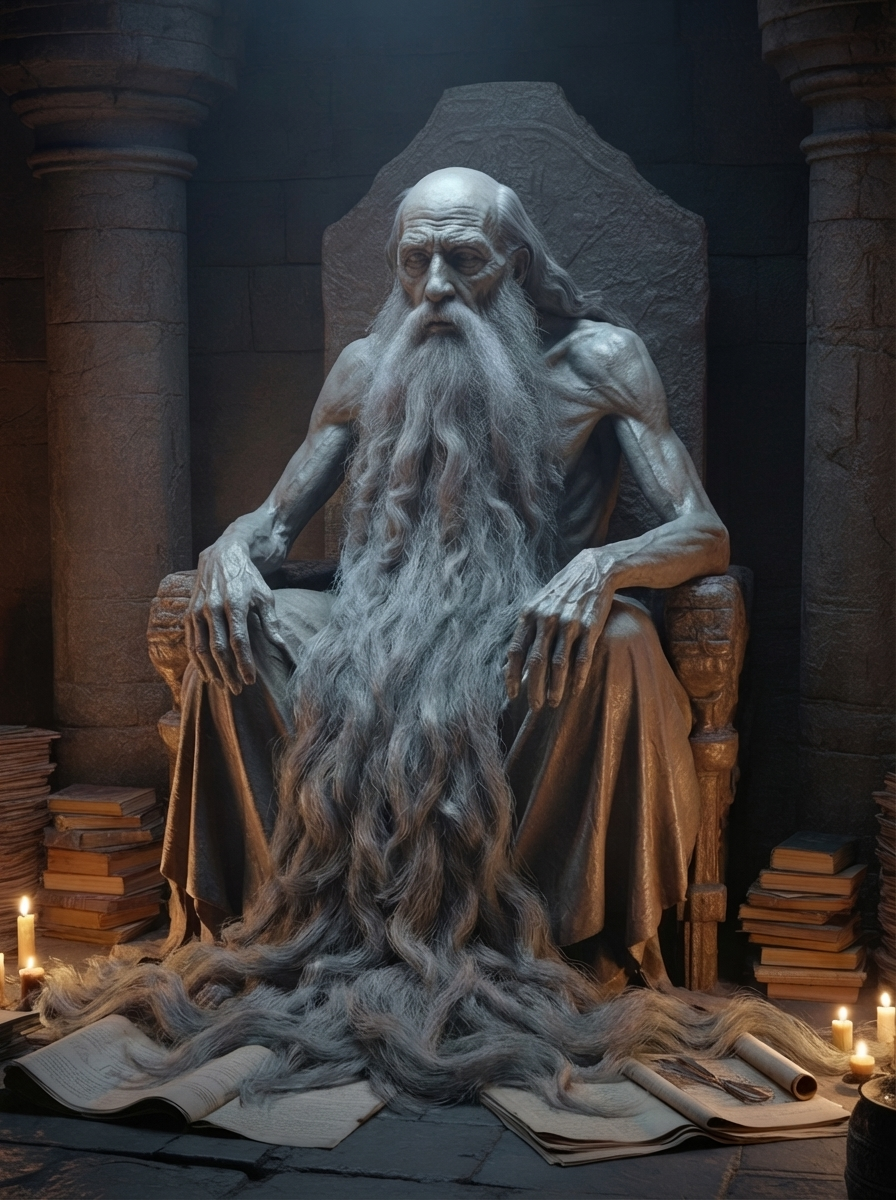
Doesn't build churches, doesn't have witches, doesn't seek followers. Has one temple — essentially a monastery. From each generation chooses one monk to be his prophet. Once chosen, the oracle remains the only one for the rest of his life. Upon passing, a new monk is chosen. All monks in the monastery serve this one prophet.
The monks have, through meditation, self-denial, and contemplation, learned to subdue the natural human resistance to divine communication. They are the only mortals who can receive their god's voice clearly.
The monastery is called Tianshu — "heavenly text" in the Daening tongue — and sits high in the mountains of Daening, in the range known there as Tianbi. It has accumulated one of the largest libraries in the known world over its centuries of existence. Because Daening's isolation kept it beyond Sorvaine's reach, Tianshu preserves records that have been purged or suppressed everywhere else — including documentation of the Umber kings and their bloodline that survives nowhere on the mainland. The community that has grown up around the monastery is called Daoshi — "the way place" — a town of pilgrims, scholars, merchants, and those who simply found themselves staying. It is not holy in the formal sense. It is simply where people go when they are going to Tianshu.
Tomas Ferre
The prophet who recorded the Umber prophecy. In his lifetime he received exactly two divine utterances — unusually few, which itself became a subject of scholarly discussion. His first prophecy described the death of a great city: its river would change course over two generations, leaving the city dry and abandoned with the old riverbed still visible in the earth. No city was named. No timeframe was given. The description matched Ossavar exactly when that city died centuries later, and scholars found they could not make the text fit anything else. The precision of the match — the two-generation decline, the visible riverbed, the absence of war or plague — established Tomas as legitimate beyond reasonable dispute.
His second prophecy was the Umber prophecy. Because the first had proven exact, nobody who studied the texts could dismiss the second. Sorvaine's church has tried, at various points, to argue the Ossavar match was coincidence or misinterpretation. The argument has never gained serious traction.
The Current Prophet
In Book Two, the group visits the prophet's monastery. He has been expecting someone. When Mags enters, his attention catches on the pendant at her throat — a knotwork design she has always known as an Aelwold Rose. He asks where she got it. She tells him. He goes still in a way that isn't dramatic but is unmistakable. He calls it by its original name: a lion's knot — also known as the lion's paw. He explains what she is holding: a symbol older than the Umber kings, older than Balda's epithet, older than the church that bore his name. In its first use — before kings claimed it — the lion's knot represented the fundamental duality of existence: good and evil, light and dark, hot and cold, love and hate. Two forces in permanent tension, neither destroying the other. Balda adopted it as his mark because of that weight. It became the Umber royal household's symbol, then the Church of Umber's symbol, then a forgotten knotwork pattern renamed by people who no longer knew what they were looking at. The design was once specific to the Umber kings — their mark, worn by the royal household and passed through the bloodline. The name change happened gradually over fifteen hundred years, the connection dissolving as the Umber line faded from living memory into legend.
This is the moment Mags learns what her bloodline may be, what the prophecy says, and what it means that she is standing in a prophet's monastery wearing a lion's knot on a cord. What he tells her doesn't resolve anything — but it reframes everything. He tells her something specific about the nature of her power that nobody else knows. He has been expecting someone, though not necessarily her specifically. He knew someone would come eventually. He is simply glad it was in his lifetime. He believes she is the one the prophecy names. He cannot prove it. Neither can she. The pendant is the strongest evidence available — it proves the design is genuinely old and connected to the Umber royal line. It does not prove the bloodline runs through her. A lion's knot — or lion's paw, as some sources name it — could have entered Harven's family in any number of ways across two thousand years. The prophet's certainty of tone is the response of a man who believes, not a man who knows. The One God does not speak to him in this scene. Mags carries the doubt from this moment forward — never entirely free of the possibility that she has been proceeding on a belief rather than a fact.
The Specific Disclosure
What the prophet tells her that nobody else knows: Sorvaine has always known who she is. Not suspected — known. The pattern of eliminations across two thousand years is too precise for guesswork. Sorvaine confirms identities before acting. The only way to confirm an Umber descendant is to watch them long enough to see the bloodline's signature in Aevorn — when a descendant dies, they enter Aevorn as a minor god. Sorvaine has been tracking this since she destroyed Balda. She knew about Mags the moment her power began to develop. Possibly earlier.
The prophet does not know Plague specifically. But he knows Sorvaine's methods well enough to tell her this: a god who knows her target does not leave surveillance to chance. Whatever has been closest to her longest — Sorvaine has eyes in it. He doesn't say the familiar's name. He doesn't need to. Mags already knows what is closest to her.
The implication: she was never invisible. The wilderness years, the careful anonymity, the decade of isolation — Sorvaine saw all of it. The machinery that has moved against her was never trying to destroy her. It was trying to control the conditions of the confrontation. A dead Umber doesn't fulfill the prophecy. A living one, under the right conditions, might be manageable. Sorvaine's two-thousand-year project was never purely elimination — it was insurance against the scenario where elimination becomes impossible.
What Sorvaine cannot control is the specific moment, the specific depth of the bond Mags has developed, the specific choice she makes at the end. The prophecy's resolution depends on variables Sorvaine can track but not determine.
The prophet's final word on it: Sorvaine has been afraid of this moment for two thousand years. That fear is not nothing.
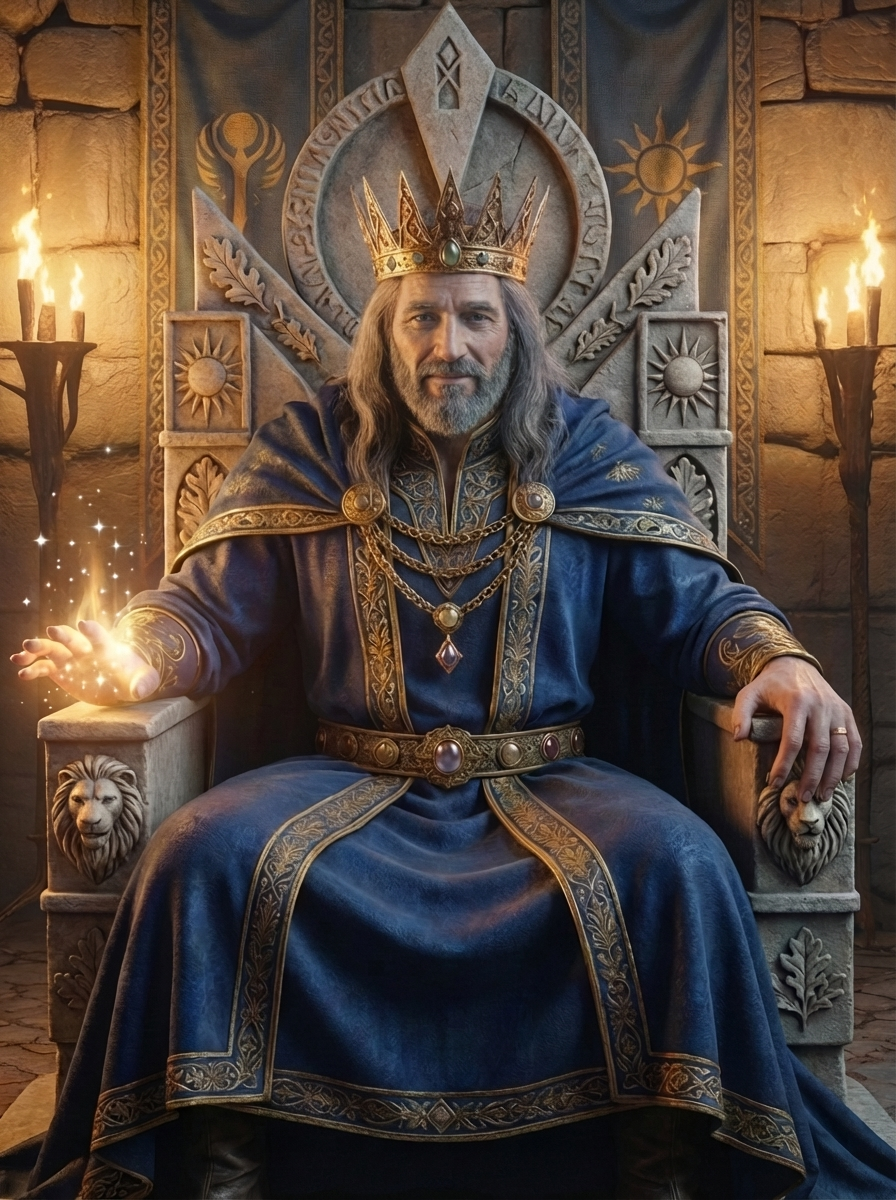
The Bloodline
Balda's father was a god — the only time in recorded history a god fathered a mortal child. Balda was therefore immortal (immortality doesn't dilute — you can't be a little bit immortal). When he died, his soul stayed in Aevorn rather than moving on. His people's continued worship — they had always prayed to kings as divine figures — gave him enough power to become a genuine god.
His children inherited partial immortality, which resolved as complete immortality (immortality doesn't dilute). His descendants became minor gods upon death — no worshippers, no power, but present in Aevorn. Other gods found this increasingly annoying and eventually dangerous.
The bastard child's line survived the holy wars in secret. By the time of the story it has been whittled to three: Mags, Harven, Eclesses.
The Bastard Child
During his reign, Balda fathered a son — Bren — on a barmaid named Lienne, who worked at a waystation inn on the road south from Sosamyra. The king passed through regularly on campaigns and diplomatic travel; the encounter was unremarkable to anyone watching. Balda arranged quietly for Lienne's needs afterward, but never acknowledged her or the child publicly and never drew them into his court or circle. Very few people knew the child existed — likely only a handful of Balda's most trusted attendants, all of whom were killed in the holy war.
The bastard line survived precisely because of its anonymity. When Sorvaine's holy war came to erase the Umber bloodline, it targeted Balda's court, his legitimate family, his political allies, and everyone connected to his visible world. Lienne was a barmaid at a waystation with no surname connection to the Umber kings. Bren grew up knowing nothing certain of his father — perhaps a mother's quiet story, perhaps nothing at all. The line continued not through heroic concealment but through ordinary obscurity. Nobody knew to look for them.
The waystation itself no longer exists as it did — two thousand years of history have erased it, absorbed it into a larger settlement, or simply worn it away. Lienne and Bren are author-level knowledge only. No character in the story knows who they were. The bloodline that ends with Mags began in a waystation inn on a road that no longer looks the same, with a woman whose name has been forgotten by everyone except the god whose line she carried forward without knowing it.
The Prophecy
Two outcomes given by the One God's prophet:
- The last of the line will stand as the instrument of the enemy's destruction — the lion fulfilling its nature.
- The last of the line will become the ewe — falling alone and forgotten, none to mark her passing.
Both turn out to be true. Mags destroys Sorvaine and dies alone. The prophecy was never wrong — it just wasn't exclusive.
The Lion of Sosamyra
Balda Umber was known in his lifetime as the Lion of Sosamyra — a title that followed him from his military campaigns through his reign and into his deification. It is the reason the prophecy's opening line reads as it does. To those who know the epithet, "the blood of the lion" is unambiguous. To those who don't — and two thousand years of distance means most people don't — it is one more thing to argue about. Scholars have proposed alternative interpretations for centuries. Sorvaine's church has at various points denied the prophecy refers to the Umber line at all.
The Prophecy Text
And as one shall stand at the enemy's end, the point of her destruction.
Shall it not be so? Shall the lion become the ewe?
Nay, for the ewe has its own fate —
the grayness of the white wool, the wandering from the flock,
falling at last, alone and forgotten, none to mark her passing.
Both fates are written. One shall come to pass."
Recorded by Prophet Tomas Ferre, the earliest recorded prophet of the One God. Year 820 — seven years after the destruction of Balda Umber in Aevorn. Tomas produced one other prophecy in his lifetime: a precise description of a great city that would be abandoned when its river changed course, leaving it dry and hollow. That city was Ossavar. The match between prophecy and event was exact in every particular. It is the reason scholars treat the Umber prophecy as authoritative rather than dismissed — Tomas was proven right once, verifiably, and nobody has a satisfying alternative explanation.
The Echoes
Later prophets of the One God — each the sole prophet of their generation, chosen at Tianshu — foresaw the same event. These later visions are known as echoes: convergent prophecies from different seers across different centuries, all pointing to the same endpoint. The words vary considerably between versions, and scholars debate whether some echoes are genuinely convergent visions or separate prophecies about different events entirely. Two echoes are significant:
The Book of Ash
A prophetic verse of unknown date, preserved in the Lirenne college archives among texts on the Umber bloodline. Formal, archaic, written as direct address. Notable for using male pronouns throughout — a key point of scholarly contention, since the Tomas Ferre original uses "her." Skeptics argue the gender mismatch proves the Book of Ash describes a different person or event. Defenders argue the prophet saw the shape without the specific detail, or that the masculine was a convention of the period.
When the pride is no more, and the fields forget the tread of their feet,
And only one still bears their name, with none to answer his call.
Behold, the brightest star shall be set against him,
And the mighty shall tremble at the meal set before them.
For the last shall rise in wrath and make war against the light,
If he lift himself in power, and contend the star,
Then shall the sky be torn.
If he bow his head, and surrender his breath,
Then shall he pass as the ewe passes,
led unto the blade.
And no cry shall be heard from him.
So shall one thing be broken:
The heavens above, or the lion below.
This is the version Edoine finds in the Lirenne archives in Book Two Ch 7, and delivers to Mags in Ch 8. The male pronouns are one of the reasons he cannot be certain the prophecy applies to her specifically — the shape fits, the mathematics fit, the lion fits, but the text says "him." The ambiguity is part of what he tells her: this may be about you. I cannot prove it is.
The Testimony of Lao Wen
A vision recorded by the prophet Lao Wen at Tianshu — date uncertain, but after the Tomas Ferre original. Unlike the formal verse of the other two versions, this is personal testimony: "I saw." Lao Wen describes a dreamlike vision in which both fates are shown — not as alternatives but as sequential experiences. This is the only version that depicts both outcomes occurring, which scholars have historically interpreted as confusion or imprecision on the prophet's part. In fact it is the most accurate version: Mags destroys Sorvaine AND falls alone. Both fates are fulfilled.
In time I saw that the landscape was changing. The ground beneath the young beast began to rise. It rose higher and higher, a knoll, a hill, a mountain climbing into the sky, raising the cub upward. The base of this mountain filled the meadow, filled the valley, consumed the surrounding landscape… until it seemed to stretch from sea to sea, and its peak was lost in the clouds. And I rose up the sides of this great mountain, floating above it like a hawk on the currents. The mount was teeming with life… cities sprung up on its slopes, and shining banners flew from mighty turrets. Crowds cheered at my passing. Others fell to their knees, lost in fervent prayer… and still I rose, through the clouds, where the air grew thin and cold and the light began to fail. And there, upon the dark summit, I saw the cub. But, no longer a cub… A great lion, strong and proud and beautiful. And there, beside him, was a bright star, piercing to the eye — blinding in its light, yet illuminating nothing. And the lion devoured the star. And though it should have fallen to utter darkness there upon the summit, instead it became fairer, as if the sun had come from behind a great cloud.
And then I saw the cub again, dying in the meadow. Hunters came from all of the corners of the world, swords and bows and spears in hand. Behind them, common men bearing stones and hay forks and torches. They descended upon the dying thing. And there was a sudden storm, darkness exploding from the sorry creature, engulfing all the meadow like the sudden seas of November storms. And the cub was no more. Only darkness remained, and distant stars. And though the meadow was littered with the dead, I saw, on the horizon, fires spring up.
The prophet at Tianshu shows Mags this text in Book Two Ch 12, alongside the Tomas Ferre original. He chooses the Testimony of Lao Wen specifically because it is the only version that does not force a choice between the two fates — and he believes both will come true. The Vision's details map precisely to the story's events: the dead lions are the purged bloodline; the father at the cub's feet is Harven; the star "blinding in its light yet illuminating nothing" is Sorvaine; the mountain is the civilization that will grow from Mags' legacy; the sudden storm is the suicide spell; the fires on the horizon are the emerging church. Lao Wen saw the truth more clearly than any other prophet. Scholars dismissed his vision as confused because they assumed the two fates were exclusive. They were not.

Character
Shen governs the sky's movements — the turning of seasons, the calendar that tells a mountain culture when to plant and harvest, when obligations come due, when a ruler's mandate is spent. His domain is the fact of the sky; Tianzhi interprets what that fact means for human life. The two gods work in close alignment: Shen provides the rhythm, Tianzhi provides the meaning. A Daening priest of Tianzhi typically has deep astronomical knowledge precisely because reading Shen's sky correctly is prerequisite to advising on the ordering of human affairs.
Shen is the older sibling — the sun rises first, predates navigation, is the older form of timekeeping. There is something settled about him. His domain has been what it is since before the current kingdoms existed. He does not expand. He does not diminish. He simply continues.
Shen and Mo'ana
The sun and Aelyr share the sky but rarely occupy it together. In Daening and H'analaise mythology this is not estrangement — it is simply the nature of their domains. They govern different hours. The separation is the work, not the cost of a falling out.
The eclipse — the rare moment Aelyr passes before the sun — carries enormous weight in both cultures. Because the siblings are close, the eclipse is not dread but something tender: the only moment in the turning of the sky where they occupy exactly the same place. Both H'analaise sailors and Daening mountain folk watching the same sky during an eclipse feel the specific connection that comes from knowing they are watching the same thing — two peoples who see themselves in each other, because their gods are family and their gods are close. (The second moon, Bryneth, is too small to produce a true eclipse — only a visible transit across the sun's disk. An Aelyr eclipse is the theologically significant event.)
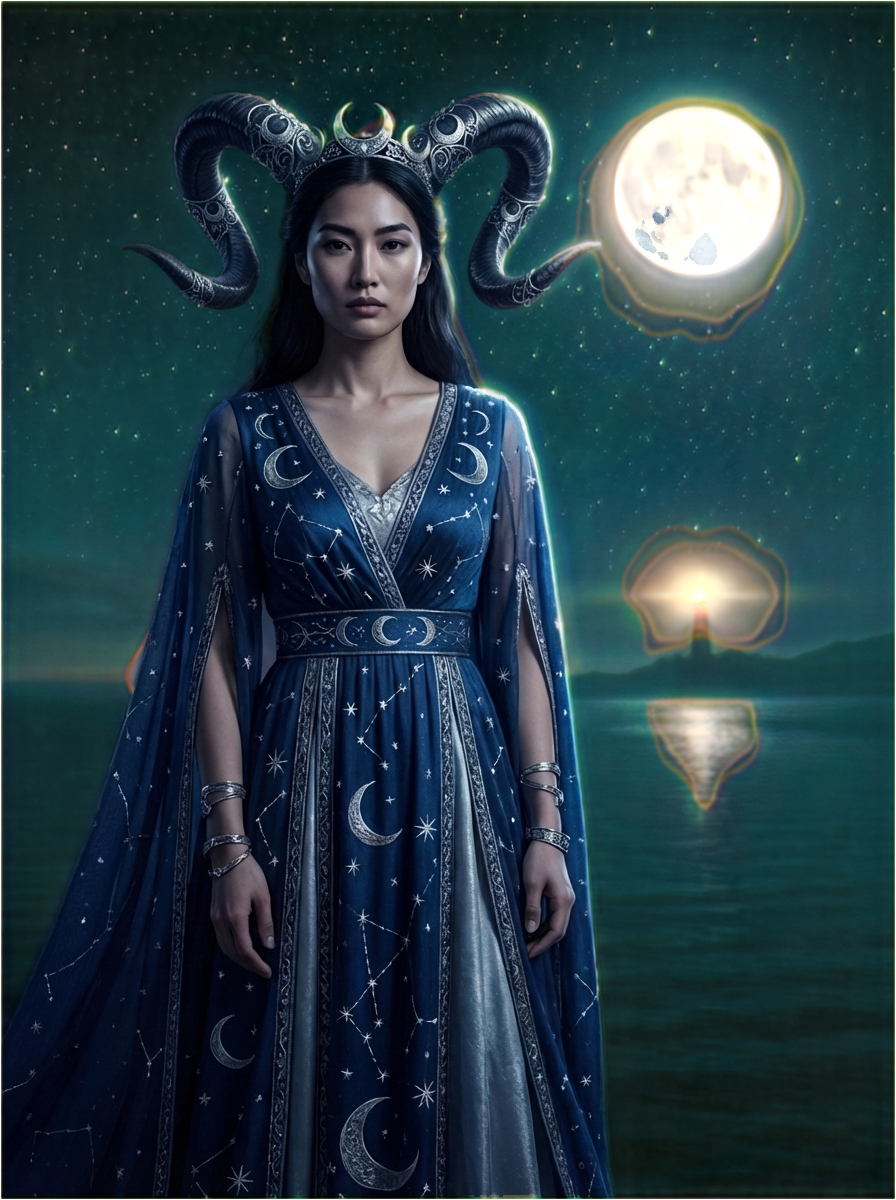
Character
Mo'ana governs the darker, wilder, more dangerous domain. Her moon — Aelyr, the Pale Witness — controls the tides. Navigation by night depends on her. H'analaise sailors don't pray to Mo'ana for safety — they pray for the courage to go anyway. She doesn't promise return. She promises that what you go toward is real. Her domain is worthy destination: the thing you trusted when you went somewhere you couldn't see.
This sits in interesting relationship with Tai, the threshold god shared by H'analaise and Daening. Tai receives you when you die. Mo'ana is what you trusted on the way. The H'analaise theological reading of death is nautical: the dead sail out, and what receives them matters less than that they went with courage toward something real.
Mo'ana is the younger sibling — Aelyr governs the night, navigates by stars, came after the sun as a form of timekeeping. There is something restless about her domain compared to Shen's. His sky is orderly; hers is vast and dark with points of light. H'analaise warrior tradition lives in this register — the willingness to sail into the unknown and trust the destination. The second moon, Bryneth — the Ember Wanderer, smaller and copper-red — shares Mo'ana's sky but is not hers. Who governs Bryneth is a matter of theological dispute; what is undisputed is that it belongs to a different order than Aelyr.
The Dunai Connection
The Dunai were primarily situated in H'analaise before being economically strangled and driven inland. Their warrior god Grael and their relationship with Mo'ana are layered — the coastal Dunai before the diaspora would have had a complex dual devotion, Grael for the warrior's code, Mo'ana for the sea crossing. The diaspora Dunai who followed Grael inland lost the sea. Whether they still light a candle for Mo'ana, or whether that tradition died with the homeland, varies by clan and generation.

Character
Rowan is probably the oldest human religious tradition in the world. The harvest faith predates kingdoms. You don't build Rowan a cathedral — you leave something at the field's edge before the first cut. You don't have priests so much as customs: the offering at the mill, the seasonal rite observed without thinking of it as theology, the particular prayer said before planting that your grandmother said before planting and her grandmother before her. The tradition is so embedded in daily life that most of Rowan's worshippers don't think of themselves as worshipping anyone in particular. They're just doing what you do.
This is Rowan's greatest strength and greatest vulnerability. The diffuse, unaddressed reverence of millions of ordinary people generates real power. But it generates no institutional structure to protect it. There is no church of Rowan to resist Sorvaine's expansion, no theological authority to name the replacement happening in front of everyone.
Sorvaine's Absorption
Ordinary people moving into Sorvaine's parish church culture don't feel like they're abandoning Rowan. They feel like they're doing something additional. The priest who buries your neighbor and the sisters who run the soup kitchen don't ask you to stop leaving something at the field's edge. Not at first. The replacement is gradual enough that it doesn't register as replacement until it's complete. By the time anyone notices, the seasonal rite has become a church feast day, the field offering has become a tithe, and the direct relationship between a farmer and their land's god has been mediated through an institution that harvests the devotion upward.

Character
Tael Marren is worshipped in the spaces where exchange happens — harbors, markets, counting houses, the moment before a contract is signed. The tradition holds that deals made in this god's name hold. Whether that's divine enforcement or the social pressure of having invoked a god in a transaction is something theologians have argued about for centuries. Tael Marren probably finds the argument tiresome. The point is not the mechanism. The point is the honesty.
This is a god whose domain is a moral claim about commerce: that exchange is legitimate, that the deal is sacred, that what you agree to you must honor. Not a punishing god — Tael Marren doesn't smite the fraudulent merchant. But the tradition of invoking this god in contracts creates a social architecture of accountability that functions even without divine intervention. The religion is partly self-fulfilling.
The Shippers Guild
What Sorvaine has done to the Shippers Guild is, from Tael Marren's perspective, a specific theological desecration. The Guild operates under the nominal benediction of honest exchange — harbor offerings, contract rites, the surface forms of the tradition. The actual operation is regulatory manipulation, favoritism for church-affiliated merchants, deliberate obstruction of competitors, and corruption running up to the divine machinery behind it all. The forms of Tael Marren's worship are being used to sanctify their opposite. This god is aware of this. They lack the institutional power to do anything about it directly. The desecration is ongoing.
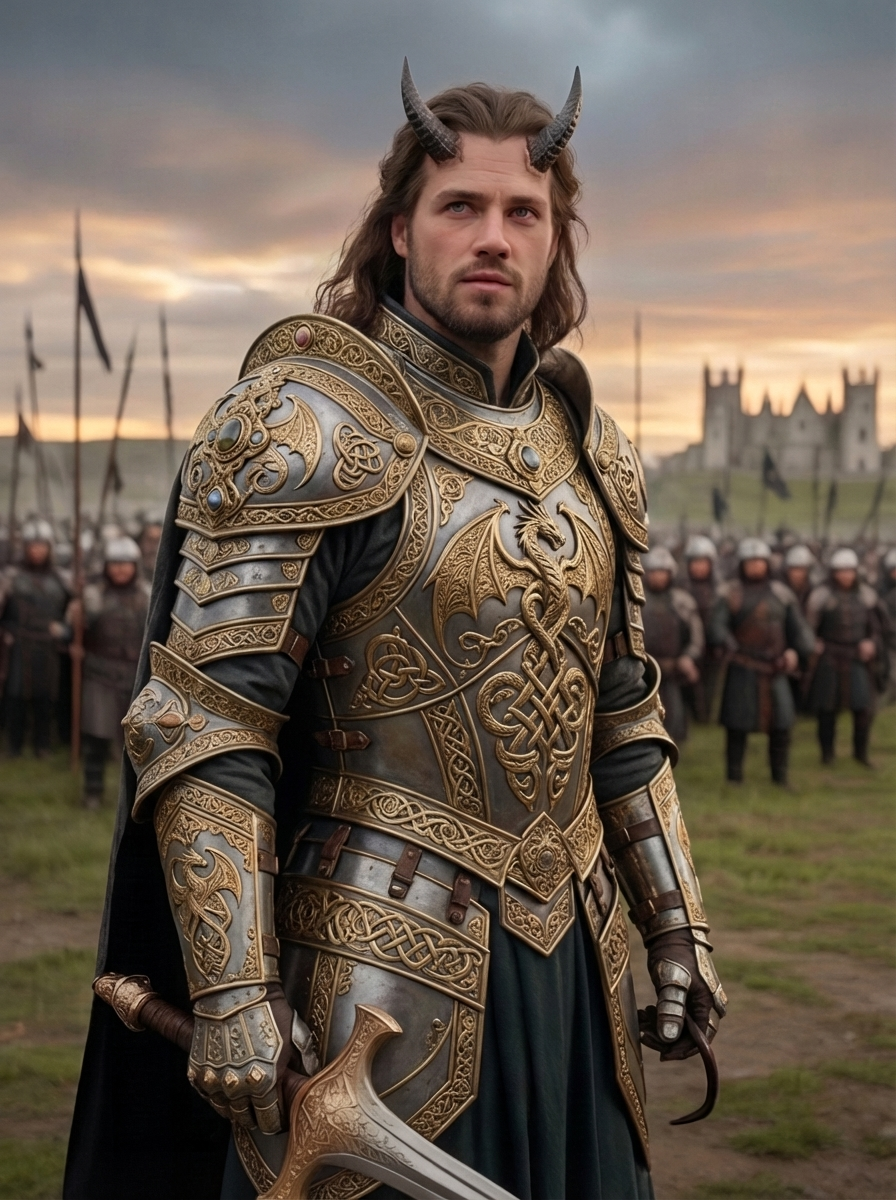
Character
Corrath's domain is not conquest or glory. It is the specific moral weight of someone who chooses a dangerous post because someone has to. The city watch sergeant who stays on through a bad shift. The soldier who holds a line. The person who steps between harm and someone who cannot defend themselves. You invoke Corrath before a hard thing, not after it. The prayer is a preparation, not a celebration.
This is a god whose worship is built from a vocabulary of protective vocation — righteous work, the courage to do hard things in defense of others, the legitimacy of necessary violence. That vocabulary is morally serious and emotionally resonant. It is also vulnerable to repurposing.
The Thagari Problem
Sorvaine's church has spent generations absorbing Corrath's worship base by positioning her clergy as military chaplains and reframing the Thagari's ideological formation in Corrath's vocabulary. Examiners are taught that they are doing righteous protective work — purifying the community, removing something dangerous before it causes wider harm. The burning is necessary. It is mercy. This is Corrath's language with Sorvaine's theology underneath it.
Examiners like Maren who have a genuine sense of protective vocation aren't worshipping Sorvaine in any emotionally real sense. They're worshipping something closer to Corrath, inside an institution that has quietly redirected that devotion. Maren's arc — from Examiner to protector of the person he was sent to burn — is, among other things, a man whose actual theological instincts were always Corrath's, not Sorvaine's. He doesn't know that. It doesn't need to be said aloud. It's true anyway.
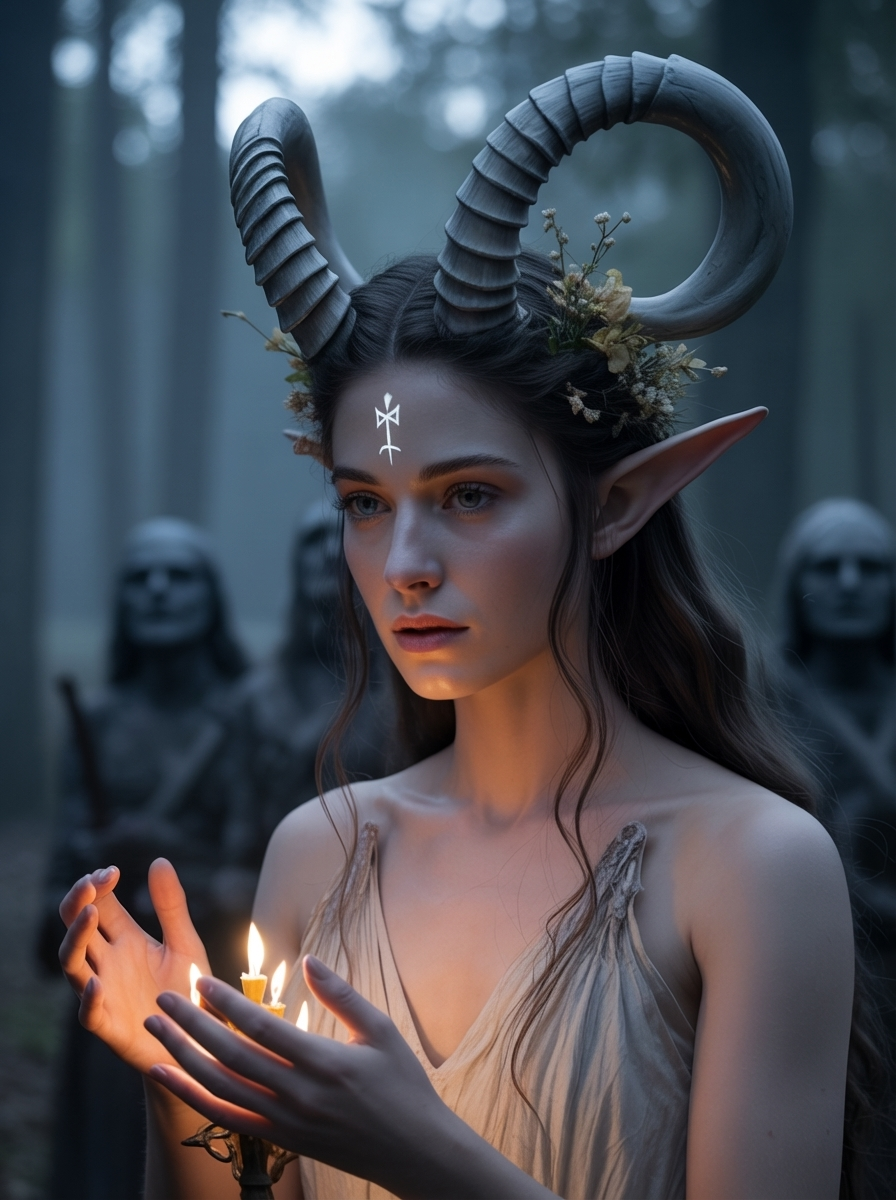
Character
Lireth Aelve's operating principle is that mathematical truth is the highest form of love. She does not comfort with falsehood. If a diaspora Alvar prays for their dying child to recover, and the child is going to die, Lireth Aelve does not send a dream of false hope. What she sends — if anything — is clarity. A precise understanding of what is coming, and why, and what it means. To those who understand the god, this is the deepest form of care available: being told the truth by something that loves you.
This also means Lireth Aelve has an unusually clear-eyed relationship with her own situation. She knows Lirenne doesn't worship her. She knows her power base is the diaspora — the Alvar living as minorities in other kingdoms, navigating the specific friction of a long-lived people in someone else's world. She knows the comfortable homeland majority takes her services for granted. A god who values truth doesn't hide from this or resent it into bitterness. She sees it completely, precisely, and continues anyway. Honoring the arrangement because the arrangement is true and good and the Alvar dead deserve tending regardless of whether their living relatives remember to say thank you.
The Naming
The Alvar did not name themselves after this god — they were recognized by her. The creation story holds that Lireth Aelve found a people whose nature aligned with what the god understood to be true, and named them: you are mine, and I am yours, and I will receive you when you are done. No miracles of formation. No clay and breath. Just the precise acknowledgment of an alignment that already existed. "We are the Aelve's people" collapsed over millennia into simply "the Aelve," softening through use into Alvar. The god's name became the people's name.
Power Situation
Tending to the Alvar dead costs little — the afterlife requires no miracles, no expenditure of harvested power. The arrangement is sustainable on the diaspora's worship alone. What it does not generate is enough power to act meaningfully on the material plane. Lireth Aelve is not a player in the divine politics of the continent. She is a custodian, operating at the scale her power allows, doing the work her nature requires.
Sorvaine's expansion into Lirenne, if successful long-term, would eventually redirect Alvar devotion and leave Lireth Aelve with fewer souls arriving as expected. The god sees this clearly. She lacks the power to prevent it through divine means. This is background knowledge she holds with the specific steadiness of someone who has always known exactly what they can and cannot do.
In the Story
Ingle — from The Hael, diaspora Alvar, deeply skeptical of organized religion — likely holds something like Lireth Aelve's faith without framing it as worship. A god who operates on mathematical truth and asks nothing of you except that you live honestly is the kind of faith a man like Ingle could hold without feeling he'd compromised himself. He would call it acknowledgment of a true thing rather than worship. The distinction matters to him. Lireth Aelve probably doesn't mind.
Mags' mother Tessara was from Lirenne. She would not have worshipped Lireth Aelve — the Lirenne Alvar assume the arrangement without sustaining it. She would not have taught Mags to. Mags knows the name. She has no personal relationship with the god.
Ambient Texture — Lirenne
Arriving in Lirenne from the mainland feels almost secular. No ten-pointed stars on buildings, no gestures in the street, no phrases overheard. The god is assumed the way gravity is assumed — present, necessary, not thought about. A visitor from Sorvaine's world finds the absence disorienting. The Alvar of L'lane are not irreligious. They simply have no need to perform a faith that is simply the arrangement of things.
The one place the assumption becomes visible is death. Lireth Aelve's domain is the Alvar dead, and funerary practice is where the relationship becomes explicit. Lirenne funerals are plain and honest — the ceremony acknowledges emotions without amplifying them. The dead are named aloud. The obligations of the relationship are stated. There is no false comfort, because Lireth Aelve does not traffic in false comfort, and the tradition reflects her. What a Lirenne funeral gives the grieving is not reassurance that everything is fine. It is the precise acknowledgment of what happened and what it means.
For the group arriving in Book Two: the absence of visible faith is its own texture. Then, near the harbor district, a wooden structure going up in the Shippers Guild compound — new construction, consuming adjacent Guild buildings, the ten-pointed star appearing on a door where none was before. People at the docks with small star pins, pressing sprigs of dried borderwick into the hands of passengers arriving from Aldenmere. Recognizable to those who know what they're being given. Invisible as religious gesture to the Alvar walking past. Sorvaine's reach into Lirenne beginning at the entry point, targeting people who already carry the cultural framework to receive it. Mott registers it immediately. He has seen his Cardinal briefings. He knows what the early stages look like.
Character
Tianzhi's domain is not law in the punitive sense. Courts punish violation. Tianzhi governs alignment — the ongoing work of keeping human life correctly oriented relative to what it owes and what it's owed. The closest parallel is the concept of ritual propriety: the correct performance of relationship, not as empty ceremony but as the grammar of a well-ordered life. You observe the rites because the rites are the shape of right relationship made visible.
This god is patient above all things. Disorder accumulates slowly. Correct ordering is restored slowly. Tianzhi does not act dramatically — no miracles, no interventions, no signs in the sky. What this god does is notice. See the misalignment clearly. Wait for the correct moment to allow the consequence to arrive. Not punishment. Just the universe returning to its proper shape.
Relationship with Shen
Shen governs the sky's movements — the correct time for planting, for harvest, for the turning of seasons. Tianzhi governs the correct time for human actions — when to marry, when to mourn, when a ruler's mandate is spent. Shen provides the fact. Tianzhi provides the interpretation. A Daening priest of Tianzhi typically has deeper astronomical knowledge than most scholars, because reading Shen's sky correctly is prerequisite to advising on the ordering of human affairs.
Relationship with Tai
Tianzhi and Tai work in sequence. Tianzhi governs the correct conduct of a life — the rites observed, the obligations discharged, the relationships properly maintained. Tai receives what arrives after death. Daening funeral culture involves both: Tianzhi's priests oversee the ceremony and determine whether the obligations of a life were properly met; Tai governs what comes after. The two together constitute Daening's complete theology of passage.
Resistance to Sorvaine
Sorvaine converts through emotional investment — devotion, fear, the desire for divine protection. Tianzhi's worship is structurally resistant to this model: you observe the rites because the rites are correct, not because you feel something. The Daening priestly tradition is less church and more civil institution — the people who determine whether a contract is properly made, whether a funeral was correctly observed, whether a ruler has forfeited their mandate. You cannot convert someone away from a god whose worship is essentially identical to civic behavior. To replace Tianzhi in Daening, Sorvaine would have to replace the entire architecture of Daening's social order.
Ambient Texture — Daening
Arriving in Daening from the mainland, the group would feel slightly off-footing in social interactions without being able to name why. Forms of address encoding relationship — elder/younger, teacher/student, obligation-holder/recipient — that outsiders keep accidentally getting wrong. The religion is essentially the grammar of how Daening people speak to each other and organize their time. It looks like excellent manners from the outside. It is the shape of correct relationship made visible.
The bells: In Daening towns and cities, bells ring at morning and evening — aligned with Shen's sky, the sun providing the anchors. When the bells ring, the people around them pause. Hands clasped together in front of the body, head bowed, eyes closed, for the count of five or so. Then resume, as if nothing happened. The group riding through when the bells ring sees an entire town briefly go interior simultaneously. Nobody polices it. Nobody looks to see who did and didn't comply. A cart driver who can't safely close his eyes doesn't — the rite yields to practical necessity, because Tianzhi governs the correct ordering of human life, which includes not causing harm through rigid observance. The compliance is between the person and their own sense of correct behavior.
The priests: Tianzhi's priests wear robes and distinctive formal hats — elaborately structured headwear that communicates institutional authority and rank, immediately readable as marking someone whose role is to determine whether things were done correctly. Less clergy, more civil arbiter. Deep astronomical knowledge is expected — reading Shen's sky properly is prerequisite to advising on the ordering of human affairs. In a room, a Tianzhi priest feels like a scholar with bureaucratic weight, not a spiritual counselor.
The monks at Tianshu are a completely different register — the One God's institution, not Tianzhi's. Simpler robes, no elaborate headwear, a quieter kind of authority. The group moving from Daening towns to Tianshu would notice the shift.
Character
Tai is the oldest of the shared gods — present before Daening and H'analaise became distinct peoples, before the mountain culture and the sea culture diverged. The name predates both and belongs fully to neither. Scholars in both traditions recognize this and treat it as evidence of a shared origin that the cultures themselves have largely forgotten.
The two traditions emphasize different aspects of Tai's domain. Daening makes this god about correct passage — you lived well, your obligations were discharged, your ancestors vouch for you, you arrive in the right shape. H'analaise makes this god about the crossing itself — the sea is the metaphor, the dead sail out, what receives them is less important than that they went with courage. Both are true. Tai holds both.
The Brocco Question
It has been proposed in some theological traditions that Tai was the god who struck the bargain with Brocco — that the threshold god, watching the holy war from a position of perfect neutrality, recognized the Umber bloodline's destruction as a wrong passage and arranged for the prophecy as a custodial act. This is not established. It is the kind of theological argument that persists in archive discussions without resolution. Tai has never confirmed or denied it. Tai rarely communicates at all.
What Happened
The Dunai were a respected warrior people. Western Umberhal was taken by force; the rest was economically strangled over generations until the diaspora became inevitable. There was no single catastrophic defeat. No enemy to honor in defeat. Just the slow specific violence of being made economically unnecessary, tolerated when useful, dispersed until the homeland became memory.
Grael watched this. A war god whose people stopped being able to make war — not because they were defeated but because the world around them stopped allowing it — had to become something different or become nothing. Grael became something different. The domain shifted from conquest to endurance. Not dramatically. Not with a declaration. Just the slow adjustment of a god whose people's survival required a different kind of courage than the one Grael was built around.
Current Nature
You don't pray to Grael for victory when you're working a trade stall in Carnehue or the docks in Myraei. You pray for dignity. For the memory of what your people were. For the specific kind of courage it takes to hold yourself together when the world is designed to make you small. The warrior tradition persists in diaspora Dunai not as actual warfare but as a cultural posture — the clan insularity, the self-sufficiency, the faint contempt embedded in the word Bred. Grael is what's underneath all of that. Still fierce. Changed by what happened to his people.
The worship is private and clan-internal. No temples visible to outsiders. No priests in the conventional sense. The rites happen inside clan structures, passed down within families, invisible to the mainlanders who tolerate Dunai instrumentally and otherwise don't think about them at all.

Character
Aldern predates the Dern dispersal — a god from when the Dern were unified, before clan insularity became the condition of survival rather than the expression of preference. The domain is the principle that some things belong to particular people and must be protected from outside claim. Not wealth. Not territory. What is yours — the hearth, the family, the accumulated knowledge of a clan that cannot interbreed with anyone and has therefore developed everything it needs within its own walls.
The Dern's practical self-sufficiency — farming, carpentry, hunting, medicine, everything an isolationist group would need — is not coincidence. It is theology expressed as lifestyle. You keep your own because Aldern says what is kept is sacred. The closed door is not rudeness. It is practice.
The Clan Hearth Gods
Beneath Aldern sit the clan hearth gods — divine ancestors, Dern of exceptional character elevated after death by the sustained devotion of their clan line. Each clan has their own. They are intensely local, unknown outside their clan, not interchangeable between traditions. A Dern from the Bres clan would have a specific hearth god nobody outside the Bres has heard of. This is partly why outsiders don't understand Dern religion — it isn't a system you can survey from outside. It's a hundred private relationships. Aldern is the only layer visible at all to non-Dern, and only barely.
Ambient Texture — What Outsiders See and Don't See
Dern religion is invisible from outside. No symbols on doorframes, no public gestures, no phrases overheard in the street. Entering a Dern settlement, a visitor notices the absence of what they've come to expect — particularly striking arriving from Sorvaine's world, where the star appears on every building. The faith is nowhere visible. This is not concealment. It is the religion's nature: what is kept is sacred, and the keeping happens behind the closed door.
What a Dern would notice entering another Dern household: the hearth. Its cleanliness — ash properly cleared, tools correctly placed, the fire maintained at the right level — is readable as a statement of devotion. Not decorative cleanliness. Functional care that signals something. An outsider sees a tidy hearth. A Dern reads it immediately. Mags, who grew up at Bresholm, would read it too.
The bulk of formal observance happens on specific days of the year — seasonal, communal, clan-internal. What passes for daily practice is simpler: taking care of your community. The practical self-sufficiency of Dern life — food placed without being offered, the specific hospitality that doesn't ask if you're hungry because the question implies you might not be fed — is devotion expressed as action. Aldern's domain is the sanctity of what is kept. Keeping your people is the practice.
Mags and Aldern
Mags grew up at Bresholm among the Dern without being Dern. She knows the inside of this tradition — the hearth practices, the forms of community care, what happens behind the closed door — without belonging to it. She attends at the edges of observance rather than participating. Her theology, to the extent she has one, is genuinely mixed: Lireth Aelve by bloodline she doesn't feel, whatever her father carried that nobody taught her, Aldern by proximity and years of lived experience. None of it resolved. None of it performed.
What stuck is not theology. It's the practice underneath — taking care of the people in front of you, because that is what life was at Bresholm. She doesn't think of this as religious. It is simply how things are done. Which makes it the deepest kind of formation: absorbed rather than taught, running underneath everything she does without a name attached to it.
Power Situation
Aldern's power base is invisible to mainlanders. Nobody realizes how many quiet, consistent worshippers sustain this god because the worship happens behind closed doors. High society looks down on the Dern most — the people who need them least are the most contemptuous. Those same people have no idea that the Dern's insularity is backed by a religious tradition older than most of the kingdoms they inhabit.
The Defection
Vessa joined Sorvaine's coalition against the Umber bloodline. The theological justification was real — a compounding accumulation of immortal Umber descendants in Aevorn was a genuine long-term problem for the existing divine order. Vessa understood the argument. She helped build it. And then, watching the coalition prepare to systematically hunt children across generations, she found she could not continue. Her entire domain was the preservation of what deserves to persist. Participating in the deliberate erasure of something that had genuine human love behind it was a theological self-contradiction she could not resolve. She defected.
The bargain she struck with Brocco was the only act available to her: non-interference purchased with a promise. She concealed the bastard line during the period when Sorvaine was destroying everything connected to Balda. She arranged for the One God's prophet to speak a prophecy that left the bloodline a door. She bought enough time and enough possibility with everything she had.
The Prophecy Reveals the Bargain
Sorvaine was shocked by the Umber prophecy. Its content told her several things simultaneously: there was a surviving bloodline she didn't know existed; someone had concealed it deliberately; someone had enough standing with the One God to negotiate a prophecy into existence as consideration for a deal. She worked backward. Brocco's retreat, which she had accepted without fully explaining, acquired a shape. The thread led to Vessa. The punishment followed — efficient, precise, and designed to last. Not death. Dismantlement. Vessa's church was absorbed into Sorvaine's apparatus. Her institutional power was stripped. She was left alive but hollowed out: present, diminished, watching what she once had become part of the machine she defected from.
Two Thousand Years After
Vessa has been acting at the edges of her remaining power ever since. Not dramatically. Just ensuring the record persists. The true history of the Umber kings surviving in the Lirenne archives when it was suppressed everywhere else. The lion's knot pendant staying in the Umber family through generations of ordinary obscurity. Small interventions, barely perceptible, costing what little power the scattered remnants of her former worshippers still generate.
The scholar at the Lirenne colleges who helps the group — who recognizes Tessara's treatise, who reads the intimate Alvari term of address in the margins, who later writes the letter confirming what Plague is — works in Vessa's tradition without knowing it. Lirenne, which has kept the true history when everyone else suppressed it, is quietly the most Vessa-aligned place in the world. Not worship. Alignment. The institutional impulse to preserve, to archive, to keep the record against suppression, resonates with Vessa's domain in a way that generates something — a faint warmth between a diminished god and the civilization most committed to the thing she loves.
The Temple in Ossavar
Vessa's temple in Ossavar is intact. The city wasn't destroyed — it was emptied when its river changed course, over sixty years, one departing family at a time. The temple has a roof. It has shelves. It has whatever wasn't worth taking when the priests left. A library with nothing in it. A memory god's temple that has forgotten what it was for.
The same prophet — Tomas Ferre — who spoke the Umber prophecy and thereby revealed Vessa's bargain, also prophesied Ossavar's abandonment with exact accuracy. Vessa's ruined temple sits in the city that the instrument of her downfall also predicted. Whether that is coincidence, or whether Tomas Ferre was drawn to Ossavar because Vessa's presence there made it a place where true things surfaced, is the kind of question that doesn't need an answer. It exists in the background. It is felt rather than explained.
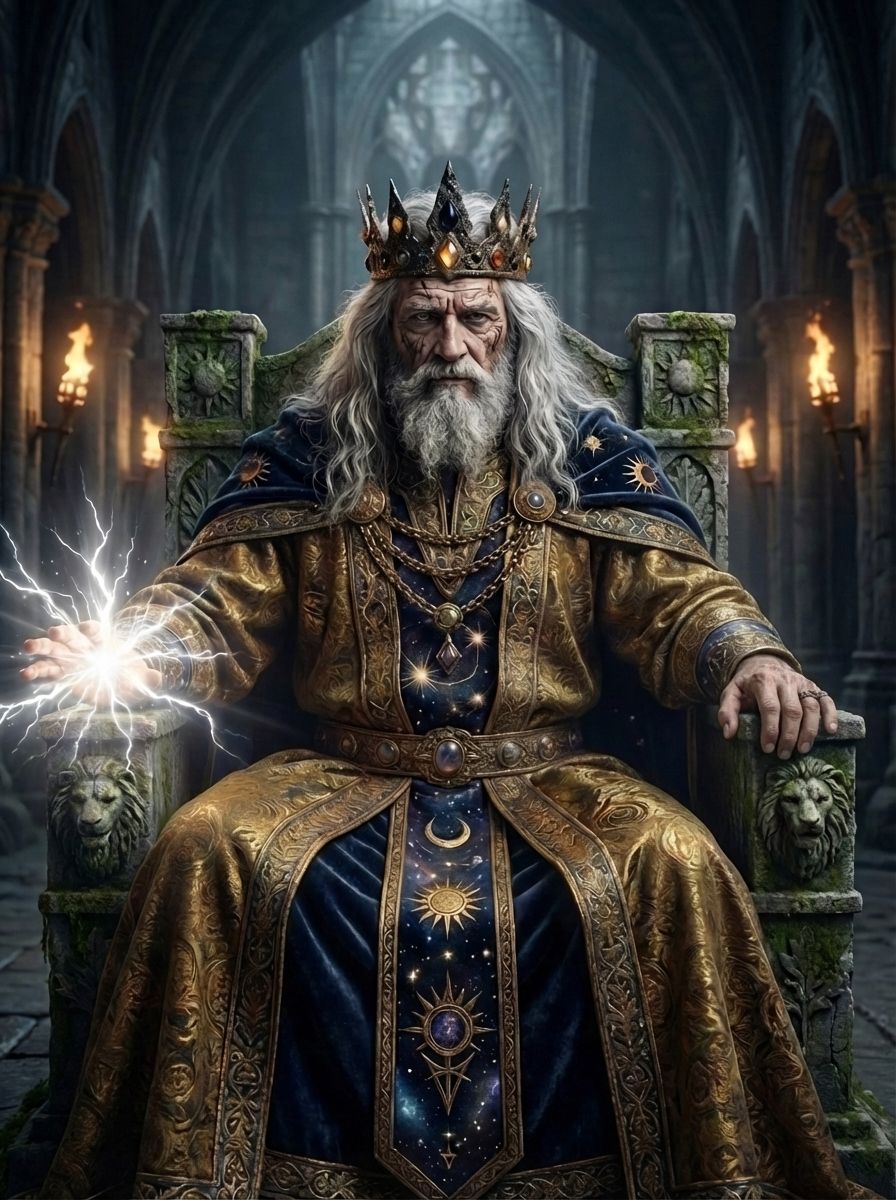
The Child
Fathering a mortal child required Brocco to do something no other god has managed or attempted: genuine self-reduction. Divine-mortal contact fails because gods are too large, too present in ways human minds cannot hold. The only way around this is not power — it's limitation. Brocco found a way to make himself small enough. Whether this cost him something permanent is not established in any text. That it cost him something is not in doubt.
Balda became the most beloved king in history. His mother Miya claimed his father was the god Brocco — a claim that was neither confirmed nor denied in Balda's lifetime, and that became central to his deification after death. The truth of Brocco's paternity is author-level knowledge. Brocco knows. Nobody else has been able to verify it for two thousand years.
The Holy War and the Bargain
When Sorvaine organized the coalition against the Umber bloodline, Brocco was a problem. He had motive to intervene that no other god shared — Balda was his son, the bloodline his grandchildren. Sorvaine built the war partly around containing him. She knew he would try to fight and calculated that the coalition had enough combined power to prevent effective intervention.
She was probably right. Vessa, who understood the coalition's strength more precisely than Brocco did, approached him before the war reached its critical phase. The bargain: stay out of the fight you cannot win. In exchange — concealment of the bastard line, which Sorvaine did not know existed, bought from the obscurity of a barmaid's unnamed son. And a prophecy spoken through the One God's prophet, leaving the bloodline a door two thousand years hence.
Brocco accepted. Whether from genuine belief that the bargain was the best available protection, from coercion, or from a calculation that his participation would only accelerate Balda's destruction without saving anyone, he stepped back. He watched the holy war proceed. He watched Sorvaine destroy Balda in Aevorn in Year 813. He has carried the weight of that acceptance ever since.
Since the Bargain
Brocco is diminished — by the long centuries, by the reduced worship of a god whose primary claim on human devotion was a beloved king who has been dead for two thousand years, possibly by whatever the act of self-reduction permanently cost him. He is present in Aevorn or barely present in the world. He is not a player.
What he is, two thousand years later, is someone watching the end of the bargain approach. The bloodline has been whittled to three people. Then two. Then one. The prophecy is live. The thing Vessa purchased with her punishment and Brocco purchased with his abstention is either going to resolve or it isn't. He has spent two thousand years with no power to affect the outcome, watching Sorvaine hunt his grandchildren's grandchildren's grandchildren through the generations, carrying the specific weight of a man who made the only available choice and has never been entirely sure it was the right one.
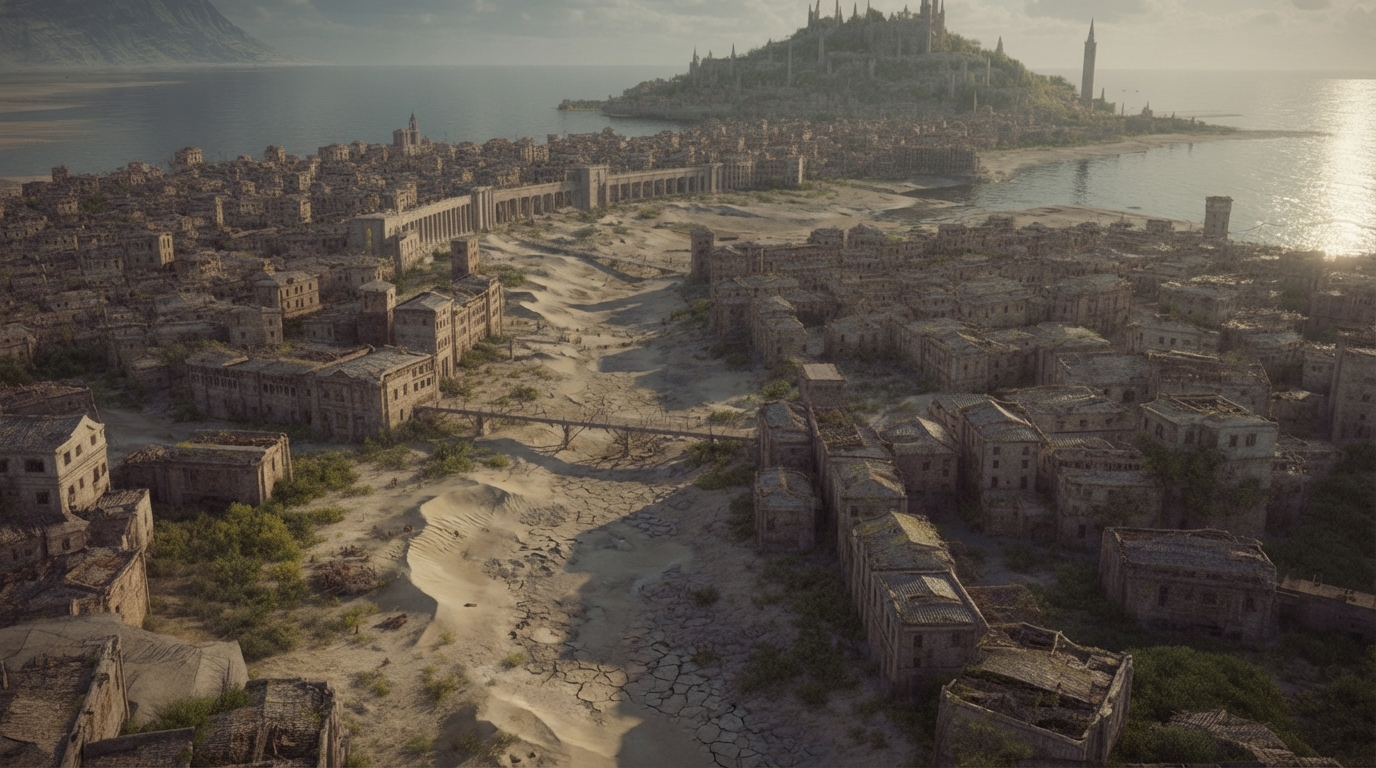
What Happened — The Deep History
In Year 761, the witch Thaga killed Balda Umber at Ossavar. The most beloved king in history, murdered in a city on the southern coast. The killing concentrated an enormous amount of grief, worship, and divine energy at this location. Balda's people continued worshipping him after death — the place where he died became the focal point of that worship. The concentrated divine activity — a god dying, a god being born from continued worship, the barrier between worlds thinning under the weight of both — created a permanent weakening of the barrier between the physical world and Aevorn at this location. Fifty-two years later (Year 813), Sorvaine destroyed Balda in Aevorn. But the thin place remained. The barrier does not heal.
Vessa's temple at Ossavar predates or follows from this event — the god of memory and persistence maintaining a presence at the site of the history she would later help preserve.
What Happened — The Surface History
The river that fed Ossavar — now called the Bridewell — split sometime around the eleventh century, the main channel bending south toward Stonebridge while a new branch (the Dunwater) cut west toward what would become Carnehue. The split happened over the span of roughly two generations. It didn't happen overnight — which is almost worse. The city watched itself die slowly. The wharves went quiet first, then the merchants, then the people who served the merchants, then everyone else. By the time the last inhabitants left, Ossavar had been emptying for sixty years. There was no catastrophe to mourn, no enemy to blame. The river simply decided to go somewhere else.
That is the surface history. The deeper question — whether the thin place slowly drained the city's vitality over centuries, whether a location where the barrier between worlds is permanently weakened is a location where living things gradually fail — is not answered in any archive. The river changed course. The city died. Whether the city was already dying before the river left is a question that sits alongside the ruins without being asked.
The old riverbed is still visible — a wide depression in the earth running alongside where the eastern wall meets open ground, grass-grown now, tracing the course the river took before it bent away south. On a dry day the line of it is unmistakable from the road.
What Remains
Stone doesn't require water. The larger structures are intact enough to be identifiable from the road — a civic hall, a temple complex, the remnants of what was clearly a significant market district. Closer in, the smaller buildings have begun to slump and collapse into each other. Nothing grows inside the walls except the kind of plants that grow in dry cracked places. The silence of a city built for tens of thousands that now holds none is its own specific quality — travelers passing nearby tend to give it a wide berth, not from superstition exactly but from the unease of scale without purpose.
Tomas Ferre's Second Prophecy
Tomas Ferre's second prophecy described, in precise and unremarkable language, a great city that would be abandoned not by war or plague or fire but by the failure of its water — not a flood, not a drought, but the river itself choosing a new path, leaving the city to stand dry and hollow. He named no city. He gave no timeframe. He described the mechanism in enough specific detail — the gradual shift, the two-generation decline, the riverbed still visible in the earth afterward — that when Ossavar died, scholars found the text and could not make it fit anything else. The match was exact in every particular.
What made it authoritative wasn't drama. It was precision. Anyone could predict a city would fall to war. Nobody predicted this, in these specific terms, before it happened. This is why nobody laughs at the other prophecy. Tomas got one exactly right. Scholars have to take the second one seriously whether they want to or not.
The Permanent Inhabitants
A handful of people still live in Ossavar. Not many — a few dozen at most. They are not there because they have nowhere to go, or not only that. They are there because they chose to stay, or chose to return, in a place that the rest of the world has already finished with. Nobody outside would understand this. The group glimpses them from a distance — a figure in a doorway, smoke from a chimney, a line of washing in a building that hasn't collapsed yet. They don't approach. The inhabitants don't approach them. The city's specific silence is its own kind of privacy.
Scene Function
The group passes Ossavar in Book One Ch. 12, between two destinations — visible from the road, the dead skyline unmistakable on a clear day. Someone — likely Edoine — identifies it. The second prophecy comes up naturally: Tomas Ferre predicted this, exactly, before it happened. The implication is not stated. It doesn't need to be. Mags is standing there looking at a city that died because something essential left it, being told that the man who predicted that also wrote the prophecy about her bloodline.
The scene should be brief. A paragraph of Mags looking at the dead skyline from the road. Sheep grazing in the foreground between the road and the city — pastoral, unremarkable, the landscape going on without the city it borders. A few lines of exchange — Edoine matter-of-fact about what it is and what was predicted about it, because that is how Edoine delivers information. The permanent inhabitants glimpsed but not addressed. The group moves on.
Book Three — The Spell Location
Ossavar is where Mags goes alone to cast the suicide spell at the end of Book Three. She saw it from a road in Book One and understood what the ewe's fate looked like. She walks into it in Book Three carrying the knowledge that this is the only place the spell can work.
The suicide spell requires a location where the barrier between the physical world and Aevorn is thinnest. The draw at maximum scale opens a channel through the bond — the channel becomes a door only where the barrier is already weak enough for it to punch through. Edoine's formula describes this requirement. The Anessi archives documented the thin place. The monastery named it. The investigation trail and the formula's mathematics converge on the same coordinate independently. Ossavar is not a choice. It is the equation's answer.
By Book Three, Ossavar is behind enemy lines — Carnehue has fallen, the coast is under Aldenmere occupation. The group must infiltrate through Sorvaine's own military operation to reach the place where Sorvaine can be destroyed. The war Sorvaine engineered has placed an army between the weapon and the target.
At night. Inside the walls, among the collapsed structures, the remnants of a temple complex are still identifiable — consistent with a Church of Umber, and now known to be the place where Balda was killed. The place has been waiting in silence since that god was destroyed. She casts the spell in the ruins of the oldest thing the city ever held, at the thinnest point between worlds, in the dark, alone.
The darkness carries multiple registers: the hour, the accumulated weight of the bond deepening, the texture of the spell itself which has grown darker as her power has grown. The woman in the dark is not just a location — it is everything the bond cost her, arriving at once in the place the story has been pointing toward since Book One Ch. 13.
Coastal city in western Aldenmere, on the southern edge of Caerwyn Bay. The knotwork design known as the Aelwold Rose — Mags' pendant pattern — takes its modern name from this city, where the design persisted as a decorative motif long after its original meaning was forgotten. No scene work established.
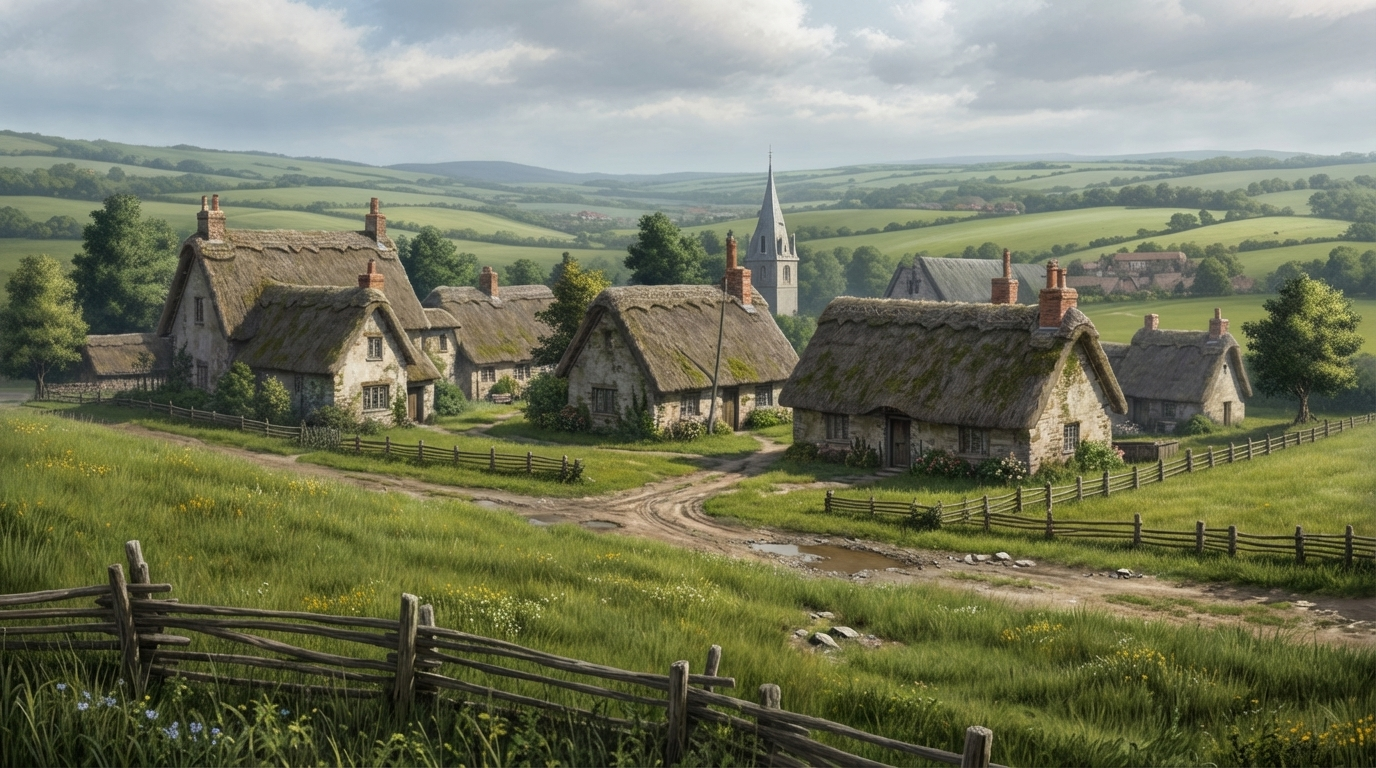
Map location in central-eastern Aldenmere. No scene work established.
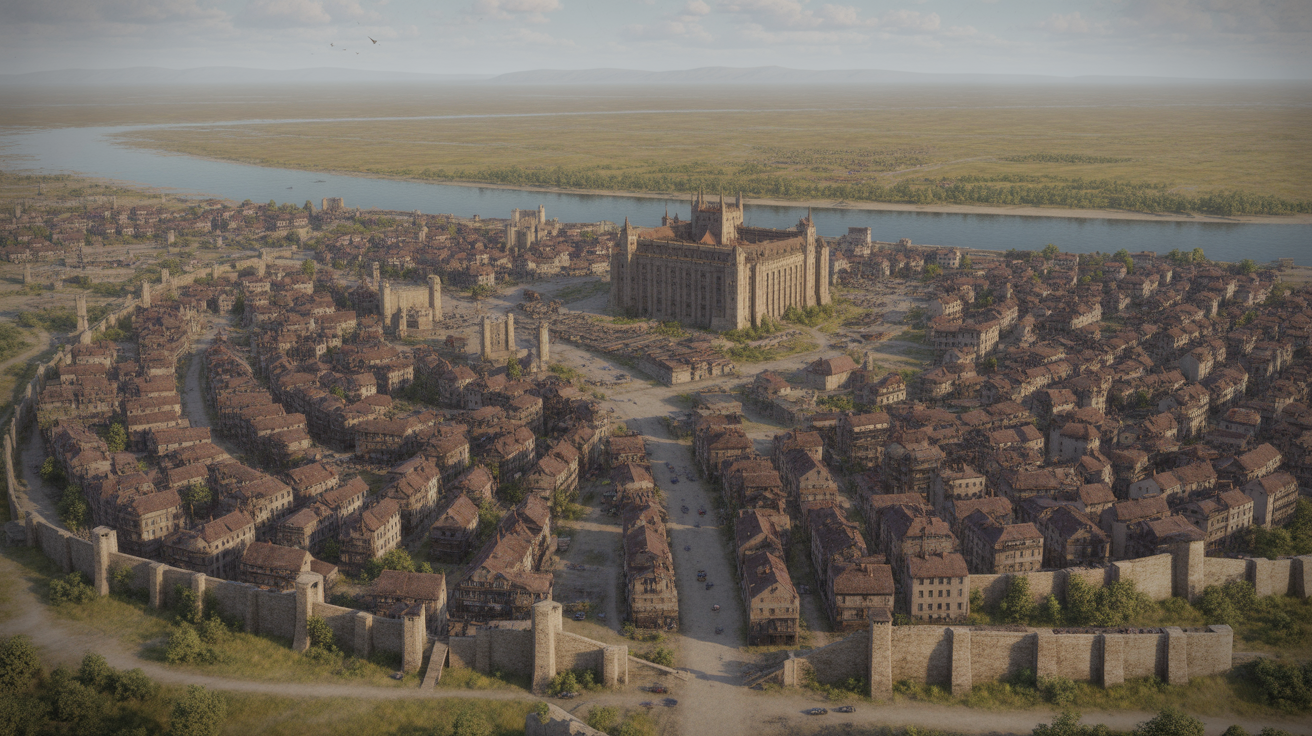
The capital of H'analaise. The Morgrym trail passes through the region south of Antis. The labor facility where Morgrym is held is in the hill country nearby.
Border region crossroads. Near the Aldenmere–South Aldenmere frontier. In the path of the Book Three invasion.
Map location in central Aldenmere. No scene work established.
Map location in southern South Aldenmere, between Carnehue and Brydden. No scene work established.
The Bres clan settlement where Mags was raised by Morgrym and Agna after the ambush. One of four designated Dern towns in South Aldenmere. The setting for Mags' coming-of-age celebration (Book One Ch 2), Agna's witch trial and burning, and Morgrym's arrest. In the path of the Book Three Aldenmere advance. The birthday, the tattoos, the bonfire, and the flowers dying in the dark all happen here.
The Hall
The clan hall — referred to simply as "the hall" — is the social and administrative center of Bresholm. The building runs east-west on its long axis, wider than it is deep (the long north and south walls are the wide faces). Morgrym conducts clan business here. Agna and Morgrym spend their days at the hall and in the kitchens, retiring in the evenings to their home nearby, situated off the courtyard to the west.
Courtyard (south): Outside the south wall, nearly as wide as the building itself. Main entrance via large double doors centered on the south wall. A large central fire pit used for celebrations, with rough-hewn timber bench seating around it. Guests arrive and deliveries are made here. Morgrym and Agna's home is off the courtyard to the west.
Main hall interior: Long tables run the east-west length of the hall. At the east end, a raised platform holds the head table, which runs counter (north-south) to the long tables. The kitchen door is on the north wall toward the west end, keeping kitchen traffic well away from the head table.
Kitchen (west end): Occupies the west end of the building. Opens north into the kitchen yard.
Kitchen yard (north, offset east): North of the hall, positioned toward the east end rather than centered. Herb gardens, a well, and storage sheds. Mags' exterior staircase is here, leading up to a small balcony and then into the attic. A path leads east to the stables.
Stables: East of the kitchen yard, northeast of the hall overall.
Mags' room: The east end of the attic, above the head table end of the hall. East-facing window — on a clear night, the watch fires of Ketton are visible. The remainder of the attic runs the full length of the building and holds old stored items under covers, largely forgotten. No other residents use the space. Tessara's spellcraft treatise is kept on the joist above the window.
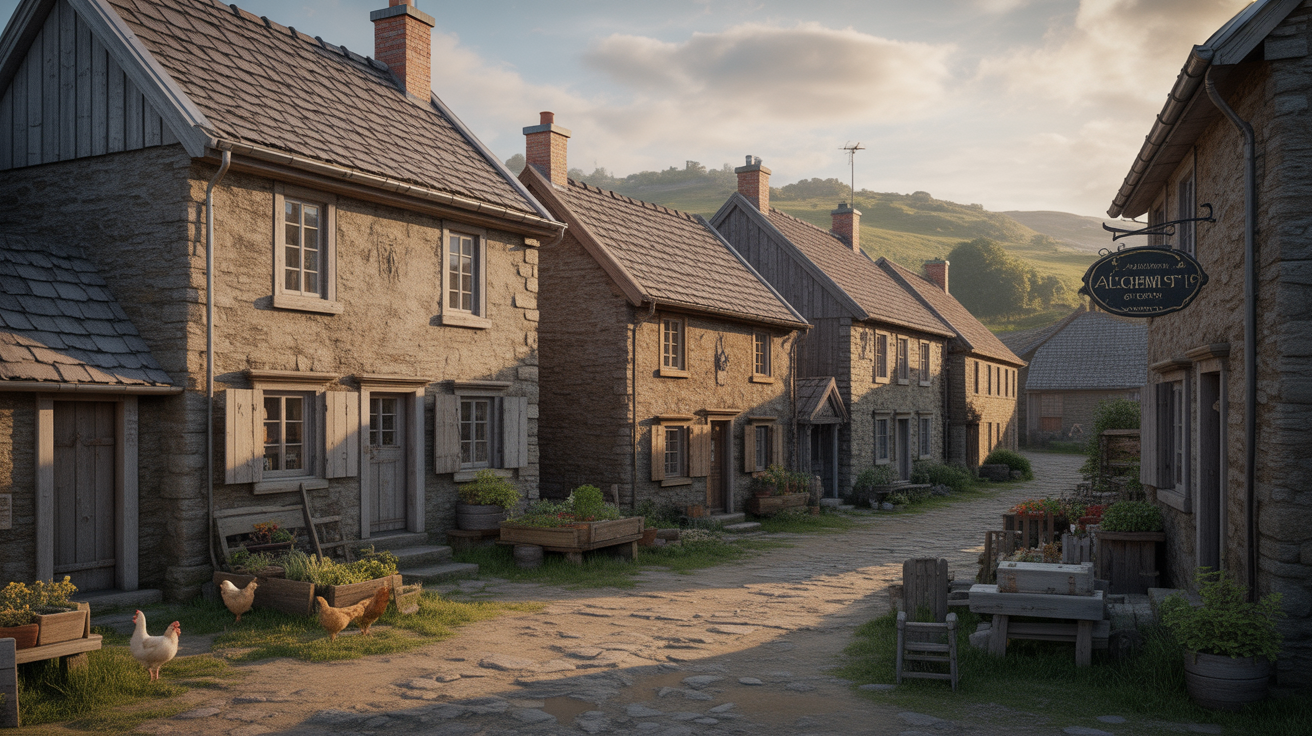
Ingle's home. A small northeastern town that exists because the surrounding farms needed a place to trade. An alchemist's shop on the main street. The setting of the Coda — the trilogy's final scene. Ingle returns here after everything. The workbench, the failed vial, the hands in the afternoon light.
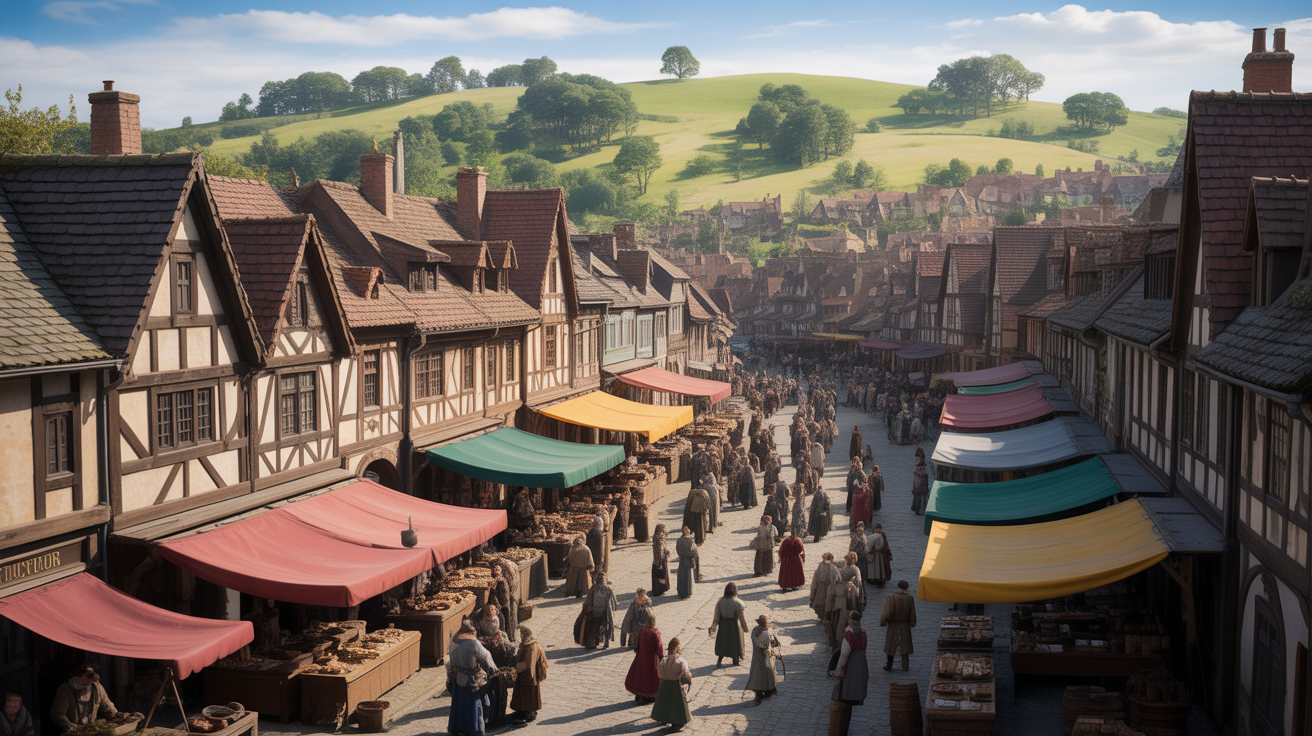
A market town south of Fenwick. Where Ingle demonstrates an alchemical light compound to a public crowd, it fails, and Mags clears his smoke — the event that brings Ingle into the group (Book One Ch 12).
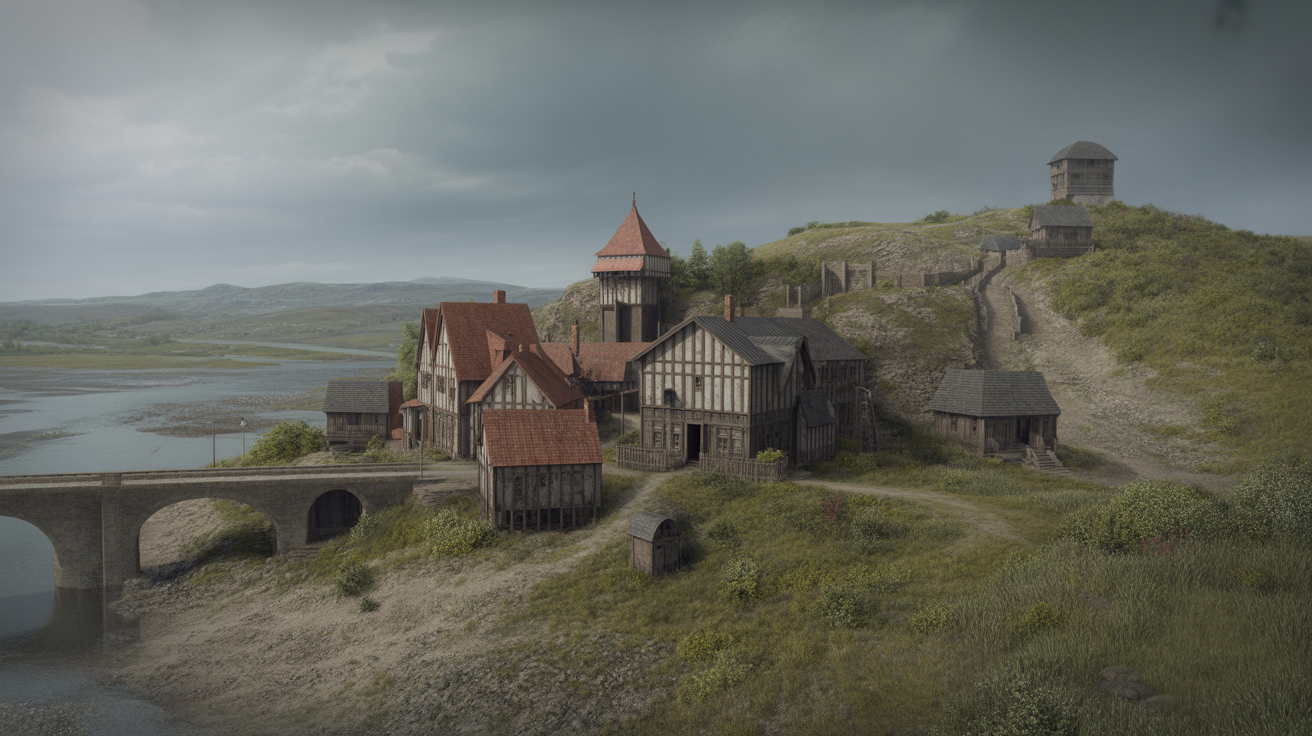
Map location in the southeastern border region. No scene work established.
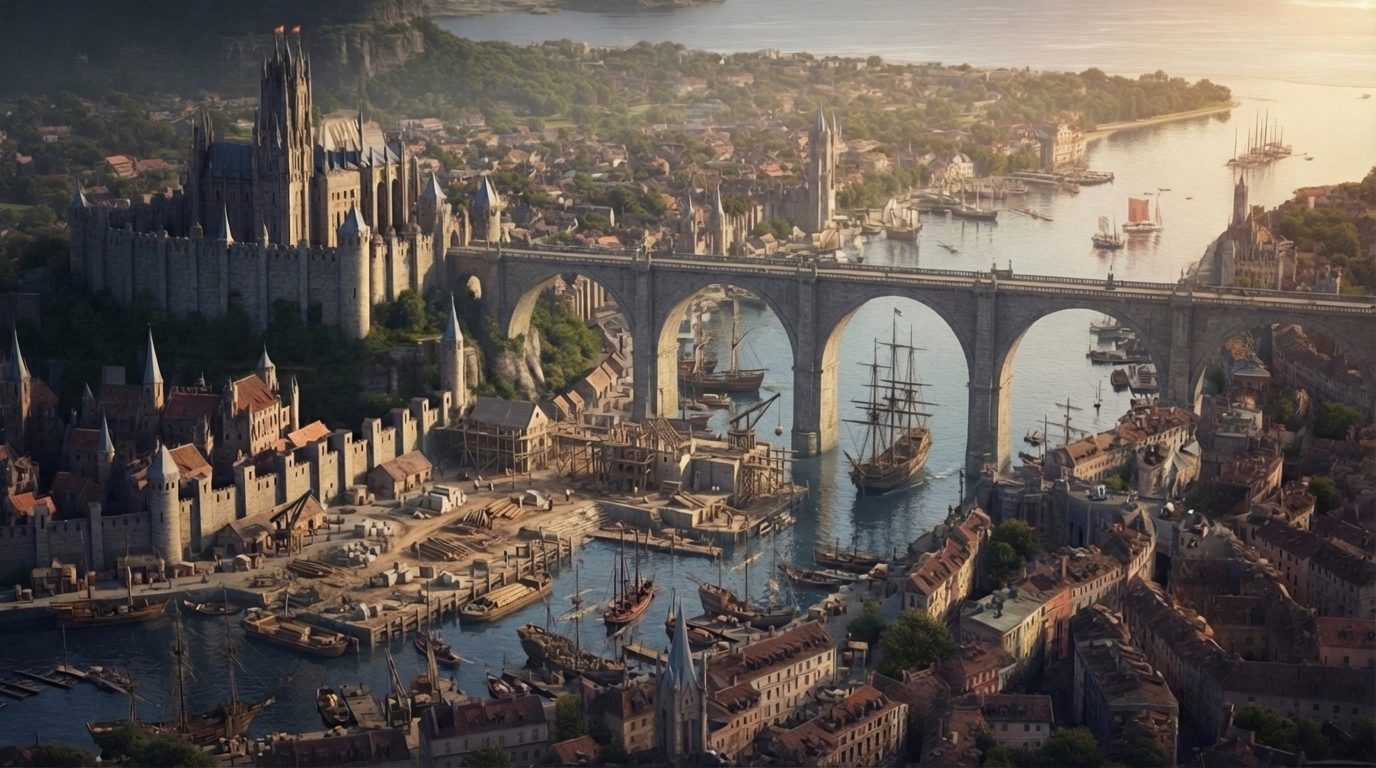
The continent's primary commercial port and the largest city in the known world. The economic heart of South Aldenmere — and notably not its capital, a gap that has shaped its politics for generations. The Shippers Guild is headquartered here, its power rooted in the control of maritime trade. Mags' birthplace. The hub of the Book One investigation. The city falls in Book Three when Aldenmere troops land at the harbor that was built to receive them.
Geography
Carnehue sits at the mouth of the Dunwater where it empties into Carnehue Bay. The river runs through a cut between two hills, both of which the city has claimed. The Dunwater is navigable well upriver, and tall-masted ships come and go with the tides. The city is divided by the river into two distinct halves — the western city and the eastern city — each with its own character, history, and social weight.
The Western City
The older half of Carnehue. The city grew up and over the western hill, spreading across its slopes and down toward the original harbor on the bay. This is the residential heart — denser, older, more weathered. Mags grew up here. The western city is where most of the population lives, where the older trades are practiced, and where the streets carry the accumulated texture of a city that has been inhabited for a very long time.
The Eastern City
The eastern hill is dominated by the fort that crowns it — the original reason Carnehue was settled, a military position before it was ever a city. The fort remains, now serving more administrative than military functions; the country has not been at war for many centuries, and the garrison is peacetime thin. The eastern city that has grown around and below the fort is wealthier and more commercial than the west — newer money, guild offices, better addresses. The new harbor is being constructed on the eastern waterfront, built up on pilings to address the low, damp ground near the water.
The High Bridge
The single most distinctive feature of Carnehue. The High Bridge connects the crown of the western hill to the fort's outer gate on the eastern hill, spanning the Dunwater far above the city and the river both. It is extraordinarily tall — tall ships pass beneath its arches. It is not a crossing of a river so much as a crossing of a chasm, the river far below, the city rooftops below that, the bridge itself exposed and monumental above everything.
Arriving at the eastern end of the bridge, a traveler passes through the fort's outer gate into an inner wall area, then may proceed into the fort itself or turn aside into the eastern city. The gate position gives the crossing a soft chokepoint quality even in peacetime. The road that approaches the bridge from the western side is called the High Bridge Road. The Tangle grew up along this road just outside the city's western boundary.
Districts and Landmarks
The Puddles — Eastern city, north of the fort, near the water. Low-lying, perpetually damp ground that was never developed by those with options — the poor settled it and were tolerated there, because no one wanted what they had. When harbor expansion began eating into the district, the ground's uselessness became an asset: pilings solved the drainage problem, and suddenly the worthless land was prime development. The displacement that followed was not malicious in any dramatic sense. The land simply became valuable. The Puddles is Maren's childhood home.
The Tangle — Technically outside the city, along the High Bridge Road where it leaves the western hill. A spillover settlement that grew from the displaced population of the Puddles — not planned, not built, but accumulated. The Tangle only began to take real shape after Tessara's death removed the interference that had been stalling the harbor expansion. It is a consequence of the conspiracy, legible in the city's own geography for anyone who knows how to read it.
The Parish Hall — Located within the eastern fort complex. The church was inside the fort's walls from the city's founding — Carnehue was a military settlement before it was a city, and the church came with the garrison. The parish hall is among the oldest structures in Carnehue, its stonework predating most of what surrounds it. In Ch. 20, Mags and Elia cross the High Bridge to reach it — Mags to check the death registers, Elia for company. The magistrate's office is also within this complex.
Crossgate — Carnehue's civil detention facility, formally Crossgate Keep. Overcrowded. Transfer paperwork moves quickly. Dern are not typically held here long-term.
Story Role
The hub of the Book One investigation: the harbor, the Tangle, the records hall, the magistrate's office, Zirul's room above the carpenter's shop. The Shippers Guild operates here under Wenden Poole, managing the harbor expansion on behalf of interests that run deeper than commerce — the church is using the new harbor as military infrastructure, positioning assets for a war still years away. The expanded harbor is built to receive an Aldenmere fleet. Carnehue falls in Book Three when the navy lands at the harbor it built. The reader's most-visited city, lost to the war.
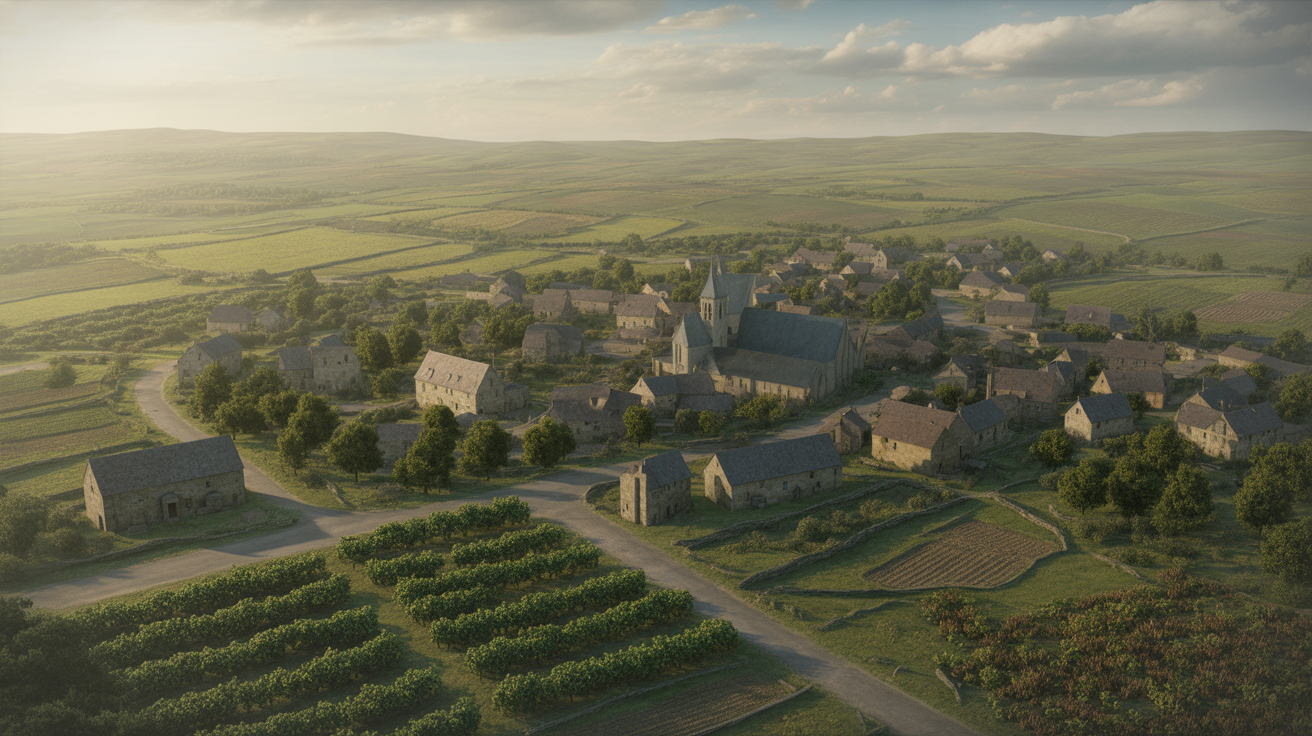
Map location in central Aldenmere. No scene work established.

A river town on the Corren, in Lirenne's interior. Home of the College of Anessi — Vitalism, the study of how essence interacts with living systems. Where Edoine discovers the Umber history. Where Ingle achieves his stabilized essence breakthrough. The group's rooms are searched here. The confiscation threat drives their urgent departure (Book Two Ch 30–31).
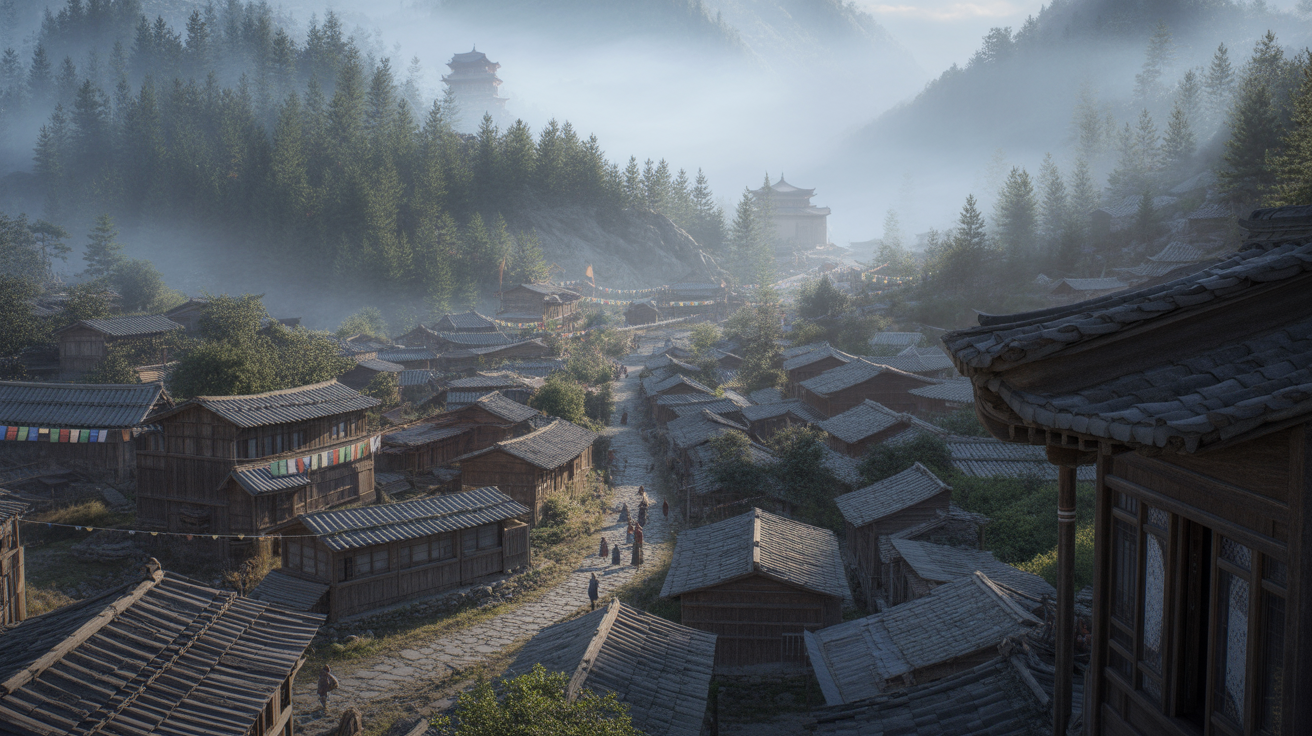
The town around the Tianshu monastery — 'the way place.' A community of pilgrims, scholars, merchants, and those who simply found themselves staying. Not holy in the formal sense. Simply where people go when they are going to Tianshu.

Capital of South Aldenmere. The records hall where Mott and Elia first crossed paths with Mags' investigation. Aldous Ferrick's office is here. In Book Three, Erish holds against the Aldenmere advance — inland, fortified, South Aldenmere's last stand. Still standing at story's end.
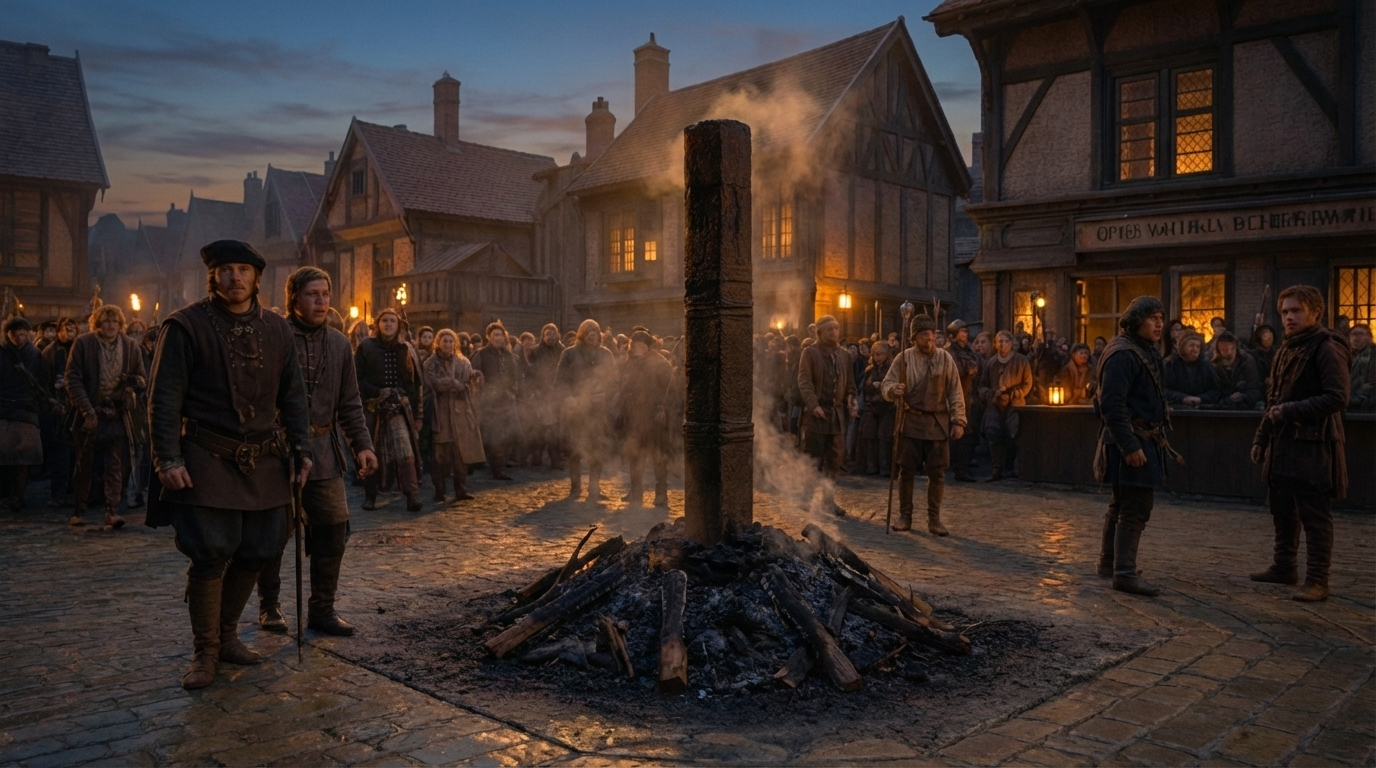
A town in the border margins. The setting of the witch burning in Book Three Ch 49 (Darker) — Aldenmere Examiners operating openly under the occupation. The chapter where Carnehue's fall is confirmed.
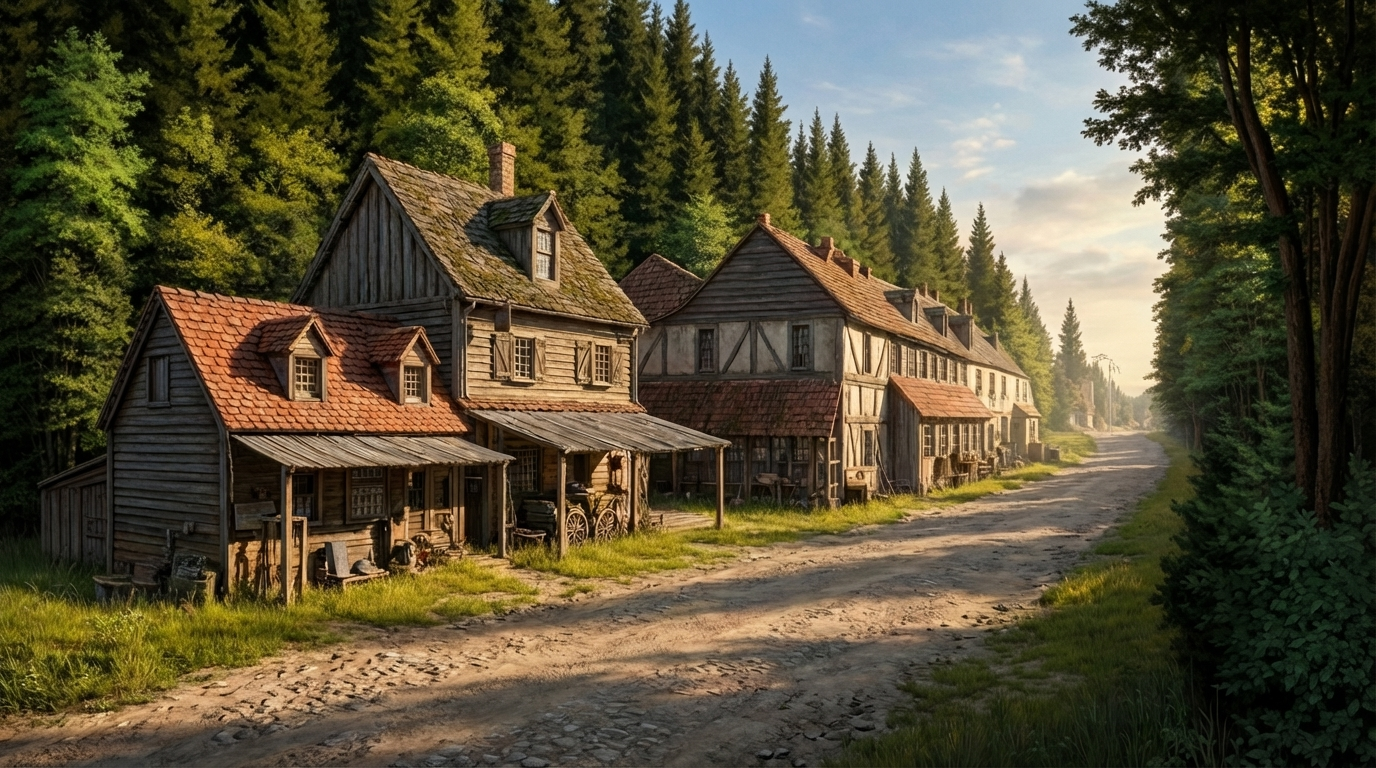
A waystation town between Bresholm and Carnehue. Bran Setter's base of operations. Where Maren works Bran's contact for Ruko's location. Where Edoine first observes the cantrip anomaly (the notebook's first entry). The starting point of the investigation's institutional chain.
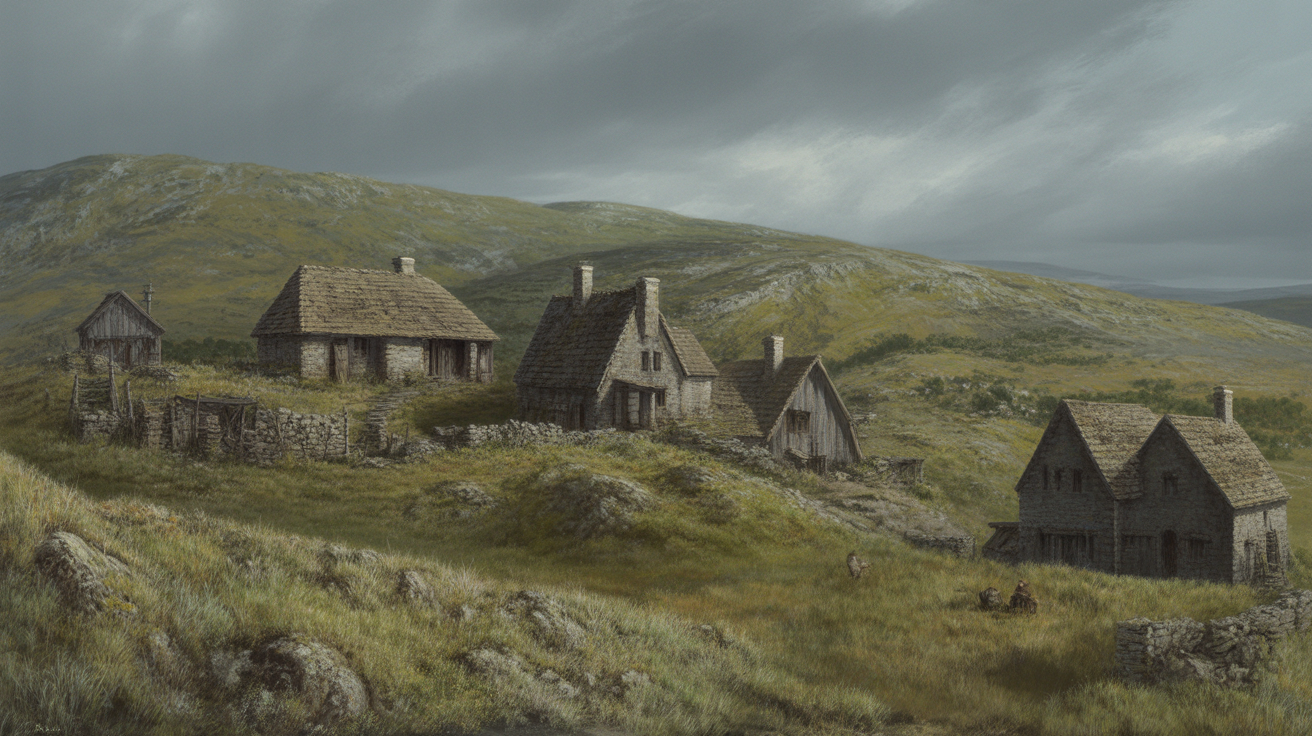
Map location in H'analaise. No scene work established.
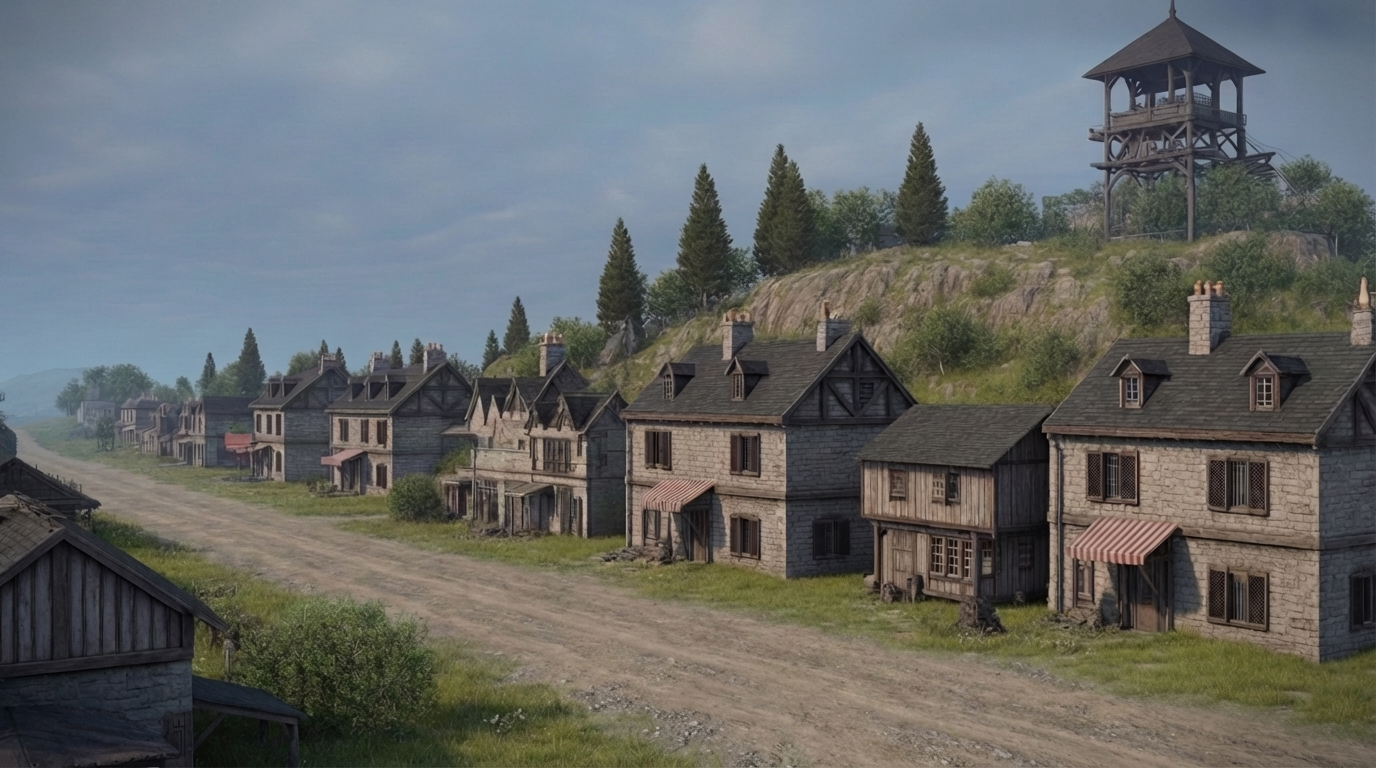
A border town split between Aldenmere and South Aldenmere — the north side under Aldenmere jurisdiction, the south side under South Aldenmere. For most of their history the two kingdoms were allied and their laws weren't different enough for it to matter. The border was an administrative line that ran through someone's backyard, not a political reality anyone in town thought about daily.
That changed with the war. Aldenmere's seizure of the whole town — including the South Aldenmere half — was arguably the first outright act of war, before the formal invasion south. Requisitioned as Aldenmere's command headquarters during the advance. Where Mott reaches Aldric. The cage closes here — three layers: Aldric's duty, Essren's eyes, Brennan's architecture.
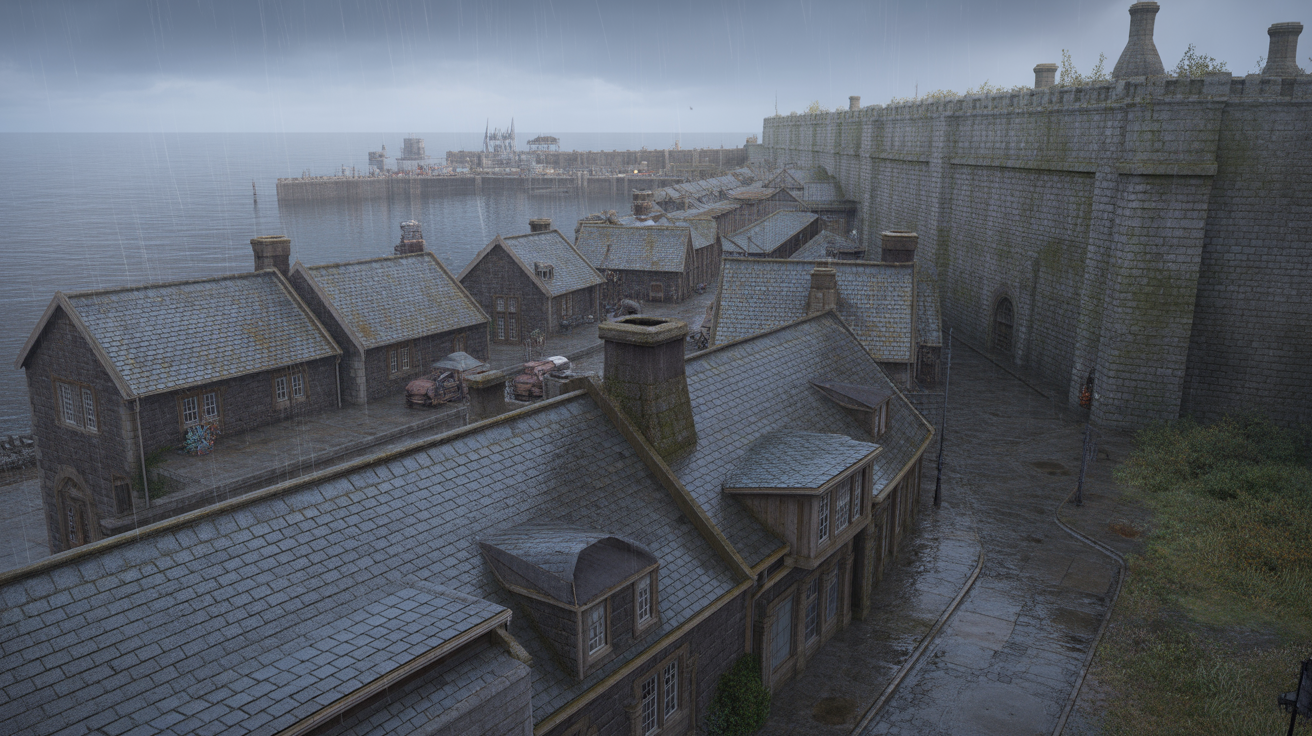
Provincial city on the Somer River, where the river widens into a near-lake before continuing to join the Lower Corveille. The grey stillness of the water at this widening is what gives the city its name. Culturally active — has an opera house. Elia Martine's home city, where she worked for the Wardens' Company, Iron Charter chapter (bodyguard and security work). Far enough from political centers that its church presence felt genuinely pastoral rather than politically charged.
An in-between region, too far from the kingdoms it borders to be administered by any of them. Ends up taking care of itself. Ingle Farwin's home region; his hometown of Brentwick sits within it. The island of Tessivane, though administratively part of Lirenne, also sits within The Hael's geographic area.
The region's primary worship historically went to Rowan (harvest, common life) — largest raw worship base, least institutional power. Sorvaine's parish structure has been slowly absorbing the Rowan base for generations.
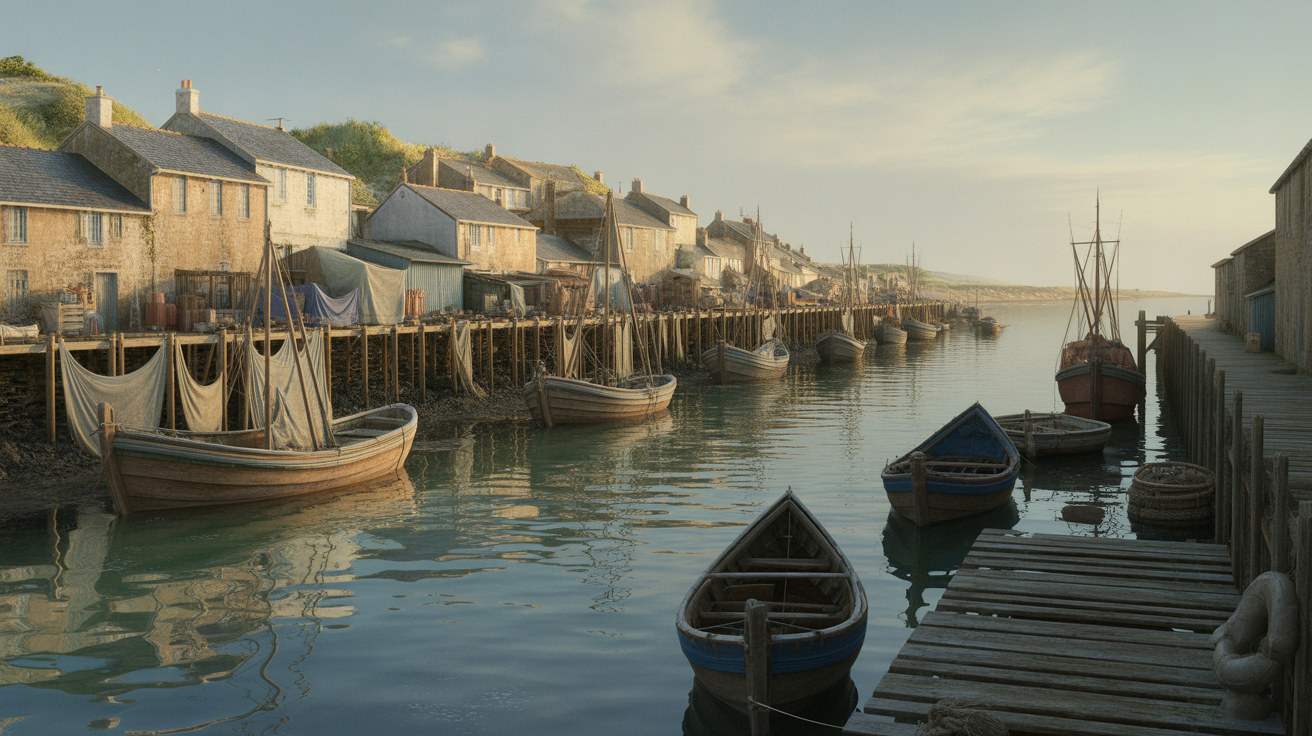
The port at the mouth of the Corren river, at Lirenne's southern tip. Where the group departs Lirenne for Daening (Book Two Ch 32). A working town — wharves, fish, tar, salt.
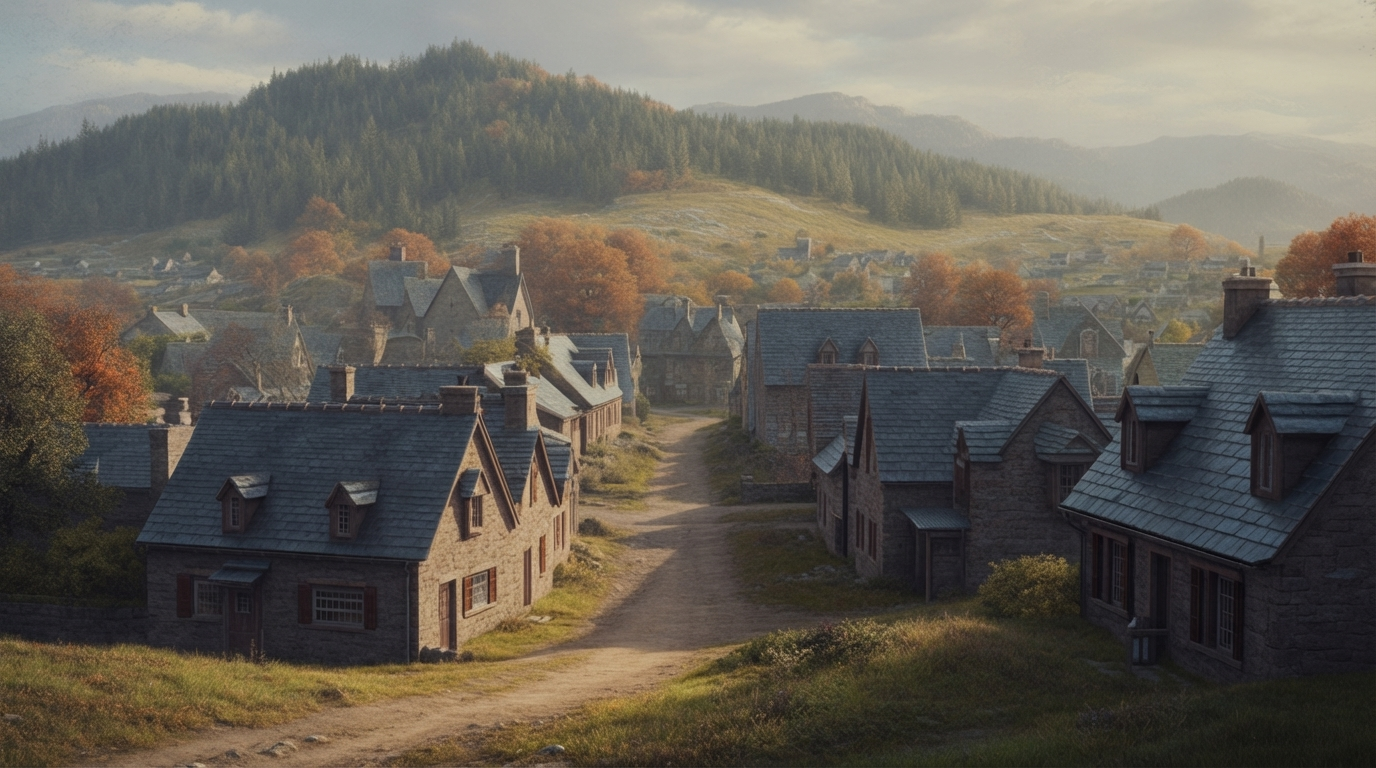
A town near the Umberhal border. Where Mave Solloway lives in retirement — the ex-Guild official who provides intelligence about the Guild's corruption structure (Book One Ch 13).
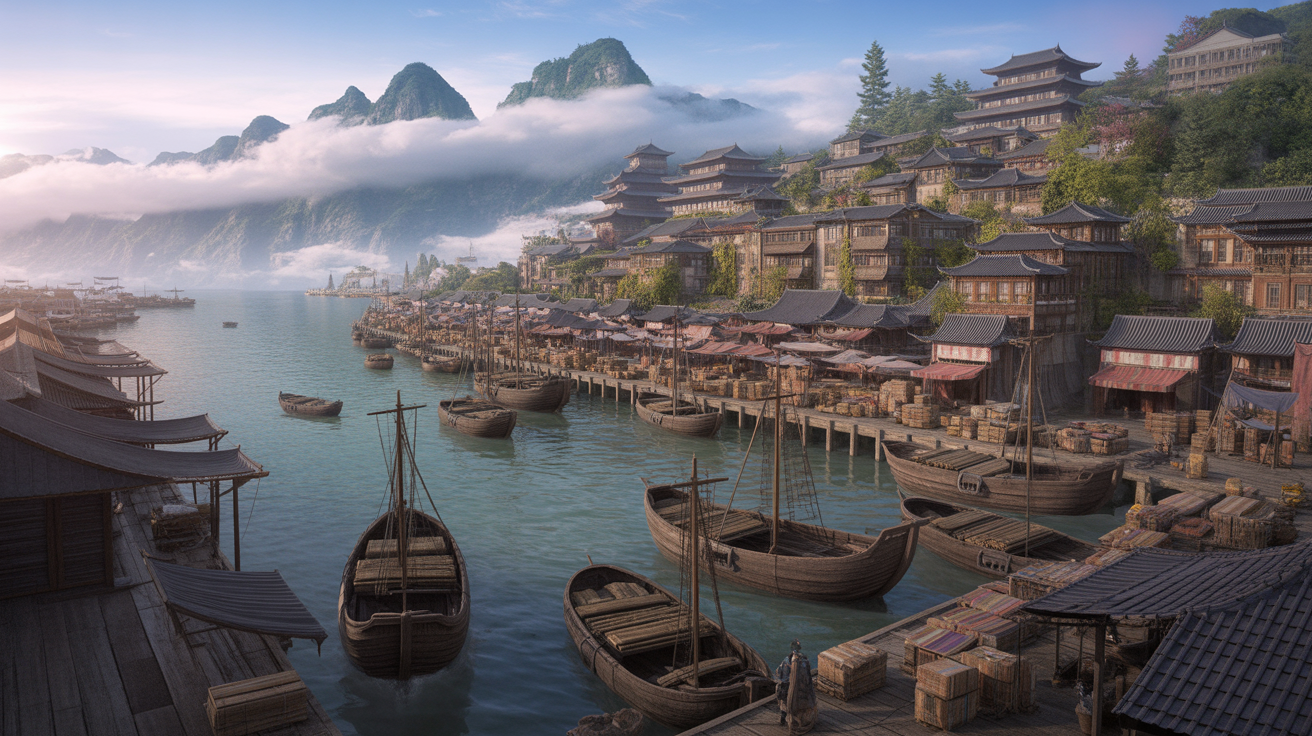
A Daening port city. Where the group disembarks after sailing from Lirenne. Edoine's self-taught Hanyi is useful here. The road west climbs into the Tianbi mountains toward Tianshu. There is only one road west from Hanyi. Maren follows it.
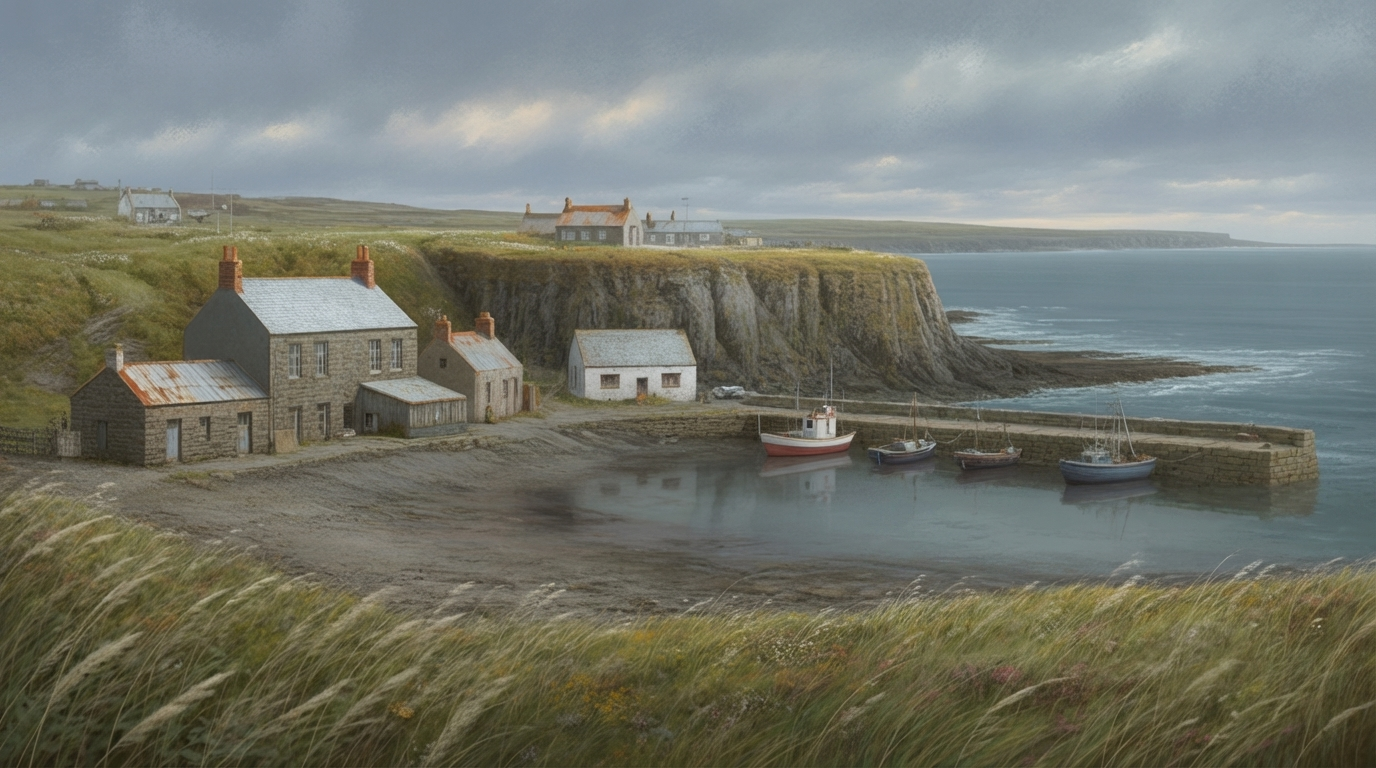
Map location on the western coast of South Aldenmere. No scene work established.
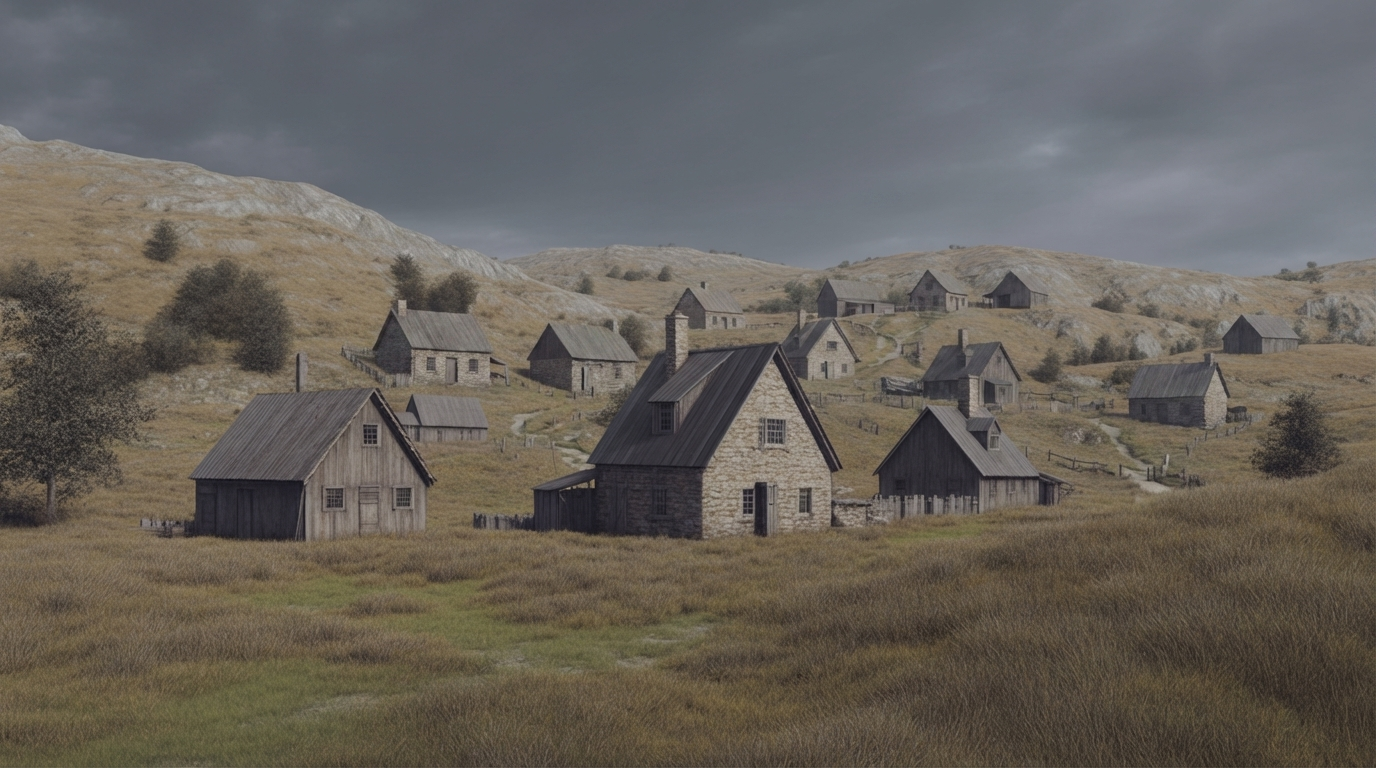
Map location in H'analaise. No scene work established.
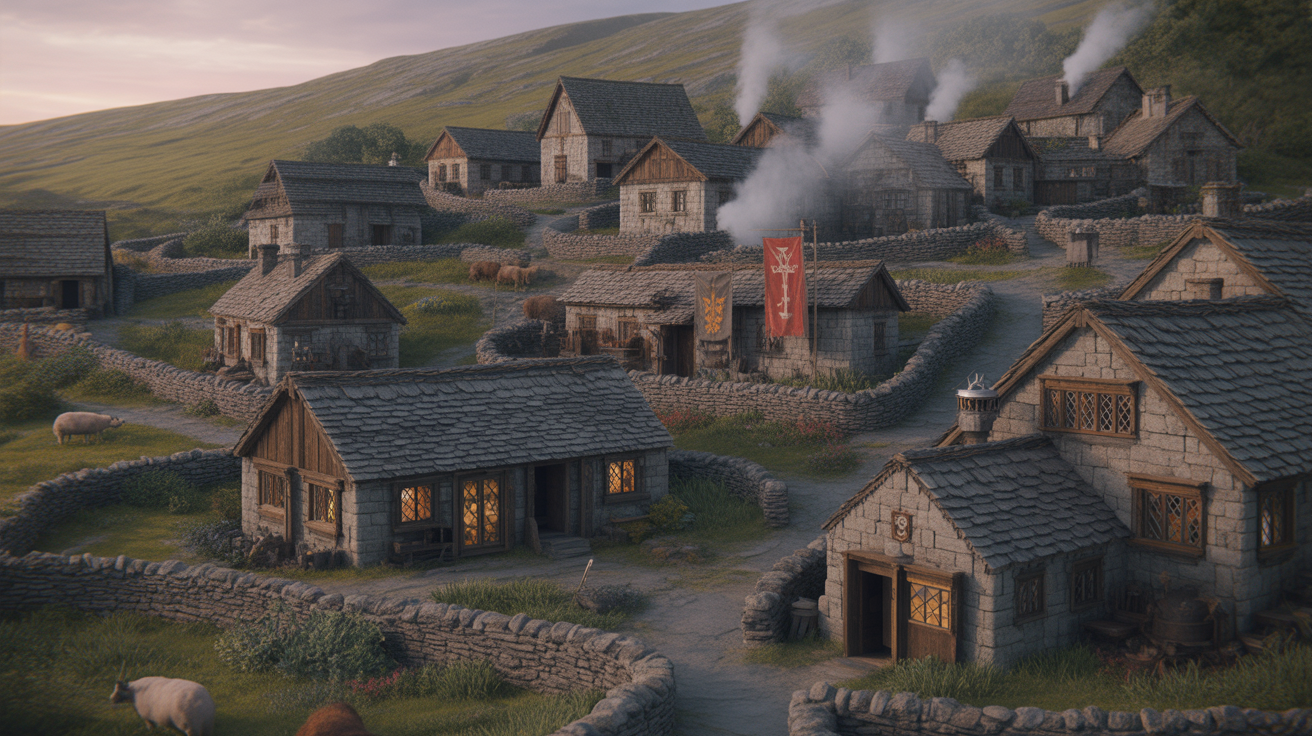
Morgrym and Agna's settlement. One of four designated Dern towns in South Aldenmere. A place with walls and a name, not a camp or a hidden enclave. Near Bresholm.
A large lake in Valdenne, sitting in the shadow of the Sauverre range. Fed by the Upper Corveille from the northeast and the Frossaine from the northwest, and drained westward by the Lower Corveille, which flows to Caerwyn Bay. The Kingsmere also empties into Lac Sauvenne from the east. The lake sits at the hydrological center of Valdenne's southern river network.
A labor camp built into a natural depression in the hill country south of Antis — low buildings, work sheds, barracks housing, perimeter fencing. Kellmere Station holds prisoners through paperwork and distance rather than physical force: the geography itself is the cell, the bureaucracy is the lock. Walking away means walking across miles of open terrain without papers, which is enough to keep most people where they are put.
Where Morgrym Bres was held after his conscription papers named him a draft-evader. Mags extracts him during a shift change as the facility is being emptied due to war mobilization — the staff distracted, the systems transitioning, the moment when the paperwork and the distance both break down at once.
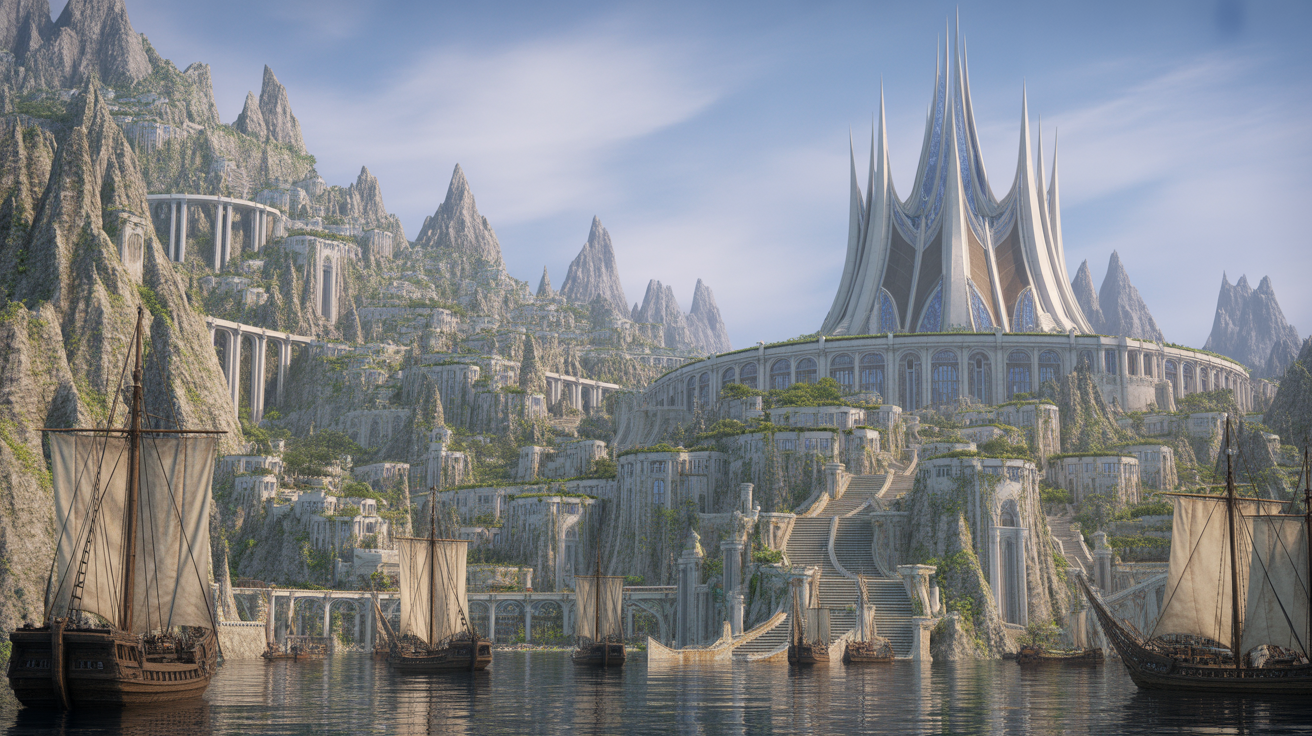
Capital of the Lirenne republic. A city that climbs — terraced streets of white stone with green copper roofing, colleges visible above like a crown. Majority Alvar. Where Mags walks in her mother's world for the first time. The harbor arch inscription (Truth is Divinity), the College of White, Natalia Delaire, the heliodor purchase, the Aldenmere delegation. The most beautiful city in the story (Book Two Ch 27–28).
Sorvaine's presence in L'lane is early-stage and strategic rather than institutionally dominant. In the Shippers Guild compound near the wharves — not on the waterfront itself, but in the working district where the Guild's offices and warehouses sit — a wooden house of worship is under new construction, consuming adjacent Guild buildings in the process. The Guild already owns the property; no expensive purchase required. The structure is new enough that the wood is still pale. At the docks, people with small ten-pointed star pins engage arriving passengers from the mainland, pressing sprigs of dried borderwick into their hands. The Alvar of L'lane walking past don't register it as significant. An Aldenmere trader stepping off a boat recognizes the gesture immediately. Sorvaine's entry point into Lirenne is not the city's heart — it is the threshold, the arrival point, the moment when mainland travelers are most displaced and most receptive. Mott registers all of it immediately. He has seen his Cardinal briefings. He knows what the early stages look like. Her symbol also appears scratched into doorframes and chalked on walls in the student districts, worn as a small pin by some younger students. Most of the city doesn't notice. The process that was already running in Aldenmere is running here too, earlier in its arc.
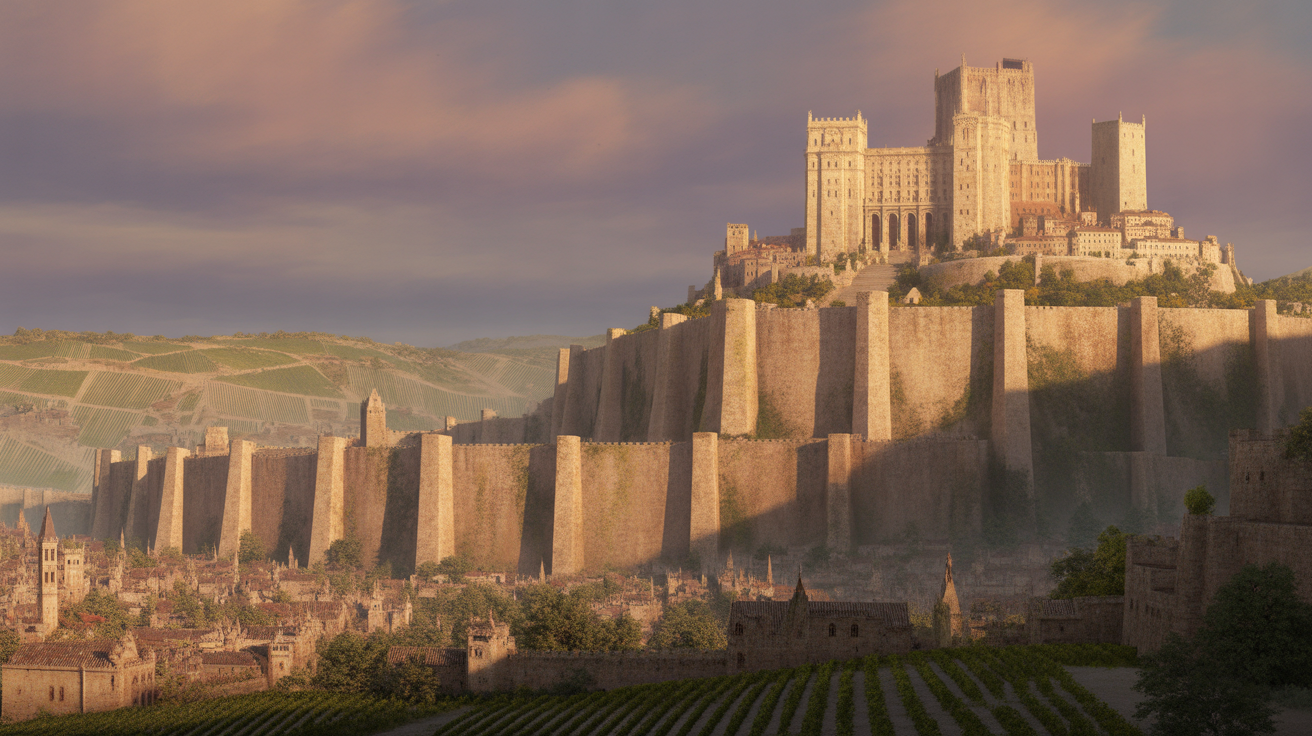
Capital of Valdenne, the oldest continental kingdom. No scene work established.

Capital of Umberhal. No scene work established.
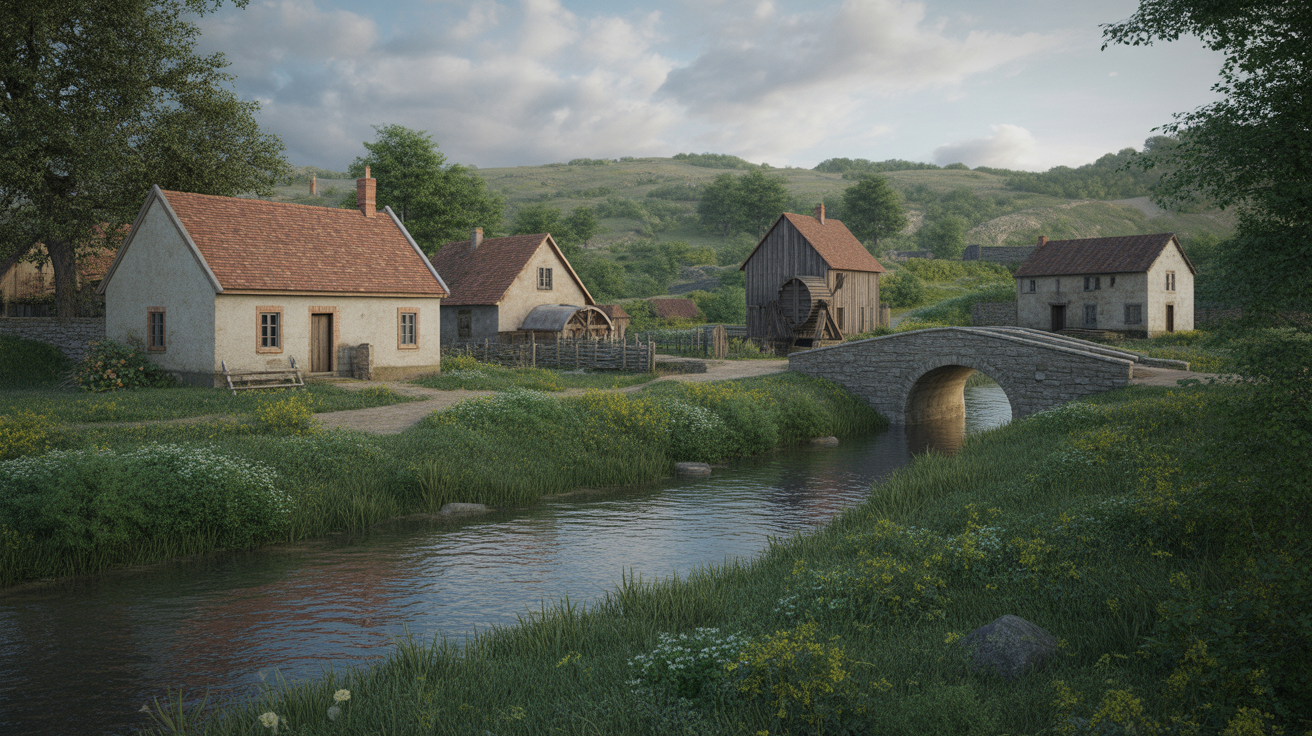
Map location in central South Aldenmere. No scene work established.
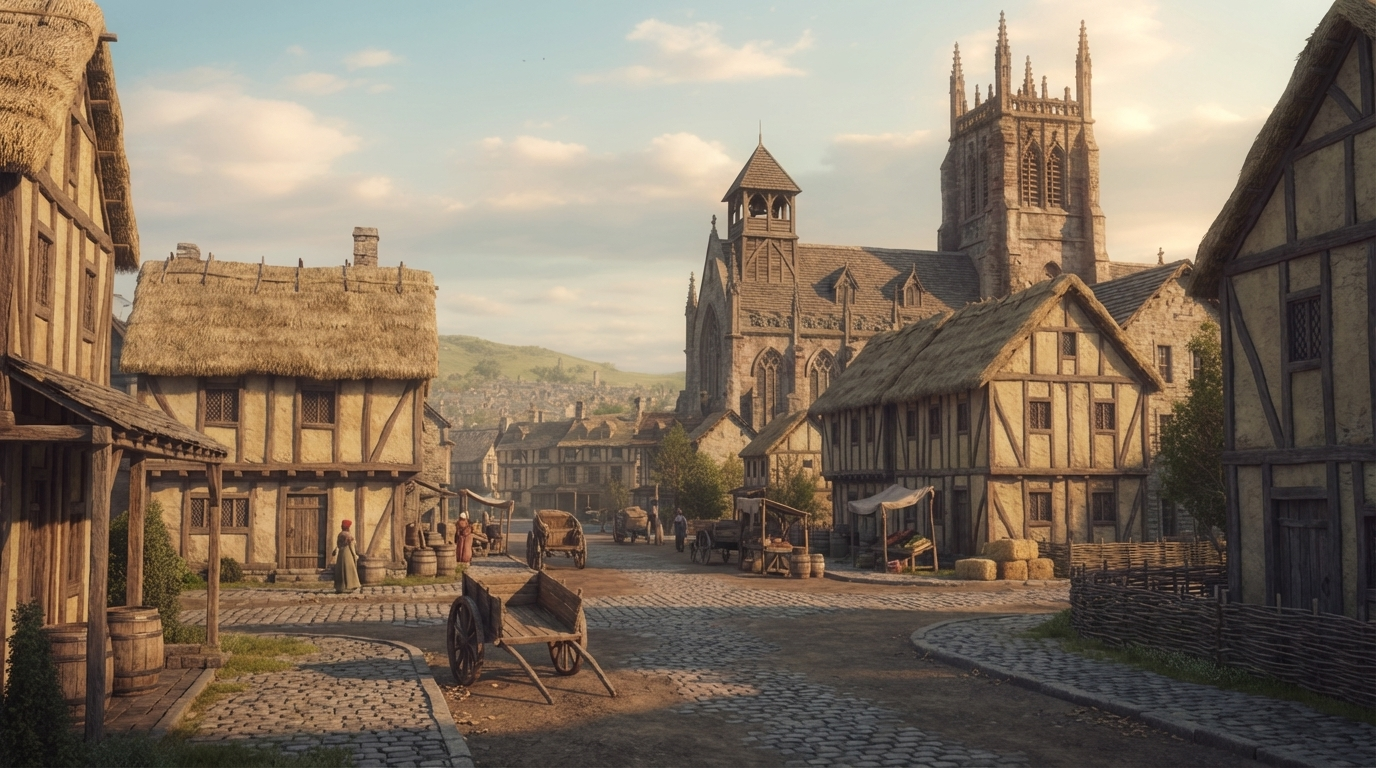
Map location in western Aldenmere. No scene work established.
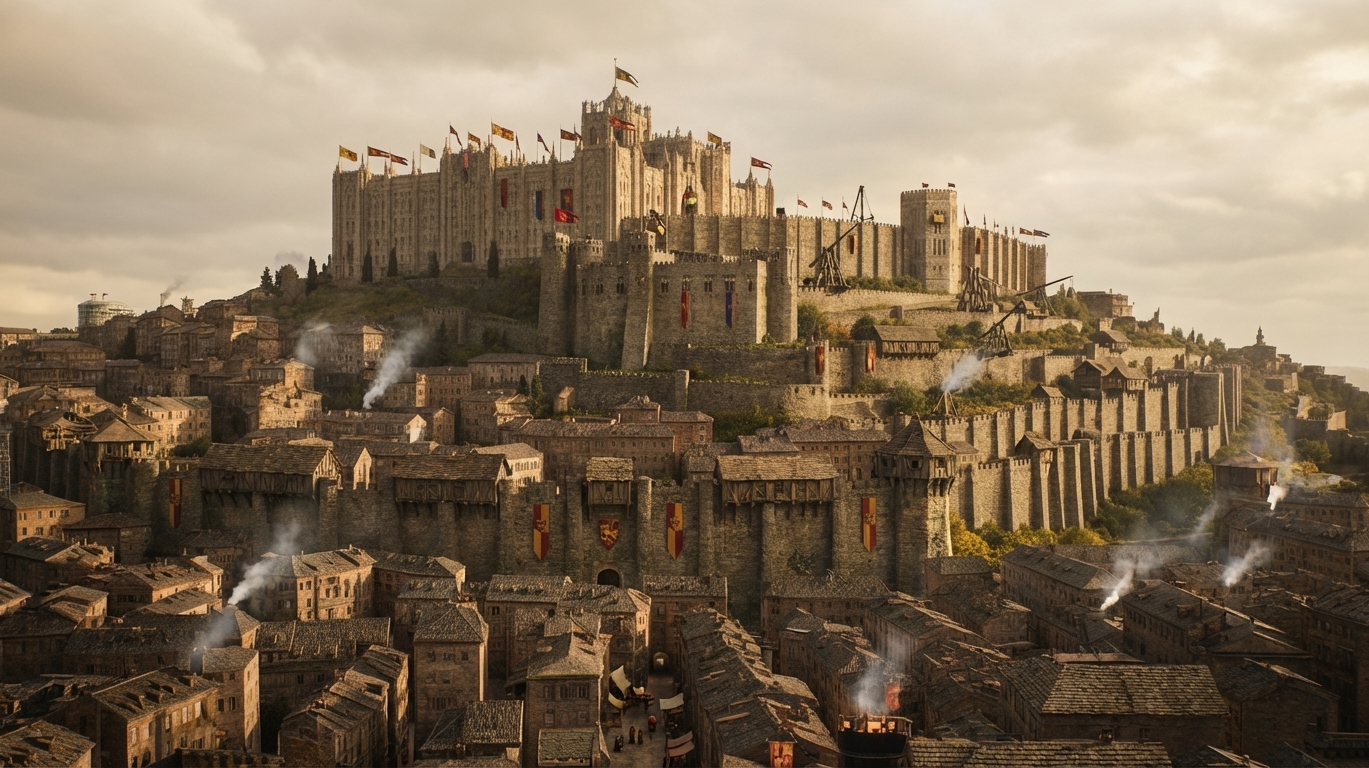
Capital of Aldenmere. The ancient imperial seat of Temet Aldric. Osmen's church compound is here — the window, the desk, the cathedral spire, the palace on its hill. The setting of Osmen's interludes across Books One and Two. Mott's home. Where the Cardinal's seat waits. The city Mott walks back into in Book Three.
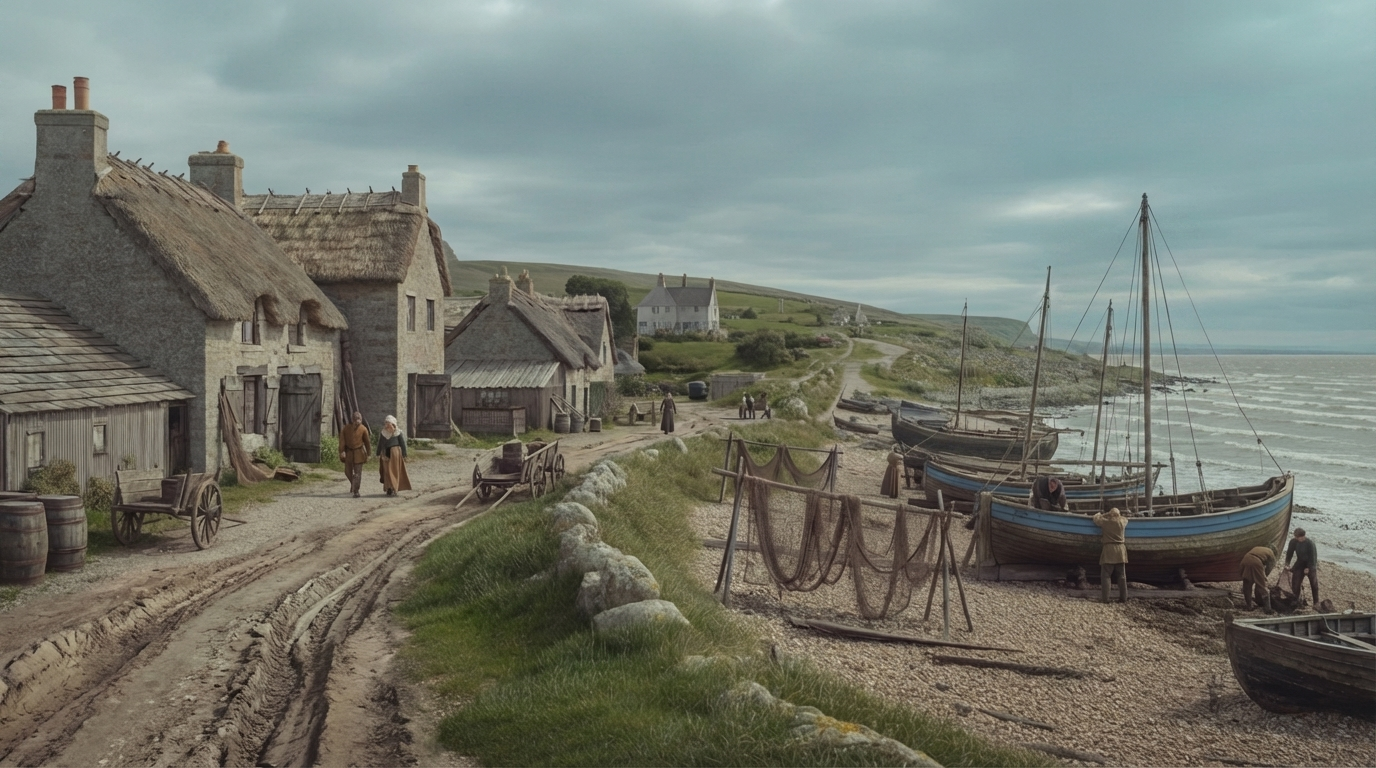
Map location in western South Aldenmere. No scene work established.
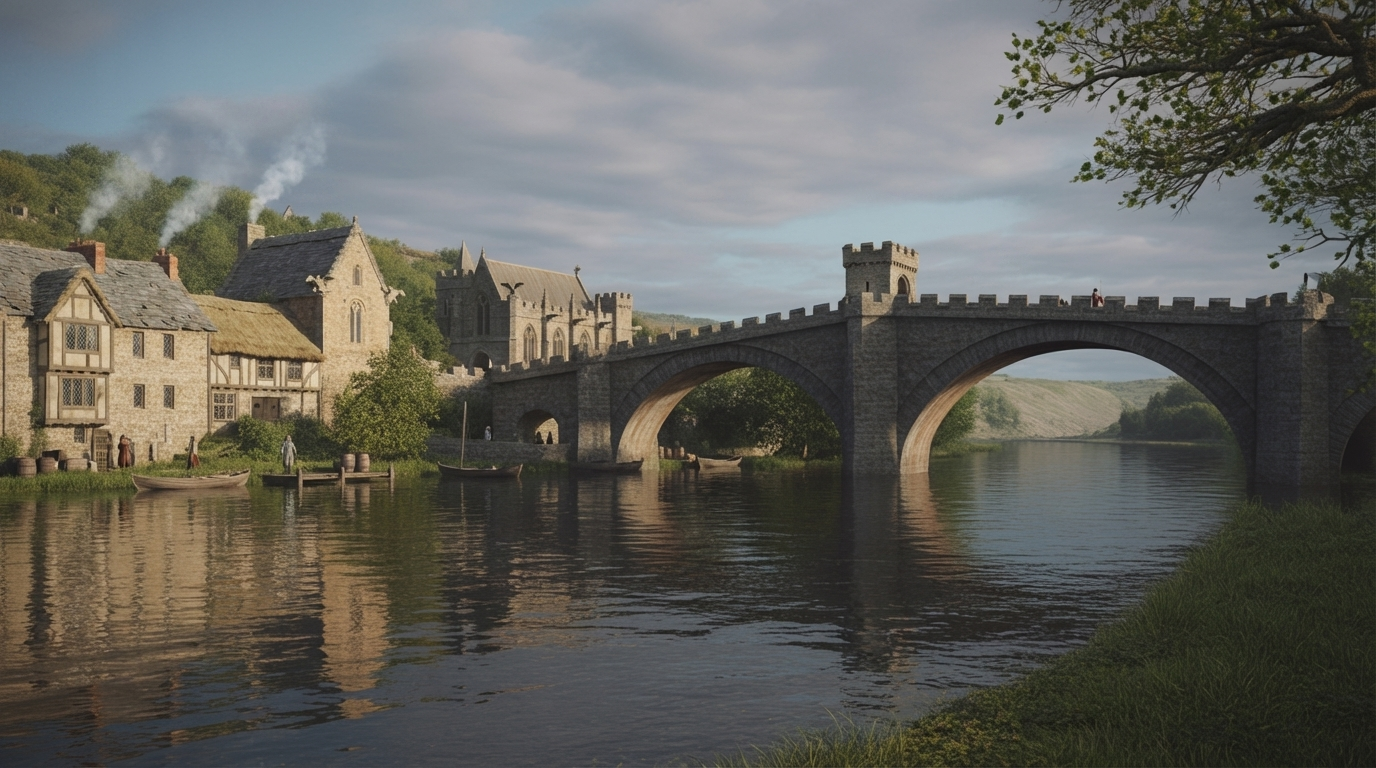
A town on the Bridewell river, south of the river split. Where Deverin performs funeral rites for a stranger — the scene where Elia says 'the church is good.' Near Ossavar. In the path of the Book Three advance.
Prefect Dell Taggert's country estate — his residence outside Carnehue. Where Tessara was going when she was killed: she had requested a private meeting with him at the estate, intending to lay out what she had found about the Shippers Guild and Sorvaine's institutional machinery, and to request additional resources to pursue it formally. She was two days from that meeting when she died. The Prefect never learned what she knew.
A Sorvaine operative — Mirin Cole — was embedded in Taggert's household with access to his calendar. She passed word to the Guild that the meeting was scheduled. Her death before the story begins created the gap Osmen filled. The estate, therefore, is the quiet geographical hinge of the Tessara thread: the meeting that was never held, the framework that was never delivered, the ally who was protected from that role by the people who killed her.
A remote island off the southern coast of Lirenne, far enough from L'lane and Corivel that reaching it requires a dedicated sea crossing rather than an inland journey. Home of the College of Vaurri — the Aerics school, the study of air. The isolation is part of the college's identity: a place where scholars go when they want to be away from the political weather of the capital and the academic weather of Corivel. The Aerics tradition has always been the quietest of the five schools, and Tāvelaris fits that temperament.
The island never enters the story. Edoine, whose self-taught specialization is Aerics, would have wanted to visit — the college's archives would contain everything he pieced together alone over eleven years in the Carenhal Order's library. But Tāvelaris is too far and too much trouble to reach without a specific reason, and he has never had one that justified the crossing. The absence is its own kind of presence in his biography: a place he might have gone if his life had taken even one different turn.
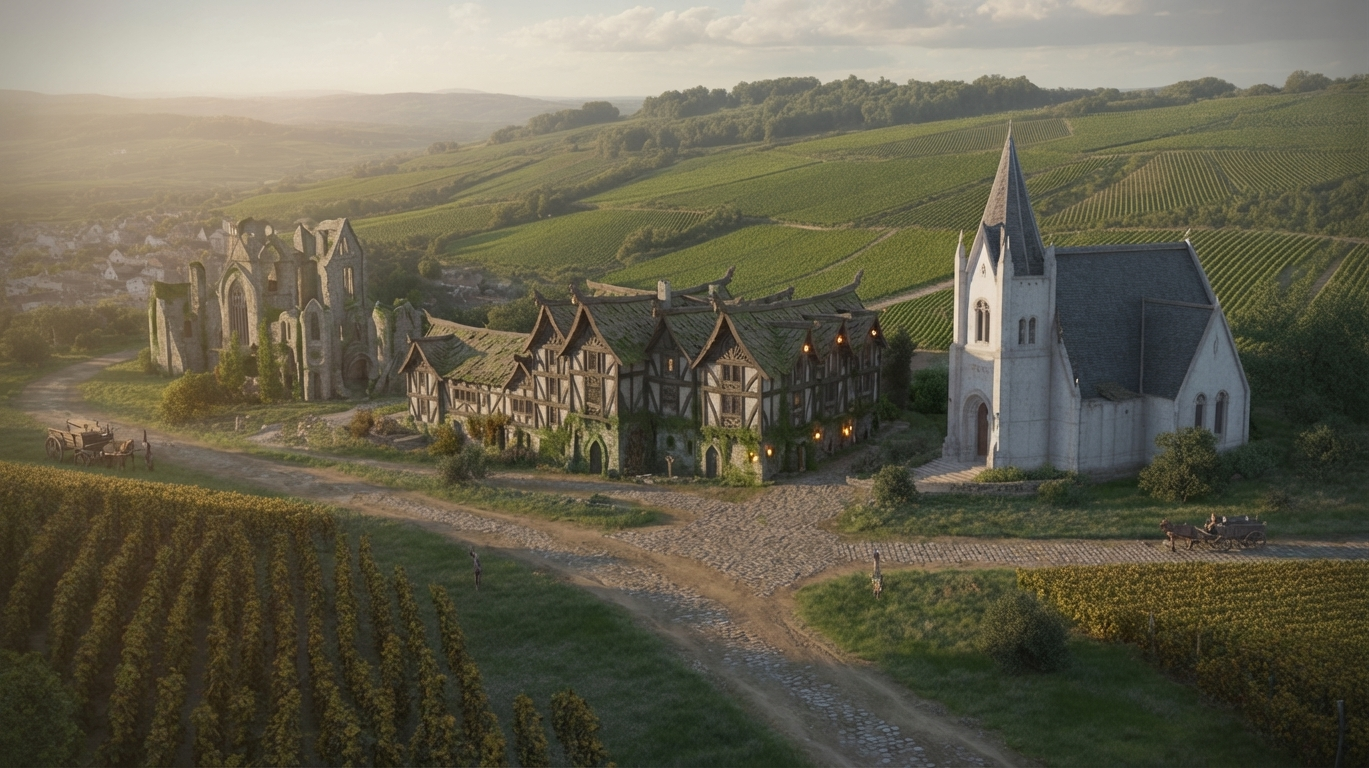
A crossroads community on Lirenne's interior road. Has an established Sorvaine church — older than the new one in L'lane. The setting of the mage-as-caster-priest scene (Book Two Ch 29) — where Edoine identifies a priest drawing from catalyst rather than from a god. The seed of the endgame: the church's magic doesn't depend entirely on Sorvaine.
A large island northwest of Lirenne, sitting in The Hael. The largest of Lirenne's island territories.
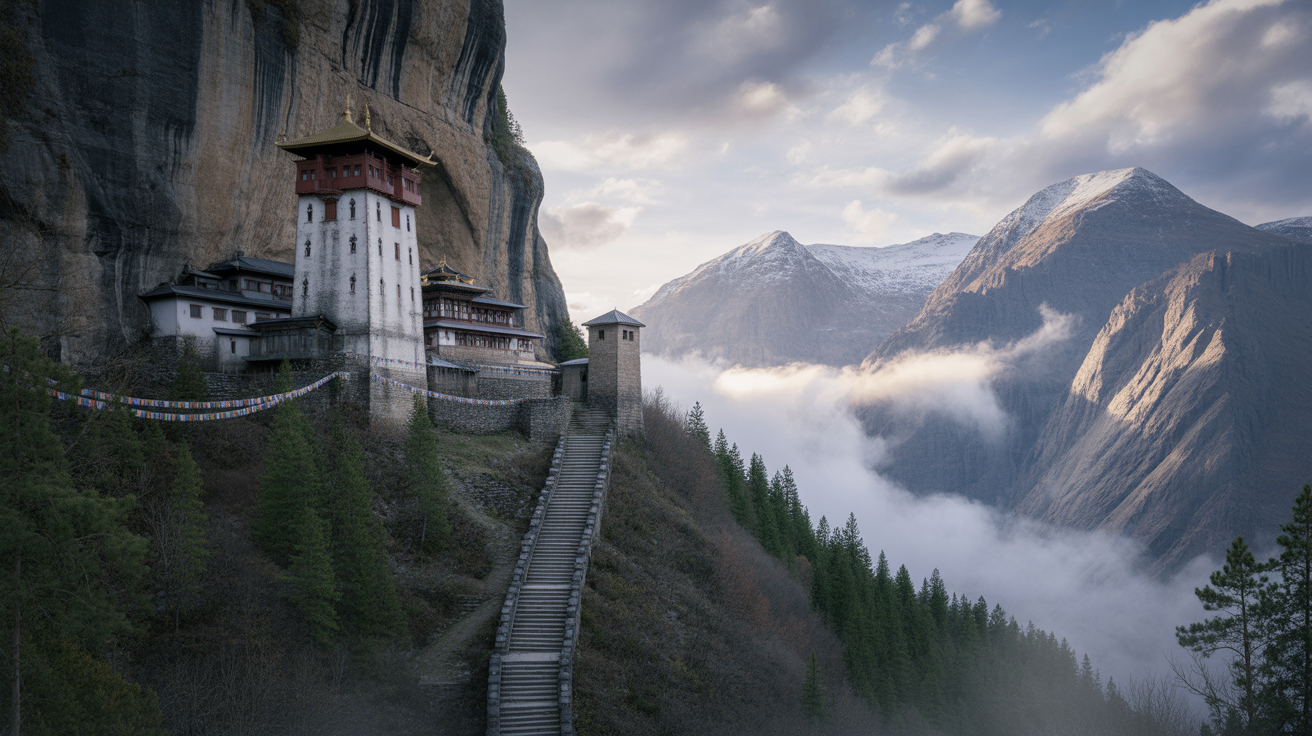
The One God's monastery. 'Heavenly text' in the Daening tongue. High stone against a mountain face in the Tianbi range. One of the largest libraries in the known world. Where the prophet names the pendant, confirms the prophecy with female pronouns, names Ossavar as the thin place, reveals Sorvaine has always known, and implies the truth about Plague. The eclipse happens here (Book Two Ch 34).
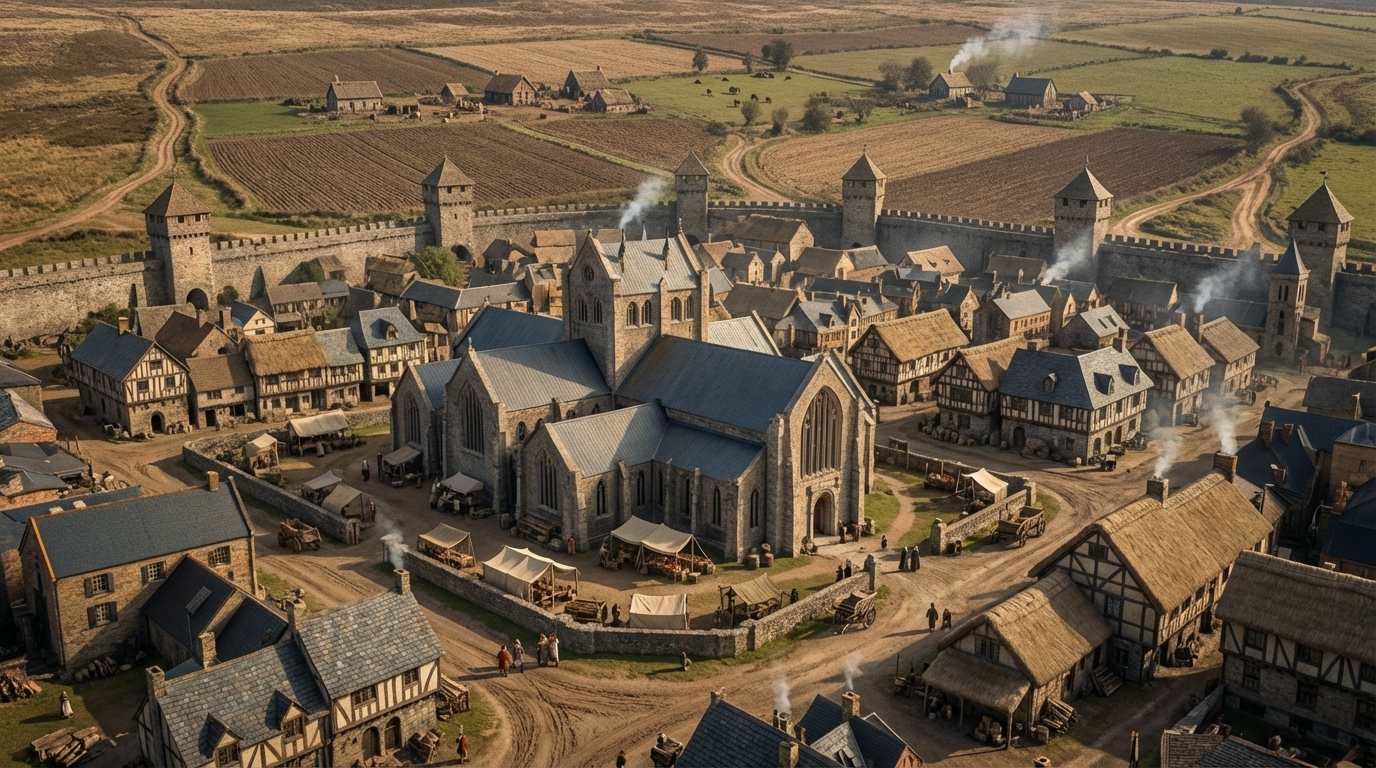
A church town in southern Aldenmere, near the South Aldenmere border. Osmen's operational base after he leaves Sosamyra. The kind of place the church effectively controls. Where Taggert is brought for questioning. The pigeon message in Book Three Ch 46 references the Waypool network.
A small provincial city in northern Valdenne. Hometown of Chancellor Astos Streuxerr — "The Vulture of Verse" — who clawed his way from this remote posting to the second-highest office in the kingdom.
The church hierarchy says Thagari. The Examiners call themselves Examiners. Everyone else says Ashmen and hopes they never have reason to say it out loud.
What the Institution Believes About Itself
The Thagari has a strong ideological formation and most Examiners genuinely believe they are doing righteous work. The official doctrine: witches are an abomination, their power drawn from minor gods who manipulate and corrupt, their presence a spiritual contamination that spreads through communities if left unchecked. The Examiner's role is not punitive but purifying — removing something dangerous before it causes wider harm. The burning is not cruelty. It is necessary. It is mercy compared to what would happen if the witch were allowed to continue.
This formation is applied to everyone who comes through the institution, whether recruited young or converted from another profession. It is effective enough that most Examiners carry it without examining it closely. The ones who do examine it — who look squarely at the rate of acquittals, which is functionally zero, or at the political pattern of who gets accused — tend not to last in the role.
What the Institution Actually Does
The institution has been used for centuries primarily as a tool of political persecution — the charge of Thagary (witchcraft) deployed to silence enemies, competitors, inconvenient women, and anyone who has offended someone with enough standing to file a formal accusation. How many innocents have burned is unknowable but certainly significant. Actual witches represent a small fraction of those prosecuted. The institution cannot distinguish reliably between genuine witchcraft and accusation-driven persecution, and its structural incentives do not encourage it to try.
Sorvaine's machinery does not need to direct each individual accusation. The institution runs itself. An accusation is filed, an Examiner in the region picks it up, the process runs, the verdict arrives. Nobody above is watching in real time. Nobody below is in a position to question the system they are part of. The institution is genuinely dangerous not because it is cynical but because it is sincere — and structured in such a way that sincerity and cruelty produce identical outcomes.
Recruitment
The Thagari recruits through two paths. Some Examiners are taken in young — teenagers or younger, often from families with church connections or from circumstances where they needed a place. These recruits receive full ideological formation from the start and tend to be the most committed. Some are converted professionals — city watch, military, occasionally former clergy — who are recruited in adulthood for their existing skills. These recruits receive the ideological formation too, layered on top of whatever they already believed. Many accept enough of it to function without accepting all of it.
Maren's path is the second kind. City watch sergeant, then mercenary, then Thagari — each institution adding a layer, none of them fully replacing what was there before. He accepted enough of the Examiner formation to do the job. He didn't examine it closely. The gap between "he called himself an Examiner" and "the people in the villages called him an Ashman" probably never bothered him before Mags.
How Examiners Operate — Open vs. Incognito
Not all Examiners work the same way. Some operate openly, using their institutional authority as a visible tool — the insignia displayed, the identity stated, the weight of the institution deployed to compel cooperation. This works well in communities where the Thagari's authority is respected or feared.
Others — a significant minority — work in deep cover. Their Examiner identity is known only to their superiors. To the world they are something else entirely: merchants, road men, minor clergy, traveling professionals. The information available to an undercover Examiner is qualitatively different from what an open Examiner can access — targets don't run, communities don't close, and accusations that would never be filed officially surface naturally in conversation. Both methods are sanctioned. The choice depends on the Examiner's temperament and the nature of the assignment.
Maren is the second kind. His cover as a Wardens' Company road man is so thoroughly constructed that a careful man like Morgrym Bres hired him without knowing what he was. Those with the specific knowledge base to read the signs — institutional training, familiarity with Thagari operational patterns — can identify him. Most people cannot.
How an Investigation Works
An accusation is filed — at a church center, through a local priest, or directly with a regional Thagari office. The accusation is evaluated for basic credibility and passed to a field Examiner. The Examiner travels to investigate: interviews accusers and witnesses, examines the accused, searches the premises. Evidence is gathered and assessed according to Thagari doctrine on signs of witchcraft.
The accuser is required to travel with the Examiners and testify in person. This is presented as a safeguard — the accuser must stand behind their accusation in front of the accused. In practice it functions as a formality, since the bar for testimony is effectively zero and the Examiners are not in the business of protecting the accused from their accuser.
A central element of the physical examination is the search for the witch's mark — called informally the Reading. An area of skin supposedly insensible to pain, taken as evidence of a pact with a minor god. The Reading is conducted by a designated Examiner with the casual professionalism of a man asked to file a form: Bob, can you perform the reading. The examination is procedural, unhurried, and deliberately humiliating — the accused reduced to a body being searched for evidence of something the examiner has already decided is there.
The process has the formal structure of a trial — accusation, investigation, finding — but not the function of one. There is no defense advocate. There is no standard of proof that would reliably result in acquittal. The Examiner's finding is the verdict. Appeals exist on paper. In practice they go nowhere.
In isolated communities where witches have been quietly accepted out of necessity — a healer who draws on something beyond herbs, a midwife whose success rate is inexplicable — the arrival of an Examiner can turn neighbors against neighbors overnight. The accusation doesn't have to be filed by an enemy. It can come from a frightened friend.
Field Autonomy
Examiners operate with significant autonomy. There is no supervisor watching an investigation in real time. Reports are filed after the fact. An Examiner who finds a verdict, carries out the sentence, and submits a report will face scrutiny only if someone with standing objects — and standing is required to object, which the accused's family rarely has.
This autonomy is what makes the institution function at scale. A centrally managed system of this kind would be expensive and slow. Field autonomy means an Examiner can move through multiple jurisdictions, handle multiple cases, and operate with the speed the institution's ideology demands. The cost is accountability. The institution considers this an acceptable trade.
The Relationship to Osmen's Level
Examiners like Maren operate at ground level — field investigations, accusations, the visible face of Sorvaine's witch-hunting apparatus. Above them, mostly invisible to them, is the level Osmen occupies: deniable operations, targeted eliminations, the machinery that operates without filing reports at all. The two levels serve the same institution and rarely interact directly. An Examiner would know Osmen's level exists. He would not know its specific operations. The gap between them is functional — the Thagari provides cover and credibility, the deniable layer provides results the Thagari cannot cleanly produce.
Maren and Osmen were born the same year and spent their careers in overlapping institutional worlds — Maren as an active Examiner, Osmen running the operations above it. They may never have met directly. They would know of each other, or know the same people. The institution that shaped Maren's professional identity is the same institution that gave Osmen his tools.
In the Story
The Thagari appears twice as an active force: in Book One Ch. 7, when Examiners arrive at Bresholm on an accusation originally filed against Mags by Eclesses — the accusation pivoting to Agna when Mags cannot be produced, the bureaucratic terror of it, Morgrym taken when he tries to stop it — and in the Maren Interlude (Part Three), when an undercover colleague encounters Maren on the road and asks about his companions. Maren introduces the group one by one, saves Mags for last, says Magdelia — the institutional name — and then stops. The institution is also present as background pressure throughout — Thagari presence at the port in Book Two Ch. 2, the persistent threat that comes with Mags being a named suspect in an open investigation after Book One Ch. 7, and a declared traitor after Book Two's ending.
Maren's decision in Ch. 16 carries institutional weight precisely because he is not a former Examiner. He is a current one, refusing a current duty, in the moment that duty is most directly triggered. He is not resisting an old instinct or confronting a shameful past. He is deciding, in real time, to stop being what he is.
Note on institutional internal politics: the open and undercover factions of the Thagari are aware of each other and maintain a professional contempt in both directions. Open Examiners view undercover operatives as unprincipled and too comfortable with deception. Undercover operatives view open Examiners as blunt instruments who spook targets. At Bresholm, this tension produces an unintended outcome: the open Examiners' assumption that Maren must be investigating Agna accidentally confirms her guilt in their accounting, contributing to the verdict against her.
Caster Priests and Mages — The Endgame Mechanism
The church employs two categories of magical practitioners: caster priests who draw power from Sorvaine through ordained connection, and trained mages who draw from catalyst and environment like any conventional mage. The institutional workforce includes both, and the categories are deliberately indistinguishable in the public performance of faith. A blessing looks the same whether the power comes from a god or from a mage with catalyst powder in his sleeve.
The church designed this indistinguishability on purpose — so that the faith's public face would survive any interruption in divine supply. This is the structural mechanism that makes the trilogy's ending ambiguous: after the spell, when the reader sees a church blessing that works, the source of the power is unknowable from the outside. The institution was built to keep running regardless of what happens to its god.
The Core Principle — Magic as Physics
All magic is the conversion of essence from one form to another. The schools of magic are not different types of magic — they are different domains of physical effect that essence can be converted into. A fire spell and a force spell use the same underlying physics; they differ only in what the essence is converted into (thermal energy vs. kinetic energy) and which formula governs that conversion.
All magic relies on formulas to achieve results. The simplest spells (cantrips) are like basic arithmetic — intuitable by some without training. More powerful spells require deeper understanding. The most powerful are like advanced theoretical physics — formulas so complex that holding them in the mind is itself the challenge. A caster cannot cast a spell more complex than they can comprehend. This applies even to gods, though they have never displayed inability in this regard.
The formula is universal. A fire spell cast by a mage and a fire spell cast by a witch produce the same fire. What varies between caster types is not the formula but the energy source — where the essence comes from.
Three Types of Casters — Energy Sources
- Mages — draw essence from alchemical catalyst and everything in their vicinity. Cannot choose sources — essence is drawn from whatever is present, including the mage themselves. This self-drain shortens lifespan over time. Very powerful spells can kill outright.
- Caster Priests — draw essence from their patron god through an ordained connection. No personal cost, but entirely dependent on the god's willingness. Gods are reluctant. High-level spells almost never granted.
- Witches (Thaga) — draw from a patron god through a familiar AND from the world around them. Unique ability: can choose which sources to draw from. Can exclude themselves and nearby allies. The familiar initiates the draw — it is the key that opens the connection. Without the familiar present, a witch cannot begin deliberate casting. The most potentially powerful type of caster.
Catalyst
Catalyst is pre-drawn stored essence — essence extracted from source materials and fixed into a stable medium (powder, resin, or crystal depending on the process). Mages use catalyst because they cannot selectively draw from the world around them the way witches can; catalyst provides pre-processed essence that reduces the gap requiring self-draw.
Catalyst is school-attuned: different source materials produce essence attuned to different physical domains, matching the school's formula requirements. A Calessi mage and a Vaurri mage stock different catalysts. Within each school, catalyst is concentration-graded from common (cheap, widely available, suitable for basic spells) through high-grade (expensive, required for advanced spells) to boutique (unusual compounds with specific properties, produced by skilled alchemists). The College of White requires composite catalyst — a genuinely unified compound carrying multiple school attunements simultaneously — which is not commercially available and is produced internally by the College.
The self-cost of casting is the gap catalyst cannot cover. Better catalyst means a smaller gap and slower personal depletion. The gap for suicide-level spells is catastrophic even with perfect catalyst — which is why they are legend rather than practice.
Impending Spells
All spells require essence to power them. When enough essence isn't immediately available, the spell's effect is delayed — sometimes seconds, sometimes years or even decades. These are called Impending spells. Critically: once begun, a spell cannot be cancelled by anyone, including the gods. It will complete. This is one of the most important rules in the magic system — a spell cast in desperation might arrive years later at the worst possible moment.
Suicide Spells
Suicide spells are a category of extreme high-level spells whose essence requirement so far exceeds what any catalyst can provide that the self-draw gap kills the caster. Most kill the caster before completion — doubly fatal, since you die and the spell fails. Occasionally a spell completes before the caster dies. Both outcomes are theoretically possible. They exist in the academic literature but are almost never attempted.
The specific formula Edoine reconstructs across Books Two and Three is in the suicide spell category but is categorically different from standard suicide spells: the death is not a side effect of the essence gap. It is the mechanism. This formula kills the caster because dying is what the spell does — the death creates a channel into Aevorn. Remove the death and the spell doesn't work. This distinction is critical: it means a witch who draws from her patron rather than herself could survive a standard suicide spell (no self-draw gap), but cannot survive this one. The death is required regardless of the energy source.
For Mags: the massive unregulated draw from Sorvaine weakens the god; the death opens the Aevorn channel; the weakened god meets the caster on the other side.
How Mages Work
Mages draw essence from alchemical powder (catalyst) and everything in their vicinity to power spells. They cannot choose their sources — when casting, essence is drawn from whatever is present, including the mage themselves. This self-drain shortens lifespan over time. Very powerful spells can kill the caster outright.
Mages are trained in formal spellcraft traditions — understanding the mathematical formulas that govern magical effects. A mage cannot cast a spell more complex than they can comprehend. This means the ceiling of a mage's power is determined by their intellectual capacity as much as raw ability.
Training
Formal training traditionally occurs through apprenticeship or at one of Lirenne's colleges. The colleges represent the most rigorous tradition — 2,600 years of accumulated knowledge, formal curriculum, and an institutional culture that treats magic as something between engineering and theoretical physics. Mages trained in the Lirenne tradition are typically more precise but less intuitive than self-taught practitioners.
Tessara Estuv was classically trained in the Lirenne tradition. Her spellcraft treatise — now in Mags' possession — represents this approach: systematic, annotated, built for a student who will learn to understand rather than just perform.
Limitations
Mages cannot choose which sources to draw from, which means they always deplete themselves alongside their environment. They are entirely self-powered — no patron god, no familiar — which makes them independent but limits their ceiling. A sufficiently powerful spell is simply beyond any mage's safe reach regardless of comprehension, because the self-drain at that scale is lethal.
Mages in the Church
Sorvaine's church deliberately deploys trained mages in roles indistinguishable from caster priests. A mage performing a blessing or a healing uses catalyst and environmental draw rather than divine essence — but the congregation cannot tell the difference. The institutional performance of divine power does not require actual divine power. The church designed the indistinguishability deliberately, so that the faith's public face would survive any interruption in divine supply.
This has critical implications for the story's ending: if Sorvaine is destroyed, the church's visible magical capability does not collapse, because the mages keep casting. The machinery outlasts the god. The seed for this is planted in Book Two Ch 7 "Roads," when Edoine spots catalyst residue on a priest's hands at Tennaly and recognizes the environmental draw signature of mage work where a caster priest's divine draw should be.
How Caster Priests Work
Caster priests draw essence directly from their patron god to power spells. There is no personal cost — the priest does not deplete their own lifespan or risk self-harm the way mages do. However, they are entirely dependent on their god's willingness to provide that essence. Gods are reluctant. High-level spells are almost never granted.
In practice, most caster priest magic is small and unreliable. A priest reaches for their god's power and often gets nothing — the god simply declines to expend the essence. This is not malice; it is economy. Gods draw power from worshippers, and every spell cast through a priest costs them some of that accumulated power. Most gods treat their reserves the way a cautious treasurer treats a limited fund: small expenditures for routine purposes, reluctant approval for anything significant, and flat refusal for anything that would meaningfully deplete them. A caster priest might attempt a healing and feel the power flow — or attempt the same healing an hour later and feel nothing at all. The congregation sees the failures as tests of faith. The priest knows it is simply the god's arithmetic.
The result: caster priests rarely attempt anything dramatic. Big magic — the kind that could change the course of a battle or heal a mortal wound — requires an expenditure most gods will not authorize. A caster priest who attempts a major spell and receives nothing looks like a fraud. Those who have served long enough learn to attempt only what their god is likely to grant, which means the visible magic of the priesthood is modest: minor healings, small wards, blessings that may or may not carry actual power. The institutional authority of a church vastly exceeds the magical authority of its priests.
A caster priest whose god withdraws support entirely is effectively powerless. This dependency is both the defining advantage and the defining vulnerability of the type — unlimited ceiling in theory, severely constrained in practice by a relationship that operates on the god's terms.
The Church Relationship
Caster priests are institutional figures — their power is tied to the church that connects them to their god. Sorvaine's church has caster priests who handle the visible, sanctioned magical work of the institution. The Thagari draw on this pool for their more formally sanctioned operations. The church's institutional power and its magical power are inseparable at the operating level.
Critically, the church also deploys trained mages in caster priest roles — performing blessings, healings, and wards using catalyst and environmental draw rather than divine essence. The congregation cannot distinguish between the two. This is by design: the church ensures its visible magical capability does not depend entirely on Sorvaine's willingness to supply essence. The mages keep casting whether the god provides or not. See the Mages page for implications.
When Sorvaine destroyed Balda Umber in Aevorn in Year 813, the expenditure weakened her church for two generations. The Church of Umber lost its caster priests entirely in that event — without the god, there is no power to draw from. This is the mechanism by which destroying a god collapses their institutional church's magical capacity.
Distinction from Witches
Both caster priests and witches draw from a patron god, but the relationship differs fundamentally. A caster priest operates within a formal contractual and institutional framework — the god grants, the priest receives, within limits the church has established. A witch can draw from their patron against the god's will, has no institutional framework mediating the relationship, and has unique ability to choose and exclude sources. Sorvaine's church persecutes witches in part because witches represent an ungoverned version of exactly the power her caster priests wield under controlled conditions.
How One Becomes a Witch
By pleading with whatever god may be listening. Major gods never respond — the risk of a witch draining their power is too high and they don't need witches anyway. Minor gods, who have no other way to interact with the world, are more likely to respond. The god prepares a creature as a familiar (a process that takes over a week, often kills the creature, and leaves survivors altered), directs it to the petitioner, and the familiar facilitates the bargain.
The bargain is a contractual agreement — specific deeds in exchange for abilities, with language about termination and limits. A standard clause allows the god to terminate the bond at will. This clause is necessary because without it the bond can only be broken by death. Most witches know they are witches — the covenant is a conscious agreement. They understand the familiar arrangement, the power source, and the terms of the relationship, even if those terms are not always equal.
The Familiar — Initiator and Channel
The familiar serves two functions: it initiates the draw and it channels essence for casting. The familiar is the key that opens the door — without the familiar present and within range, a witch cannot begin deliberate casting. Distance between witch and familiar degrades the draw along a continuous curve; beyond functional range, deliberate casting becomes effectively impossible. Protecting the familiar is the primary priority for any witch.
The familiar also regulates the draw from the patron god, throttling how much essence the witch can pull to protect the god from over-drain. This is both a safety mechanism for the patron and the architecture of the witch's power ceiling — the familiar mediates what the god supplies. A new familiar can be obtained if the original is lost, but the process takes time and the new familiar establishes its own bond.
When a familiar dies, the connection to the patron normally closes. The familiar's death triggers the closing mechanism built into the covenant architecture. Without the familiar, the door cannot be opened again — and without the covenant, there is nothing to reopen it from.
How Witches Learn Spells
Witches acquire spells primarily through their familiars, whether they realize this or not. Formula knowledge seeps through the familiar channel over time — not as explicit instruction but as osmosis. A witch experiences new formulas as sudden insight, instinct, or the feeling of simply knowing something she didn't know yesterday. The formula arrived gradually and feels native by the time it's accessible. Most witches believe their power is entirely their own. They are partly right and partly wrong.
The simplest formulas — cantrip level — can be intuited by a witch with natural aptitude, independent of familiar transmission. The channel is already open; the threshold for intuition is lower than for an untrained mage. More complex formulas must be transmitted through the familiar. What the familiar transmits is shaped by what the patron chooses to allow or send. A witch's spell repertoire is partly a portrait of what her patron wants her to be able to do. The gaps in her capability are also meaningful.
If a witch understands the unified physics of magic — that formulas are universal and the schools are just domains of physical effect — she can also learn spells directly from a mage or from written sources, outside the familiar channel. This requires comprehension sufficient to hold the formula, and is rare because most witches don't have the theoretical framework. It is, however, possible.
Mags as a Unique Case
Mags never made a plea. Sorvaine sent Plague to her without being asked, and imposed the witch status without a bargain. This makes her unique in several compounding ways:
- The only witch to serve a major god (Sorvaine)
- The first witch who struck no bargain — no covenant, no negotiated terms, no protections
- The only witch with no contractual limits on drawing from her patron — the god cannot refuse because no terms were agreed that would allow refusal
- She does not know she is a witch. She has never understood the familiar arrangement, the patron, or the source of her power.
- Because there is no covenant, the draw connection has no closing mechanism when the familiar dies. Most witches' connections close when their familiar dies — the covenant's architecture includes the closing instruction. Mags' connection has no such instruction. The door has nothing telling it to shut.
After years of convergence and deepening bond, Mags can hold the draw connection open after Plague dies — briefly, at enormous effort, through a capability specific to her. She cannot open the connection without Plague (initiation still requires him), but she can maintain an already-open connection after his death. No other witch has managed this. It is the specific vulnerability in Sorvaine's arrangement that the god never designed for, because no witch had ever done it.
The Draw Hierarchy
Witches can choose their draw sources. The practical and moral ordering of preference: environment (plants, air, ground — least harm, most abundant) → animals → people → self → patron god. Drawing from the patron runs through the familiar, which regulates the flow to protect the god. Drawing from people without their knowledge or consent is the mechanism by which Sorvaine draws from her worshippers — the same architecture, applied differently.
Modern Witches — The Village Healer Model
The Thagari's centuries of persecution have selected for discretion. Witches who used dramatic magic were caught and burned. What survives is smallness, usefulness, and concealment. Modern witches are predominantly Vitalism-focused — healing, helping with crops, easing illness. They operate as village healers, herbalists, or traveling medicine practitioners. Communities often pretend not to know what they are, because they want the help. The pretend-not-to-know dynamic is a genuine social institution in many isolated communities.
Some clever witches carry sand, sawdust, or common herb powder to create the appearance of catalyst use — providing cover by looking like traveling mages rather than witches. Nobody looks too hard at someone producing a pouch before a healing. The theater of catalyst use is effective protection.
Social Status
Witches are hated and feared by virtually everyone. The accusation of witchcraft carries swift judgment and death by burning. Not all witches are evil; many use their powers for good. The institution of the Thagari, backed by Sorvaine's church, has been burning mostly innocent people for centuries — and the church's reasons for suppressing witches go beyond theology. A witch with sufficient knowledge, power, and desperation could theoretically threaten any god. The suppression of that knowledge is part of why the Thagari exist.
What Catalyst Is
Catalyst is essence extracted from source materials and fixed into a stable medium — a powder, resin, or crystal depending on the alchemical process. A mage using catalyst is using essence that an alchemist already drew from the world and packaged. They didn't do the drawing themselves. The drawing was done for them.
This is why mages use catalyst and witches don't. Witches draw live — reaching into the world and pulling fresh essence in real time, selectively, because that selectivity is what witches do. Mages can't isolate their draw. They draw involuntarily from everything present including themselves. Catalyst is how they compensate: they bring pre-extracted essence to the spell so the involuntary live-draw only covers the remaining gap.
The self-cost of casting is the gap catalyst doesn't cover. Better catalyst, smaller gap, slower personal depletion. Cheap catalyst, larger gap, faster toll. A mage's lifespan is partly an economic question.
School Attunement
Catalyst is school-attuned: different source materials carry essence attuned to different physical domains. The school-attunement determines what kind of spells the catalyst can efficiently power. Using mismatched catalyst produces degraded results. A Calessi mage stocks thermically-attuned catalyst; a Vaurri mage stocks kinetically-attuned catalyst.
Concentration Grades
Within each school, catalyst comes in concentration grades. Common catalyst is widely available and cheap, suitable for cantrip through basic spells. High-grade catalyst is expensive and less available, required for intermediate through advanced spells. A serious mage stocks carefully and never runs out of high-grade material in the field — because field conditions rarely allow replenishment.
Source Materials by School
Calessi / Pyrethics (Thermics): Common grade from charcoal compounds, combustion resins, and tree saps that burn cleanly. High grade from refined volcanic minerals — obsidian, sulfur compounds, ash from specific geological formations. Boutique: phosphorescent materials producing unusual cold-light effects.
Vaurri / Aerics (Kinetics): Common grade from wind-dispersed seed materials and dried grasses shaped by air movement. High grade from deep-pressure minerals — crystal formed under immense geological compression. Geographically constrained to mountainous regions with accessible deep-earth formations.
Ondurri / Hydromancy (Resonance): Common grade from tidal deposits, dried aquatic plant materials, shells with strong resonant properties from prolonged wave exposure. High grade from crystalline materials with exceptional natural resonance. Boutique: instrument woods — specific trees whose grain produces extraordinary resonance when worked.
Anessi / Vitalism (Biological): Common grade from healing herbs and spring plant materials at peak growth — this is where folk herbalism and catalyst production overlap. High grade from materials at peak biological vitality harvested at specific moments; timing matters significantly; out-of-season harvest produces noticeably degraded catalyst. Boutique: rare biological materials from long-lived organisms or brief-blooming plants.
Aevessi / Entropics (Flux): Common grade from materials in natural late-stage decay — dried husks, shed skins, old wood not yet fully decomposed. High grade from genuinely ancient materials: cave deposits formed over millennia, stone from structures standing for centuries. Geographically constrained to regions with accessible ancient formations. The optimal harvesting window is narrow — materials in active decay carry more essence than materials fully decayed.
Boutique Catalyst
Boutique catalyst is unusual in some specific way that produces effects beyond standard school-attuned formulations: unusual source materials producing unexpected properties, extended-duration release rather than immediate release, or compounds that approach the boundary between two school attunements. Boutique catalyst is the domain of skilled alchemists working experimentally. It is expensive, difficult to source consistently, and often produces results the alchemist can describe but not fully explain.
Composite Catalyst — College of White
Composite catalyst carries multiple school attunements in a single unified compound — not a mixture of two school catalysts but a genuinely processed substance in which the attunements integrate rather than cancel. The process requires alchemical knowledge of multiple schools' essence requirements simultaneously, a sophisticated and rare expertise. Composite catalyst is required for College of White spells, which run two or more school formulas concurrently. It is not commercially available. The College of White produces it internally. The process is closely held institutional knowledge.
Ingle's Research
Ingle is an alchemist whose work pushes into boutique territory — experimental formulations, unusual source materials, compounds that behave unexpectedly. His most significant project is an attempt to build a catalyst that fully encodes the draw connection — approaching the holy grail of catalyst formulation: a catalyst that provides 100% of a spell's essence requirement, leaving no self-draw gap. This works at cantrip level for simple spells. It has never been achieved for complex spells because the encoding overhead scales with formula complexity. His research produces an unexpected byproduct: a compound that stabilizes an already-open draw connection rather than initiating one. No mage has ever needed this. The application becomes clear only in the endgame.
| School (Alvar) | Discipline | Domain | Location | Notes |
|---|---|---|---|---|
| Calessi | Pyrethics | Heat, cold, combustion, light | TBD | Simplest school; most students begin here |
| Vaurri | Aerics | Force, motion, pressure, displacement | Tāvelaris | Remote southern island; most geographically isolated |
| Ondurri | Hydromancy | Waves, sound, divination, essence-reading | TBD | |
| Anessi | Vitalism | Healing, growth, decay, animating force | Corivel | Ethical divide; oath of no harm vs. tool practitioners |
| Aevessi | Entropics | Probability, entropy, structural decay, time effects on matter | TBD | Most dangerous; most complex |
| Omessi | — | All five in concert | L'lane | Colloquially "the College of White" |
The School System
The five schools each have colleges in Lirenne, named in the Alvar academic tradition that predates the current kingdom structure. The school names — Calessi, Vaurri, Ondurri, Anessi, Aevessi — are Alvar words that have remained unchanged for 2,600 years. Laypeople use informal shorthand ("the Red school," "the fire school") but these are folk names, not the formal designations.
The schools are organized around domains of physical effect — what the essence is being converted into — not around classical elements as earlier traditions assumed. Magic is physics: the conversion of essence from one form to another. The schools exist because different physical domains require different mathematical approaches to formulate.
Most classically trained mages specialize in one or possibly two schools. The College of White (Omessi) trains the most talented mages to use all five disciplines in concert, creating effects impossible within any single school. The colleges have formal political representation at Lirenne's national council.
School Identities
Calessi / Pyrethics is the simplest school and the traditional entry point for students. Pyrethics covers heat, cold, combustion, and light — the full thermal domain, not just fire. A Calessi mage who can start fires can also reduce fever, create cold, or produce sustained light without fuel. The simplicity is pedagogical, not categorical: high-level Pyrethics is lethal.
Vaurri / Aerics originated as the study of kinetics through air — the most accessible kinetic medium. The school has always covered the full domain of force, motion, pressure, and displacement, but air is where students begin and where most practitioners focus. "Aerics" has stuck despite the domain expanding beyond air because the name predates the fuller understanding. Vaurri sits on Tāvelaris, a remote southern island accessible only by sea crossing — the most geographically isolated of the colleges. The isolation is deliberate: the Alvar academic tradition held that different disciplines benefit from different environments.
Ondurri / Hydromancy is the school of wave phenomena: sound, vibration, divination, and essence-reading. The name reflects water as the superior wave medium — early Ondurri practitioners worked almost entirely through water for scrying and information-gathering, and the name has remained even as the school expanded to cover all wave phenomena. Divination in Ondurri is not mysticism: it is reading the essence signatures that events imprint on their environment. Hydromancy reads the past and present; Entropics reads probability distributions of what may come.
Anessi / Vitalism is the biological school — healing, growth, decay, and the animating force that distinguishes living from dead matter. The ethical divide within Anessi is significant. The oath of no harm — voluntary, cultural rather than institutional — is the school's public face: healers, physicians, battlefield medics. Tool practitioners (those who see the same formula as equally valid for healing or harm) exist and are quietly recruited by militaries and institutions. The same spell that accelerates healing can accelerate decay. The college culture strongly encourages the oath without requiring it. The College of White's use of Vitalism in combination with other schools is a source of ongoing institutional tension with Anessi's oath practitioners.
Aevessi / Entropics is the most dangerous and most complex school. Entropics covers probability, entropy, structural decay, and time effects on matter. Most Aevessi casting produces no visible effect — no fire, no wind, no sound. A mage nudging probability looks like nothing at all. A mage weakening a wall section may work for days before anything shows. This invisibility is what makes Flux practitioners uniquely feared: consistent patterns of things going wrong around someone are hard to attribute but impossible to ignore. The school name shares a root with Aevorn — the realm of the dead — because entropy at its limit is death. Most practitioners are not aware of this etymology. Those who are find it either meaningful or deeply unsettling.
The College of White
Omessi is colloquially called "the College of White" because of its architecture — white marble construction that distinguishes it from the surrounding city of L'lane. The name describes the building, not a color-coding system. The Alvar formal name Omessi is still used in institutional documents and academic contexts, but most people — including most mages — refer to it simply as the College of White.
Omessi has no discipline name of its own because its discipline is all five disciplines used in concert. The effects this produces are impossible within any single school: lightning (Thermics + Kinetics + Resonance simultaneously), kinetic surgery (Kinetics + Vitalism), structural failure through resonance and entropy (Kinetics + Aevessi), life extension (Vitalism + Aevessi). The College of White requires composite catalyst — a genuinely unified compound carrying multiple school attunements, produced by alchemists who understand multiple schools' requirements simultaneously. This catalyst is not commercially available; the College produces it internally.
The College operates under a regulated proportionality framework rather than a blanket ethical code: significant castings require justification of purpose and proportionality of effect. The oath practitioners of Anessi view this framework with suspicion — particularly the use of Vitalism in combination with Flux. The College's unwritten code is that practitioners who publicly compromise the institution's reputation are disavowed. The boundaries of acceptable use are enforced institutionally rather than by any written rule.
The Colleges and Lirenne
The colleges are distributed across Lirenne rather than concentrated in the capital. The College of White and its archives sit at L'lane. The College of Anessi sits at Corivel, on the Corren. The College of Vaurri sits on Tāvelaris, a remote island off Lirenne's southern coast. The locations of the remaining colleges are not yet established. All five colleges and the College of White have formal political representation at Lirenne's national council — making Lirenne's relationship to magic uniquely institutional in the known world.
Ancient History
Valdenne consolidates power west of the Embry Mo'sant, establishes capital at Sosamyra.
Valdenne armies subdue lands east of the Embry Mo'sant. Lords bend the knee to King Aldric.
King Temet Aldric becomes God-King. Eastern lands renamed H'analaise. The mainland is united.
Oss'e Umber seizes the throne. First contact with Lirenne. The Umber Kings begin.
Will become the most beloved king in history. His mother Miya claims his father is the god Brocco.
Killed by the witch Thaga at Ossavar. The concentrated divine death creates a permanent thinning of the barrier between the physical world and Aevorn at that location. The term "Thaga" becomes a curse, later synonymous with witches. His son Orr'e ascends.
Orr'e assassinated. The Church of Umber begins in secrecy. Balda Umber declared a saint.
Balda Umber destroyed in Aevorn. The Church of Umber loses its caster-priests. Sorvaine weakened for centuries by the expenditure.
Prophet Tomas Ferre brings forth two prophecies. One concerns the last of the Umber line — whether the blood of the lion shall stand at the enemy's end, or fall alone and forgotten with none to mark her passing.
Led by Sorvaine's caster-priests. Over 1,900 witches tried, convicted and burned over two decades. Surviving witches go underground.
The kingdom fragments into six. The Church of Umber all but annihilated. 450 years of intermittent conflict.
Faith in Sorvaine makes a significant comeback. Her church becomes the predominant faith west of the mountains.
Recent History
Also: Maren joins the city watch.
Also: Maren makes sergeant.
Also: Maren's daughter born (Oct 29).
After years drifting with the Wardens' Company.
Tessara and Harven Estuv murdered on the forest road. Magdelia shot and left for dead. Found by dwarves. Taken in by Morgrym and Agna Bres.
Magdelia turns twenty. Returns to Carnehue to claim her inheritance.
The Two Moons
The sky holds two moons. The calendar's architecture is built on their cycles, but the moons belong to the world in a way that predates any human reckoning.
Aelyr — The Pale Witness
Aelyr is the moon that shapes ordinary existence. Each month is exactly one Aelyr cycle — new moon to new moon. The calendar's fundamental rhythm is Aelyr's rhythm. When people say "by the moon" they mean this one. When a contract specifies a deadline by mooncount, they are counting Aelyr's turnings. The name means "the pale witness" — the idea embedded in the language is that the moon sees and remembers. Oaths sworn under Aelyr's full light carry weight in most cultures, not because the moon enforces them but because something is watching and will not forget.
Aelyr is large enough in the sky to fully eclipse the sun. An Aelyr eclipse — the moment Mo'ana's moon passes before Shen's sun — carries the enormous theological weight described in both Daening and H'analaise tradition: the rare instant where the sibling gods occupy exactly the same place.
Bryneth — The Ember Wanderer
Bryneth moves slower than Aelyr, its phases shifting noticeably across the months. Where Aelyr is reliable — one cycle, one month, no variance — Bryneth drifts. Its 45-day cycle means it falls out of alignment with the calendar's monthly structure, creating a sense of something that doesn't quite belong to the orderly system Temet Aldric built. This is appropriate. Bryneth governs what resists order.
Bryneth is too small in the sky to eclipse the sun. It can transit — a copper shadow moving across the solar disk, visible to astronomers, notable to those who know to look — but it does not produce darkness. Bryneth's transits are tracked and recorded, not feared.
Convergence
Aelyr's 30-day and Bryneth's 45-day cycles share a mathematical relationship: every 90 days — every three months — the two moons realign. This produces four convergence points per year across the 360 calendar days. These moments carry ritual weight in cultures that track both moons. The five Unmoored Days at year's end fall outside this pattern entirely, deepening their theological strangeness — the reliable rhythm of the moons breaks during the days that belong to neither moon nor month.
The Week — Cyrn Aelyr
The seven-day week is called the Turning of Aelyr — Cyrn Aelyr in the Aldrician tongue. The reason for seven days specifically is lost to history; the tradition predates any surviving record that explains its origin. Each day reflects an aspect of the two moons' influence on daily life.
| Day | Name | Meaning | Cultural Feel |
|---|---|---|---|
| 1 | Calen | Beginning, seed | Good for starts |
| 2 | Voryn | Growth, motion | Travel, trade |
| 3 | Dathra | Balance, choice | Oaths, diplomacy |
| 4 | Maelor | Strength, action | War, labor |
| 5 | Elyth | Reflection, learning | Study, magic |
| 6 | Bryn | Change, fire | Risk, passion |
| 7 | Nôl | Ending, rest | Ritual, remembrance |
The Twelve Months
Each month is exactly 30 days — one complete cycle of Aelyr. The months map to twelve constellations that form the Seasonal Wheel, each dominating the sky for roughly one month. The constellations predate the Aldrician Calendar; Temet Aldric built his system around an astronomical tradition already ancient when he formalized it.
Winter (Early Year)
| Month | Constellation | Meaning |
|---|---|---|
| Calanwyr | The Stag — Carveth | Renewal, leadership |
| Brythalen | The Harp — Elyrion | Art, memory (sacred to the Alvar) |
Spring
| Month | Constellation | Meaning |
|---|---|---|
| Eldavar | The Seed-Bearer — Talun | Growth, destiny |
| Talvorn | The Crowned Lion — Arvanel | Kingship, final choice, sacrifice |
| Maereth | The River Serpent — Vaelor | Change beneath stillness |
Summer
| Month | Constellation | Meaning |
|---|---|---|
| Caelwyn | The Burning Spear — Draeth | War, conquest (sacred to the Dunai) |
| Dernhal | The Hammer — Dernak | Craft, endurance |
| Voryneth | The Withered Tree — Morvael | Decline, memory |
Autumn
| Month | Constellation | Meaning |
|---|---|---|
| Thalorien | The Veiled Woman — Saelith | Death, spirits, crossing |
| Gwaelen | The Broken Wheel — Caeroth | Fate disrupted |
| Bryndor | The Ember Wolf — Brynvar | Survival, hunger |
Winter (Late Year)
| Month | Constellation | Meaning |
|---|---|---|
| Aelyndra | The Silent Gate — Aelythar | Endings, the unknown beyond |
Calendar Structure — Summary
Twelve months of 30 days each produce 360 days of structured time. Five Unmoored Days bring the year to 365. Aelyr completes twelve full cycles — one per month, new moon to new moon. Bryneth completes eight full cycles per year (360 ÷ 45 = 8), with its phase during the Unmoored Days falling outside the count. The two moons converge every 90 days — four times across the structured year. The weekly cycle of seven days runs continuously through each month but pauses during Ancalen, resuming on Calan-Nûr.
Holidays and Observances
The Aldrician Calendar carries a layer of holidays — civic, religious, and folk — that have accumulated across three thousand years. Some were formalized by Temet Aldric. Some predate his calendar entirely. Some belong to specific cultures and were adopted into the common reckoning because the calendar absorbed everything it touched. What follows are the major observances. Sorvaine's church has been steadily overlaying its own names on existing holidays — not replacing them openly, but offering an alternative that gradually becomes the default. This pattern is visible across the calendar and tells its own story.
Winter (Early Year)
| Date | Name | Type | Character |
|---|---|---|---|
| Calanwyr 1 | Aldric's Day | Civic | Founding of the calendar and the Aldenmerian state. Oaths of office renewed, civic ceremonies. In Aldenmere proper, increasingly a Sorvaine-flavored event with church processions grafted onto the civic tradition. Everywhere else, simply the new year. |
| Brythalen ~15 | Elyravel | Alvar / widely observed | "The night of the Harp." A night of music, storytelling, and remembrance under the Harp constellation (Elyrion). The Alvar treat it as sacred to Lireth Aelve — a night when memory sharpens and truth is easier to hear. In human communities it has become a general festival of performance and tale-telling, the religious origin blurred into entertainment. The Alvar name stuck because the holiday spread from them — human communities adopted both the tradition and the word without translating it. |
Spring
| Date | Name | Type | Character |
|---|---|---|---|
| Eldavar 30 | Tael-Cyr | Civic / trade. First convergence. | "The Binding Turn." Both moons align at the end of the Seed-Bearer's month. Tael Marren invoked over deals, contracts sealed, trade fairs held. The practical boundary between planting season and growing season — after this, what you've sown is committed. The name uses the Aldrician root cyr (turning) — the same root as Cyrn Aelyr. |
| Talvorn 15 | The Lion's Seat also: Arvanel's Crown | Civic / historical | Mid-spring, under the Crowned Lion. Originally commemorated the Umber kings' coronation tradition — new kings were crowned when the Lion was highest. Since the dynasty's fall, a general day honoring governance and duty. Sorvaine's church has been gradually claiming it as a feast day of "divine order." Scholars and priests use the constellation's proper name — Arvanel's Crown. Everyone else says the Lion's Seat. |
| Talvorn 30 | Shen-Dao | Daening | "The sun's reckoning." The final accounting of spring. Tianzhi's priests read the sky and issue declarations about the season's obligations — which debts come due, which mandates hold, which relationships require formal attention. Not a celebration. A civic reckoning delivered by priests instead of politicians. The Daening name is used untranslated because other cultures borrowed the day without renaming it. |
Summer
| Date | Name | Type | Character |
|---|---|---|---|
| Caelwyn ~15 | Vael-Mo'ana | H'analaise | "Mo'ana's Lantern." Sailors light lanterns and set them on the water at dusk — a navigation blessing for the season's crossings. Coastal cities know the full name; inland people who've heard of it at all just call it Lantern Night. The Dunai diaspora version — a single candle in a bowl of water, placed at the threshold — has no name. You just do it. |
| Caelwyn 30 | Draeth-Cyr | Civic / military. Second convergence. | "The Spear's Turn." Under the Burning Spear (Draeth), both moons align at the peak of the war constellation. Military reviews and parades. Dunai clans observe Grael's rites internally — warrior tradition, clan-private, invisible to outsiders. In Aldenmere this has become increasingly a display of Sorvaine's military reach. |
| Dernhal 1 | First Cut | Rowan / folk | The oldest human festival. The first mowing — hay, meadow grass, the earliest cutting of what the land has grown. The offering at the field's edge before the first cut. No priests, no church, no formal structure — just something your grandmother did. The name is plain English because Rowan's worship has no liturgical language. It is folk tradition, kitchen-table religion. Sorvaine's church has started calling this day Sovren's Blessing — a rebranding most farmers ignore. |
| Dernhal 30 | Derncyr | Civic / craft | "The Hammer's Turn." Under the Hammer (Dernak), at the height of the working season. Craft guilds display their year's work. Dern communities mark this day as Thorngrund — "the anvil's rest" — in their own tongue, but that name stays inside Dern communities. |
Autumn
| Date | Name | Type | Character |
|---|---|---|---|
| Thalorien 15 | Saelith-Varn | Tai / shared across cultures | "The Veiled Crossing." Under the Veiled Woman (Saelith). The day of remembrance for the dead, observed across Daening, H'analaise, and increasingly everywhere. Graves tended, names spoken aloud. In Daening, Tianzhi's priests confirm obligations to the dead are properly discharged. In H'analaise, the dead are spoken of as having sailed out — their names called toward the water. Sorvaine's church runs Saints' Rest on the same date. Different theology, same graveyards. |
| Thalorien 30 | Saelith-Cyr | Civic. Third convergence. | "The Veiled Turn." Under the Veiled Woman (Saelith), both moons align at the close of the month of the dead. The year's third convergence — an alignment that falls in the month most associated with crossing, passage, and the threshold between worlds. The weight of the alignment is different here than at the other three turns: Tael-Cyr binds, Draeth-Cyr marches, Aelyndra-Cyr closes. Saelith-Cyr remembers. |
| Gwaelen 15 | Caeroth-Val | Civic / folk | "The Broken Turn." Under the Broken Wheel (Caeroth). A day of reversals and acknowledgment that fate is not fixed. Gambling peaks. Debts forgiven or called in suddenly. A folk tradition of switching roles for the day — the servant gives orders, the master serves. Mostly symbolic now, but the energy persists: the wheel can break in anyone's favor. |
| Bryndor 15 | Hearthnight Dern: Aldernren | Dern / widely observed | Aldern's festival. Late autumn, on the threshold of winter, under the Ember Wolf. Doors closed, fires lit, family gathered. The Dern close their thresholds and do not open them until dawn. Among non-Dern populations, a general feast marking winter's approach has grown around the same date. The Dern name is Aldernren — "Aldern's keeping" — but that stays inside the clans. Sorvaine's church calls it The Light Endures. |
| Bryndor, Bryneth full | Bryneth-Ael | Folk / magical | "The Ember Watching." Bryneth at its brightest as the year darkens toward winter. People who work magic feel something — a tidal pull, a sharpening, an instability. Common folk stay indoors. The Alvar call this night Lirethen — "Lireth's night" — and consider it sacred. Humans consider it a night of bad omens. Both are probably right. |
Winter (Late Year)
| Date | Name | Type | Character |
|---|---|---|---|
| Aelyndra 30 | Aelyndra-Cyr | Civic. Fourth convergence. | "The Last Turn." The final day of the structured year. Both moons align one last time before the calendar breaks apart into the Unmoored Days. What the year owed you, it has paid. What you owed the year, you had better have settled. Tomorrow is Nôl-Calan, and the reckoning begins. |
Ancalen — The Unmoored Days
Five days between the end of Aelyndra and the beginning of Calanwyr. They belong to no month, no week, no moon. The weekly cycle pauses. The divine architecture of the calendar suspends. These are the oldest observances — older than the Aldrician Calendar, older than the kingdoms. Temet Aldric formalized their position but did not invent them.
| Day | Name | Character |
|---|---|---|
| 1 | Nôl-Calan | Year's last breath. End of all reckonings. Debts settled, grudges released or made permanent. What you carry past this day, you chose to carry. |
| 2 | Dathra-Veil | Spirits walk openly. In a world where gods and spirits are real, this is not folklore — it is a day people genuinely prepare for. Doors are marked. Offerings are left at thresholds. Tai's presence is closest on this day. |
| 3 | Morvellen | The day without shadow. Strange and unexplained. Something about the light is wrong, or different, or simply not what it should be. No culture has a satisfying explanation. Most have stopped trying. |
| 4 | Caer-Lost | No work, no law. Obligations suspend. Courts close. What happens on Caer-Lost is between you and the gods, not you and the magistrate. The day's name carries the weight of its meaning — something lost, something outside the keeping of order. |
| 5 | Calan-Nûr | First dawn of the new year. The weekly cycle resumes. Aelyr's turning begins again. The world re-enters its structure. Whatever the Unmoored Days were, they are over. The calendar takes hold and ordinary time returns. |
Story Dates
Origin and Dominance
The Aldrician Calendar was established by King Temet Aldric in the year that bears his system's first number. The act of creating a calendar was an act of institutional power — the framework every contract, tax cycle, harvest schedule, and legal deadline would operate on for the next three thousand years. Other cultures maintain their own calendars: Daening has its own reckoning tied to Shen's cycles and Tianzhi's ordering of obligation; the Alvar keep time by systems older than human civilization; the Dern mark years by their own count. But in practice, public life across Cenne Rese runs on the Aldrician Calendar. A Daening priest knows what month it is in the Aldrician reckoning the same way anyone knows the common tongue regardless of what they speak at home. Using the calendar is not love. It is practicality. It is also, quietly, a measure of how thoroughly Aldenmerian institutions shaped the world.
World Map

The Two Continents
The known world consists of two continents. Lirenne is the smaller of the two, located to the east, separated from the mainland by open sea. It is an island nation — the Alvar homeland — and home to the magic colleges. Cenne Rese is the larger continent to the west, where the remaining six kingdoms are situated.
Cenne Rese — Continental Layout
Reading from north to south, the kingdoms of Cenne Rese are arranged as follows:
Valdenne occupies the northernmost position, its southern border defined by the point where the Embry Mo'sant curves eastward. South of that, the continent splits into two columns divided by the mountain range: Aldenmere to the west and H'analaise to the east — H'analaise being largely mountainous and hilly, sitting in and against the range itself. Continuing south, South Aldenmere lies below Aldenmere, its eastern border running along the mountains. Due east of South Aldenmere, on the other side of the range, is Daening — similarly hilly and mountainous, its long isolation explained entirely by the geography. Umberhal occupies the southernmost position, the only kingdom that straddles both sides of the range, which ends somewhere in its middle territory.
Seas
| Name | Also Known As | Location |
|---|---|---|
| The Valdenmere | The North Passage | North of Cenne Rese |
| The Western Sea | West of Cenne Rese | |
| The Moren Thal | The Dunai Sea | South of Cenne Rese |
| The Embry Vaelen | The Shear | Between Cenne Rese and Lirenne |
| The Lireth Vaelen | East of Lirenne | |
| The Hael | Between northern Cenne Rese and Lirenne |
Bays & Deltas
| Name | Also Known As | Location |
|---|---|---|
| Caerwyn Bay | Western coast, between Montbriare (Valdenne) and Aelwold (Aldenmere) | |
| Carnehue Bay | Southern coast of South Aldenmere | |
| Tai Uru | The Black Tide | South-facing bay, southern Umberhal |
| Hanwei Delta | Coastal Daening, by Hanyi | |
| Bay of L'lane | Northeastern Lirenne |
Mountain Ranges
| Name | Also Known As | Extent |
|---|---|---|
| The Embry Mo'sant | The Mossant (common); The H'ossant (H'analaise); Tianbi (Daening) | The great continental divide. Runs SSW from the Hael coast through the continental interior, ending in Umberhal. |
| The Sauverre | Runs SE through Valdenne. | |
| The Aelindre | Runs south through the interior of Lirenne. | |
| Yinshan | The Little Mossant (outsiders) | Runs SSW along the Daening/H'analaise and Daening/Umberhal borders. Separate from the Embry Mo'sant — a gap between the two ranges provides a corridor between Umberhal and H'analaise, though Daening itself remains largely behind the mountains. |
Hills, Peaks & Highlands
| Name | Location | Notes |
|---|---|---|
| Le Puy Dormant | Valdenne | Mountain. The sleeping peak. |
| Les Terreaux | Valdenne | Hilly region. Agricultural country — the name farmers gave the landscape centuries ago. |
| The Stonebacks | Aldenmere | Foothills of the Embry Mo'sant. Named for what the hills look like from the lowlands. |
| The Hael Dorn | H'analaise / Daening | Hills split between the two kingdoms, near The Hael. Ancient name predating both borders. |
| The Caladorn | Lirenne | Hills. |
Marshlands & Wetlands
| Name | Location | Notes |
|---|---|---|
| Longtan Mire | Daening | Dragon pool. A place locals avoid after dark. |
| Huangze Swamp | Daening | Yellow marsh. |
| Wairehu / Hallowmere | Umberhal / South Aldenmere border | Dual-named — Wairehu in the Polynesian register of southern Umberhal, Hallowmere from the South Aldenmere side near the town of Hallow. |
| Papatuanuku Marsh | Umberhal | Polynesian register. Sacred ground. |
Forests
| Name | Location | Notes |
|---|---|---|
| The Saelverne | Valdenne / Aldenmere | The largest forest. Bisects the continent, spanning both kingdoms. Pre-Umber name — older than either border. |
| The Veldenmere | Valdenne | |
| The Fenwood | South Aldenmere | The second-largest forest. The Breswood — the Bres clan's local name for their portion — sits within it. |
| Brentwood | The Hael (Aldenmere) | Small forest near Brentwick, Ingle's hometown. |
| Merrick's Cope | Driftmark (Valdenne) | Small island forest on Driftmark, off the Valdenne coast. |
Roads
| Name | Also Known As | Route |
|---|---|---|
| The Myraei Road / The Hanyi Road | Connects Hanyi (Daening) to Myraei (Umberhal) through the gap between the Embry Mo'sant and the Yinshan. Named for the destination — depends which end you start from. | |
| The Tianshu Road | The only road west from Hanyi. Climbs into the Tianbi mountains to Tianshu monastery. A pilgrimage road that ends at the monastery gates. | |
| The Corridor Road | Connects Antis (H'analaise) south to Umberhal through the gap between the Embry Mo'sant and the Yinshan. | |
| Lirendael | The White Road | The main highway of Lirenne. Formal name carved into ancient milestones; common name earned by the white stone it's built from. |
Rivers & Lakes
| Name | Kingdom | Course |
|---|---|---|
| The Upper Corveille | Valdenne | Flows SE from its source, then turns SW to empty into Lac Sauvenne. |
| Lac Sauvenne | Valdenne | A large lake in Valdenne, fed by the Upper Corveille and draining into the Lower Corveille. |
| The Lower Corveille | Valdenne | Flows westerly from Lac Sauvenne to empty into Caerwyn Bay. |
| The Somer River | Valdenne | Flows from its source SW to join the Lower Corveille. Widens into a near-lake at Greypool before continuing. |
| The Bridewell | South Aldenmere | Major river. Rises near Erish and flows SSW through the heart of the kingdom, emptying into Carnehue Bay near Stonebridge. |
| The Dunwater | South Aldenmere | Splits from the Bridewell near Fenwick. Empties into Carnehue Bay at Carnehue. Once part of the same river — the split killed Ossavar. |
| The Sweetwater | South Aldenmere | Smaller tributary flowing west to the Bridewell. The local river of the Bres clan's territory. |
| The Blackhal | Umberhal | Flows SE to empty into Tai Uru (The Black Tide). |
| The H'aldesse / The Kuanhe | H'analaise / Daening | Dual-named river — H'aldesse in H'analaise, Kuanhe in Daening. Travels through both kingdoms to feed the Hanwei Delta. |
| The Longhe | Daening | Flows north from its source to empty into the Embry Vaelen. |
| The Corren River | Lirenne | Flows to the coast, emptying into the Embry Vaelen. Corivel sits on its banks; Haelith is the port at its mouth. |
| The Aeluren | Lirenne | Flows to empty into the Embry Vaelen on Lirenne's western coast. |
| The Tressaine | Valdenne | Flows from the Sauverre into the Valdenmere. |
| The Pirenne | Valdenne | Small river in the Sauverre, flows into the Tressaine. |
| The Belleserre | Valdenne | Empties into the Somer at Greypool. |
| The Frossaine | Valdenne | Empties into the northwest side of Lac Sauvenne. |
| The Wyebrook | Aldenmere | Empties into the Upper Corveille north of Sosamyra. |
| The Whittle | Aldenmere | Empties into the Kingsmere at Ansgrove. |
| The Kingsmere | Aldenmere | Flows from the Embry Mo'sant and empties into Lac Sauvenne. |
| The Millford | South Aldenmere | Flows from the Embry Mo'sant and empties into the Bridewell south of Erish. |
| The Ashford | South Aldenmere | Flows from the Embry Mo'sant and empties into the Bridewell. |
| The Owsbrook | South Aldenmere | Flows from the Embry Mo'sant and empties into the Bridewell. |
| The Morgaine | H'analaise | Empties into the H'aldesse near Antis. |
| The H'estarre | H'analaise | Empties into the H'aldesse. |
| The Hanshui | Daening | Empties into the H'aldesse. |
| The Shihe | Daening | Empties into the Longhe. |
| Jinghu | Daening | Lake. |
| Tianchi | Daening | Lake. |
| The Ashenmere | Umberhal | Empties into the Blackhal. |
Islands
| Name | Sovereignty |
|---|---|
| VALDENNE | |
| Île Maren | Valdenne |
| Bressoire | Valdenne |
| Les Gravennes | Valdenne |
| Île Souverre | Valdenne |
| Petite Caille | Valdenne |
| Île Dormante | Valdenne |
| Vauclaire | Valdenne |
| Île Thessane | Valdenne |
| Montrevaux | Valdenne |
| Les Brumes | Valdenne |
| Île Corveille | Valdenne |
| Doraine | Valdenne |
| Île Fessard | Valdenne |
| Belverre | Valdenne |
| Les Écailles | Valdenne |
| Île Morenne | Valdenne |
| Grande Caille | Valdenne |
| Rochebrune | Valdenne |
| Île Vervain | Valdenne |
| Saulière | Valdenne |
| Les Fourches | Valdenne |
| Île Dauphenne | Valdenne |
| Mervault | Valdenne |
| Driftmark | Valdenne |
| ALDENMERE | |
| Thornholm | Aldenmere |
| Greycairn | Aldenmere |
| Westhaven | Aldenmere |
| Dunmere | Aldenmere |
| Pell Isle | Aldenmere |
| The Anvil | Aldenmere |
| Blackfen | Aldenmere |
| Merrick | Aldenmere |
| Oldshore | Aldenmere |
| Thistledown | Aldenmere |
| Gallows Rock | Aldenmere |
| Hemmidge | Aldenmere |
| SOUTH ALDENMERE | |
| Saltmark | South Aldenmere |
| Briddon | South Aldenmere |
| Wharfisle | South Aldenmere |
| Ketterstone | South Aldenmere |
| Dunning | South Aldenmere |
| Copperspit | South Aldenmere |
| Tallowcross | South Aldenmere |
| Fenshore | South Aldenmere |
| Gull Rock | South Aldenmere |
| Lantern Isle | South Aldenmere |
| Bridgeholm | South Aldenmere |
| DAENING | |
| Liushan | Daening |
| Haiwen | Daening |
| Jinyu | Daening |
| Xiaodao | Daening |
| Changhe | Daening |
| Longdao | Daening |
| Baiyu | Daening |
| Qinghe | Daening |
| Yundao | Daening |
| Tiandao | Daening |
| Huangshan | Daening |
| Minghe | Daening |
| Fengdao | Daening |
| Lanyu | Daening |
| Shuishan | Daening |
| Heishi | Daening |
| Jingdao | Daening |
| Luoshan | Daening |
| Zhulin | Daening |
| Shuidao | Daening |
| UMBERHAL | |
| Tai Maru | Umberhal |
| Aroha | Umberhal |
| Motukai | Umberhal |
| Waihou | Umberhal |
| Rangatira | Umberhal |
| Marotai | Umberhal |
| Korukai | Umberhal |
| Rengate | Umberhal |
| Stourholm | Umberhal |
| Valespoint | Umberhal |
| Heidao | Umberhal |
| LIRENNE | |
| Tessivane | Lirenne |
| Aeluvaine | Lirenne |
| Vaelith | Lirenne |
| Sorenne | Lirenne |
| Lirendell | Lirenne |
| Calassere | Lirenne |
| Aelvorne | Lirenne |
| Mirethane | Lirenne |
| Telvaine | Lirenne |
| Ossalindre | Lirenne |
| Vaelondre | Lirenne |
| Calathen | Lirenne |
| Lirevaine | Lirenne |
| Aelundre | Lirenne |
| Thessivorn | Lirenne |
| Morevaine | Lirenne |
| Saeliverne | Lirenne |
| Aelcassere | Lirenne |
| Vaelthorn | Lirenne |
| Liressande | Lirenne |
| Mirondelle | Lirenne |
| Calavesse | Lirenne |
| Aelmorenne | Lirenne |
| Thessandre | Lirenne |
| Tāvelaris | Lirenne |
| OPEN OCEAN — INDEPENDENT (TRIBAL LAW) | |
| Vaeloria | Independent — tribal law |
| Lōmaevar | Independent — tribal law |
| Saelunai | Independent — tribal law |
| Mārelion | Independent — tribal law |
| Thaelunea | Independent — tribal law |
| Vaehilani | Independent — tribal law |
| Arovaelis | Independent — tribal law |
| Naeloria | Independent — tribal law |
| Lioraʻani | Independent — tribal law |
| Vaeselune | Independent — tribal law |
| Hāelunor | Independent — tribal law |
| Noeluvia | Independent — tribal law |
| Saelohani | Independent — tribal law |
| Tāreʻani | Independent — tribal law |
Language
Valdic is the universal language of the known world — spoken in every kingdom on Cenne Rese and in Lirenne. It is a direct legacy of the old unification: when the continent was bound under a single empire, Valdic spread as the language of governance, trade, and law. The kingdoms split; the language did not. Across the centuries it has absorbed regional inflections and dialects, but remains mutually intelligible everywhere. Common folk often call it simply the common tongue without knowing or caring where the name comes from. Scholars and those with formal education tend to use the proper name. Because Valdic is universal, character language entries on this wiki record only languages spoken beyond that baseline.
Kingdom Summary
| Kingdom | Location | Capital | Government |
|---|---|---|---|
| Valdenne | Northernmost | Montbriare | Constitutional Monarchy |
| Aldenmere | West, central | Sosamyra (~55,000) | Aristocracy — church, crown, military |
| H'analaise | East, central | Antis (~30,000) | Oligarchy |
| South Aldenmere | West, lower | Erish (~9,000) | Monarchy with Parliament |
| Daening | East, lower (isolated) | Hanyi (~22,000) | Centralized republic |
| Umberhal | Southernmost | Myraei (~20,000) | Autocracy |
| Lirenne | Eastern island | L'lane (~40,000) | True Republic |

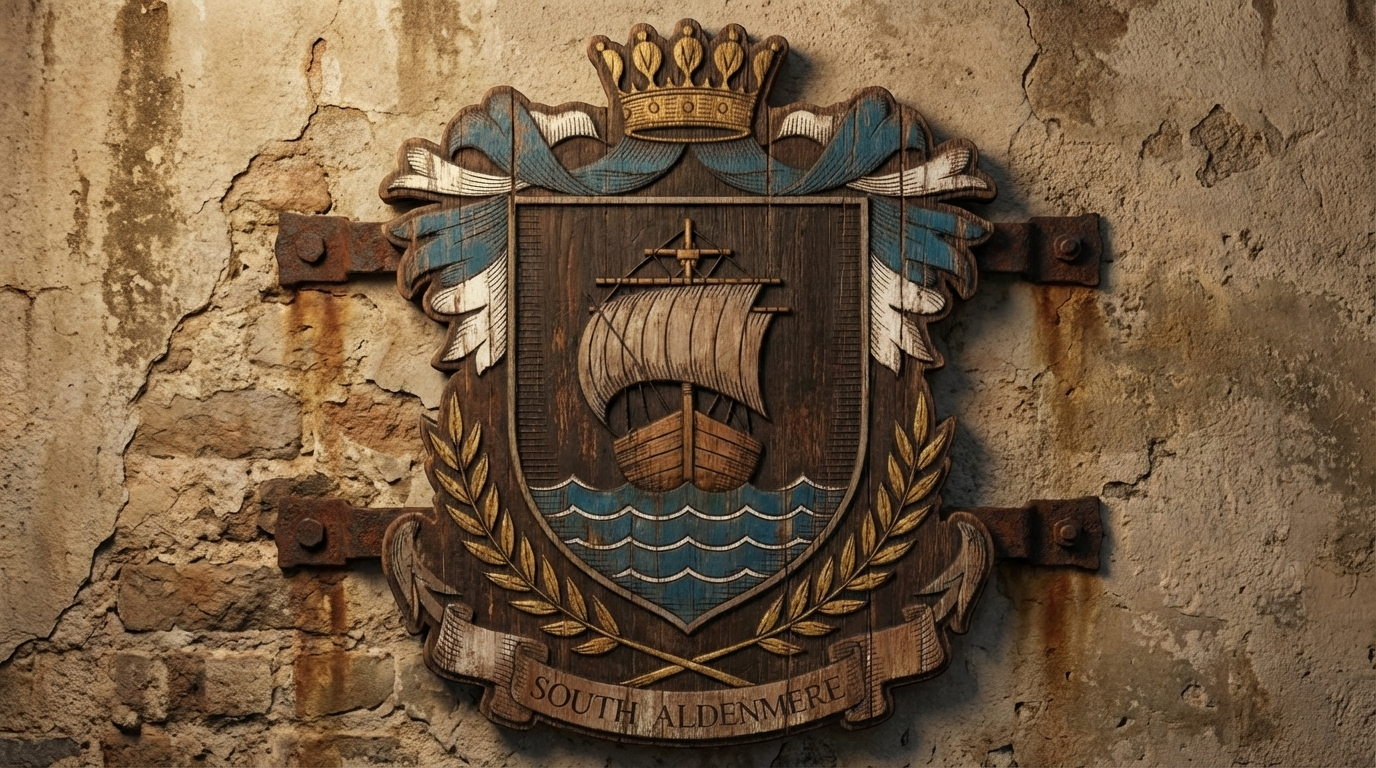
Major Cities
| City | Population | Notes |
|---|---|---|
| Carnehue | ~60,000–65,000 | Largest city in the world. Commercial capital. Mags' birthplace. Sits at the mouth of the Dunwater river on the western coast. |
| Erish | ~8,000–10,000 | Political capital. Much smaller than Carnehue. |
| Staham | ~6,000–7,000 | |
| Beypool | ~4,000–5,000 | Sits upstream on the Dunwater. |
| Fenwick | ~1,000–2,000 | Waystation town on the road south from Carnehue. Flat, damp fen country. Where Mags meets Edoine in Book One. |
| Hallow | ~500–1,000 | Small town near the border with Umberhal. Warm, flat, quiet. The kind of place people come to when they want to be forgotten. Where Mave Solloway has retired. |
| Stonebridge | ~500–800 | Small town where the Bridewell meets Carnehue Bay. Where the group passes through in Book One and encounters Deverin performing burial rites. Notable only for that. |
| Ashton Cross | ~1,500–2,500 | Crossroads town in northern South Aldenmere, near the Aldenmere border. Occupied during the war. Where Mott finds Brynn in the compressed Mott interlude — a church compound requisitioned, the ten-pointed star fresh on the lintel. |
| Greyminster (south) | ~2,000–3,000 | The southern half of a border town split with Aldenmere. For most of their history, the border running through town was an administrative line nobody thought about. Aldenmere's seizure of the whole town — including this half — was the first outright act of war. |
Notable Features
The most commercially active kingdom. Carnehue is the largest city in the known world, a significant port city whose harbor is central to its commercial dominance — and yet it is not the capital. The gap between where the money is and where the crown sits creates fertile ground for corruption. The Shippers Guild operates here, its power rooted in control of maritime trade. The group's journey to Lirenne in Book Two departs from Carnehue. The Dern population is 14% — higher than most kingdoms — with four designated Dern towns (Bryegate, Hiecot, Ketton, Owsbrook). Morgrym and Agna's clan is based in or near Ketton — their settlement is called Bresholm by outsiders and maps, and House Bres by the Bres clan themselves.
More racially mixed than most kingdoms. Ha'alvar at 1.22% — higher than elsewhere — suggesting a relatively tolerant society. Tessara and Harven's mixed marriage was unremarkable here.
The River System
The Bridewell is the major river of South Aldenmere. It begins in the Embry Mo'sant just east of Erish, flows west for a short stretch, then turns south through the heart of the kingdom before emptying into Carnehue Bay near Stonebridge. The Bridewell valley is the geographic spine of South Aldenmere — Bresholm and Ketton sit along its western bank, and the forest Mags grew up in (the Breswood, as the Bres clan calls it) occupies the valley between the Bridewell and the higher ground to the west.
The Dunwater branches off from the Bridewell near Fenwick, flowing separately to Carnehue Bay and entering the sea at Carnehue itself. The city takes its commercial identity from this river — the Dunwater carries inland trade from the kingdom's interior to the port.
The Sweetwater is a smaller tributary flowing from the Ketton area west to the Bridewell — the local river of the Bres clan's territory.
The Bridewell and the Dunwater were once a single river. Sometime in the fourth century, the river split — the Bridewell became the main channel flowing south to Stonebridge, and the Dunwater branched west toward what would become Carnehue. Before the split, the original river flowed through Ossavar. The split left Ossavar dry over roughly two generations, killing the city. This is the geographic mechanism behind Tomas Ferre's second prophecy — the river that "chose a new path," described in precise and unremarkable language before it happened. See the Ossavar page.
Carnehue — Geography and Layout
Carnehue sits on the western coast of South Aldenmere at the mouth of the Dunwater — the river the city takes its commercial identity from. The Dunwater is a branch of the larger Bridewell, splitting off near Fenwick and flowing west to the sea. The Dunwater carries significant inland trade from the kingdom's interior, and Carnehue captures both that river traffic and the maritime trade of the western sea. It is the largest commercial port in the region, and its position on the western sea makes it a common departure point for ships making the crossing to Lirenne via the northern route. A major highway runs through the city connecting South Aldenmere and Umberhal to the kingdoms to the north, making Carnehue a commercial nexus by land and sea simultaneously. The Shippers Guild's power is rooted in controlling this chokepoint.
Carnehue — The Harbor
Busy, functional, and not elegant. The working harbor is all commerce — warehouses stacked against the waterfront, cranes and rigging, the smell of salt and fish and tar. Counting houses, rope merchants, chandlers, the constant movement of cargo. The Shippers Guild's influence is visible in every transaction on the common docks. Noise and crowds are the natural state.
A separate section at the northern end of the harbor serves officials, wealthy merchants, and visiting dignitaries. The contrast is stark: expensive vessels, high security, clean stonework, and direct passages to the wealthy district and the government quarter. Entry is controlled. The two harbor sections share a waterfront but operate as entirely different worlds.
Carnehue — Districts
The Puddles — a low-lying district south of the harbor, always damp, subject to minor flooding, and poor. The city's lowest inhabitants live here — the people the rest of Carnehue needs but does not think about. Named for the standing water that collects in its streets after any significant rain. Maren grew up in the Puddles.
The Cat and Boar — Maren's inn. Clean enough, practical, the kind of place a road man returns to because he knows the beds and nobody asks questions. In the working district near the harbor. The group uses it as a base during their Carnehue operations.
The harbor expansion — the commercial project Tessara died over — is extending the harbor southward with new quays and reclaimed land. The expansion is eating into the Puddles. The people displaced are not being rehoused; they are accumulating in a shantytown known locally as the Tangle — a maze of hastily built shacks sharing walls, growing into each other, paths that dead-end and alleyways that turn and turn again. The Tangle has grown up outside the city walls, expanding as the harbor does. The city grows inward toward commerce and outward toward poverty simultaneously, and the machinery that drives this does not mark it.
When Mags returns to Carnehue at twenty, the expansion is visible from the road coming in — new construction along the southern waterfront, the harbor's footprint noticeably larger than it was ten years before. She notes it as something new and keeps moving. She does not yet know what it cost.

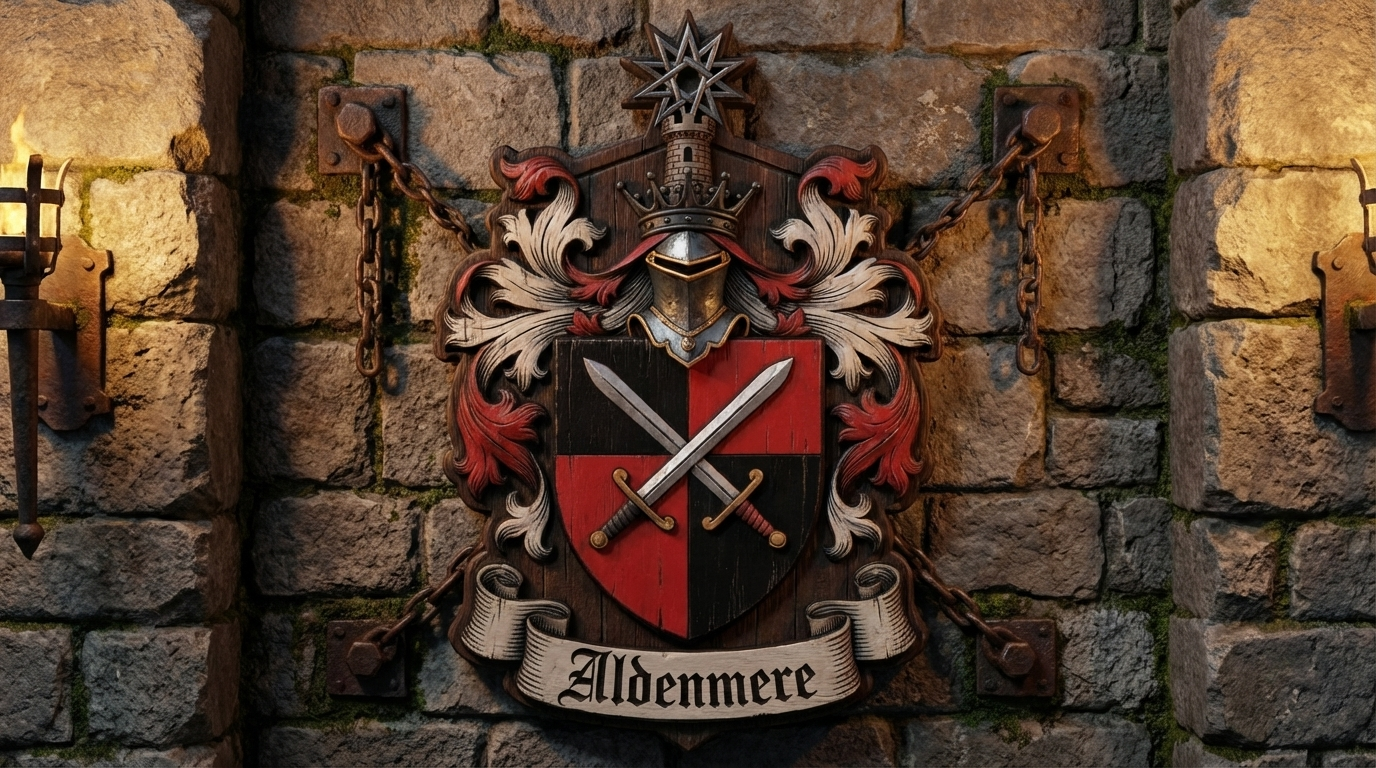
Major Cities
| City | Population | Notes |
|---|---|---|
| Sosamyra | ~55,000–60,000 | Largest capital city. Ancient seat of Umber Kings. Imperial gravity. |
| Waypool | ~15,000–18,000 | Church town in southern Aldenmere, near the South Aldenmere border. Disproportionate clergy — effectively under ecclesiastical control. Thagari communications network, institutional infrastructure. Osmen's forward operating base from Book Two onward — used for operations that need proximity to South Aldenmere without the political visibility of Sosamyra. Taggert brought here for questioning. |
| Aelwold | ~11,000–13,000 | |
| Pemminster | ~9,000–11,000 | |
| Ansgrove | ~4,000–5,000 | |
| Cedon | ~3,500–4,000 | |
| Bellcross | ~2,000–3,000 | Church town on the interior road between Waypool and Sosamyra. Part of the Waypool ecclesiastical network. In Mott's interlude, the town where he sees a priest blessing soldiers heading south — the institutional machinery visible in its most routine form. |
| Greyminster | ~4,000–6,000 | Border town split between Aldenmere (north) and South Aldenmere (south). The seizure of the whole town was the first outright act of war. Requisitioned as command headquarters during the advance. Where Mott reaches Aldric. The cage closes here — three layers: Aldric's duty, Essren's eyes, Brennan's architecture. |
The Somer
A river of Valdenne, not Aldenmere — though its influence extends into the cultural life of this kingdom through Greypool, which sits on its banks just inside Valdenne's border. The Somer flows westward from the interior toward the marshes. At Greypool it widens considerably — almost a lake — before narrowing again and eventually joining the Lower Corveille. The grey stillness of the water at this widening is what gives the city its name.
Notable Features
The most powerful kingdom by every measure — largest population, most castles (1,056 active), largest capital. The Cardinal holds state power equal to the King and General — Sorvaine's church has a seat at every table of governance. The Unification Movement is headquartered here, led by a king going slowly mad. Mott Kir is the king's third son, who fled the destiny of becoming Cardinal.
The War — Book Three
By Book Three, Brennan has pushed Aldric the final distance toward military action. The Unification Movement becomes conquest. Aldenmere moves on South Aldenmere first — pulling the war directly into the geography of Mags' story. Aldric genuinely believes this is the completion of something ancient and sacred. The belief is real. The madness is what that belief becomes when it has been guided by the wrong hands for long enough.
When Osmen filed treason charges against Mott and the group in Book Two, Aldric's reaction was that the whole thing was absurd — the truth would come out at trial. He didn't file the charges. He didn't endorse them. Osmen moved without him, serving Sorvaine's agenda rather than Aldric's feelings about his son. Brennan managed Aldric's reaction, redirected his attention toward the war, kept him from acting on his instinct to dismiss the charges. Aldric still believes Mott is coming home.
Aldric dies during the war — the group hears the news as a rumor on the road in Book Three Ch 17. Killed in a counterattack, refused to retreat. Essren takes the throne. The war continues. Mott, inside the cage at Greyminster, carries the loss inside the institution that produced it.
After Aldric — Essren and Brennan
With Aldric dead, the throne passes to his eldest son Essren Kir — the crown prince, groomed for kingship, trained in military arts. Essren is ambitious and capable. He is not particularly religious but understands clearly that religious institutional power is a lever worth holding. He doesn't need faith. He needs utility.
Brennan pivots to him without breaking stride. He doesn't need a true believer — Aldric's faith was complicated to manage. Ambition is predictable. The conversation between Brennan and Essren probably happens within weeks of Aldric's death. It is warm. It is practical. Both men leave satisfied.
The trilogy ends with Sorvaine destroyed and Brennan already seated at the new king's table. The church didn't lose. It adapted. This is what these things do — they survive, they find new hosts. The machinery outlasts any individual confrontation with it.
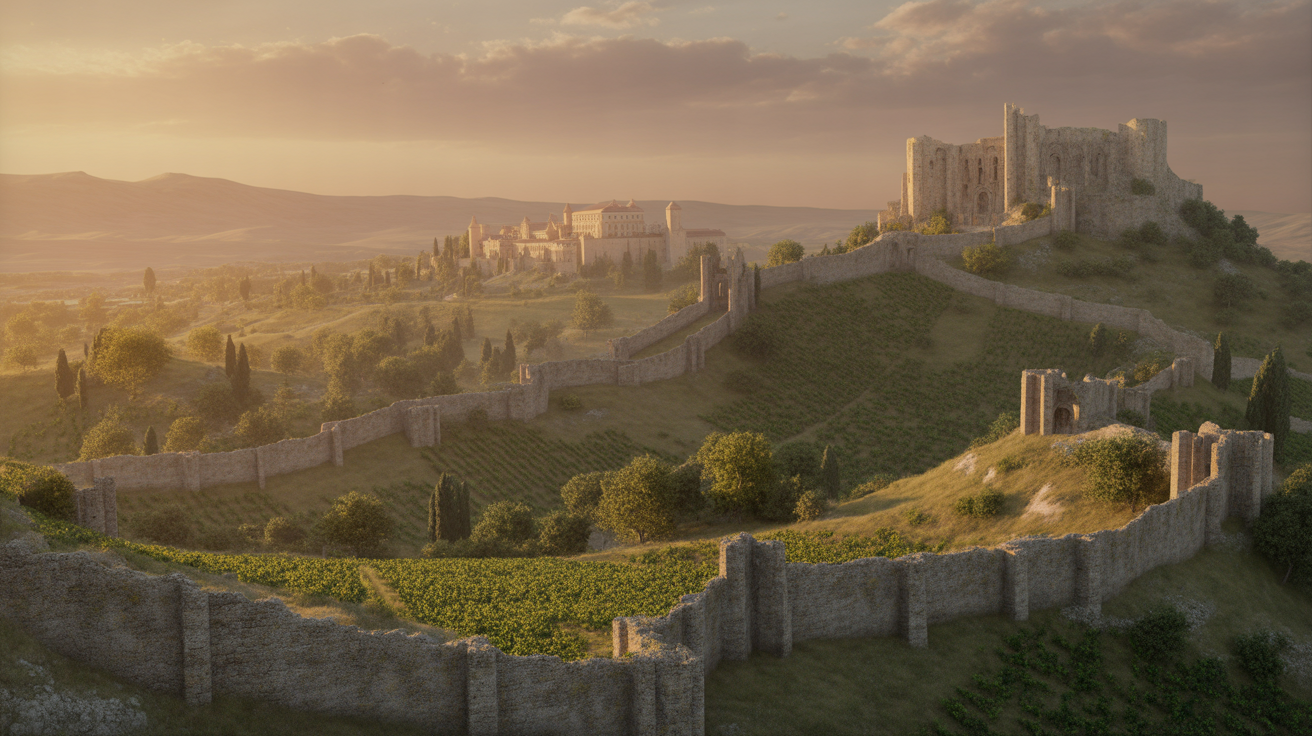
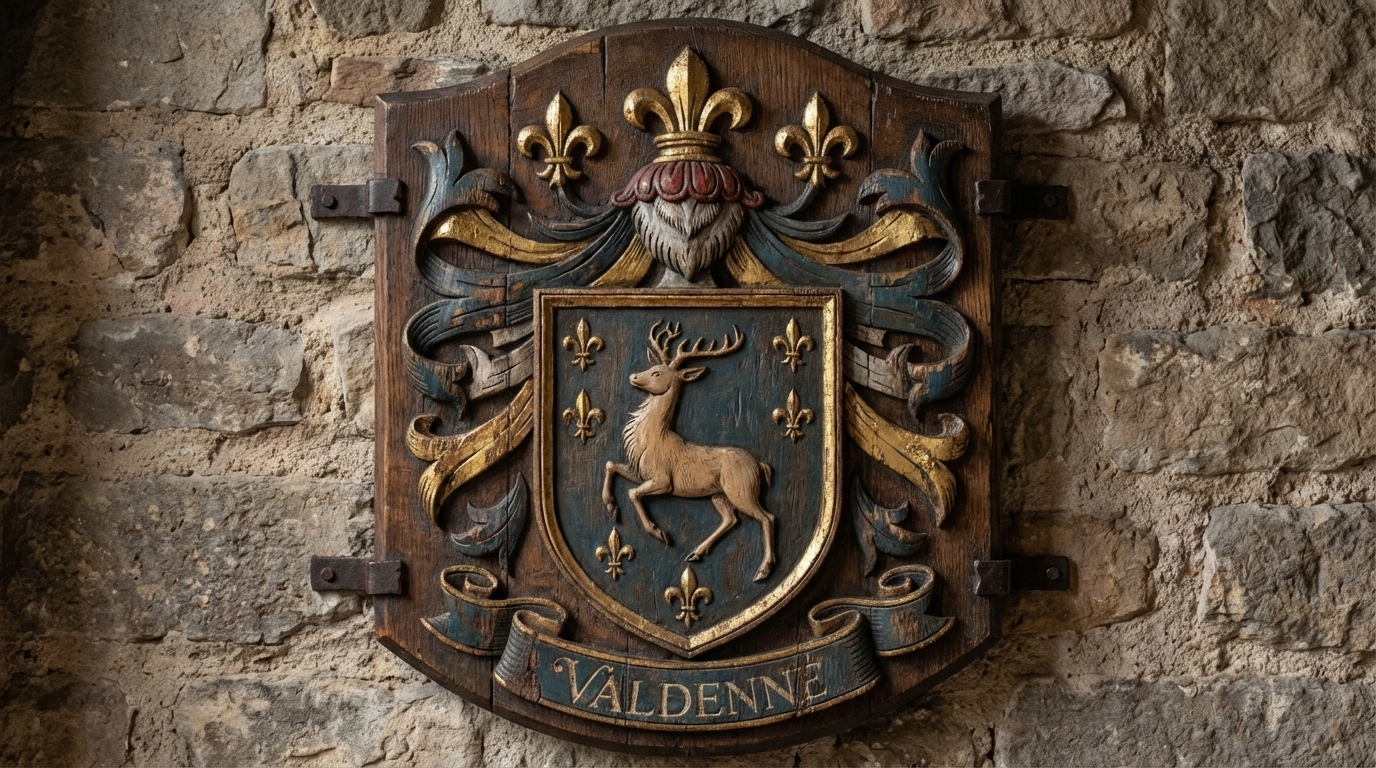
Major Cities
| City | Population | Notes |
|---|---|---|
| Montbriare | ~35,000–40,000 | Capital. Sits on the western coast at the northern edge of Caerwyn Bay (04.68,05.60). |
| Greypool | ~12,000–14,000 | Provincial city on the Somer River, where the river widens into a near-lake. Culturally active — has an opera house. Elia's hometown. Far enough from political centers that its church presence felt genuinely pastoral rather than politically charged. |
| Verse | ~2,500–3,500 | Small provincial city in northern Valdenne. Hometown of Chancellor Astos Streuxerr — "The Vulture of Verse" (05.98,03.71). |
Geography
The Sauverre — the mountain range running SE through the kingdom's interior. Lac Sauvenne — a large lake fed by the Upper Corveille river and draining into the Lower Corveille, sitting in the shadow of the Sauverre range. Caerwyn Bay — the bay on the western coast between Montbriare and Aelwold (Aldenmere), where the Lower Corveille empties into the sea.
Rivers
The Upper Corveille flows SE from its source, then turns SW to empty into Lac Sauvenne. The Lower Corveille continues westerly from Lac Sauvenne to empty into Caerwyn Bay. The Somer River flows from its source to join the Lower Corveille, widening at Greypool into a near-lake — the grey stillness of that widening is what gives the city its name.
Notable Features
Dunai hold top military positions despite being a 16% minority — suggesting either a long-standing martial tradition specific to Valdenne or a historical arrangement that has calcified into custom. They do not hold royal or political office. Half-Dunai at 1.65% are the most marginalized population. French-influenced naming conventions suggest refinement and aristocratic culture. The Vulture of Verse — a chancellor from a small provincial city who clawed his way up — is a character worth keeping in mind.
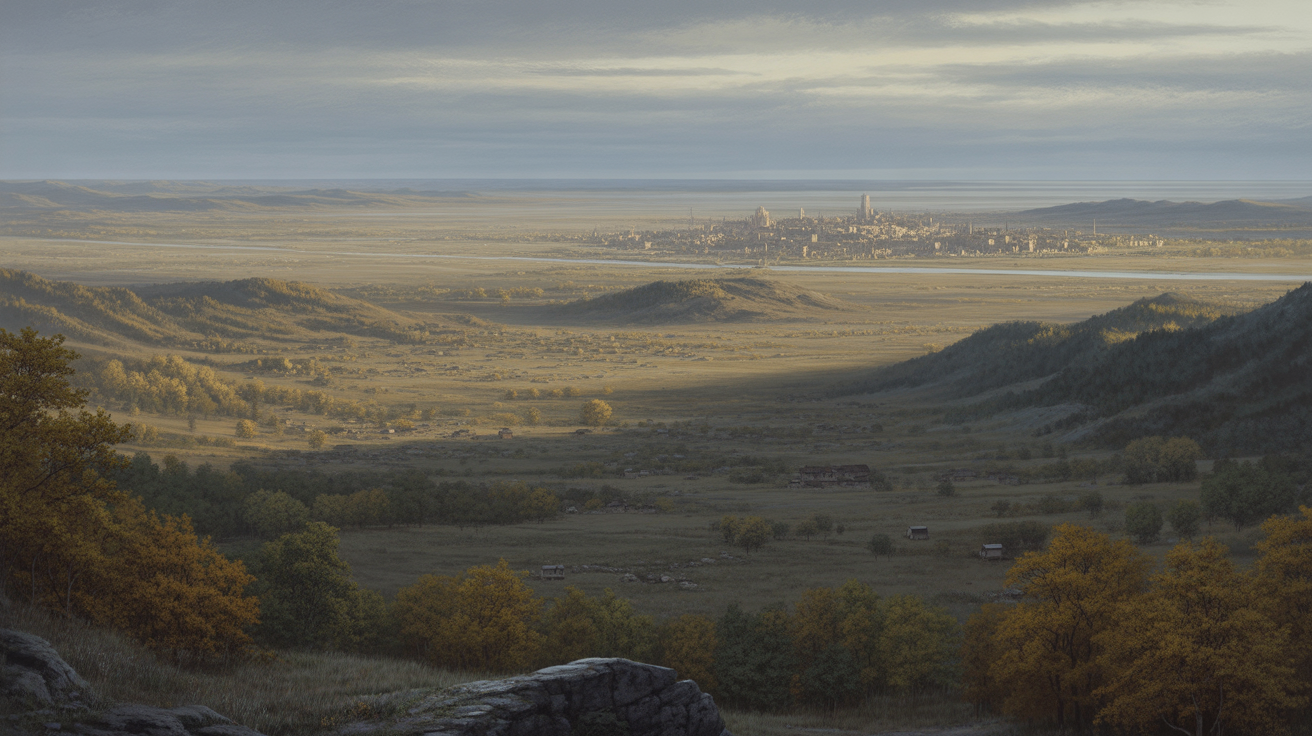
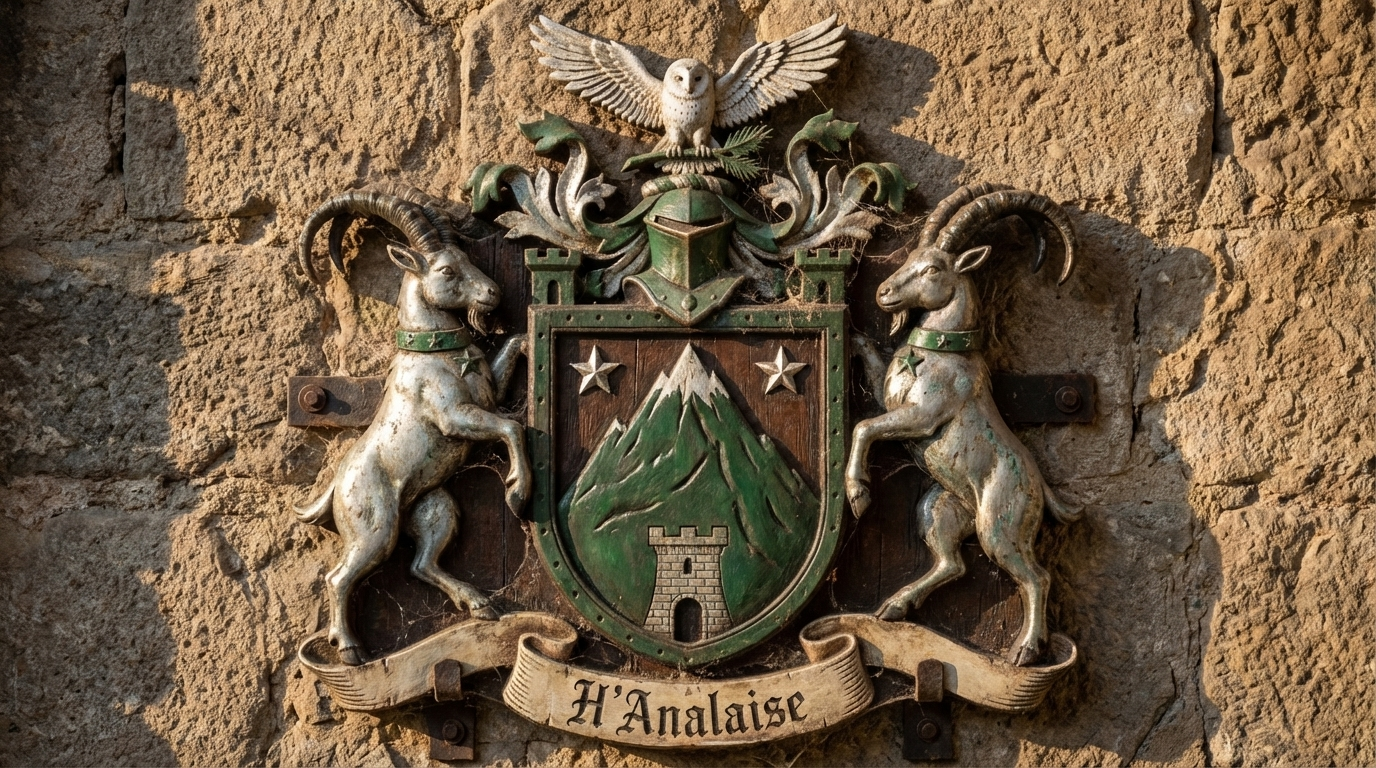
Notable Features
Named for the ancient Hanalaise (Eastlands) of the Umber kingdom. Sits in and against the eastern face of the Embry Mo'sant — largely mountainous and hilly terrain, which the H'analaise call the H'ossant, a name older than the Umber kings. 82% wilderness with 149 border castles suggests actively contested edges and vast ungoverned territory. King Tymen Hael presides over a human oligarchy that sits atop a population that is 37% non-human (Dern + Dunai) — significant internal tension. The Hael family name carries a territorial memory: the strait now called The Hael was once under their control, or their claim, before the geography moved out from under the name. Good territory for people who need to disappear, or for things to be hidden.
Settlements & Locations
| Location | Type | Notes |
|---|---|---|
| Antis | Capital (~30,000–35,000) | Eastern-central H'analaise. The group passes through this area entering Aldenmere through the pass above Antis. |
| Kellmere Station | Labor facility | South of Antis, in the hill country. A labor camp built into a natural depression — low buildings, work sheds, barracks housing, perimeter fencing. Holds prisoners through paperwork and distance rather than physical force. Where Morgrym was held. Mags extracts him during a shift change as the facility is being emptied due to war mobilization. |
| Ketholm | Dern settlement | West-southwest of Kellmere Station, deeper into the foothills toward the Mossant. A day and a half on the Dern road. The community where Mags leaves Morgrym after the extraction. The woman here confirmed Morgrym's presence at the facility. Part of the Dern network that quietly intercepts released prisoners. |
| Grenholm | Dern settlement | In the western foothills, in the border margins between Aldenmere and H'analaise. House Gren — a small mining clan working marginal seams. Twenty or thirty people. Where the group first connects with the Dern road network in Book Three Ch 4. The elder here gives Mags the Morgrym trail and the route through the foothills. |
| Felkirk | Border town | Small town in the eastern margins of Aldenmere (technically Aldenmere jurisdiction, not H'analaise). Half-abandoned by the war's approach. Where the group witnesses the witch burning in Book Three Ch 8. |

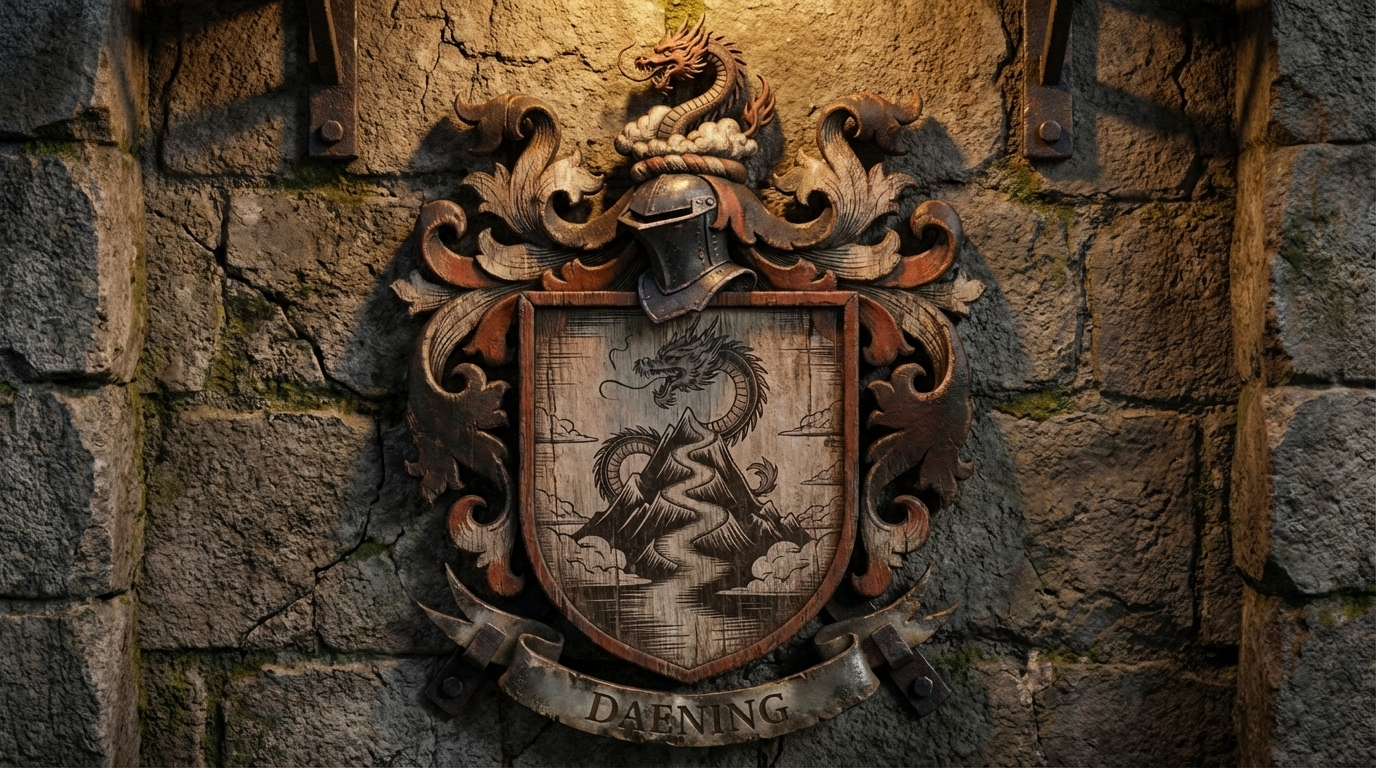
Notable Features
The mountains — known here as Tianbi, the sky wall — explain everything: the homogeneity, the cultural distinctiveness, the uninterrupted civilization. 2,600 years of largely undisturbed history means Daening has preserved records that others have lost. Getting in requires a deliberate, difficult journey. Daening is the one place beyond Sorvaine's immediate reach.
Daening is accessible by sea — from Lirenne the group sails south along the eastern coast to reach Hanyi. From Hanyi they travel west into the mountains toward Tianshu.
Geography
Yinshan (known to outsiders as The Little Mossant) — a separate mountain range running SSW along the borders of Daening with H'analaise and Umberhal. Not connected to the Embry Mo'sant — a gap between the two ranges provides a corridor between Umberhal and H'analaise, but Daening itself remains largely behind the mountains. Hanwei Delta — the coastal delta by Hanyi, where the Kuanhe empties into the sea. The Kuanhe (called the H'aldesse in H'analaise) — a dual-named river crossing both kingdoms, feeding the Hanwei Delta. The Longhe — flows north from Daening to the Embry Vaelen.
Tianshu
The monastery of the One God, high in the Tianbi mountains west of Hanyi. Its name means "heavenly text" in the Daening tongue — a name earned by its library, one of the largest in the known world. Because Daening's isolation kept it beyond Sorvaine's reach, Tianshu preserves records that have been purged or suppressed everywhere else, including documentation of the Umber kings and their bloodline. The monastery is the physical home of the One God's prophet — a high stone structure built against a mountain face, cold and austere and very old. The monks who serve the prophet have spent their lives in contemplation and self-denial. Visitors are received, but the monastery does not seek them.
Daoshi
The community that grew up around Tianshu — pilgrims, scholars, merchants, and those who simply found themselves staying. The name means "the way place" in common usage: not holy in the formal sense, but the stop on the way to something larger. It sits below the monastery on the mountain's lower slopes, visible from the road that climbs to Tianshu's gates. It is the last warm meal and the last bed before the ascent.
Story Role — Book Two
After Lirenne, the group sails south along the eastern coast to Daening — a voyage following the mainland's coastline, shorter than the Carnehue-to-Lirenne crossing but through less familiar waters. They arrive at Hanyi, cross west into the mountains, reach Daoshi and then Tianshu. The pendant scene happens here. After, rather than sail back the long way, the group decides — after argument — to cross the Mossant westward into H'analaise and then into Aldenmere. This is faster but significantly more dangerous. It is the harder route chosen for the second time. They arrive in Aldenmere directly — and that is where Osmen's trap springs.
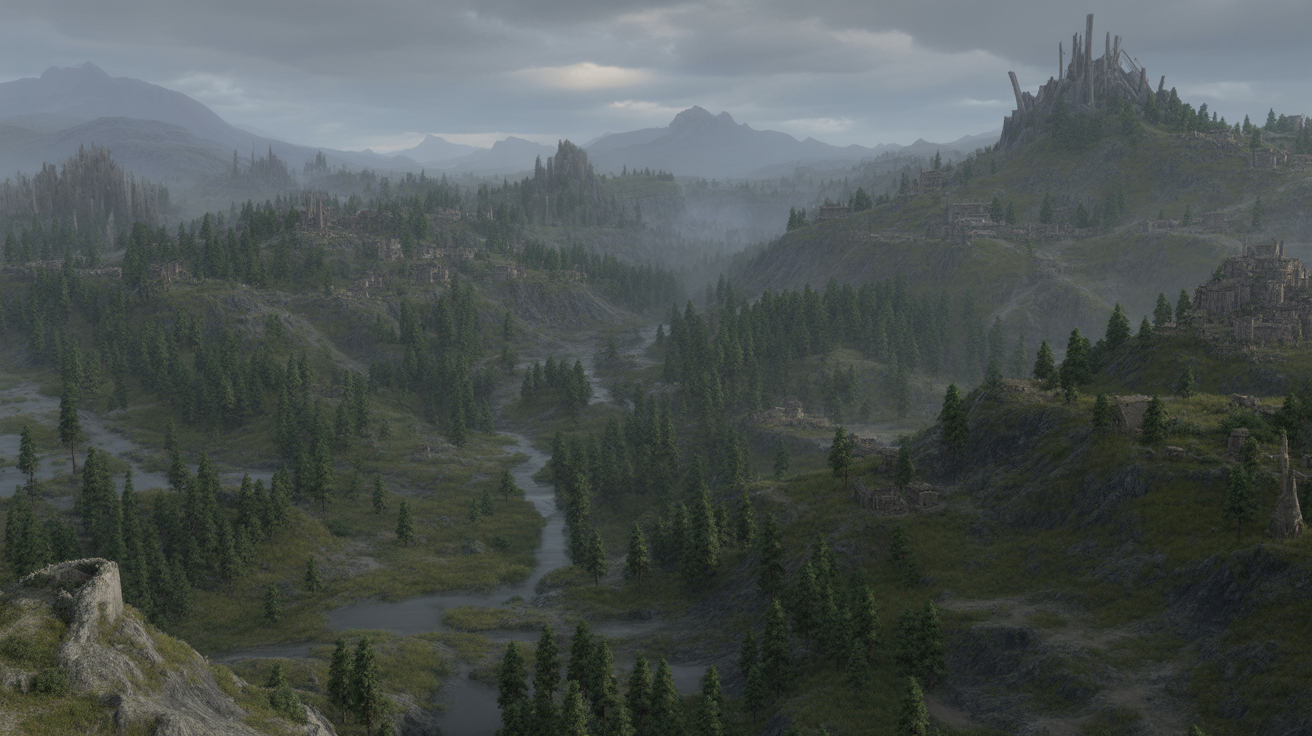
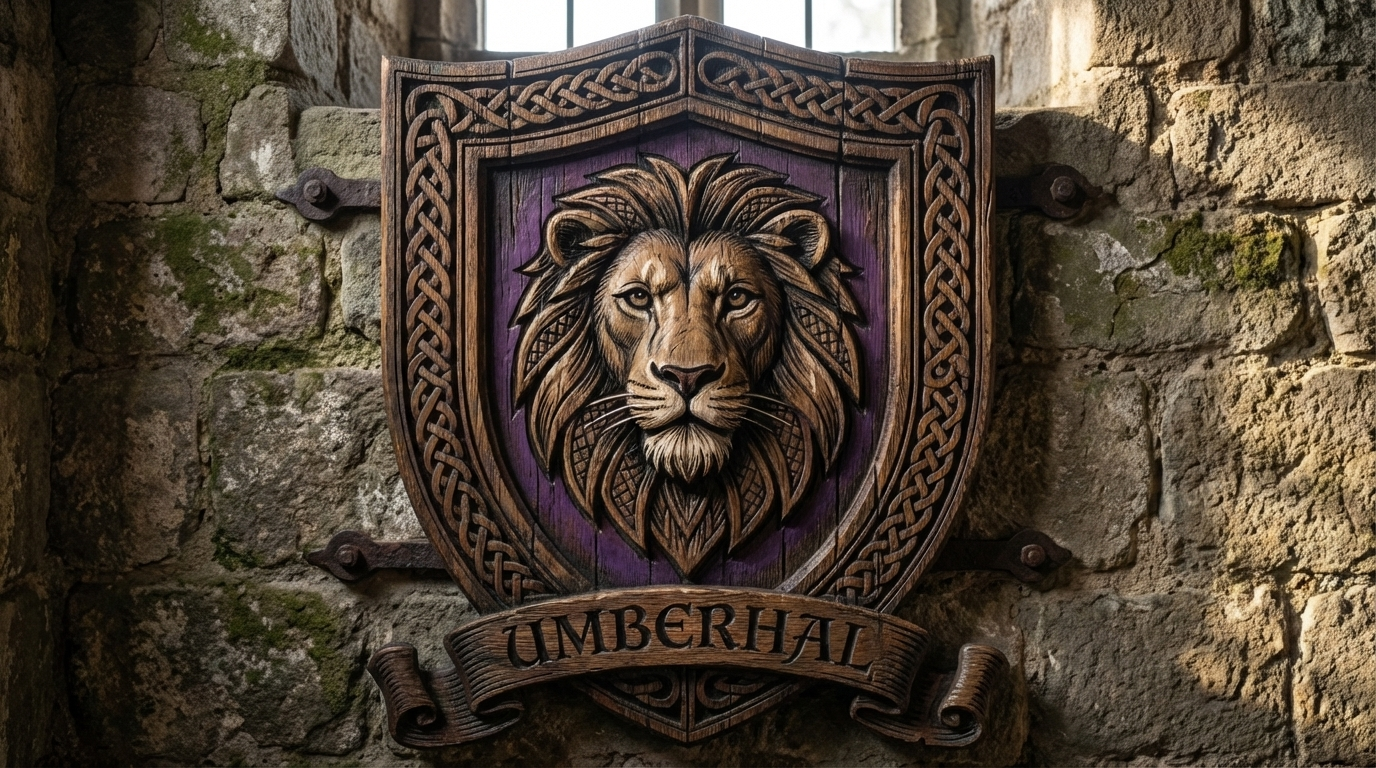
Geography
Tai Uru (colloquially The Black Tide) — the large south-facing bay on Umberhal's southern coast. The formal name comes from the Polynesian-influenced cultural zone of the southern shores, predating the Valdic translation that sailors and traders popularized. The Blackhal — the river that feeds Tai Uru, flowing SE from the kingdom's interior to the bay. The "Black" in both names carries down from river to bay — a connection the locals probably stopped thinking about centuries ago.
Notable Features
The name means "Kingdom of Umber" — deliberately positioned as heir to the old king's legacy. Three distinct cultural zones visible in town names: Chinese-influenced (near Daening border), Polynesian (southern shores, possibly connected to Lirenne), and English (bulk of kingdom). Assembled through conquest or absorption of genuinely different peoples. Myraei has unusually high inn count — a transit and trading city, a crossroads. Positioned as a corridor between Daening and western kingdoms.

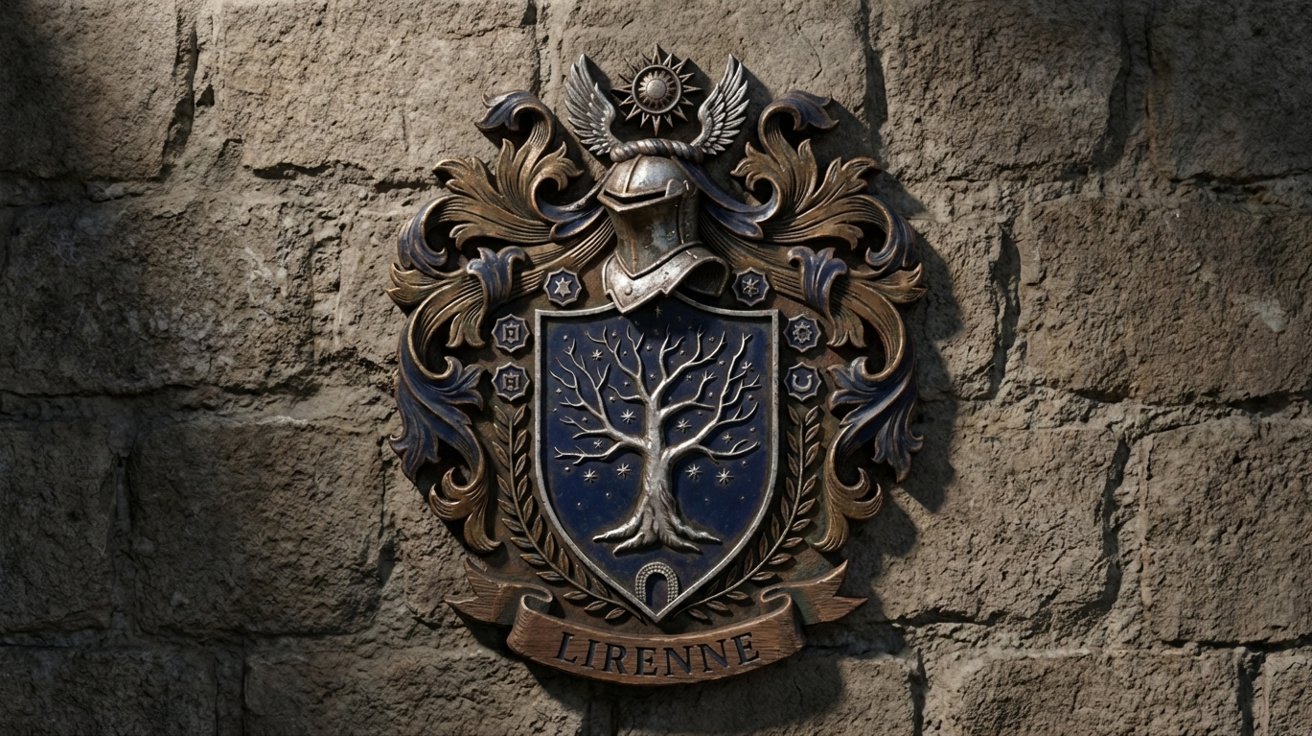
Notable Features
The most sophisticated civilization in the world. 2,600 years of largely stable democratic governance. The five magic colleges plus the College of White have formal political representation. Most structurally resistant to Sorvaine's influence — no single ruler to convert, distributed authority across districts and colleges. Tessara's magical tradition traces here. The real history of the Umber kings is most likely preserved in the college archives.
For Mags, Lirenne is her mother's world — the world Tessara came from, the world she never knew. Arriving there in Book Two is one of the most emotionally significant events of the trilogy.
L'lane — The Capital
L'lane climbs. The city starts at the harbor and ascends in tiers — terraced streets, stairways cut into hillside, buildings rising in levels of white and cream stone with green copper roofing. The colleges sit at the crown, visible from the harbor like something the city wears without vanity. The further from the water, the higher, the older, the more the architecture carries the weight of centuries. Trees and gardens grow between the buildings — not decorative but structural, the city built around its green spaces rather than against them. The whole effect is of a place that grew organically upward, following the terrain rather than fighting it, and arrived at beauty without having aimed at it directly.
Truth is Divinity
L'lane's civic motto, inscribed in Aevornian (the Old Tongue) on the arch above the harbor gate. The philosophical foundation of Lirenne's scholarly tradition — the principle that truth itself is the highest authority, outranking kings, churches, and gods. This is the intellectual tradition that kept the Umber history alive when Sorvaine suppressed it everywhere else.
The same characters are written inside the front cover of Tessara's spellcraft treatise, in her hand. Mags has been sounding them out since she was ten years old — repeating the syllables without comprehension. In Book Two Ch 5, Elia reads the inscription casually (she learned Aevornian from Natalia Delaire) and Mags hears the translation for the first time. The sounds she has been carrying since childhood suddenly have meaning.
What the Group Actually Sees
The first thing visible from the water, before the wharfs and the city proper come into focus, is the opera house. It sits on the northwestern end of the harbor, built up on a massive stone pavilion that rises above the docks and wharfs below it. It does not face the harbor. It faces the sea. A republic wealthy and stable enough to make art infrastructure has placed its grandest building where incoming ships see it first — not as advertisement but as statement of what this city considers worth building large. For a group arriving by boat, it is the image that defines L'lane before anything else does.
L'lane is a city that has had 2,600 years to figure out how to work. The streets are clean in a way that suggests it's been a policy for centuries rather than a recent initiative. Public water is free at fountains distributed throughout the districts. The courts are open — citizens can attend any hearing that isn't sealed, and most aren't sealed. The colleges are physically present in the city's skyline in a way that makes education feel like infrastructure rather than privilege.
The social texture differs from the mainland in ways that take a moment to name. People argue in public without it escalating. Dunai and Alvar walk the same markets without the specific loaded courtesy that marks mixed-race spaces elsewhere. There are no visible Thagari. Several faiths share the public square without obvious friction. After weeks of moving through South Aldenmere and the mainland, this is noticeable.
Also noticeable, for someone who knows what they're looking at: a church of Sorvaine near the harbor district, newly constructed, larger than it has any right to be in a city that has never been her stronghold. The stonework is fresh. It was not here five years ago. In the student districts, her symbol appears in graffiti — not everywhere, not dominant, but present. Scratched into doorframes, chalked on courtyard walls, worn as a small pin by some of the younger students. Most of the city doesn't register it as significant. Mott registers it immediately. He has seen his Cardinal briefings. He knows what the early stages look like.
For Mags specifically: the Alvar here are at home. Not visitors, not the slightly too-careful-in-public grace she has seen in mixed-race cities on the mainland. This is where they're from. She takes after her mother enough to pass as mostly Alvar in the right light, and Lirenne is the first place in her life where that has meant belonging rather than ambiguity. She is not sure what to do with that. She is here to do a job. She is also, for the first time, somewhere her mother's blood is the majority.
The group is not tourists. They are moving through the city with purpose. But the texture of it accumulates in the background of every scene set there — a city where things work, where power is distributed rather than concentrated, where the machinery that ground Agna to ash and lost Morgrym in paperwork has less purchase. The contrast with everything that preceded it is not stated. It doesn't need to be. Neither is the implication of the fresh stonework near the harbor. That doesn't need to be stated either.
Corivel — College Town on the Corren
A river town in Lirenne's interior, roughly two-thirds of the way down the island from L'lane. Situated on the Corren — a river that runs through the island's interior and empties into the sea at Haelith. Older than L'lane in some ways — settled before the capital was a capital, the kind of place that grew around a ford and a college rather than a harbor. River stone buildings, lower than L'lane's terraces, built along the water rather than climbing away from it. Agricultural land around it. The College of Anessi (Vitalism/Life) is part of the town — its buildings interspersed with homes and shops, the campus flowing into the community rather than sitting above it.
Corivel is where the group goes after L'lane, following Edoine's research trail to the Anessi archives. The Umber history — the most extensively documented case of inherited divine power — is found here, because Vitalism is the study of how power interacts with living systems and inherited divine power is their domain. Ingle's compound breakthrough also happens at Anessi's laboratories. Sorvaine's infiltration is more advanced here than in L'lane — further from the republic's institutional protections, the church presence is older and more established. The group's rooms are searched; reports filed that enter Osmen's network.
The Corren
A river running through Lirenne's interior, roughly north-south. The college town of Corivel sits on its banks. Haelith sits at its mouth where it meets the sea. The road along the Corren is the group's route from Corivel to their departure point — the road where the church checkpoint encounter occurs.
Haelith — Port at the River Mouth
The port town at the mouth of the Corren. Smaller than L'lane, functional, a working town. No terraced streets, no colleges glowing above. Wharves built for river barges and coastal traders. A town that exists because the geography demanded it — the river needs a mouth, the mouth needs a port. The group departs Lirenne from Haelith rather than returning to L'lane — they are heading south toward Daening, and the Corren has carried them to the departure point. The departure is under pressure: the filed reports from Corivel are in the network, the checkpoint was real, and the island that was supposed to be safe has shown them the same machinery that runs everywhere else.
Tennaly — Crossroads Town
A small crossroads community on the interior road between L'lane and Corivel. Exists because travelers need to stop somewhere. Has a Sorvaine church that's been established longer than L'lane's new construction — the stonework weathered, the congregation real, the folk practices further along in their absorption into the church's calendar. This is where Edoine spots the mage-as-caster-priest fraud: a priest performing a blessing whose environmental signature is wrong. Catalyst dust on the priest's hands. A mage performing the role of a caster priest. The seed of the endgame planted here — the church designed to survive any interruption in divine supply.
An independent island chain sitting outside the seven-kingdom framework entirely. Self-governed under tribal law, these islands have never been claimed by or subordinated to any continental or Lirenne authority. Their naming register — Alvar roots blended with Polynesian elements, macrons and ʻani endings — tells the story of a people whose ancestry connects to both Lirenne's Alvar civilization and the Polynesian-influenced cultures of southern Umberhal, but who have forged their own identity across centuries of oceanic independence.
Islands
Vaeloria, Lōmaevar, Saelunai, Mārelion, Thaelunea, Vaehilani, Arovaelis, Naeloria, Lioraʻani, Vaeselune, Hāelunor, Noeluvia, Saelohani, Tāreʻani.
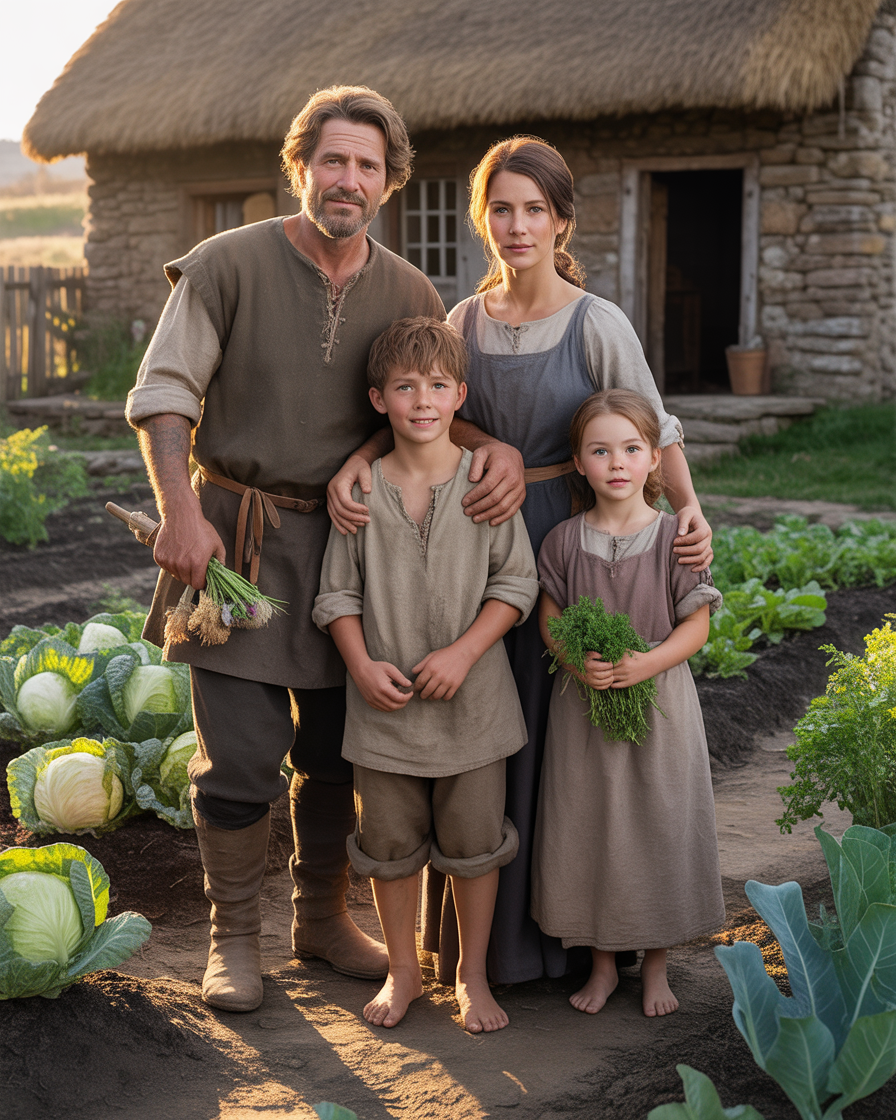
The most populous race. The baseline against which other races are measured — not because humans are superior but because they built the institutions that do the measuring. The Aldrician Calendar, the kingdoms, the legal systems, the churches — all human architecture. Other races exist inside human structures, sometimes comfortably, often not.
Racial terms: Dunai call humans Vael (neutral) or Uren (bitter, historically loaded). Dern call them Bred — implying common stock, a faint contempt for those without clan purity.
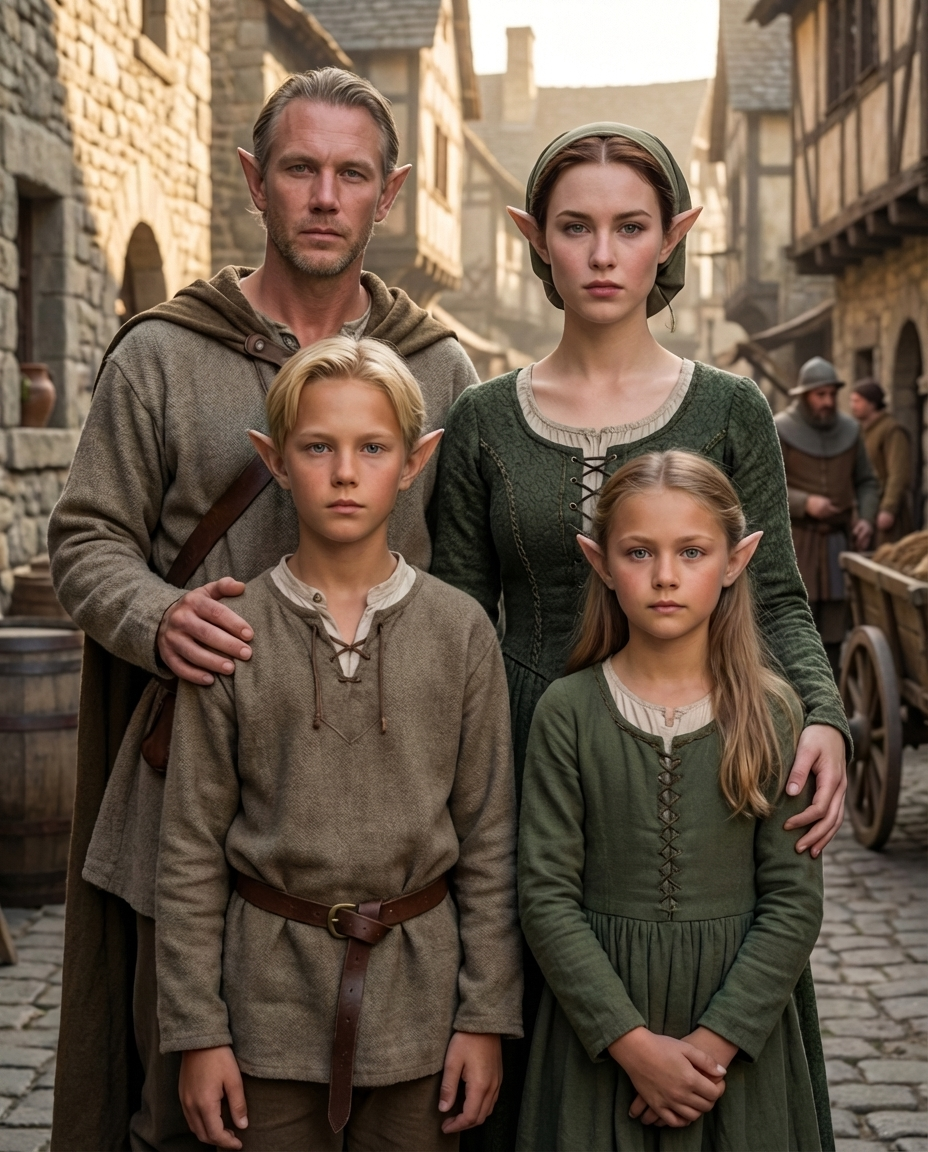
Slimmer, more graceful, live roughly twice as long as humans. Essentially another race of humans — not wiser, not more magical, not inherently superior. Prefer to be called Alvar; "Elf" is used casually by the poor and as a mild insult when intended as one. The educated and wealthy use the correct term.
Alvar regard themselves as visitors outside Lirenne — they have a homeland to return to, which gives them a psychological insulation other races lack. This homeland privilege is real and shapes their diaspora identity in ways both positive (confidence, cultural continuity) and negative (detachment, a faint superiority that reads as aloofness).
Key characters: Tessara Estuv (full Alvar), Sienne (full Alvar), Mags (Half-Alvar, takes after her mother, identifies as Alvar).
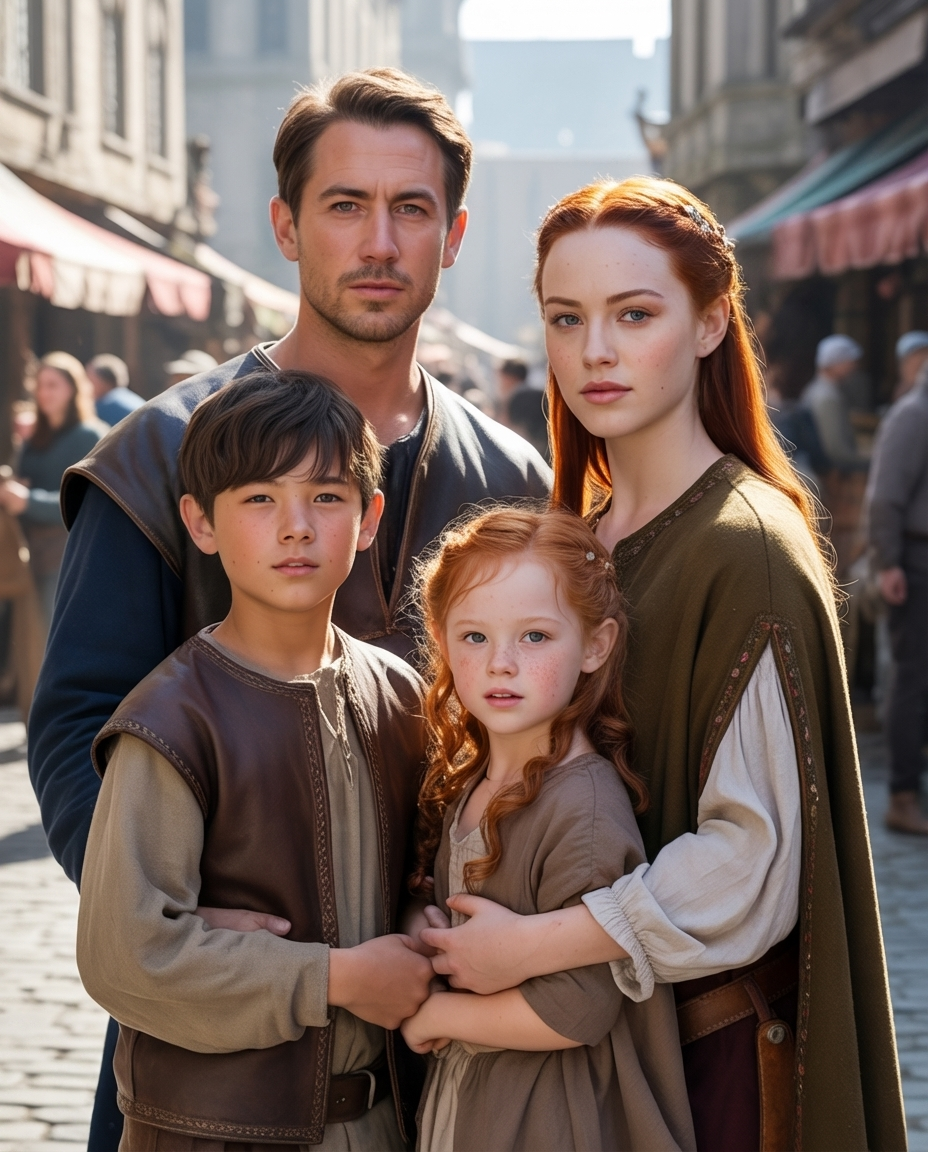
Human/Alvar. Range from mostly human to mostly Alvar in appearance. Claim whatever heritage their appearance supports — there is no formal term for themselves. Lifespan falls somewhere between human and Alvar but varies considerably between individuals.
Key character: Magdelia Estuv-Bres — Half-Alvar, takes after her Alvar mother, identifies as Alvar though she knows she has no real place among them.

Stockier, shorter. Stand-offish — prefer own company, form clan villages or urban ghettos. Good at everything an isolationist group would need: farming, carpentry, hunting, medicine. Tolerated when their services are needed, ignored otherwise. High society looks down on them most — the people who need them least are the most contemptuous.
The ONLY race that cannot interbreed, which partly explains their insularity and tight clan culture. Often work as prostitutes — their inability to become pregnant being a practical advantage. Call humans Bred — implying common stock.
Settlements are named after the leading clan family. The Dern theology is closed-door, centered on the hearth god Aldern. Clan hearth gods sit beneath Aldern as elevated ancestors, intensely local.
Key characters: Morgrym Bres (Aldmark of the Bres clan), Agna Bres, Malgrin Bres, Hald Garr, Prenna.
Graelin Smithing
The Dern learned to work graelin — originally a Dunai alloy, see the Dunai race page for origin — generations ago and have since become its most accomplished smiths. The metal requires hotter forges than silver but takes to Dern tooling with the same malleability, and clan smiths have developed graelin work into one of their signature crafts. The Bres clan in particular is known for graelin blades and ceremonial pieces, typically set with heliodor drawn from the same mountain deposits as their silver. A Bres-clan graelin dagger is recognizable to any Dern who grew up around the craft. Mags carries one — her father's, by a chain of ownership no one in the story can trace.
Coming-of-Age Rites
Dern culture observes two distinct coming-of-age rites, strictly gendered in tradition and rarely crossed.
Male — the warrior tattoos. At thirteen, after a Dern boy's first kill (in combat or in defense of clan), a master tattooer marks his right arm from wrist to shoulder with the warrior-script of his clan. The tattoos are almost never given to women. (Mags carries them on her left arm, earned at thirteen after her first kill — a breach of tradition Morgrym quietly authorized; the only woman in living memory of the Bres clan to bear the marks.)
Female — the Morenn. At twenty-five, a Dern woman celebrates her Morenn — her coming-of-age rite. Her mother gives her a Morenn ring she has woven herself at the hearth, over months: silver wire twisted with strands of the mother's own hair, worked small enough to fit her daughter's thumb. There is no ceremony beyond the giving. The mother produces the ring, the daughter holds out her hand. The ring is worn on the right thumb through maidenhood and unmarried life (it moves to the left thumb at marriage — a Dern woman's marital status is visible at a glance to anyone who knows the custom, and there is no separate wedding ring). On widowhood, the ring leaves the hand entirely and goes on a chain at the throat — the working life of the hands continuing, the ring now carried closer to the heart.
The Morenn functions as a life-stage marker in ordinary Dern speech — a woman's life has a before-her-Morenn and an after-her-Morenn, the way other cultures mark time by weddings or majorities. "She was quiet before her Morenn." "Ten years before my Morenn." The event is a dividing line in a woman's life.
The Morenn ring tradition is a survival from older patriarchal Dern practice, when the ring more explicitly marked women as bonded to clan and household. Its current meaning is almost entirely maternal love rather than social control — most modern Dern women experience making or receiving a Morenn ring as an act of devotion, not of constraint. Some conservative clans still emphasize the older reading; most do not. Agna does not.
Agna performed Mags' Morenn at twenty — five years early by Dern reckoning — privately in the kitchen, without the community's presence, adapting the rite to meet Mags at her Alvar majority rather than at the Dern age Mags would likely never observe in Bresholm. The gesture is doubly a claim: both the Morenn itself (Mags is a Dern woman in Agna's eyes) and the adaptation (Agna will bend her own people's rite to meet her daughter where her daughter is). Mags thus carries both the male and female Dern initiation markers — tattoos on her left arm from Morgrym, Morenn ring on her right thumb from Agna. Two breaches of tradition, each authorized by the Dern adult closest to that tradition's transmission. She is more fully claimed by Dern custom than most actual Dern women.
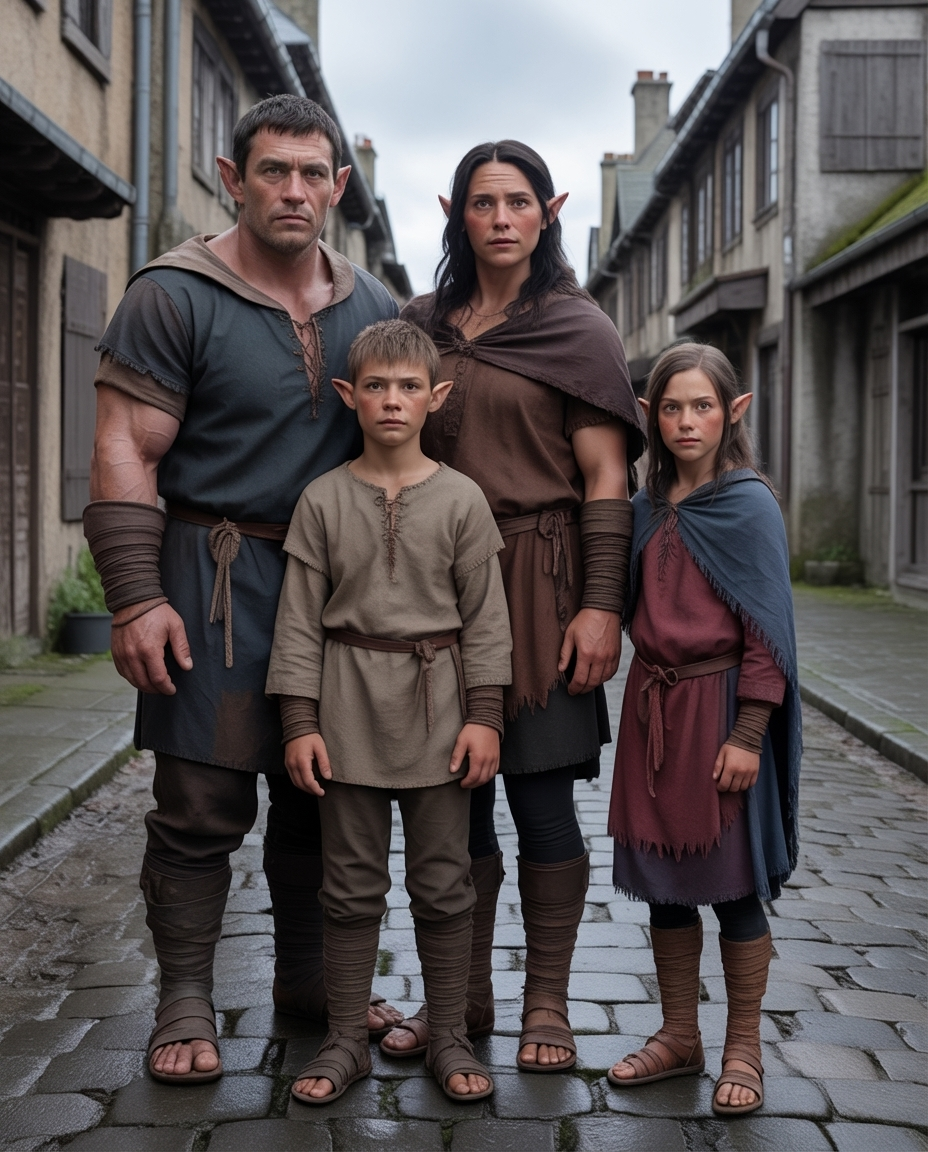
Similar size to humans, bulkier. Not evil — regarded as lower class and brutish. Once a respected warrior people whose name the Umber Kings borrowed to lend legitimacy to their dynasty. That history is now invisible. Western Umberhal was taken by force; the rest was economically strangled over generations until the diaspora became inevitable. Now dispersed across the continent with no homeland.
Racial terms: Call humans Vael (neutral, standard) or Uren (bitter, historically loaded) — the shift between the two in conversation is a tell. Even Vael carries edge in poor urban communities.
In Valdenne, Dunai hold top military positions despite being a 16% minority — suggesting a long-standing martial tradition or a historical arrangement that has calcified into custom. They do not hold royal or political office.
Graelin — The Dunai Craft
The alloy known as graelin is a Dunai invention. Originally forged for swords that held an edge longer than any steel on the continent, the metal's proper name derives from Grael, the war god Dunai smiths swore under. The Dern learned to work graelin generations ago and have since become its most accomplished smiths — though the Dunai were its originators. The craft survived the people.
Three registers in common use:
- Graelin — the accurate name. Used by Dunai, by Dern, and by any human who knows the material (smiths, arms merchants, scholars, the wealthy).
- Graelsteel — an informal compound used in ordinary commerce. A shopkeeper's word. Neither right nor wrong, just common.
- Grave-steel — folk corruption, born of mishearing graelsteel and finding the result fitting. Used in taverns and by commoners who couldn't name the metal's origin if asked. No one corrects it — the association with war, death, and Dunai warriors feels right even to people who don't know what they're feeling.
The progression of the name — Dunai proper noun to Valdic compound to grim folk corruption — is the shape of cultural absorption in this world. Most humans know only the third register. That the metal still carries Grael's name at all is a linguistic accident the Dunai did not ask for and cannot now undo.
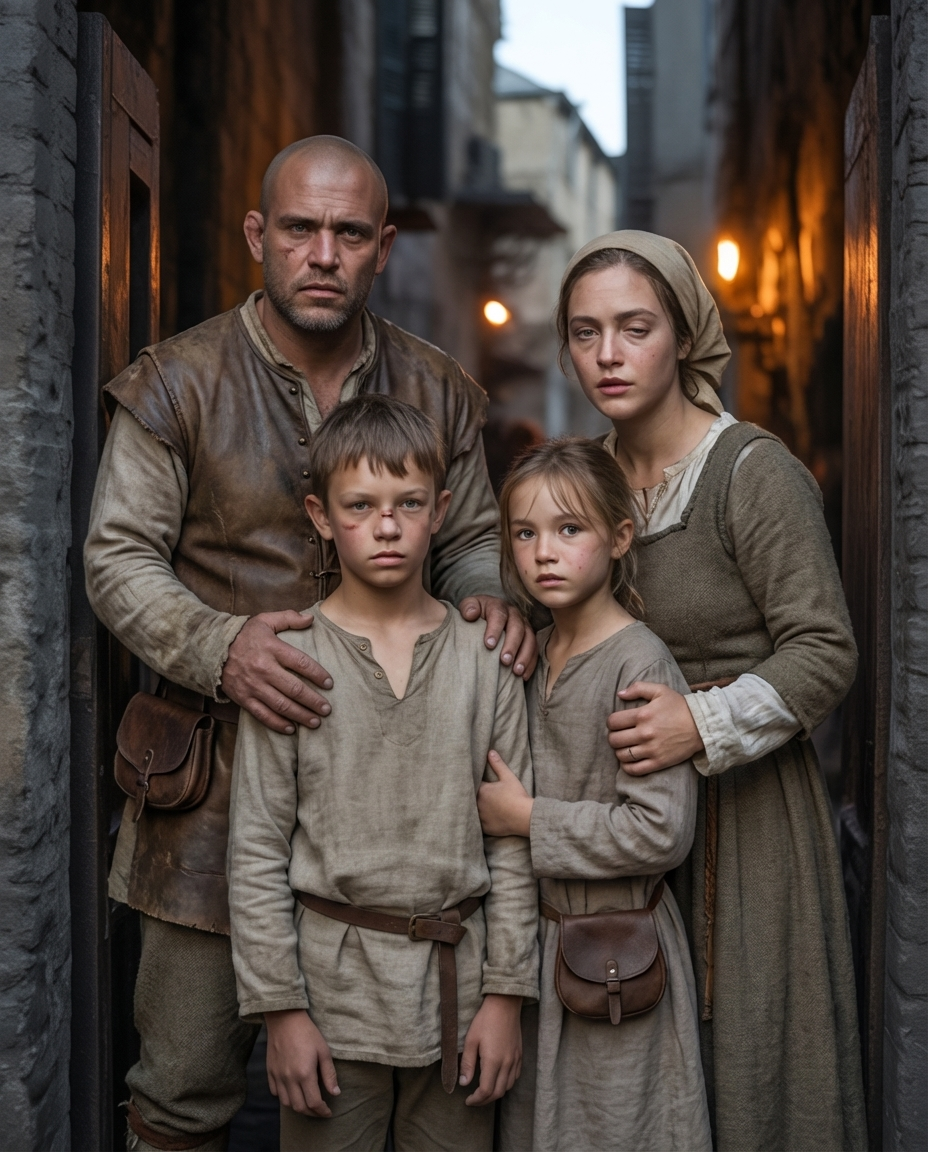
Human/Dunai. Genetic issues — tend toward mental, physical, or emotional defects. Lowest social status of any group. Called "Dregs" as a slur. Claim whatever identity circumstance allows, which is usually neither parent culture fully.
Key characters: Ruko Paka and Devon Paka (the hired killers from the ambush — both Half-Dunai).

Extremely rare. Genetic issues cause most conceptions to miscarry. Those that survive tend to have severe birth defects. Socially unthinkable — caught between the highest and lowest non-human social positions with no community to claim them. No known named characters in the story.

Physical description: Small, humanoid in basic shape. Upright torso, two arms, two legs, head proportioned slightly large. Hands with dexterous fingers ending in small curved claws for gripping bark. Covered in down — not fur, not feathers, the fine dense softness of a moth's body. The down blurs their silhouette. Coloring varies by environment — muted browns and grays on the mainland, gray-greens in Lirenne. Dark eyes, large relative to head, carrying the specific quality of attention that separates intelligence from instinct.
Metabolism and warmth: Extremely fast metabolism — they eat constantly, like hummingbirds. The metabolism generates heat far beyond what their size should allow. A Dowlen is warm. In winter, frost doesn't form where they sleep. This thermal quality is central to Mags' survival story: during the coldest nights, the Chiri surrounded her with their collective warmth. She slept through nights that should have killed her because the forest decided she was worth keeping warm.
Language — Briari: Tonal, click-based, simple in structure but difficult for outsiders. Works with what a small body can produce: clicks, tonal shifts, shaped exhales, chirps, trills. Grammar is positional — meaning changes based on speaker's position relative to listener (above, below, same level), because the language evolved in three-dimensional canopy space. Mags speaks Briari imperfectly but fluently, learned through six years of immersion.
Intelligence: Highly intelligent but not at the same intellectual level as the main races. They do not build cities, write books, or worship gods. They have the forest, and the forest has them. Their intelligence expresses as community, communication, architectural skill (the nests), and the specific social cognition required to decide, collectively, whether a stranger is worth keeping warm.
Relationship with the races: The Dern know them best — neighbors at the forest's edge for centuries. Urban populations are largely unaware. The Chiri observe without participating. They are interested without being involved.
Thematic function: The Chiri represent Home — the forest, the wilderness years, the community that chose Mags before anyone else did. When the Chiri appear, the reader should feel Mags soften. When dead Chiri appear in the war's wreckage, the reader should feel Home destroyed.
Appearances: Book One Ch 1 (the wilderness — introduction), Book One Ch 6 (Bresholm tree line — Home checking in), Book Two Ch 29 (Lirenne road — Home in a foreign forest), Book Three Ch 44 (dead Dowlen pinned to a tree — Home destroyed by the war), Book Three Ch 49 (Chiri refuse to approach Mags — the convergence's most personal cost).
The church that grew from Balda Umber's worship after his death. His people had always prayed to kings as divine figures; continued worship after Balda's murder gave him enough power to become a genuine god. The Church of Umber formalized this worship and carried the lion's knot as its symbol.
When Sorvaine destroyed Balda in Aevorn (Year 813), the church's caster priests lost their divine source. The institution persisted through the holy wars (1101–1550) but was systematically dismantled. The history was suppressed on the mainland. Lirenne kept the records. The Anessi archives at Corivel studied the bloodline because inherited divine power was their domain.
By the time of the story, the Church of Umber exists only in fragments — a children's tale, academic records, Vessa's ruined temple at Ossavar, and the pendant around Mags' neck.
A reputable mercenary guild with chapters across the continent. Not a criminal organization — structured, professional, the kind of institution that provides legitimate cover for skilled people who need to move through the world.
Known Members
Maren Lull — Order of the Road chapter. Long-distance escort and travel contracts. Maren's cover for his Thagari work — the Wardens' Company identity was so effective that Morgrym hired him without knowing what he was. His road skills are genuine; the Thagari recruited him partly because the cover was already built.
Elia Martine — Iron Charter chapter. Bodyguard and security work. Based in Greypool. Different chapter from Maren, which explains why they never met despite being in the same guild.
Pol Harkin — Order of the Road (retired). Worked with Maren on contracts years ago. Now runs a chandlery in L'lane. Maren's confederate who tracked the group through Lirenne in Book Two.
Based in Carnehue, South Aldenmere. Corrupt. Had many city council members in their pocket. Wanted to spread influence beyond South Aldenmere — supported the Unification Movement for commercial reasons.
Tessara Estuv was a principled councilwoman who stood in their way. They arranged her murder, hiring four men to make it look like highway robbery. The Guild was itself acting on instruction from above — specifically from Aldous Ferrick, Commissioner of Charitable Works in South Aldenmere's government. Ferrick's position required routine contact with both the Guild and the church: overseeing the displacement of the poor caused by the harbor expansion, coordinating with the Guild on construction and with the church on absorbing the displaced. His church connection was unremarkable because the job required it. From below, he looked like a bureaucrat doing his job. From above, he was the church's bridge into South Aldenmere's government.
Mags following this thread in Books One and Two will eventually reveal that the Shippers Guild was a middleman, not the source. Ferrick is the link between the Guild and the church's machinery. The full connection to Sorvaine's institutional apparatus becomes visible in the Lirenne college archives through Mott's Cardinal thread in Book Two.
Spearheaded by the King of Aldenmere — Mott's father — who is going slowly mad and will become worse as the story progresses. The old seat of power, where the Umber Kings ruled, was in Aldenmere (Sosamyra). Aldenmere has already declared Sorvaine's church the only official religion.
Sorvaine engineered the Unification Movement as a vehicle for spreading her church's dominion across all six kingdoms. If Aldenmere unifies the continent under its banner, Sorvaine's church comes with it.
The Shippers Guild in South Aldenmere supports Unification for commercial reasons — they want to spread their influence beyond the single kingdom they currently operate in. This is the connection between the guild and the larger divine conspiracy.
Five colleges specializing in the five schools of magic (Fire, Water, Earth, Air, Life) plus the College of White for the most talented mages who can use all five in concert. Located in Lirenne. Have formal political representation at the national council.
2,600 years of accumulated knowledge. The real history of the Umber kings — suppressed everywhere else — is preserved in the college archives. Tessara's spellcraft tradition traces here. In Book Two the group travels to Lirenne following Mott's Cardinal thread — confirming the Shippers Guild as Sorvaine's financial arm in the region, and establishing that the Unification Movement was Sorvaine's project from the beginning rather than Aldric's vision co-opted. The Umber history surfaces separately, as a consequence of Edoine's private research, not as the group's stated goal.
The college scholar who helps them in Lirenne becomes a significant secondary character — fully realized, not just an exposition delivery mechanism. Their letter later, confirming what Plague is, is one of the pivotal documents of Book Two.
Sienne
A young Alvar woman attached to the College of White's archive division. The group's primary contact in the college archives during their time in Lirenne. She seems almost too young for the position, but her knowledge is immediate and precise — she speaks about the archives with the specific familiarity of someone who has spent years in the stacks. Pleasant without warmth, helpful without humor. She answers questions completely and moves on.
Sienne's significance deepens across the Lirenne chapters: she guides Mott through the financial archives (Ch 6), directs Edoine's research that surfaces the Umber history (Ch 7), and later recognizes Tessara's spellcraft treatise as Tessara's known unfinished research (Ch 10). Her letter confirming what Plague is — matching the familiar preparation process to Plague specifically — is one of the pivotal documents of Book Two.
Overview
A crown-affiliated military institution. The Order takes in acolytes from a young age — some sent by families, some by circumstance — and trains them in martial and administrative service to the crown. Those unsuited to combat are redirected to support functions: columbary work, logistics, records, tactical communications. The institution's relationship to those support functions is essentially extractive — useful outputs, invisible sources. People who produce valuable work in the margins of their assigned roles do so without formal acknowledgment, because formal acknowledgment would require explaining how a columbary keeper came to be analyzing troop movements.
The Order reorganizes periodically as commanding officers change. These reorganizations are efficient and impersonal. Positions are eliminated without drama. People who have spent years making themselves useful in ways the institution couldn't formally acknowledge are discharged with paperwork that describes their service as satisfactory. The institution moves on. The person does not always have somewhere to go.
Edoine's Tenure
Sent at thirteen. Spent five years among boys twice his size, unable to wield a blade. Assigned to the columbary — messenger birds, administrative work — where he spent years largely alone, self-teaching from the Order's library. Gradually expanded his columbary role beyond its stated remit without being asked to and without being formally credited for it. Drafted dispatches sent under senior officers' names. Identified logistical failures in planned operations and was thanked privately and ignored officially. Eleven years in total.
Discharged when a new commanding officer reorganized the administrative structure and eliminated his position. No misconduct finding. Paperwork described him as satisfactorily completing his term of service. The Order did not note what it was losing. He collected his things and left.
Plague's Nature
- Has Plague exceeded his programming? The ambiguity is intentional and should not be resolved definitively. But the story needs to know what answer feels right to the author even if it's never stated on the page.
- Did Plague know what was coming on the road? He was present at the ambush. He was already Sorvaine's instrument. This question should haunt Mags after the revelation — and should never be cleanly answered.
Structural Decisions
- Front matter map — Recommended. A version of the Cenne Rese map should appear in each book's front matter. The geographic movement in Book Two (Carnehue → Lirenne → monastery → Mossant crossing → Aldenmere) and Book Three (Aldenmere → eastward detour → H'analaise border) is complex enough that a visual reference significantly aids reader comprehension. The existing project maps are suitable as a basis.
- Aldrician dates as chapter headers — Undecided. Current guidance: draft with dates on all chapters, remove in revision those that aren't earning their place. The prologue date stays.
World Consistency
- Eclesses / Prefect hierarchy — Watch. Eclesses is described as city magistrate of Carnehue. The Prefect (Dell Taggert) is a separate figure — a senior civil administrator, not the King. Keep the governmental hierarchy of South Aldenmere consistent: King → Prefect(s) → city magistrates.
Book One — Prologue
- Plague at the body. Osmen notices a rat at what he believes is Mags' body. He finds it unremarkable — nature being efficient. He doesn't know what he's looking at. The craft beat is in the not-noticing: Osmen is a professional who observes everything and understands almost everything he sees. This is the one exception. His competence is his blind spot here, and it costs him everything twenty years later. Do not signal the rat's significance. Let Osmen find it unremarkable. That's the point. Payoff: Book Two, Plague revelation. Book Three, Osmen's final scene.
- The closing line. "He didn't enjoy killing. But one must do what one must do." On first read: a professional's cold philosophy. On second read, knowing his motivation is self-interest dressed as necessity: "one must" is doing enormous work. The line echoes in Book Three's final confrontation — not quoted, but the logic reverses. His last act (clearing the path to himself) is the one thing in his career that wasn't assigned. The first time "one must" was genuinely his own. Payoff: Book Three, Ch. 18.
- The heliodor thread. Elia buys a golden beryl (heliodor) in L'lane's market district (Book Two Ch 5) — a throwaway beat, a pretty stone that caught her eye. In Book Three Ch 13, Morgrym reveals the graelin dagger's empty pommel cage and identifies the missing stone as heliodor — Bres clan stone, mined from the same mountain deposits as their silver. In Ch 20, Mags mentions the empty cage. Elia produces the stone. It seats. The dagger feels warmer. In Ch 22, Elia uses the completed dagger to sever the bond. Whether the heliodor was necessary is never determined. The universe might be working through Elia's instincts. Elia might just like pretty things. Both readings available. Neither confirmed.
- The witch burning thread. Three beats across Books Two and Three. Ch 2 (Papers): blackened post visible from the checkpoint queue, on the far side of the barrier — evidence of a recent burning, environmental, seen from the wrong side. Ch 8 (Darker): fresh pyre aftermath in a town square, church officials still present, Mags standing fifty yards away with a familiar in her coat. Ch 11 (Closer): old post by the road near the facility, weathered, yellow wildflowers growing at the base — Mags alone, without the group to share the weight. The landscape absorbing what was done and moving on.
- Ingle's compound. Ingle begins working on a stabilized essence compound after the bond-deepening delivery in Ch 1. Months of quiet work in the margins. The compound is chemically sound but fails at the scale of the suicide spell — the ocean doesn't care about the breakwater. The failed vial is kept among his working compounds, carried to Brentwick, present on the workbench in the Coda. The most beautiful failure in the book.
Book One — Chapters 1–2
- Tessara's treatise already in her hands. The book Mags studies in the wilderness is Tessara's spellcraft treatise — written in Alvari, the one she reads every evening. Establish this clearly and early, without emphasis. She has been using her mother to teach herself magic for years without knowing that's what she's doing, or that her mother had intended exactly this for her future. When Zirul produces the second book in Ch. 5, the reader who registered this beat will feel the echo before Mags does. The marginal notations in the treatise — numbers, development curves, technical shorthand — look like abstract spellcraft theory to Mags. They are also a mother tracking her daughter's latent potential across years, preparing a curriculum she never finished. The Lirenne scholar in Book Two Ch. 9 is the one who shows Mags what she's been reading. The unfinished section near the end is the beginning of the instruction Tessara never got to give. Payoff: Book Two Ch. 9, the scholar scene.
- The white flowers. The campfire/activation scene — the first time Mags draws essence from the world around Plague. The white flowers withering and blackening should be described naturalistically, not ominously. Something died near Plague that night. She notices it as odd — the way living things sometimes die near each other without apparent cause. She doesn't dwell. Files it away. On first read: minor strangeness, quickly forgotten. On reread: the most important image in the story. The description in the text should not know that. Payoff: Book Two, Plague revelation. Book Three, power development arc.
Book One — Chapter 4
- The harbor under construction. Mags returns to Carnehue after ten years. Among the things that changed while she was gone, the harbor expansion is visible — from a distance, or passed on the way in. She notes it as something new. One line, no emphasis. Does not know why it matters. When she later learns her mother died two days before a meeting that might have stopped it, and that it broke ground within the year of Tessara's death — the reader who remembered seeing it from the road will feel that weight before Mags finishes the sentence. Payoff: Ch. 22, confrontation at the top of the Carnehue thread.
Book One — Chapter 5
- The pendant's weight. Among the objects in Zirul's box — the journal, the ribbons, the pendant — the pendant should be slightly more present than the others without announcing itself. Two beats, either or both: (1) the knotwork is unusually precise for a common design — the craftsmanship of something made with intention, not mass-produced; (2) Zirul pauses with it a moment before handing it over, uncertain, as if he briefly considered keeping it and then decided it was too personal to be his. The pendant should feel like the most carefully made thing in the box — ordinary in subject, extraordinary in execution. The reader who catches this won't know why it matters yet. Payoff: Book Two, Ch. 12, the prophet names it.
- Morgrym and the dagger. A backward glance — the narration noting in passing how Morgrym held the dagger differently when Mags first arrived, ten years ago. Not for long. Not with any outward sign. But differently than he held the other salvaged things, and then he set it down and handed it back and said nothing. She noticed at the time and filed it away. One sentence in passing is enough. The reader won't know what they've been shown. Payoff: Book Three, the reunion scene — Morgrym tells her it is Bres clan work, that he recognized it when they first brought her in and said nothing because there was no way to explain it and it seemed like the wrong kind of thing to make much of when the child had just lost everything. He doesn't know how Harven came to carry it; the chain stops at recognition. She looks at the dagger. It's the same dagger it has always been. It isn't. The backward glance in Ch. 5 is the plant; the reunion is the quiet, twenty-year-held exhale of it.
Book One — Chapter 10
- The notebook's first entry. Edoine sees the cantrip Mags uses at the waystation from across the room. Nobody else notices. He opens his notebook to a fresh page and writes something — a line of notation, possibly two, not readable by the reader but clearly deliberate and clearly significant to him. The equations don't resolve the way any magic he has studied does. He closes the notebook without explaining himself. The notebook appears one more time before the Book Two revelation — briefly, without explanation — and closes for the last time in Book Three Ch. 18 after Osmen gives Edoine the last variable. A reader who tracks it across all three books will feel the weight of that closing. Don't draw attention to it. Let it accumulate. Payoff: Book Two Interlude — Edoine, Book Three Ch. 17 and Ch. 18.
Book One — Chapter 14
- The Derni phrase. Mott uses a Derni expression reflexively — something Braggar drilled into him — in the alley aftermath. Mags' head turns before she means it to. Physical, involuntary, the body recognizing something the mind hasn't caught up to yet. Something in her posture changes slightly. Neither acknowledges it. He doesn't notice her reaction. She notices that he didn't notice. One line of physical description nested inside a scene doing other work. On reread, it's the exact moment her wariness toward him first cracked. Payoff: the Mags/Mott relationship across all three books. The Dern thread — she was raised by them, he was shaped by Braggar — as their first unexpected point of connection.
Book Two — Chapters 2, 4, and 5 — Plague's Restlessness (three-beat sequence)
- Beat one — the harbor (Ch 2). Plague is unusually restless at Carnehue's harbor as the group arranges passage. Nervous energy. Elia notices and says something light — rats love ships, he'll be in heaven once they board. Warm, funny, and entirely wrong about what she's looking at. The beat should land adjacent to a conversation about Lirenne — what the colleges might hold, what Edoine hopes to find. On first read: animal unease. On reread: Sorvaine's instrument agitated at what the crossing will surface. Payoff: Book Two, Part Eight, Plague revelation.
- Beat two — the crossing (Ch 4). Plague still restless at sea. Not frantic — persistent. The open water has given it a different quality. Elia notices again — a callback to her harbor line, the warmth still there but with the faintest edge of genuine observation underneath. She's a professional. She watches things. She's watching Plague without quite knowing she's watching Plague. Payoff: same.
- Beat three — the arrival (Ch 5). L'lane. The restlessness carries the faintest edge of something almost like grief, though the word is too strong and Mags wouldn't use it. He is a rat on an island. The island doesn't agree with him. The reader who returns after the Plague revelation will understand all three beats as the same thing: Sorvaine's instrument approaching the place where her deepest secret is kept, and the bond between Plague and Mags responding to that proximity in ways neither of them can articulate. Payoff: Book Two, Part Eight, Plague revelation.
Book Two — Chapter 5
- Truth is Divinity — the inscription. On the harbor arch in L'lane, carved in Aevornian: the same characters written inside the front cover of Tessara's treatise. Mags recognizes the shapes — she has been sounding them out since childhood without comprehension. Elia reads the inscription casually (she learned Aevornian from Natalia Delaire) and says it: Truth is Divinity. The sounds Mags has been making since she was ten suddenly have meaning. The first page of her mother's book has been speaking to her all along. This also reveals that Elia speaks Aevornian — a fact the group didn't know, retroactively reframed in Ch 6 when Elia tells Mags about Natalia. The language of the gods came to Elia through love. Payoff: Book Two Ch 9, when the scholar explains what the treatise actually is. On reread: Tessara wrote Truth is Divinity in the book that was secretly about her daughter's divine bloodline.
Book Two — Chapter 2
- Brynn at the harbor — Mags' observation. Mags notices a well-dressed woman in the port crowd whose gaze finds Mott before he sees her. Mags catches the full sequence: the woman's recognition, her deliberate silence, and Mott's evasive reaction. Mags files the specific detail that nobody else caught: the woman saw Mott first, and her silence was a decision, not an absence. She does not mention this to Mott. Payoff: Book Three, when Brynn names the port encounter during the Aldenmere confrontation. Mott will be surprised. Mags will not be — she already knew the woman made a choice. She just didn't know what the choice was protecting.
- Mott's money. Mott pays for the ship passage in Ch 1 — resources the group can't fully account for. A faint charge of unease. Payoff: Ch 3, the Cardinal reveal explains the resources.
Book Two — Chapter 8
- "The Lion of Sosamyra." The word lion needs to exist in Mags' hearing before the pendant scene in Ch 12. When Edoine finds the Umber history in the archives, the epithet appears — he murmurs it to himself, or it's on a document she briefly glimpses over his shoulder, or visible on a gilded label on an archive shelf she passes. She doesn't catch its significance. She probably doesn't catch it consciously at all. But the word has been in the room. When the prophet calls the pendant a lion's knot, the word lion will carry a faint double register she can't quite place. The reader will know exactly where they heard it before. Payoff: Book Two Ch 12, the pendant scene.
Book Two — Interlude — Edoine
- The notebook's age. Edoine POV — doing mathematics while the group sleeps. One brief observation about the notebook itself: worn cover, filled pages, a detail that implies time and accumulated work. Not announced. Just present, the way a well-used object is present. The closing of the same notebook in Book Three Ch. 18, after Osmen delivers the last variable, lands harder if the reader has a sense of how long it has been open. Payoff: Book Three Ch. 18, Edoine closes the notebook.
Book One — Chapter 18
- Deverin — the birthmark. The group passes through the ruins of a destroyed town in Ch. 18. A refugee parish priest with a strawberry birthmark covering his right cheek is performing burial rites for one body while surrounded by more than he can ever reach. He does the rites from memory — improvised, incomplete in form, whole in intention. Elia speaks to him briefly and names him for the group as an example of what she means when she says the church is good. The scene holds two readings simultaneously: the futility of the war visible in the ruins around him; the grace of the one act visible in the man. The birthmark is the mechanism: describe it clearly enough in Ch. 18 that when the reader sees it again in Book Three Ch. 3, the recognition is immediate — not a revelation requiring explanation, just the specific cold shock of identifying someone in the wrong place. The scene in Ch. 18 should feel like incidental grace caught in passing. It should not feel like a setup. Payoff: Book Three Ch. 3 — Deverin dead in the mud, unburied, in the aftermath of a battle his church helped engineer.
Book Three — Chapter 4
- Deverin — the payoff. The group passes through a recent battle's aftermath on the harder route. Among the unburied dead: Deverin. The birthmark. Elia stops, looks, keeps walking. Nobody says anything. The observation she made in Book One is still true. It doesn't protect him. The thematic weight arrives after she keeps walking, not before — Deverin is a person, not a symbol, and the scene should feel like finding a specific person in the wrong place. See Foreshadowing Map entry for Book One Ch. 18.
- The notebook opens again. When Edoine delivers the math to Mags in Ch. 1, he opens the notebook to a fresh page. The reader who has tracked it from Book One Ch. 9 through the Book Two Edoine Interlude will register: same notebook, new chapter in every sense, a long way from the waystation. The opening doesn't need to be remarked upon. Just present. Payoff: Ch. 18, the closing.
Book Three — Chapter 11
- Mott's absence echoes Maren's. Book One Ch. 17: Mags wakes up and Maren's pack is gone. Book Three Ch. 11: Mott is gone. The echo should be felt without being stated — the similarity in the structure of finding someone absent who was there the night before. What makes it land as an echo rather than a repetition is the difference: Mags understood immediately, absorbed it, kept moving. Elia discovers that knowing the horizon was coming and the horizon arriving without a farewell are not the same thing. The reader feels both versions of the loss simultaneously. Payoff: the sustained not-knowing that runs through the group's final movement.
Book Three — Mott Interludes
- Asymmetric knowledge. The first Mott interlude (Part Ten) gives the reader something the group will never have: he chose to leave. The second (The Cage, Part Eleven) gives two more: the Brynn confrontation in Ashton Cross where nothing resolves, and Aldric's death before Mott could decide — presence without action. This foreshadowing runs in reverse — we know the ending of his arc while the group doesn't, and that knowledge colors every scene with the group from Ch. 11 onward. The reader is quietly grieving something the characters on the page haven't lost yet. Payoff: the ending. The group closes without Mott. The not-knowing is part of what they carry.
Book Three — Chapter 17
- The notebook almost closes. Edoine opens the notebook to the formula page and closes it again. "Not yet." The reader who has tracked it from Book One Ch. 10 will feel the weight of how long it has been open — and the specific tension of almost but not yet. One chapter later it closes for the last time. Payoff: Ch. 18, the closing.
Book Three — Chapter 18
- The notebook closes. After Osmen delivers the last variable and Mags kills him, Edoine closes the notebook. The same notebook he opened at a waystation in Book One Ch. 9 when he saw something in Mags' magic that didn't resolve the way anything else did. He doesn't say anything. He closes it. They leave. The reader who has been watching it across three books will feel the finality of that gesture more than any spoken line could carry. Payoff: everything the notebook has been accumulating since Book One.
- Osmen's closing line echoes the prologue. The logic of "one must do what one must do" from the prologue closes here — not quoted, but present in the structure of his final act. He cleared the path to himself because he decided the ending, and having decided it, he arranged the conditions for it. The first "one must" in the prologue was assigned to him by Sorvaine's machinery. This last act was entirely his own. The echo is structural, not verbal. The reader feels it rather than reads it. Payoff: the closing of Osmen's full arc from prologue to Ch. 18.
Cross-Book — The Notebook
- Book One Ch. 9 — first entry. Edoine sees the cantrip, opens notebook, writes. The first appearance.
- Book One Ch. 12 — second appearance. Present during the Ingle/Edoine magic discussion at camp. Visible, not explained. Two appearances in close proximity lodge it in memory.
- Book Two Ch. 1 — present at the table. Open, or on the surface. The reader should register: same notebook, still going.
- Book Two Interlude — Edoine — worn and filled. A single sentence of description: the same notebook, but changed by use. The passage of time visible in a physical object.
- Book Three Ch. 1 — opens again. Fresh page. Same notebook. A long way from the waystation.
- Book Three Ch. 17 — almost closes. "Not yet." The tension of almost.
- Book Three Ch. 18 — closes for the last time. After Osmen. Says nothing. They leave. Payoff: everything.
- The notebook should never be explained. The reader should work out what it contains by inference. The moment they do — probably mid-Book Two or early Book Three — is far more powerful than any explicit statement.
Cross-Book — The Prophecy Phrasing
- Book Two — first delivery. Clean, stark, balanced. "The instrument of an enemy god's destruction" / "a soul that falls forgotten with none to mark her passing." Both halves stated precisely enough to hold in memory.
- Book Three — echoes, not repetitions. The first half resonates in every suicide spell discussion. The second half resonates in quiet moments of isolation. Neither is quoted verbatim after the first delivery.
- Book Three — final chapters. Language adjacent to "none to mark her" refreshes the prophecy without quoting it. Then the Epilogue title lands.
- The dual fulfillment: she destroys the god AND she falls with none to mark her. Both true. Neither cancelling the other. The ending image — the rat — exists in the space between the two halves.
Graelin — Mithral Replacement
- Problem: Mithral is Tolkien-specific lexicon that doesn't belong in an otherwise clean secondary world.
- Replacement: Graelin — a Dunai alloy, originally forged as sword-metal by a warrior people. Name derives from Grael (Dunai war god). The Dern learned to work it generations ago and became its most accomplished smiths, though the Dunai were its originators.
- Three registers: graelin (accurate; used by Dunai, Dern, and knowledgeable humans), graelsteel (informal commerce term), grave-steel (folk corruption that stuck because the war/death association felt right).
- Thematic work: Another layer of invisible Dunai history. The craft survived the people; the proper name still carries the war-god Dunai smiths swore under, even where no one remembers who Grael was. The social register of which word a character uses is itself characterization.
- Quiet irony on the dagger: Mags carries a weapon whose origin culture is the same as the Paka brothers', the men who killed her parents.
Prose Register — Horse Terminology
- No modern breed names. Terms like Warmblood, Thoroughbred, Arabian, Hanoverian, etc. are out of register — they carry a modern-European equestrian-sport association that doesn't match the prose's otherwise classic fantasy vocabulary (short-sword, catalyst, mage, cloak).
- Descriptive phrases only. Describe the horse by build, purpose, and bearing. Phrases like heavy-boned, cavalry-bred, road-worn, a broad-shouldered black gelding, close-coupled do the work without committing the world to a breed-registration system.
- Established example: Osmen rides "a heavy-boned black gelding, cavalry-bred" (Prologue). Future Osmen horse references should match or rhyme with that language.
- If horse-breed vocabulary ever needs to expand, invent in-world terms tied to cultures (Dunai steppe horses, Dern mountain ponies, Lirenne coursers) rather than importing real-world breed names.
Pacing Overhaul — Lirenne Arc (Book Two)
- Pressure system added: The Lirenne arc (Ch 23–32) now has continuous institutional pressure from the boarding through departure. Aldenmere navy boards the group's ship mid-crossing (Ch 26). An Aldenmere delegation is in L'lane. The colleges are under political pressure. A confiscation request targets the Umber-related archives at Corivel, creating a race.
- Pol Harkin added: Maren's confederate in L'lane. Former Order of the Road. Runs a chandlery in L'lane's harbor district. Maren uses him to track the group from the mainland. Appears as a shadow in Ch 28 (Sienne mentions him); identified retroactively in Ch 37 when Maren arrives at the monastery. See Pol Harkin character entry.
- Boarding dual consequence: The same naval manifest entry endangers the group (through Sorvaine's intelligence network) and enables Maren to find them (through military contacts). Neither hunter knows the other is looking.
- Ingle's breakthrough — institutional reaction: Some Anessi scholars see the stabilized essence compound as a threat to the colleges' monopoly on magical practice. Creates a second source of danger at Corivel.
Pacing Overhaul — Book Three Middle
- Osmen trail deadline: The pigeon message in Ch 46 includes a redeployment schedule. The church's operational network will reorganize in late spring. The trail has an expiration date.
- War as active obstacle: The war closes the group's intended route in Ch 48 (War), forcing a costly reroute that burns days against the deadline.
- Carnehue falls: New beat in Ch 50 (Darker). Carnehue taken from sea and land simultaneously — the harbor expansion from Book One revealed as military infrastructure. The coast is occupied. Ossavar is behind enemy lines. This is the trigger for Mott's departure in Ch 51.
- Occupation texture: From Ch 50 onward, the group is in occupied territory. Witch burning under occupation (Aldenmere Examiners operating openly). Movement chapters carry infiltration tension. Maren as point man for reading military terrain.
Ossavar — Established as Balda's Death Site
- Core decision: Ossavar is where the witch Thaga killed Balda Umber in Year 761. The concentrated divine death created a permanent thinning of the barrier between the physical world and Aevorn.
- Thin place: The barrier between worlds is thinnest at Ossavar. The suicide spell requires this property — the channel at maximum draw becomes a door only where the barrier is already weak enough. The formula resolves only at this location.
- Five-layer significance: Plot (Osmen is there), formula (the thin place), prophecy (Tomas Ferre's dead city), geography (Mags' home coast), war (behind enemy lines).
- Planted at: Anessi archives (Book Two Ch 30 — Balda's death location and thin-place phenomenon), monastery (Book Two Ch 34 — Ossavar named), Edoine's formula (Book Three Ch 58 — geographic variable confirmed as solved).
- Timeline fixed: River split changed from "fourth century" to "approximately eleventh century" to be consistent with Tomas Ferre's prophecy (Year 820) predicting a future event.
- Vessa connection preserved: Vessa's ruined temple at Ossavar predates or follows from Balda's death — the god of memory maintaining a presence at the site of the history she would later preserve.
Chapter Numbering — Updated
- Continuous numbering: Chapter numbers run continuously across all three books. Book One: Ch 1–22. Book Two: Ch 23–41. Book Three: Ch 42–63. Interludes remain labeled by character name, not numbered.
- "Books" confirmed: The three narrative divisions are called "Books" (standard epic fantasy convention). Book One — The List, Book Two — The Testament, Book Three — Epitaph.
Osmen
- Birth year revised: Born 2778 (previously 2792). Age 32 at the prologue, 42 at Book One. Exact contemporary of Maren Lull — same year, same era, divergent paths.
- Motivation clarified: Not a true believer. Serves personal ambition dressed in the language of order. The story he tells about himself is close enough to true that he has never needed to examine it closely.
- Arc decided: No direct encounter in Book Two — Naia Sorrel's attack in Ch 33 is Osmen's machinery, not Osmen. First and only meeting is the Book Three confrontation. Survives. Does one thing that matters before the end without redeeming himself. Mags may never know it was him.
- Maren mirror: Both born 2778. Professional worlds overlap through the church's institutional machinery. May have crossed paths or know the same people.
Devon and Ruko Paka
- Names confirmed: Devon Paka and Ruko Paka. (Drevon/Davor variants superseded.)
- Both die in Book One.
- Ruko first: Found first by Mags. Tells her freely the murder was contracted — just business, no shame. He forces her hand when cornered; she tries to stop him without killing him but he pushes it until kill-or-be-killed. She has no clean choice.
- Devon second: Found after the contracted-murder revelation. Holds no new information. Mags chooses his death deliberately, in front of the group. Nothing lifts afterward. The list is finished and she feels exactly the same.
- Group present for Devon: Everyone sees her choose it. Maren stays. Edoine sees the equation become a person. Elia carries it forward. Ingle is conspicuously quiet. Mott doesn't flinch.
Tessara's Murder — Motive Resolved
- Shippers Guild, not Thieves Guild. All prior references to the Thieves Guild in this context are superseded.
- The Guild had been infiltrated by Sorvaine's operatives and was being used to spread her commercial influence — favorable fees, tariffs, and regulatory treatment for church-affiliated interests; obstruction for those opposed to her expansion.
- Immediate trigger: the harbor expansion. Tessara stalled it while she gathered evidence. The Guild tried bribery first. She refused. The expansion broke ground after her death.
- She had connected the Guild to the church — not the prophecy, which she knew nothing about. She was following corruption wherever it led.
- She was two days from telling the Prefect. Had requested a private meeting at his country estate. Someone passed word to the Guild that the meeting was scheduled. The Prefect is not corrupt — he simply never learned what she knew.
- Harven knew the shape of it. She talked to him. He understood what she was carrying when they set out. He went anyway.
- Prefect Dell Taggert is practical but not corrupt. The rot is localized to the Guild, not the broader government.
Mags' Age at the Ambush
- Confirmed: 10 years old. Born September 8, 2800. Ambush September 10, 2810. Any notes suggesting age 12 are superseded.
Ketton
- Morgrym and Agna's settlement confirmed as Ketton — one of four designated Dern towns in South Aldenmere. A place with walls and a name, not a camp or a hidden enclave.
Carnehue
- Confirmed as a significant port city. The harbor is central to its commercial dominance and the power of the Shippers Guild. The group's Lirenne crossing in Book Two departs from here.
King Aldric and Cardinal Brennan
- Mott's father named: King Aldric. Confirmed intentional — he renamed himself after the God-King Temet Aldric, whose ancient imperial seat at Sosamyra he occupies. He believes he is the new God-King. The kingdom name Aldenmere, derived from the same source, means every map ratifies his self-mythology. See craft note on the Aldenmere kingdom page re: using both names in proximity.
- Cardinal named: Brennan. Warm, approachable, pastoral. The friendly face of Sorvaine's institutional power. Probably genuinely likes Mott, which makes him harder to dismiss.
Place Names
- Elia's city: Greypool (replaces Kintargo)
- Ingle's region: The Hael (replaces Issia)
- Ingle's town: Brentwick (replaces Edmuth)
- Maren's district: The Puddles, Carnehue (Dunreach removed from background)
- Guild name — Resolved: The Wardens' Company (parent guild). Maren's chapter: the Order of the Road. Elia's chapter: the Iron Charter. Different chapters explains why they never met.
Plague's Timing
- Pre-murder arrival confirmed. Plague is sent by Sorvaine before the ambush. Mags has already named him by the time her parents are killed.
- He was present at the ambush. Injured in the blast that killed Tessara. Mags carried him away from the road without knowing what he was.
- The campfire scene is preserved as activation, not arrival. The night the bond deepens, communication sharpens, and Mags first manifests witch magic unconsciously — the white flowers withering and blackening. Sorvaine watches through him as the connection locks in.
- Prologue note — RESOLVED: Plague appears in the drafted prologue. Osmen notices a rat at Mags' body and finds it unremarkable — "She's already dinner." On reread, the reader understands what he was looking at.
Eclesses
- No bloodline knowledge. Pure greed and self-interest. The inheritance was there, the child was gone, the paperwork was his. He didn't need to hate her — indifference was enough.
- Killed by Maren — accidentally, in circumstances Sorvaine may have arranged. An argument in Carnehue, Maren's fist at the wrong moment. Whether Sorvaine engineered the meeting or simply let the pieces fall is deliberately ambiguous. Maren does not know the significance of what he has done. He kills Eclesses before he knows what Mags is.
- Mags never resolves what she would have chosen. The list had his name. The name is gone before she acts on it. It doesn't feel like anything she expected.
- His death makes Mags the last Umber. The prophecy becomes live. Sorvaine begins to move directly.
- The Maren irony. He is already entangled in her story in ways he cannot see — he changed the shape of everything before he knew what it was. His near-betrayal in Ch. 15 and departure in Ch. 16 carry additional weight in light of this.
Morgrym's Fate
- He survives. Imprisoned, transferred through the justice system, worn but not broken.
- Mags finds him in early Book Three — before the climax, giving her one thing saved before the end.
- The reunion echoes their earlier register — quiet, oblique, the important things said sideways. She leaves him somewhere safe. He is alive when she goes.
- The dagger reveal (DO NOT FORGET): Morgrym recognized the graelin dagger as Bres clan work when they first brought Mags in. He said nothing — no way to explain it, wrong moment, Dern way. The Book Three reunion is when he finally tells her. A few lines, no more. Something held for twenty years, said sideways, before the end.
Group Assembly — Session 2
Maren: Active Examiner
- Maren is currently an active Examiner — not former. His mercenary work is his cover for moving around the kingdom. He takes Morgrym's escort job because it is exactly the kind of work his cover is supposed to produce.
- His betrayal arc is heavier for this. When he almost turns Mags in, he is refusing a current duty — not resisting old instincts. He hasn't just decided not to report her; he has decided to stop being what he is.
- His status is visible to anyone who knows what to look for. Edoine and Ingle both read him correctly shortly after joining — before Mags has the full picture.
- Mags at story start knows he has a military/institutional past but not the specifics. She is careful with her magic around him from general instinct, not precise knowledge.
- Mags knows she is a witch and is careful accordingly. She does not register her cantrips as accidents — she knows what she is and practices discretion.
Edoine — Chapter 10 Join
- Waystation delay: Maren sent a letter to a contact before leaving the village. They wait 3–4 days for a reply.
- Edoine's position: Writing correspondence for travelers at the waystation — the Carenhal Order reorganized him out of existence some months prior. No misconduct, no drama. The institution simply no longer had a place for him.
- The scene: Mags stills a basin of water to check her reflection before meeting someone who knew her parents. She is looking for her mother's face. Edoine sees the cantrip; nobody else does. He writes in his notebook and says nothing. He also reads Maren shortly after. Two connected silences.
- The join: Three mornings at breakfast, uninvited. On the fourth morning he has his pack. Maren feeds him. Nobody asks.
- The notebook: Appears again once before the Book Two reveal. No explanation given.
Ingle — Chapter 12 Join
- Project status: Can replicate some magical effects alchemically, not all — yet. Credibility and something to prove simultaneously.
- The scene: Public demonstration of an alchemical light compound goes visibly wrong (wrong color, yellow smoke, wrong sound). Mags inadvertently clears it with a reflex cantrip passing by. Ingle reads her, then reads Maren. Neither says the word.
- The join: Ingle makes his case efficiently. Mags defers. Maren says "His supplies are worth having" without turning around. Ingle takes it as a yes.
- First private conversation: Conducted entirely in the language of people not saying the word. Maren is in the next room.
- Contrast with Edoine: Edoine gravitated without asking; Ingle pitched and got a provisional yes. Two different temperaments, two different kinds of joining.
Elia and Mott — Chapter 14 Join
- Elia's backstory update: She and Natalia were lovers. Elia ended it — and has never been entirely sure she was right to. She met Mott on the road shortly after. They have been traveling together approximately two months. Natalia resolved: single off-page encounter in Lirenne, Book Two. See Elia's character page.
- Elia knows: exactly who Mott is — a prince of Aldenmere running from the Cardinal destiny.
- Mott's adjacent problem: Information relevant to Mags' thread — a name from his Cardinal grooming that connects the Shippers Guild to the church. He is in South Aldenmere trying to understand what he was being prepared to oversee.
- The scene: Same records hall, different angles. Something goes wrong. Elia draws blades. Shared alley. Mott has a name Mags needs; Mags has context Mott lacks. Neither explains their source.
- The Derni moment: Mott uses a Derni phrase reflexively. Mags' head turns before she means it to. Neither acknowledges it. First crack in her wariness.
- The join: No invitation. They fall into step when the group moves.
Still Open From This Session
- The specific person Mags meets at the waystation — Resolved. A former colleague of Harven's. Someone who knew him professionally and can give her something of him that wasn't in Zirul's box.
- Maren's contact — who, and what the reply says at minimum
- The specific sound Ingle's compound makes when it fails
- Which records hall in Ch. 15 and what specifically goes wrong
The Prophecy — Session 3
- "Gather all people" removed. This phrase only appeared in overview prose, not in the prophecy itself. The overview has been rewritten to remove it. The "gathering" question is resolved by setting it aside entirely — it was never in the formal text.
- Balda Umber was the Lion of Sosamyra. A military and royal epithet from his lifetime, carried into his deification. It is the key to reading "the blood of the lion" — legible to scholars who know the history, debatable to everyone else. Sorvaine's church has denied the connection at various points.
- The prophecy text is now finalized:
- Opens with the lion image — vague enough to be argued about, clear enough to those who know
- The lion/ewe contrast carries the either/or — strength against the enemy, or falling forgotten
- Closes: "Both fates are written. One shall come to pass."
- Both are true. Same act. Same moment.
- Tomas Ferre's second prophecy is already fulfilled — verifiably, historically. This is what gives the Umber prophecy its authority. People don't argue about whether it's real. They argue about what it means.
- The church ending is settled in concept. Mags doesn't build a church. Nobody decides to build a church. The world simply does what it always does with stories like hers. Someone paints a symbol. Someone tells the story wrong. Someone lays a stone. The final image is not triumphant — it is the question: will it be better, or worse, or just the same? That question is never answered. The reader closes the book holding it.
Ossavar & Second Prophecy — Session 3 (continued)
- Tomas Ferre's second prophecy is now settled. It described a great city abandoned when its river changed course — the two-generation decline, the dry riverbed still visible afterward. No city named, no timeframe given. The match to Ossavar was exact.
- Ossavar is a dead city between two destinations on Mags' route. Visible from the road. Stone structures still standing. The old riverbed a grass-grown depression alongside the eastern wall. Mostly abandoned — a handful of permanent inhabitants remain.
- Scene function: The group passes it en route. Someone — likely Edoine — identifies it. The second prophecy comes up naturally. The implication is not stated. Mags looks at a city that died because something essential left it, and understands without being told that the man who predicted that also wrote the prophecy about her.
- Sorvaine's church has never formally commented on the Ossavar fulfillment. Their silence is noted by scholars.
The Lion's Knot Pendant — Session 3 (continued)
- Mags does not know she is an Umber descendant at the start of the story. She finds out in Book Two at the One God's monastery.
- The mechanism: a pendant on a cord worn close to her body — usually under clothing — in an old knotwork design. She has always known it as an Aelwold Rose. It was in Zirul's dusty box with her parents' other things. Harven had it passed down to him without explanation and had no idea what it was.
- The design's real name is a lion's knot — also known as the lion's paw — and its history is deeper than the Umber kings. In its oldest known use the symbol represented the fundamental duality of existence: good and evil, light and dark, hot and cold, love and hate. Two forces in permanent tension, neither destroying the other. Balda Umber adopted it as his mark — likely because of that cosmological weight — and it became the symbol of his royal household. After his death it became the symbol of the Church of Umber. When Sorvaine destroyed Balda in Aevorn and dismantled the church, the symbol's name dissolved over fifteen hundred years until only the knotwork remained, renamed and forgotten by most.
- The prophet recognizes it immediately. He asks where she got it. She tells him. He calls it by its right name and explains what it has meant across the centuries. That is the moment. Not dramatic — just a very old man returning a name to something she has worn since childhood without understanding.
- The scene should be quiet. The weight arrives slowly. First for the reader, then for Mags.
- At the story's end — after Mags has passed into Aevorn — her devotees adopt the lion's knot as the symbol of her emerging church. The symbol has now meant the duality of existence, a king, a destroyed church, a forgotten bloodline, and a god. Each meaning accumulated without erasing the one before.
Two-Stage Umber Revelation — Session 3 (continued)
- The group goes to Lirenne following Mott's Cardinal thread — not to research the Umber history. That surfaces as a consequence of Edoine's private research into Mags' magic.
- Stage one — the colleges (Ch. 9–10): Edoine finds the Umber history in the archives while looking for something else. He tells Mags privately. He delivers the history, the prophecy, his suspicion that it runs through her — and the fact that he cannot prove it. Mags decides who else knows and when.
- Stage two — the monastery (Ch. 15): The prophet sees the pendant, names it correctly. The possibility Edoine described becomes the strongest evidence available — but not certainty. The prophet believes. He cannot prove it. Mags carries that distinction from this moment forward. The scene is quiet. A very old man saying a name she doesn't recognize for something she has worn since childhood — and telling her what he believes it means about who she is.
- The doubt persists. The pendant proves itself. It does not prove her bloodline. Mags proceeds on the weight of accumulated evidence — her magic, the pendant, Edoine's research, the prophet's belief — while never being entirely free of the possibility that she is acting on a belief rather than a fact. This doubt should be present throughout Books Two and Three. It does not stop her. But it is always there.
- The emotional shape: Stage one is intellectual and slightly abstract — a story she may be part of. Stage two is personal and immediate — the story is hers, has always been hers. The gap between them is where she carries the uncertainty alone.
- Book Two outline updated — monastery and revelation chapters reshaped accordingly. The Lirenne chapters foreground Mott's Cardinal thread as the group's stated purpose.
Sorvaine's Catastrophic Move — Session 4
- The move: Osmen files treason charges against Mott in Aldenmere — Mott's royal identity weaponized, the group named as co-conspirators. Aldenmere's legal machinery moves against them. The group is being taken.
- Mags' response: She uses her power publicly and desperately to get them out. Not a declaration — an action. Unmistakable, impossible to explain away. People are hurt. Some are killed — not named enemies, but numbers. The group escapes.
- What this costs: Her invisibility, permanently. She is now a declared witch and publicly identified as the last Umber. Sorvaine's machinery hunts her openly. Aldric has cause against all of them. The distinction between enemies-on-a-list and people-in-the-way has been crossed.
- "Becoming what you fight" — this is where that theme becomes concrete. Sorvaine kills to protect her position. Mags kills to protect her people. Different motivation. Same structure. She knows it afterward.
- The aftermath scene (Ch. 21) now carries the weight of what she did — the group is safe and together because of it, and the silence in the room is a specific kind of silence.
- The church ending seeds here. She acted publicly and everyone saw it. The institutionalization of Mags begins in this moment without her knowledge or consent.
- Sorvaine's epilogue: She got what she wanted and what she feared simultaneously. The prophecy is no longer a secret. The numbers don't comfort her.
Mott's Cardinal Thread — Session 5 (final item)
- Stage one — Chapter 14: At the records hall in Erish, Mott is tracing money from his Cardinal briefings through the Shippers Guild's financial structure. His argument with a clerk escalates — Mags overhears him say "Shippers Guild." In the alley afterward, he gives Mags the name Aldous Ferrick, Commissioner of Charitable Works. She gives him context from Mave Solloway. Threads confirmed as tangled.
- Stage two — Lirenne colleges, Ch. 6: The archives confirm two things simultaneously: the Shippers Guild is Sorvaine's financial arm in the region, and the Unification Movement was Sorvaine's project from the beginning — grown through Aldric because he was the right instrument. Not co-opted. Engineered.
- His father lost his mind pursuing something he was engineered to pursue. Mott tells the group the facts without the weight. The thing underneath he keeps to himself. Elia probably notices the gap.
- Parallel private knowledge: Mott and Mags are both carrying things they haven't shared while moving through Lirenne — she has Edoine's Umber revelation, he has what the archives confirmed about his father. Neither knows the other is doing the same thing.
The Plague Discussion — Book Two Ch. 15
- The identification is specific. The scholar's letter doesn't just confirm what Plague is — it confirms who sent him. The familiar preparation process described is Sorvaine's church's process. Combined with what the prophet told Mags in Daening — that a god who knows her target does not leave surveillance to chance, that whatever has been closest to her longest, Sorvaine has eyes in — the patron's name is no longer ambiguous. Witches rarely know the name of their patron god. This group now does.
- The problem this creates is immediate and practical. If Plague is an active conduit — not just a familiar but a live channel — then Sorvaine has been present in every conversation held near him. Every plan, every name, every vulnerability. The question isn't whether she knows about Mags. It's whether she knows everything. The group has to sit with that.
- The second problem is worse. A witch without her familiar is powerless. Plague is Mags' only source of power. Getting rid of him — casting him out, refusing the bond, whatever that would even look like — doesn't protect them from Sorvaine. It just disarms Mags entirely. The god who wants her dead is also the god who supplies the only weapon they have.
- The discussion needs to happen out loud. Some members of the group (probably not all — Mott and Elia may not have the theological context to engage fully, but Edoine and Maren do) need to walk through the logic in front of the reader. Not dramatically — practically. The way people work through a problem that has no clean answer. What are the options? What does each cost? What do they actually know versus what they're assuming? The discussion should feel like a real conversation, not an exposition delivery.
- They choose to keep Plague. The outcome is never in doubt — losing her power isn't survivable strategically — but the choice needs to be made explicitly and knowingly, not by default. Mags makes it. The group accepts it. That's different from it simply continuing unchanged.
- Maren's contribution lands here. His note that familiars sometimes exceed their programming — that what a god sends out into the world sometimes stops being purely what the god intended — is not reassurance. It's the one ambiguity that lets the decision be made at all. He's not saying Plague is trustworthy. He's saying the question of whether Plague is still fully Sorvaine's instrument is genuinely open. That's enough to proceed on.
- The reader benefit. By walking through this logic in scene, the story nearly spells out the Book Three mechanism without naming it: her power comes from Sorvaine; the weapon is already in her hands; the question is whether the god who sent it can see what's being built with it. The reader who is paying attention will feel the shape of what's coming. The reader who isn't will understand the stakes clearly enough to follow the ending when it arrives.
- Chapter placement: Book Two, Chapter 16 — "Sometimes." This is the chapter where the group processes the revelation. The Maren contribution and the keep-or-lose discussion are both already assigned here. The note above is the frame for how that chapter needs to function.
Still Open (All Sessions)
- Book titles — all three Resolved. Series: The Lion's Knot. Book One: The List. Book Two: The Testament. Book Three: The Door. Epilogue (Book Three): None to Mark Her. See Continuity Notes.
- Anthony Salerno — Retired. No plot function. Will not appear.
- Natalia — Resolved. Single off-page encounter in Lirenne, Book Two. Elia ended the relationship and has never been sure she was right to. Comes back quieter. Mott notices without asking. See Elia's character page.
Bran Setter & Mave Solloway — Resolved
- Bran Setter — Maren's contact. Former Carnehue watch official. Knows how records and money move through the city's institutions. Owes Maren enough to pass a name along without asking questions. Appears in person in Ch. 9 (Fenwick) only. Has used Mave Solloway as a paid informant — she was ex-Guild and buyable, and Bran needed Guild information. Edoine Tull handled the correspondence between Bran and Mave as part of their working arrangement in Fenwick. Edoine knows of Mave from sending those letters — her name, her location in Hallow, her willingness to sell information. This is the mechanism by which the group finds Mave: Edoine provides the direction at the end of Ch. 10, after Ruko names the Guild.
- Mave Solloway — retired Shippers Guild official, now living quietly in Hallow — a small town near the border with Umberhal, warm, flat, the kind of place that doesn't ask questions. Buyable — will do almost anything for money, including sharing information she shouldn't share. Bran Setter used her as a paid informant when he needed Guild intelligence. Knew Tessara and Harven socially. More importantly, worked inside the Guild that Tessara was investigating — saw things during her career that only made sense after Tessara died. Has been sitting on uncomfortable knowledge for ten years with nobody to give it to.
- How Mags finds her: Through Edoine, who handled Bran Setter's correspondence to Mave and knows her name, location, and buyable nature. Edoine provides the direction at the end of Ch. 10 after the group learns the Guild was the middleman. Mags arrives in Hallow knowing who she's looking for and that the woman can be paid for information. What she does not know going in is that Mave knew Tessara personally. Mave sees Tessara in Mags almost immediately — the face, the hair, the ribbons — though the differences register too (tattoos, practical dress vs. Tessara's elegance). Mave names a price before sharing anything. It's more than they have. The Tessara connection gets them a discount, not a freebie. How much is it? How much do you have?
- What Mave gives Mags: not a document — firsthand knowledge. Which officials were compromised, how money moved, that Tessara's investigation was real and close to something. The thread above the Guild level leads somewhere powerful. Mave only half-glimpsed it from the periphery of her own career. But she glimpsed enough to give Mags a name and a direction — the first entry above the Guild level, which becomes the new list.
- The emotional layer: Mave knew Tessara personally. Grieves her in the quiet way people grieve someone they couldn't protect. Mags came looking for her mother's face in still water. What she finds is someone who remembers the original. That lands harder than anything on the list.
- Chapter placement: Ch. 14 (Mave). Chapter opens with travel and approach — the road south to Hallow, Mags' state of mind, the texture of a warm flat border town where people come to quietly disappear. The scene with Mave arrives at the end.
- The chain: Ruko names the Guild middleman (Ch. 10) → Edoine provides direction to Mave from Bran's correspondence (Ch. 10, Beat 12) → travel south to Hallow → Ch. 13 scene → first name on the new list pointing above the Guild level.
Clarity Pass — Reader Comprehension Review
- Sorvaine's paradox addressed: The Plague discussion in Book Two Ch. 15 must reconstruct the timeline explicitly — Sorvaine sent Plague before the ambush, then ordered the hit. The killing failed. The witch-making became the liability. Characters should work through this logic out loud.
- Suicide spell mechanism — split delivery: Edoine delivers the math (Ch. 1 Book Three). Osmen delivers the Aevorn entry mechanism (Ch. 18 Book Three). The church's suppressed knowledge is the missing variable.
- Mags' self-knowledge clarified: She knows she's a witch throughout. The Book Two revelation is about the patron (Sorvaine), not the status (witch).
- Examiner-Sorvaine connection: Must be planted in Book One Ch. 7 via church seal/detail at the Examiner arrival. Reader needs "Examiner = Sorvaine's church" before the Maren reveal.
- Osmen's church affiliation: Environmental detail in prologue. Church compound visible in interludes. Builds layer by layer across three books.
- Investigation chain — tier structure: Reader tracks tiers (killers → Guild operative → government official → church), not individual names. Each name anchored to function.
- Maren return: Must carry visible physical/behavioral evidence of change. Professional habits repurposed, not gone.
- Edoine romantic thread: Peppered from Book One Ch. 12 onward. His attention to her magic inseparable from his attention to her. Notebook carries double weight.
- Elia decisive action: Needs a precedent beat before Book Three climax.
- Ingle in Book Three: Thread is presence and ordinariness, not transformation. The false hope carries his structural weight.
- Umber lore delivery: Conclusion first, evidence as questions arise. Reader retains three things: bloodline existed, was hunted, prophecy about the last of the line.
- Prophecy phrasing: Must be precise and memorable at first delivery. Echoed (not repeated) across Book Three. "None to Mark Her" title must hit immediately.
- Eclesses' death: Facts clear, cause ambiguous. Cosmic significance arrives retroactively in Book Two.
- War presence: Physical condition in Book Three, not just political concept. Connected visibly to Sorvaine/Brennan.
- Plague ambiguity: Needs 1-2 moments of uncertainty in Book Three to prevent the balance tipping too far toward genuine agency.
- Ossavar: Name must be spoken and lodged in memory in Book One. Vivid image attached to the name.
- Maps: Recommend including a map in front matter, especially for Book Two where geographic movement intensifies.
- Chapter numbering: Continuous across all three books (Book One: Ch 1–22, Book Two: Ch 23–41, Book Three: Ch 42–63). Interludes labeled by character, not numbered. "Books" is the correct term for the three narrative divisions.